Tsukui Castle (Kanagawa Prefecture) Complete Guide | Exploring a Typical Negoya-style Mountain Castle and its Sengoku Period History
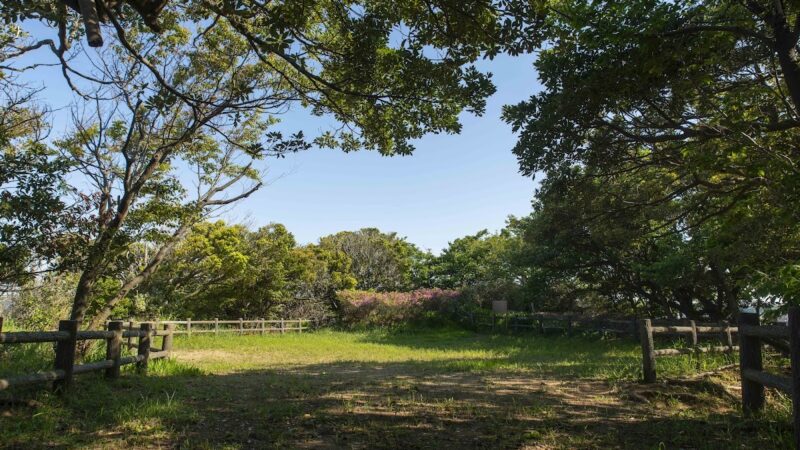
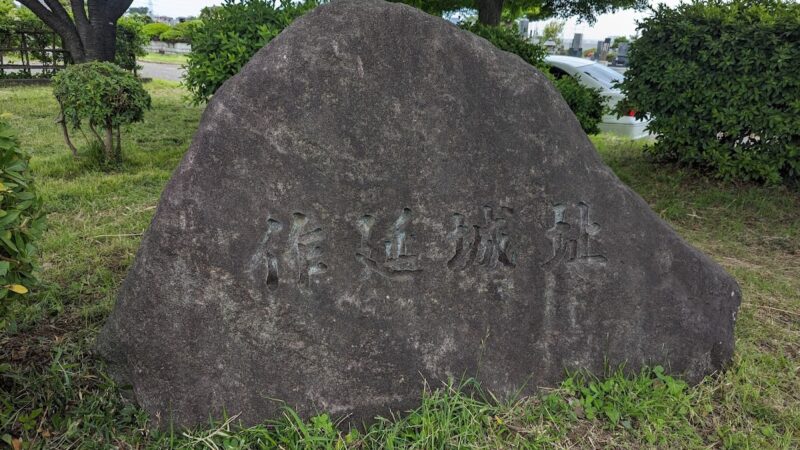
Located in Midori Ward, Sagamihara City, Kanagawa Prefecture, Tsukui Castle is an important mountain castle built by the Hojo clan during the Sengoku period to defend against the Takeda clan of Kai Province. Built on a 375-meter-high mountain, this castle is highly regarded in castle research as a typical example of a “Negoya-style castle” with base camps arranged to the north and south. Currently, it is maintained as Kanagawa Prefectural Tsukui Lake Castle Mountain Park and is popular with a wide range of people, from history enthusiasts to mountain climbing and hiking lovers.
History of Tsukui Castle
From Construction to the Sengoku Period
There are various theories regarding the construction period of Tsukui Castle, but it is generally believed to have been built during the Kamakura period by the Tsukui clan, a branch of the Miura clan. However, it only clearly appears in historical records from the mid-1500s onward, when the Naito clan ruled as the castle lords.
Tsukui Castle is located in the northwestern part of Sagami Province, at a strategic point bordering Musashi and Kai Provinces. Its geographical location, facing the Sagami River and close to the Tsukui Highway leading to the Koshu Kaido, has long been considered a strategically important military location. This location was ideal not only as a transportation hub connecting the Kanto and Koshin regions, but also as a defensive base against invasions from the west.
Hojo Clan Rule and the Naito Clan
With the arrival of the Sengoku period, as the Later Hojo clan, based at Odawara Castle, developed into a powerful daimyo controlling Sagami and Musashi Provinces, Tsukui Castle also became an important branch castle of the Hojo clan. In the mid-16th century, the Hojo clan entrusted Tsukui Castle to the Naito clan, positioning it as a frontline castle against the Takeda clan, who ruled Kai Province to the west.
The Naito clan was treated as a highly important retainer of the Hojo clan, second only to the Matsuda clan, and marriage alliances were even formed between the two families, demonstrating the Hojo’s trust in them. The Naito clan, as lords of Tsukui Castle, governed the surrounding region and played a crucial role in the Hojo’s territorial management.
Confrontation with the Takeda Clan
In the late 16th century, as Takeda Shingen of Kai Province expanded his power, fierce conflicts raged between the Hojo and Takeda clans. Tsukui Castle, situated on the border between these two forces, became an extremely important defensive stronghold for the Hojo.
In preparation for Takeda invasions, Tsukui Castle’s defensive facilities were strengthened, and its function as a mountain castle was enhanced. Located on the route connecting Kai and Sagami Provinces, Tsukui Castle played a vital role in monitoring the Takeda army’s movements and preventing their invasion of Odawara Castle.
Fall of Tsukui Castle in 1590
In 1590, when Toyotomi Hideyoshi’s siege of Odawara began, Tsukui Castle was also caught in the flames of war. The forces of Torii Mototada and others, subordinates of Tokugawa Ieyasu, attacked Tsukui Castle, and after a fierce battle, the castle fell.
In this battle, the castle lord, the Naito clan, was killed, marking the end of Tsukui Castle’s Sengoku period. With the fall of the Odawara Hojo clan, Tsukui Castle also disappeared from the stage of history.
Structure of Tsukui Castle
Typical of a Negoya-style Castle
The most distinctive feature of Tsukui Castle lies in its structure, which is considered the origin and typical example of a “Negoya-style castle.” A Negoya-style castle is a type of mountain castle where the main defensive facilities are located on the mountaintop, and facilities called “Negoya,” which served as living quarters and administrative offices during peacetime, are located at the foot of the mountain.
At Tsukui Castle, fortified residences were located on both the north and south sides of the castle hill, and these two residences supported the castle’s functions. Military facilities were concentrated on the mountaintop, while the fortified residences are thought to have housed the lord’s residence, the residences of retainers, and warehouses.
Layout of the Mountaintop
The mountaintop of the castle hill features multiple enclosures centered around the main keep (Honmaru). The Honmaru is located on the northwestern summit, and from there, a series of enclosures including the Taiko Enclosure, Iizuna Enclosure, and Takashiba (hawk archery range) extend southeastward.
The Honmaru was the center of the castle and the most important defensive stronghold. It was surrounded by earthen ramparts to prevent enemy intrusion. Each enclosure was positioned along the ridgeline, designed to function as an independent defensive unit.
Characteristics of Defensive Facilities
Tsukui Castle retains many defensive facilities characteristic of mountain castles. Of particular note are the dry moats and trenches. A moat (horikiri) is a trench dug to cut across a ridge, serving as an important defensive structure to hinder enemy advances. Multiple moats have been identified at Tsukui Castle, each serving to isolate its respective enclosure.
A dry moat (karabori) is a moat that does not hold water. Because securing water was difficult in mountain castles, such dry moats were frequently used. The dry moats at Tsukui Castle are large in scale and sufficiently deep, indicating their high defensive capabilities.
Earthen ramparts (dozui) are also important defensive structures. Built by piling up earth around the enclosures, these ramparts prevented enemy intrusion and also acted as a shield during attacks from within the castle. The earthen ramparts at Tsukui Castle remain well-preserved today, allowing us to imagine their appearance in the past.
Water Sources and Living Facilities
Securing water was a matter of life and death for mountain castles. Tsukui Castle had a water source facility called a “water source” near the mountaintop, ensuring a water supply even during sieges. Furthermore, a water reservoir called Takaragaike existed, playing a crucial role in maintaining the castle’s functionality.
On the mountaintop, there is a place called “Prison Valley,” and it has been suggested that it may have been used as a prison. The existence of such living and administrative facilities indicates that Tsukui Castle functioned not merely as a military facility, but as a base for regional control.
North and South Negoya (Base Camps)
The Negoya, located north and south at the foot of the mountain, are a distinctive feature of Tsukui Castle. The southern Negoya is believed to have housed the lord’s residence, while the northern Negoya is thought to have contained residences for retainers and storage facilities for supplies.
The Negoya functioned as the center of politics and administration during peacetime, and allowed for efficient castle management by providing a fortress on the mountaintop during times of conflict. This structure is highly valued in castle history research as an important example of the development of mountain castles during the Sengoku period.
Highlights of Tsukui Castle
Main Enclosure Site
Located on the northwestern summit of the castle mountain, the main enclosure site is the heart of Tsukui Castle and its most important highlight. From the 375-meter-high summit, you can enjoy a panoramic view of Lake Tsukui, the Sagami River, and the surrounding mountains, giving you a real sense of the castle’s strategic location.
The remains of earthworks are well-preserved around the main enclosure, allowing you to understand the original layout. Especially on clear days, you can see as far as the Tanzawa Mountains and even Mount Fuji, captivating visitors with its magnificent views.
Enclosure Groups
The group of enclosures, including the Taiko Enclosure, Iizuna Enclosure, and Takashiba, which stretch southeast from the main enclosure, are important remains for understanding Tsukui Castle’s defensive system. Each enclosure is arranged along the ridgeline and functioned as an independent defensive base.
Moats were constructed between the enclosures, creating a structure designed to gradually hinder enemy advances. By actually walking around these remains, you can experience the defensive thinking of mountain castles during the Sengoku period.
Moats and Dry Moats
Tsukui Castle has several moats and dry moats remaining, which are important points of interest as defensive structures of a mountain castle. The large moats, in particular, are dug in a way that completely cuts across the ridge, and their depth and width are overwhelming.
The dry moats are also well-preserved, and you can observe how they were dug deep in a V-shape. These defensive structures are valuable remains that demonstrate the high level of castle-building technology of the time.
Water Source and Takaragaike Pond
The water source remaining near the mountaintop is an important remains that shows the ingenuity of securing a water source in a mountain castle. Even today, it can be seen as a damp area, suggesting how important this water source was during a siege.
Takaragaike Pond is thought to have functioned as a water storage facility, and was an important facility that supported life in the castle. These water-related facilities are essential points of interest for understanding the practical aspects of mountain castles.
Site of the Negoya (Fortified Residence)
The northern and southern sites of the Negoya, remaining at the foot of the mountain, are important remains that explain why Tsukui Castle is considered a typical example of a Negoya-style castle. Although now developed as a park, the flat terrain and traces of the layout allow us to imagine the many buildings that once stood here.
In particular, the southern Negoya site retains the location believed to be the lord’s residence, and archaeological excavations have uncovered building foundations and artifacts such as pottery.
Development as Tsukui Lake Castle Mountain Park
Park Overview
The Tsukui Castle site is now almost entirely developed as Kanagawa Prefectural Tsukui Lake Castle Mountain Park. The park is divided into four areas: “Flower Garden,” “Water Garden,” “Negoya Area,” and “Shiroyama Area,” each with its own unique charm.
The Shiroyama Area corresponds to the main part of Tsukui Castle, and with walking paths and hiking trails, anyone can easily enjoy history and nature. The well-maintained paths make it easy to walk, and the mountain castle is easily accessible even in sneakers.
Hiking Courses
Tsukui Lake Castle Park offers several hiking courses, allowing you to choose one that suits your fitness level and available time. The most common course is the route from the park center to the main keep, which takes approximately two hours round trip.
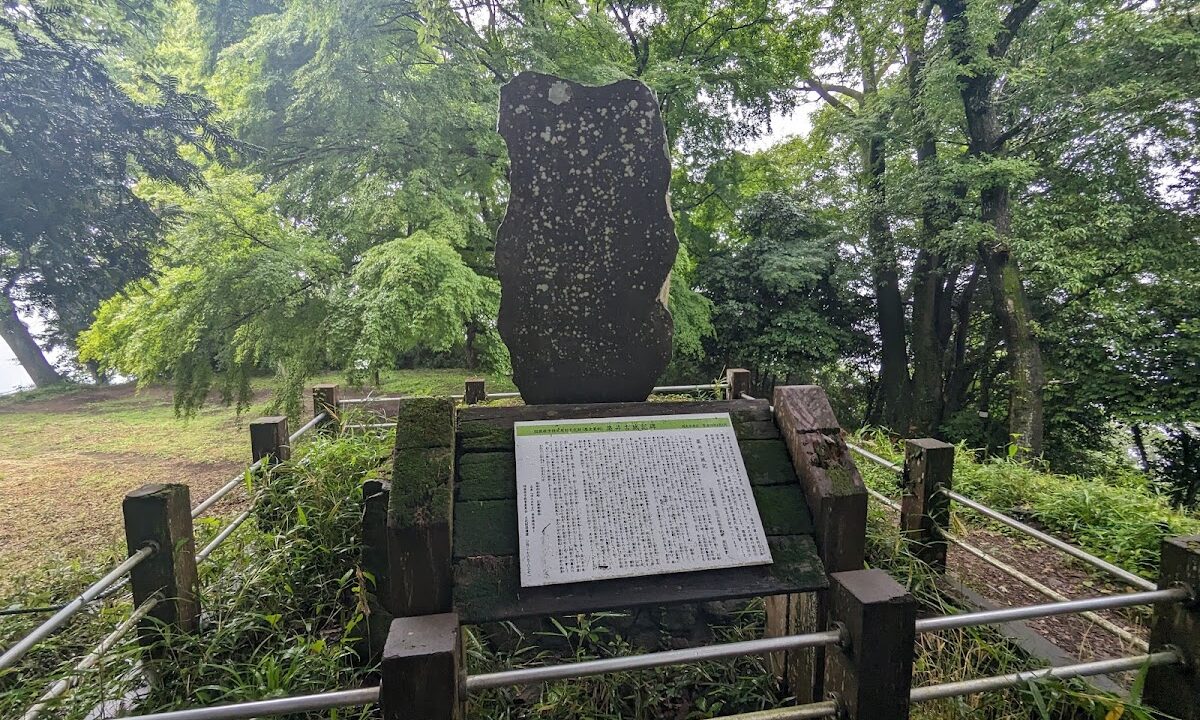
Information boards and explanatory signs are placed along the course, allowing you to learn about the castle’s history and remains as you climb. The beauty of nature throughout the seasons—cherry blossoms in spring, fresh greenery in early summer, and autumn leaves in fall—is another attractive feature.
Facilities and Access
The park has a park center where you can learn in detail about the history and structure of Tsukui Castle. The exhibition room displays artifacts unearthed during archaeological excavations and a reconstructed model of the castle. Visiting before your visit will allow you to gain a deeper understanding of Tsukui Castle.
Parking is also available, making it convenient to access by car. If using public transportation, take a bus from Hashimoto Station on the JR Yokohama Line, Sagami Line, or Keio Line and get off at “Tsukui Lake Tourist Center.” The park center is approximately a 15-minute walk from there.
Cultural Value of Tsukui Castle
Importance in the Study of Negoya-style Castles
Tsukui Castle occupies an extremely important position in the study of castle history as the origin and typical example of Negoya-style castles. Negoya-style castles represent a developmental form of mountain castles during the Sengoku period, and Tsukui Castle is a valuable example that clearly demonstrates this structure.
The structure, with Negoya (fortified residences) arranged north and south and military facilities concentrated on the mountaintop, enabled efficient castle management by differentiating the castle’s functions between peacetime and wartime. This structure had a significant influence on later mountain castle construction and was adopted in many castles, mainly in the Kanto region.
Excellent State of Preservation
The remains of Tsukui Castle are in an extremely good state of preservation for a mountain castle. Defensive structures such as moats, dry moats, and earthworks remain clearly visible, conveying the appearance of a mountain castle from the Sengoku period.
After ceasing to be used as a castle in the Edo period, it was used as forest land, thus avoiding large-scale development. Currently, it is properly managed as a park, and is being passed down to future generations as a valuable historical heritage site.
Archaeological Excavation Results
Multiple archaeological excavations have been conducted at Tsukui Castle, yielding many important discoveries. From the remains of the castle grounds, building foundations, post holes, pottery, and iron artifacts have been unearthed, providing valuable clues to the lifestyle of the time.
Furthermore, investigations at the mountaintop have revealed details of the enclosure structure and defensive facilities, providing new insights into the layout and construction techniques of Tsukui Castle. These research findings have greatly contributed to the study of castles from the Sengoku period.
Nearby Tourist Attractions
Lake Tsukui
Lake Tsukui, located immediately north of Tsukui Castle, is an artificial lake created by damming the Sagami River. A promenade is maintained along the lakeshore, allowing visitors to enjoy walks and cycling. In spring, cherry blossoms and in autumn, the vibrant autumn leaves are reflected on the lake’s surface, creating a beautiful landscape.
The Tsukui Lake Tourist Center offers local specialty products and dining options, making it an ideal stop in conjunction with a visit to Tsukui Castle.
Sagami Lake
Lake Sagami lies to the east of Lake Tsukui and is another popular tourist spot. Activities such as pleasure boats, boats, and canoes are available, and there are hot spring facilities on the lakeshore, perfect for relaxing after exploring Tsukui Castle.
Shiroyama Dam
The Shiroyama Dam, which forms Lake Tsukui, was completed in 1965 as a gravity-type concrete dam. Dam tours are available, allowing visitors to see the massive structure up close. The view from the dam is magnificent, offering panoramic views of Lake Tsukui and the surrounding mountains.
Tsukui Lake Memorial Hall
Near the Shiroyama Dam, the Tsukui Lake Memorial Hall offers insights into the dam’s construction and the history of the Sagami River. Furthermore, there are exhibits on the history and culture of the Tsukui region, which are helpful in understanding the historical background of Tsukui Castle.
Best Season and How to Enjoy Your Visit
Spring Cherry Blossoms
Tsukui Castle is known as a famous cherry blossom viewing spot in spring. Many cherry trees are planted within the park, reaching full bloom from late March to early April. The cherry tree-lined avenue in the Negoya area is particularly magnificent, attracting many visitors.
During cherry blossom season, the combination of the cherry blossoms reflected on Lake Tsukui and the castle mountain is beautiful, making it ideal for photography. Enjoying the cherry blossoms while hiking is a unique charm of Tsukui Castle.
Season of Fresh Greenery
The season of fresh greenery from May to June is also recommended for visiting Tsukui Castle. Young leaves sprout, and the entire mountain is enveloped in vibrant green. The weather is perfect for hiking during this time, allowing you to stroll through the castle ruins while enjoying the refreshing breeze.
Autumn Foliage
In autumn, Tsukui Castle captivates visitors with the beauty of its autumn leaves. From late October to mid-November, the maple and other trees change color, painting the entire mountain in shades of red and yellow. The reflection of the autumn leaves on Lake Tsukui is particularly beautiful, attracting many photography enthusiasts.
During the autumn foliage season, Tsukui Castle’s charm is at its peak, offering both historical exploration and nature appreciation.
Winter Silence
In winter, Tsukui Castle is less crowded, allowing visitors to quietly experience its history. The clear air makes the view from the mountaintop especially beautiful, with Mount Fuji and the Tanzawa mountain range clearly visible.
While snow accumulation is rare, you can enjoy a magical atmosphere on frosty mornings. With proper cold-weather gear, you can discover the unique charm of Tsukui Castle in winter.
Important Points When Visiting Tsukui Castle
Clothing and Equipment
Tsukui Castle is a mountain castle, so appropriate clothing and equipment are necessary when visiting. Wear comfortable sneakers or light hiking boots, and clothing that allows for easy movement. While the walking paths are well-maintained, they are still mountain trails, so it’s important to choose shoes with non-slip soles.
In summer, the sun is strong, so bring a hat, sunscreen, and plenty of water. Insect repellent is also useful. From autumn to winter, be sure to bring warm clothing.
Estimated Time Required
The standard course from the park center to the main keep and back takes approximately 2 hours. If you plan to carefully observe the remains and take photographs, allow about 3 hours.
If you plan to visit multiple baileys or explore the remains of the north and south base camps, it is recommended to allocate about half a day.
Safety Considerations
As this is a mountain castle, there are steep slopes and areas with uneven footing. Particular caution is needed during and after rain, as these areas become slippery. Climb at a pace that suits your physical condition and do not overexert yourself.
Visiting with multiple people is safer than visiting alone. Also, check your cell phone signal strength so that you can be contacted in case of emergency.
Tsukui Castle and the Kanto Region in the Sengoku Period
Hojo Clan’s Territorial Control
Tsukui Castle was one of the castles that played an important role in the Hojo clan’s territorial control. Within the Hojo clan’s network of branch castles centered around Odawara Castle, Tsukui Castle was positioned as a western defensive base.
The Hojo clan established many branch castles within their territory, each with powerful vassals to govern the region. The Naito clan, the lords of Tsukui Castle, played an important role in this branch castle system and contributed to the expansion of the Hojo clan’s power.
Conflict with the Takeda Clan
In the late 16th century, when Takeda Shingen of Kai Province attempted to expand into the Kanto region, a fierce conflict ensued between him and the Hojo clan. Tsukui Castle was located on the front lines between these two forces, becoming a crucial defensive stronghold to prevent the Takeda army’s advance.
During Takeda Shingen’s siege of Odawara in 1569, Tsukui Castle may have also been attacked by the Takeda army. During this period, the castle’s defensive facilities were strengthened, and its function as a mountain castle was enhanced.
The Siege of Odawara and the Fall of the Castle
The Siege of Odawara in 1590, led by Toyotomi Hideyoshi, was the final battle for the Hojo clan and Tsukui Castle. Forces under Tokugawa Ieyasu, including Torii Mototada and Hiraiwa Chikayoshi, attacked Tsukui Castle. The castle lord, the Naito clan, fiercely resisted, but the castle ultimately fell.
In this battle, Naito was killed, marking the end of Tsukui Castle’s Sengoku period. With the surrender of Odawara Castle and the fall of the Hojo clan, Tsukui Castle was abandoned and never used as a castle again.
Summary
Tsukui Castle is a Sengoku period mountain castle remaining in Sagamihara City, Kanagawa Prefecture, and holds high historical value as a typical example of a Negoya-style castle. It was a frontline castle considered crucial by the Hojo clan to prepare for the Takeda clan, and its robust defensive structures built on a 375-meter-high mountain are still well-preserved.
Currently, it is maintained as Kanagawa Prefectural Tsukui Lake Castle Mountain Park, with well-maintained walking and hiking trails, making it easily accessible to everyone. There are many points of interest, including the view from the main keep ruins, clearly remaining moats, dry moats, earthworks, and the remains of the Negoya (fortified residences) arranged north and south.
Tsukui Castle, where you can enjoy the beauty of nature throughout the seasons—cherry blossoms in spring, lush greenery in early summer, and vibrant autumn leaves—is an attractive place not only for history buffs but also for hikers and nature lovers. Be sure to visit Tsukui Castle, where you can stroll through beautiful nature while feeling the history of the Sengoku period.
Visiting it in conjunction with nearby tourist spots such as Lake Tsukui and Lake Sagami will make for a fulfilling day. Tsukui Castle, where you can experience the history and nature of Kanagawa Prefecture, is one of the representative mountain castles of the Kanto region and will undoubtedly continue to be cherished by many people for years to come.