Komatsu Castle (Sagamihara City, Kanagawa Prefecture) Complete Guide: A Thorough Explanation of the History and Remains of Hosenji Castle
Komatsu Castle, located in Kawajiri, Midori Ward, Sagamihara City, Kanagawa Prefecture, is a mountain castle built by the Hojo clan during the Sengoku period. Also known as “Hosenji Castle,” it functioned as an important relay point connecting Tsukui Castle and Hachioji Castle. Even today, the remains of moats and baileys are well-preserved, attracting attention from castle enthusiasts and history buffs.
Basic Information on Komatsu Castle
Komatsu Castle is a flatland castle built on the hillside behind Hosenji Temple, a Shingon Buddhist temple of the Koyasan sect, near 4562 Kawajiri, Midori Ward, Sagamihara City, Kanagawa Prefecture. Located on a hill approximately 280 meters above sea level, it is known as a mountain castle with a relative height of about 60 meters.
Location and Access
Location: Near 4562 Kawajiri, Midori-ku, Sagamihara City, Kanagawa Prefecture
Access Method:
- Approximately 15 minutes by car from Hashimoto Station on the JR Yokohama Line, Sagami Line, and Keio Sagamihara Line
- Approximately 10 minutes from Sagamiko IC on the Chuo Expressway
- It’s easy to find if you use Hosenji Temple as a landmark.
Parking: There is parking space for visitors within the grounds of Hosenji Temple, but consideration for the temple is necessary when visiting the castle ruins.
Estimated Time Required for Visiting: Allow approximately 60-90 minutes to stroll around the castle ruins. If you want to carefully observe the remains, it is recommended to allow about 2 hours.
Historical Background of Komatsu Castle
Construction Period and Builder
While there are no clear records of the construction period of Komatsu Castle, it is believed to have been built by the Odawara Hojo clan during the late 16th century, in the late Sengoku period. The Hojo clan built a vast power base in the Kanto region and established castles and fortresses throughout the area to maintain their control.
Komatsu Castle is presumed to have functioned as part of this defense network centered around Tsukui Castle. While historical records are scarce and the specific builder of the castle cannot be identified, it is considered highly likely that the Naito clan, lords of Tsukui Castle, or local lords who served the Hojo clan were involved.
Role as a Relay Point for the Hojo Clan
Komatsu Castle’s most important role was as a military and administrative relay point connecting Hachioji Castle and Tsukui Castle. During the Sengoku period, the Hojo clan constructed a “roadside castle network” for governing their territory, and Komatsu Castle was positioned as a crucial junction.
Relay Route: Hachioji Castle → Katakura Castle → Komatsu Castle → Tsukui Castle
Komatsu Castle is thought to have played a vital role along this route in information transmission, troop movement, and transportation of supplies. Tsukui Castle, in particular, was a key point in the Hojo clan’s control of northern Kanto, and Komatsu Castle functioned as its vanguard base. ### The Siege of Odawara and the Abandonment of the Castle
In 1590, during Toyotomi Hideyoshi’s Siege of Odawara, the Hojo clan’s network of branch castles was conquered one after another. Komatsu Castle was no exception. While it’s unclear whether there was any fighting during this period or if it surrendered peacefully, it’s believed that its role ended with the fall of the Hojo clan.
In the Edo period, Komatsu Castle was abandoned, completely losing its function as a military facility. Afterward, it was left as a forest, and the castle ruins have been preserved to this day.
The Layout and Structure of Komatsu Castle
Overall Layout
Komatsu Castle was built on a ridge extending east-west behind Hosenji Temple, exhibiting a typical mountain castle layout. The castle area measures approximately 200 meters east-west and 100 meters north-south, with five baileys (enclosures) arranged continuously along the ridge.
Each enclosure is clearly demarcated by a moat, and defensive measures are evident throughout. This structure can be described as a typical “renkukaku-shiki” (connected enclosure) layout for mountain castles of the late Sengoku period.
Features of the Main Enclosure (Honmaru)
The main enclosure, the heart of Komatsu Castle, is located slightly west of the center of the castle grounds. The main enclosure measures approximately 30 meters east-west and 20 meters north-south, making it relatively compact.
Highlights of the Main Enclosure:
- Watchtower Base: A clear watchtower base remains within the main enclosure, suggesting it was used as a lookout or command post.
- Flat Surface: The interior of the main enclosure is relatively flat, indicating the presence of buildings.
- Earthwork: Traces of earthworks can be seen in parts around the main enclosure, indicating the presence of defensive structures.
Moat Arrangement and Features
The greatest highlight of Komatsu Castle is its well-preserved moats. Multiple moats have been identified within the castle grounds. In particular, the two moats west of the main enclosure are well-preserved and are valuable remains for understanding the defensive techniques of the time.
Major Moats:
- First Moat West of Main Enclosure: A large moat approximately 4-5 meters deep and 8 meters wide.
- Second Moat West of Main Enclosure: Located west of the first moat, this moat is approximately 3-4 meters deep.
- Eastern Moat Group: Multiple moats are also located between the enclosures east of the main enclosure.
These moats were excavated to completely cut across the ridge, forming a strong defensive line to prevent enemy intrusion. They are still clearly visible as terrain features and are valuable remains that allow us to appreciate the castle-building techniques of the Sengoku period.
Arrangement and Function of Each Enclosure
Komatsu Castle has five enclosures centered around the main enclosure. Each enclosure is demarcated by moats, creating a tiered defensive system.
Layout of Enclosures (West to East):
- Western Enclosure Group: Two to three enclosures are located west of the main enclosure, preparing for invasions from the west.
- Main Enclosure: The central enclosure of the castle, equipped with a watchtower base.
- Eastern Enclosure Group: Two enclosures are located consecutively east of the main enclosure, responsible for eastern defense.
This layout indicates that Komatsu Castle had a defensive system designed to withstand attacks from both the east and west. The particularly strong defenses on the west side suggest a structure that may have been designed with the threat from the Hachioji area in mind.
Remains and Highlights of Komatsu Castle
Existing Major Remains
The following remains of Komatsu Castle are preserved in relatively good condition:
Civil Engineering Remains:
- Flat surfaces of five enclosures (kuruma)
- Multiple moats (particularly the two on the west side of the main enclosure are prominent)
- Watchtower base within the main enclosure
- Traces of partial earthworks
- Cut slopes (defensive structures created by vertically cutting the edges of enclosures)
- Traces of vertical moats (partially visible)
Vegetation and Topography:
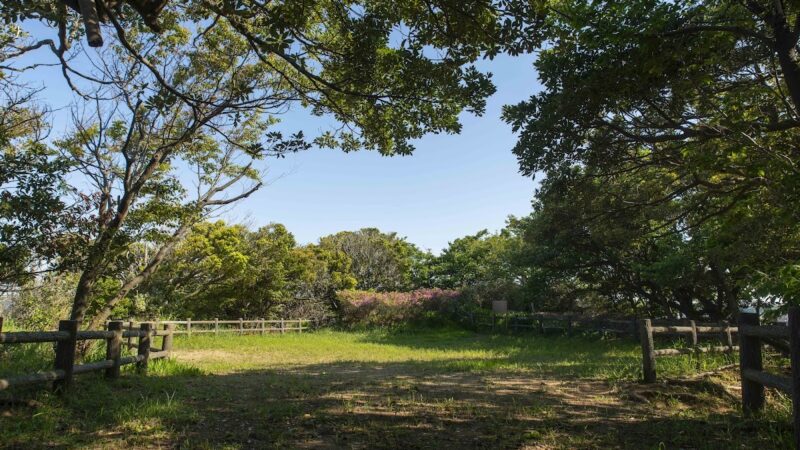
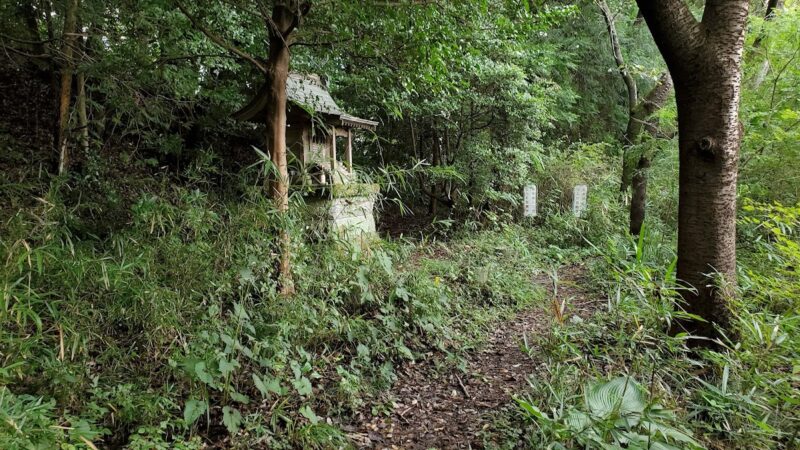
The current castle site is a mixed forest, and the remains are easier to observe, especially in winter when the leaves have fallen. However, in summer, the vegetation is dense, making it difficult to confirm the remains.
Points to Note and Highlights for Visiting
Clothing and Equipment:
- As it is a mountain castle, appropriate clothing and shoes for hiking are necessary.
- Insect repellent is recommended in summer, and long sleeves and long pants are recommended even in winter.
- Bring drinking water and a map (smartphone GPS function is also effective).
Highlights for Visiting:
- It is advisable to first pay your respects at Hosenji Temple and obtain permission from the temple to visit the castle ruins.
- Find the entrance to the ridge from behind the temple (be careful as there is no clear hiking trail).
- The two moats on the west side of the main enclosure are a must-see.
- By observing the relationship between the flat areas of each enclosure and the moats, you can understand the overall layout of the castle.
- You can also enjoy the view from the watchtower platform (however, the view is currently limited by trees).
Safety Precautions:
- Entering steep slopes or inside moats is dangerous.
- Avoid visiting alone; visiting with multiple people is recommended.
- Avoid visiting in bad weather.
- Please be considerate of private property and temple grounds, and observe proper etiquette during your visit.
Related Historical Sites and Castles in the Surrounding Area
Tsukui Castle (Midori Ward, Sagamihara City)
Located approximately 5 kilometers southwest of Komatsu Castle, Tsukui Castle is a mountain castle known as an important base for the Hojo clan. Built on a 375-meter-high mountain, Tsukui Castle was ruled by the Naito clan. Komatsu Castle is thought to have functioned as a branch castle and forward base for Tsukui Castle, and visiting both castles together provides a deeper understanding of the Hojo clan’s castle network.
Tsukui Castle is currently maintained as “Tsukui Lake Castle Mountain Park,” and with well-maintained hiking trails, it is more easily accessible than Komatsu Castle.
Hachioji Castle (Hachioji City, Tokyo)
Located approximately 15 kilometers northeast of Komatsu Castle, Hachioji Castle is a large mountain castle built by Hojo Ujiteru and is designated as a national historic site. This site is famous as the location of fierce fighting during Toyotomi Hideyoshi’s siege of Odawara.
Komatsu Castle was located on the route connecting Hachioji Castle and Tsukui Castle, and played a vital role in military and administrative communication. Visiting Komatsu Castle when you visit Hachioji Castle will allow you to experience the overall layout of the Hojo clan’s defensive line.
Katakura Castle (Hachioji City, Tokyo)
Katakura Castle, located midway between Hachioji Castle and Komatsu Castle, was also an important base on this communication route. Currently, it is maintained as Katakura Castle Ruins Park, a historical site rich in natural features and natural environment.
Other Castles in Sagamihara City
Besides Komatsu Castle, several other medieval castles exist in Sagamihara City:
- Okumakino Castle: A mountain castle located in the Tsukui area
- Fushimata Castle: One of the branch castles of Tsukui Castle
- Matano Castle: A flatland castle in the Sagami River basin
- Yabe Castle: A castle site located in the Chuo Ward of Sagamihara City
- Isobe Castle: The site of a castle site in the Minami Ward of Sagamihara City
By visiting these castle sites, you can understand the medieval history and the realities of regional governance in the Sagamihara area.
Relationship between Hosenji Temple and Komatsu Castle
History of Hosenji Temple
Hosenji Temple, which serves as the entrance to Komatsu Castle, is a temple of the Koyasan Shingon sect. While its founding date is unclear, it may have existed since the medieval period. The relationship between castles and temples was a common arrangement during the Sengoku period (Warring States period), where temples sometimes functioned as part of the castle or were protected as the lord’s family temple.
Regarding the relationship between Komatsu Castle and Hosenji Temple, it is possible that there was some connection as the temple was located at the foot of the castle, but no specific historical records have been confirmed.
Manners for Visiting the Temple and Castle Ruins
Hosenji Temple is still a temple that functions as a place of worship. When visiting the castle ruins, please observe the following manners:
- Behave quietly within the temple grounds
- If possible, inform the temple in advance that you intend to visit the castle ruins
- Follow the temple’s instructions regarding parking
- Be considerate of other visitors
- Always take your trash with you
Historical Evaluation and Research Status of Komatsu Castle
Academic Evaluation
Komatsu Castle is an important historical site for understanding the Hojo clan’s castle network, but large-scale archaeological excavations have not been conducted, and academic research is limited. However, because the remains are well-preserved, new insights may be gained through future research. The site is recognized for its academic value in the following respects:
- An example illustrating the actual role of a relay point in the Hojo clan’s network of branch castles
- Remains demonstrating the construction techniques of mountain castles in the late Sengoku period
- A good example of a defensive system centered on moats
- A historical site contributing to the elucidation of the realities of the Sengoku period in regional history
Preservation Status and Challenges
The Komatsu Castle site is currently private land (forest) without any special protective measures in place. Therefore, the following challenges exist:
Preservation Challenges:
- Lack of public protection due to not being designated a historical site
- Potential for the remains to become unclear due to overgrown vegetation
- Risk of land development
- Insufficient public awareness
Future Prospects:
- Activities to raise awareness as a regional historical asset
- Consideration of cultural property designation by Sagamihara City
- Surveys and documentation by local history enthusiasts and castle researchers
- Development of an appropriate preservation and management plan
Advice for Castle Fans Visiting Komatsu Castle
Guide for Castle Beginners
Komatsu Castle is a full-fledged mountain castle, so it may be somewhat difficult for beginners visiting castles. First-time visitors should note the following:
Preparation:
- Prepare a topographic map or a GPS app in advance.
- It is recommended to go with someone who has experience visiting mountain castles.
- Choose a day with good weather (avoid rainy days or the period after rain).
- Visiting in winter (November to March) is ideal for observing the remains.
Viewing Flow:
- Visit Hosenji Temple and confirm the entrance to the castle ruins.
- View the eastern group of enclosures in order.
- Observe the main enclosure and the watchtower base.
- Focus on the two moats west of the main enclosure.
- Check the western group of enclosures.
- Descend while understanding the overall layout.
Observation Points for Advanced Visitors
Those with a deep understanding of castle research can gain a deeper understanding by conducting the following detailed observations:
Layout Analysis:
- Differences in depth, width, and shape of each moat and their defensive intentions.
- Functional division of labor inferred from the area and arrangement of the enclosures.
- Evaluation of defensive capabilities based on the angle and height of the cliff face
- Presence and placement of vertical moats (observation of the slope)
- Estimation of the location and structure of the entrance (gateway)
Comparative Study:
- Similarities and differences in the layout of Komatsu Castle with Tsukui Castle and Hachioji Castle
- Comparison with other Hojo clan branch castles of the same period
- Comparison of regional characteristics with mountain castles in the Kanto region
Recording Method:
- Creation of a layout map (comparison with existing drawings)
- Recording of remains using photographs
- Recording of accurate location information using GPS
- Acquisition of survey data (to the extent possible)
History of Komatsu Castle and Sagamihara City
Medieval History of the Sagamihara Region
In the medieval period, the Sagamihara area was under the influence of the Kamakura and Muromachi Shogunates, yet it was a region where local lords and powerful samurai groups vied for power. Entering the Sengoku period, it became the stage for the conflict between the Uesugi and Hojo clans vying for hegemony in the Kanto region, and was ultimately incorporated under the control of the Hojo clan.
History of Komatsu Castle and Sagamihara City
Medieval History of the Sagamihara Region
In the medieval period, the Sagamihara area was under the influence of the Kamakura and Muromachi Shogunates, but was also a region where local lords and powerful samurai groups held sway. During the Sengoku period, it became the stage for the conflict between the Uesugi and Hojo clans vying for hegemony in the Kanto region, and was ultimately incorporated under the control of the Hojo clan. The late 16th century, when Komatsu Castle was built, was a period when the Hojo clan controlled most of the Kanto region and began to seriously manage their territory. During this time, the Hojo clan built numerous fortresses within their domain, establishing a military and administrative network.
Strategic Importance of the Tsukui Region
Komatsu Castle is located in Midori Ward, Sagamihara City (formerly Tsukui District), in the inland part of Sagami Province, a strategically important location close to the transportation route to Kai Province (Yamanashi Prefecture). For the Hojo clan, the Takeda clan of Kai was one of their greatest threats, making the defense of this region extremely important.
The defensive line centered on Tsukui Castle served to prepare for invasions from the Kai direction and also played a role in securing the communication route from Hachioji to Odawara. Komatsu Castle was a crucial base that played a vital role in this defense system.
Modern Sagamihara City and Castle Ruins Preservation
Sagamihara City is the third largest city in Kanagawa Prefecture, with a population of approximately 720,000, and became a designated city in 2010. The city is comprised of three wards: Midori Ward, Chuo Ward, and Minami Ward. Midori Ward, where Komatsu Castle is located, is in the northern part of the city and is a region rich in natural beauty.
Sagamihara City has several medieval castles, including Komatsu Castle, but many castle ruins have been lost due to urbanization. On the other hand, some castle ruins, such as Tsukui Castle, have been developed into parks and are popular with citizens.
Currently, there are no active preservation efforts for Komatsu Castle, but it is hoped that its recognition as a regional historical asset will increase, leading to its future preservation and utilization.
Nearby Sightseeing to Enjoy Alongside a Visit to Komatsu Castle
Tsukui Lake Castle Mountain Park
A vast park including the Tsukui Castle ruins, where you can enjoy nature throughout the seasons. The park center features exhibits where you can learn about the history of Tsukui Castle and the nature of Sagamihara City. Visiting before or after your Komatsu Castle tour will deepen your understanding.
Sagami Lake
Located in Sagamiko Town, adjacent to Sagamihara City, this artificial lake is a popular tourist destination. You can enjoy boating, fishing, and exploring the surrounding nature. It’s about a 15-minute drive from Komatsu Castle.
Sagami River Nature Village Park
This nature park stretches along the Sagami River, offering camping, barbecues, and river activities. It’s a great place to refresh yourself in nature and recover from the fatigue of visiting castle ruins.
Fujino Art House
Located in the Fujino area of Midori Ward, Sagamihara City, this experiential cultural facility offers creative workshops such as pottery and glassblowing. Enjoy a cultural experience different from visiting castle ruins.
Summary: The Charm and Significance of Visiting Komatsu Castle
Komatsu Castle (Sagamihara City, Kanagawa Prefecture) is a mountain castle built by the Hojo clan during the Sengoku period, possessing the following charms and historical value:
Charms of Komatsu Castle:
- Well-preserved remains such as moats and baileys
- Role as a relay point in the Hojo clan’s castle network
- A layout that allows you to experience the mountain castle construction techniques of the Sengoku period
- Relatively accessible location (close to Sagamihara city center)
- A quiet mountain forest environment where you can reflect on history
Significance of Visiting:
Visiting Komatsu Castle is not simply about seeing the castle ruins, but also a valuable opportunity to learn about the regional history of the Sengoku period, the Hojo clan’s territorial management, and the castle construction techniques of the time. Furthermore, visiting it together with Tsukui Castle and Hachioji Castle allows you to understand the overall picture of the Hojo clan’s defense line.
For castle enthusiasts and history buffs, Komatsu Castle is a historical site worth visiting as a “hidden gem.” While it hasn’t been heavily commercialized as a tourist destination, this is precisely what makes it so appealing—the opportunity to observe the ruins in a tranquil environment.
When you visit Sagamihara City, be sure to stop by Komatsu Castle and experience the historical romance of the Sengoku period. With proper preparation and consideration, your visit will surely become an unforgettable historical adventure.