Tsuchizawa Castle (Iwate Prefecture) Complete Guide | History and Remains of a Border Defense Base of the Nanbu Domain
Tsuchizawa Castle, located in Tsuchizawa, Towa-cho, Hanamaki City, Iwate Prefecture, is a flatland castle built in the early Edo period by the Nanbu clan to defend the border with the Date clan. Currently, it is maintained as Tateyama Park, and the remains such as earthworks and baileys are well-preserved. This article provides a detailed explanation of Tsuchizawa Castle’s history from its construction to its abandonment, its castle structure, the remains that can be seen today, and tourist information.
Basic Information on Tsuchizawa Castle
Tsuchizawa Castle is a flatland castle built on a hill 170 meters above sea level with a relative height of 70 meters. Located at a strategic point overlooking Tsuchizawa, a post town that flourished on the Kamaishi Highway, it played an important role in monitoring the border between the Nanbu and Date domains.
Location: Tsuchizawa, Towa-cho, Hanamaki City, Iwate Prefecture
Castle Type: Hilltop Castle
Year of Construction: Keicho 17 (1612)
Builder: Nanbu Toshinao
Main Lord: Esashi Clan
Year of Abandonment: Kanbun 10 (1670)
Remains: Earthworks, baileys, moats, wells
Designation: Hanamaki City Historic Site
Historical Background of Tsuchizawa Castle Construction
Border Dispute Between the Nanbu and Date Clans
The construction of Tsuchizawa Castle was rooted in a long-standing border dispute between the Nanbu and Date clans. During the Keicho era, the Nanbu clan, who ruled the Morioka Domain, and the Date clan, who ruled the Sendai Domain, frequently engaged in skirmishes over the border between their domains. In particular, Ukiushi Castle, built by the Date clan in the southern part of Waga District, posed a threat to the Nanbu territory.
Construction in 1612
In 1612 (Keicho 17), Nanbu Toshinao, the first lord of the Morioka Domain, decided to build a castle in Tsuchizawa, near the border, as a defense against the Date clan. This location was a strategic point on the Kamaishi Road and ideally situated for monitoring the Sendai territory.
Nanbu Toshinao appointed Esashi Chosaku Takanao, who had served the Nanbu clan after the fall of the Kasai clan, as the first lord of the castle. Esashi Takanao was originally the lord of Shinbori Castle (Shinbori Manor), but moved to Tsuchizawa Castle and was granted a stipend of 1,700 to 2,000 koku.
Structure and Layout of Tsuchizawa Castle
Arrangement of Main and Secondary Enclosures
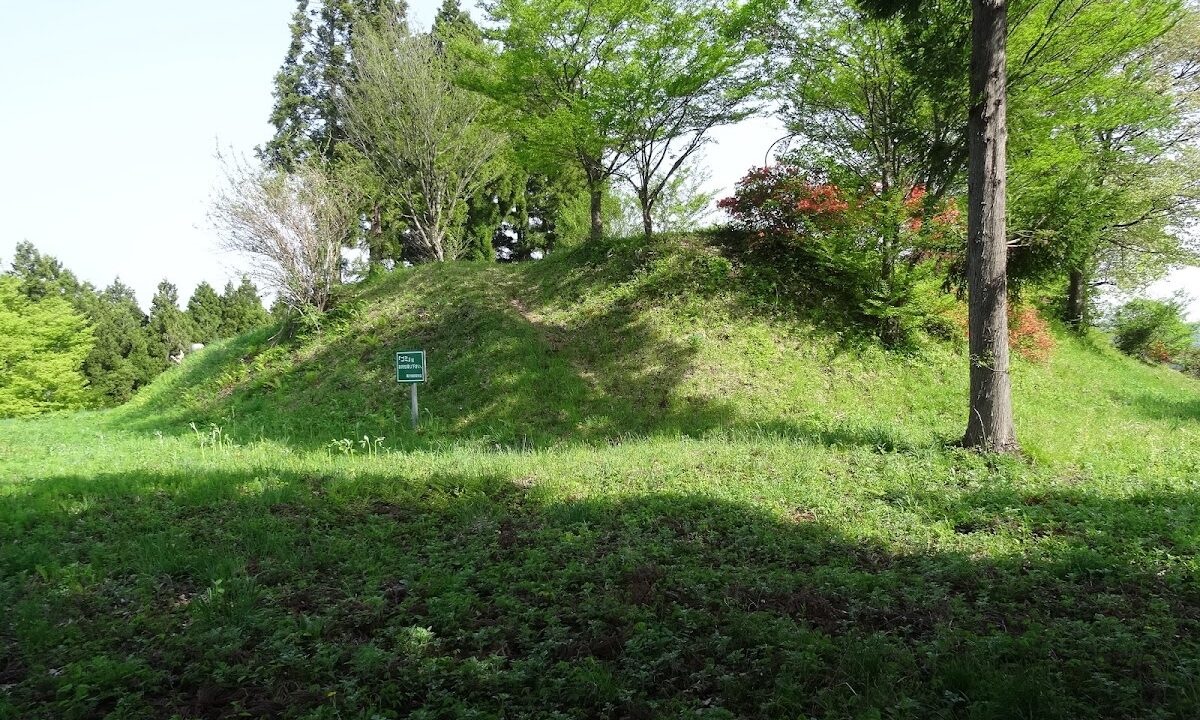
Tsuchizawa Castle has a terraced layout, with the main enclosure (honmaru) created by leveling the top of a hill, and multiple enclosures arranged around it. The area currently developed as Tateyama Park roughly corresponds to the castle grounds.
The main enclosure measured approximately 80 meters east-west and 60 meters north-south, and was surrounded by earthen ramparts. Secondary enclosures were located to the north and east of the main enclosure, forming a defensive line utilizing the elevation differences.
Features of Defensive Structures
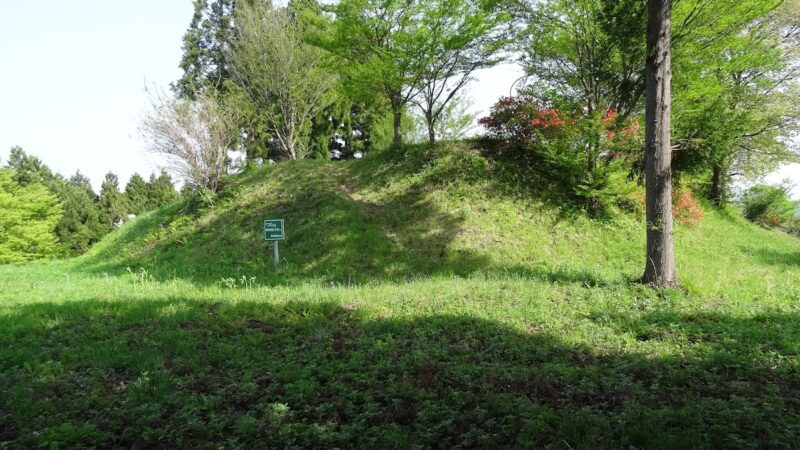
The most noteworthy defensive features of Tsuchizawa Castle are the well-preserved earthen ramparts and moats. The earthen ramparts surrounding the main enclosure are approximately 2-3 meters high and are particularly clearly visible on the south and west sides. The moats primarily functioned as dry moats, separating the enclosures.
Several wells were dug within the castle grounds, indicating consideration for securing a water source during sieges. Some well remains can still be seen today.
Entrance and Access Routes
It is believed that access routes to the castle were located on the south and east sides. The southern gate, in particular, features a staggered earthwork design, a clever way to prevent direct enemy advances.
The Rule of the Esashi Clan and the Role of Tsuchizawa Castle
The Seven Generations of the Esashi Clan’s Rule
From the first lord, Esashi Takanao, the Esashi clan ruled the Tsuchizawa area for seven generations. The Esashi clan not only played a military role as castle lords but also contributed to the development of Tsuchizawa as a town and a post town on the Kamaishi Highway.
A merchant district formed below Tsuchizawa Castle, and commercial activity flourished. The foundation of the current townscape of Tsuchizawa was formed during this period.
Relationship with the Junikabura Yakata
The existence of the “Junikabura Yakata” (Twelve-Bullet Hall) is mentioned in historical documents as a facility related to Tsuchizawa Castle. It is thought to have functioned as a subsidiary or outpost of Tsuchizawa Castle, but there are various theories regarding its exact location, and research continues to this day. One theory suggests it was located near the Kaburahachiman Shrine.
Abandonment of the Castle and the Castle Path in Kanbun 10
Abandonment Due to the General Land Survey
In Kanbun 10 (1670), during a general land survey conducted by the Morioka Domain, Tsuchizawa Castle was officially abolished. This was a dismantling after only 58 years since its construction. During this period, the “One Castle Per Province” decree was being strictly enforced nationwide, and the Morioka Domain also began to consolidate castles other than Morioka Castle.
However, due to its important location on the border with the Date Domain, it was not completely abandoned.
Establishment of the Castle Path
Even after the castle’s abandonment, the Esashi clan remained in Tsuchizawa and established a governing office called “Jōnai Kōji” (Castle Path) to handle local administration. The Jōnai Kōji was located within or near the former castle grounds and functioned as both the Esashi clan’s residence and office.
The End of the Esashi Clan and Its Aftermath
The Family Dispute of 1781
In 1781 (Tenmei 1), a major family dispute occurred within the Esashi clan. While the detailed circumstances vary depending on the historical source, it is believed to have been an internal conflict involving disagreements among retainers and succession issues. As a result of this dispute, the Esashi clan was stripped of their domain (the family line was extinguished) by the Morioka Domain.
The rule of the Esashi clan, which had governed Tsuchizawa for approximately 170 years over seven generations since the first generation, Takanao, came to an end.
After the Meiji Restoration
After the Meiji Restoration, Tsuchizawa belonged to Waga District, and in 1889 (Meiji 22), with the implementation of the town and village system, Tsuchizawa Town was established. In 1954 (Showa 29), it merged with surrounding towns and villages to become Towa Town, and in 2006 (Heisei 18), it was incorporated into Hanamaki City, where it remains today.
The former castle site was cherished as a local symbol even after the Meiji era, and was developed into Tateyama Park during the Showa period.
Current Remains and Highlights
Development as Tateyama Park
Currently, the Tsuchizawa Castle site has been developed into Tateyama Park, a place of relaxation for citizens. Walking paths are maintained within the park, allowing visitors to enjoy strolling while viewing the castle remains.
In spring, it is known as a famous cherry blossom viewing spot, attracting many flower viewers. In autumn, the autumn foliage is beautiful, making it a spot where you can enjoy nature throughout the seasons.
Major Remains
Earthworks: The earthworks surrounding the main enclosure remain in good condition. The earthworks on the south and west sides are particularly high, allowing us to imagine the defensive structures of the time.
Enclosures: The difference in elevation between the main enclosure and the secondary enclosure is clearly visible, making it easy to understand the structure of the castle. The leveled areas of each enclosure are relatively flat, allowing us to imagine where buildings once stood.
Moat: Moats separating the castle enclosures can be seen in several places. While some sections are filled in, the cross-sectional shape indicates they were dry moats.
Well Remains: The well remains within the castle grounds demonstrate the importance of securing a water source during sieges. Some areas can still be identified as depressions.
Information Boards and Guides
Information boards explaining the history of Tsuchizawa Castle are installed within the park. They detail the castle’s construction, the rule of the Esashi clan, and its history after its abandonment, deepening your understanding of the castle grounds.
Tsuchizawa Town and Kabura Hachiman Shrine
Tsuchizawa as a Castle Town
The town of Tsuchizawa, spread out at the foot of Tsuchizawa Castle, flourished as a post town on the Kamaishi Highway during the Edo period. Even today, traces of the old townscape remain, allowing visitors to experience a historical atmosphere.
Tsuchizawa was also known as “Little Kyoto” and once prospered as a commercial center. During the Meiji era, Tsuchizawa Station opened, maintaining its position as a transportation hub.
Kabura Hachiman Shrine and Tsuchizawa Festival
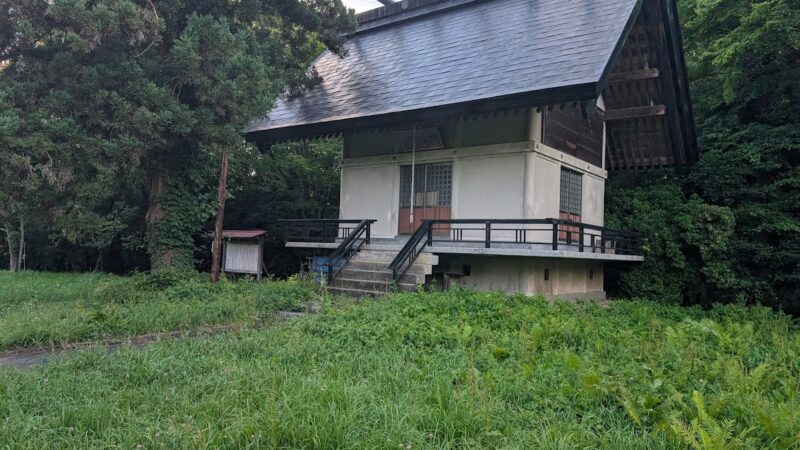
Kabura Hachiman Shrine has deep ties to Tsuchizawa Castle. This shrine has long been revered as the guardian shrine of Tsuchizawa.
The Tsuchizawa Festival, held every September, is the annual grand festival of Kabura Hachiman Shrine and boasts a history of approximately 300 years, dating back to the mid-Edo period. The sound of festival music and flutes announces the arrival of autumn, and the festival features a procession of portable shrines and floats. This festival is a valuable cultural heritage that conveys traditions from the time of Tsuchizawa Castle.
Castle Stamps and Castle Tours in Hanamaki City
Tsuchizawa Castle Stamp
In response to the recent castle boom, castle stamps for Tsuchizawa Castle are now issued. Castle stamps are sold at the Hanamaki City Museum and can be obtained for 300 yen (tax included) per stamp.
Sales Location: Hanamaki City Museum (26-8-1 Takamatsu, Hanamaki City, Iwate Prefecture)
Inquiries: 0198-32-1030
Opening Hours: 8:30 AM to 4:30 PM
Closed: December 28th to January 1st
Nanbu Castle Tour Project
Tsuchizawa Castle is one of the castles targeted in the “Nanbu Castle Tour” project. This project involves visiting castles associated with the Nanbu clan in Iwate Prefecture, and Tsuchizawa Castle is included along with Hanamaki Castle and Takamizudera Castle.
By visiting multiple castles, you can understand the overall picture of the Nanbu clan’s rule over their territory and the differences in the roles of each castle.
Access and Tourist Information
Access by Public Transportation
Train: Get off at Tsuchizawa Station on the JR Kamaishi Line, approximately 15 minutes on foot.
Tsuchizawa Station is the closest station to Tsuchizawa Castle, and the castle ruins are within walking distance from the station. The townscape of Tsuchizawa spreads out around the station, making for an enjoyable stroll.
Access by Car
Tohoku Expressway: Approximately 30 minutes from Hanamaki IC via National Route 283.
Tateyama Park has a parking lot, which is free to use. However, it may be full during peak seasons such as cherry blossom season.
Points to Note When Visiting
- Tateyama Park is always open and free to visit.
- The walking paths are well-maintained, but there are some steep slopes, so we recommend wearing comfortable shoes.
- Insect repellent is recommended during the summer months.
- Carefully reading the information boards will allow you to understand the history more deeply.
Nearby Tourist Attractions
Hanamaki City Museum: You can obtain a castle stamp for Tsuchizawa Castle and learn about the history of Hanamaki comprehensively.
Takamura Kotaro Memorial Museum: This is the place where the poet and sculptor Takamura Kotaro spent his post-war years.
Miyazawa Kenji Memorial Museum: This museum showcases the achievements of the great poet and children’s author born in Hanamaki.
Historical Significance of Tsuchizawa Castle
Tsuchizawa Castle, located on the border between the two major powers, the Nanbu and Date clans, is a border castle that symbolizes the political situation in the Tohoku region during the early Edo period. Although its history as a castle lasted only 58 years, its continued role as a center of regional governance, with its inner perimeter serving as a narrow thoroughfare, speaks to the strategic importance of the area.
Currently, the remains are protected as a city historical site, serving as a valuable cultural asset that conveys the region’s history. The fact that its historical value has been preserved without diminishing, while it remains a popular park for citizens as Tateyama Park, is a good example of cultural property preservation.
By visiting Tsuchizawa Castle, you can learn about the multifaceted history of the Nanbu Domain during the Edo period, including its border defense strategy, its methods of local governance, and the role the castle continued to play in the region even after its abandonment. When planning a tour of castles in Iwate Prefecture, be sure to include Tsuchizawa Castle in your itinerary.