Complete Guide to Hanamaki Castle (Iwate Prefecture): From Toriyagasaki Castle to a Key Point in the Morioka Domain, a Thorough Explanation of History and Highlights
Located in the heart of Hanamaki City, Iwate Prefecture, Hanamaki Castle is a castle that once flourished as an important base protecting the southern edge of the Morioka Domain. Formerly known as Toriyagasaki Castle, it played a central role in the development of the Hanamaki region as rulers shifted from the Hienuki clan to the Nanbu clan. This article comprehensively explains everything a castle enthusiast and history buff would want to know, from the history of Hanamaki Castle and its highlights to access information.
History of Hanamaki Castle: From Toriyagasaki Castle to Hanamaki Castle
The Hienuki Clan Era: The Establishment of Toriyagasaki Castle
The origins of Hanamaki Castle are said to date back to the Zenkunen War (1051-1062) in the late Heian period. It is said that Abe Yoriyoshi, a powerful local lord from Oshu, built a fortified residence in this area at that time.
History of Hanamaki Castle: From Toriyagasaki Castle to Hanamaki Castle
The Hienuki Clan Era: The Establishment of Toriyagasaki Castle
The origins of Hanamaki Castle are believed to date back to the Zenkunen War (1051-1062) in the late Heian period. Later, in the mid-16th century, the Hienuki clan, who ruled this region, built Toriyagasaki Castle and made it their residence. The Hienuki clan was a local powerful family that ruled the Hienuki region from the Muromachi period to the Sengoku period, maintaining their power from Toriyagasaki Castle.
The castle was built on a strategically advantageous location, cleverly utilizing the terrain surrounded by four rivers: the Kitakami River, Toyosawa River, Segawa River, and Sarugaishi River. It boasted a size of approximately 500 meters north-south, 700 meters east-west, and a total area exceeding 200,000 square meters.
Toyotomi Hideyoshi’s Pacification of Oshu and the Entry of the Nanbu Clan
In 1590 (Tensho 18), Toyotomi Hideyoshi carried out the Odawara Campaign and the Pacification of Oshu. At this time, the Hienuki clan refused to respond to Hideyoshi’s request for troops, and after the war, their territory was confiscated and they were dispossessed of their domain.
In 1591 (Tensho 19), this area came under the control of the Nanbu clan, and Kitahidechika, a retainer of Nanbu Nobunao, entered the castle as its castellan. At this time, the castle’s name was changed from “Toriyagasaki Castle” to “Hanamaki Castle,” and the place name was also changed to Hanamaki.
Recent archaeological excavations have revealed that large-scale renovation work, including the construction of stone walls and the strengthening of earthworks and moats, was carried out from the late 16th to the early 17th century. This is important evidence of the Nanbu clan’s modernization of the castle.
Edo Period: As the Residence of the Hanamaki County Magistrate of the Morioka Domain
During the Edo period, Hanamaki Castle functioned as an important base located at the southern end of the Morioka Domain. It served as the residence of successive Hanamaki County Magistrates, playing a crucial role not only as a military stronghold but also as a management center for the granary region.
In particular, during the Battle of Sekigahara in 1600 (Keicho 5), the “night attack on Hanamaki Castle” occurred here. This incident has become a legend among locals and residents of Iwate Prefecture, and is an indispensable episode when discussing the history of Hanamaki Castle.
Throughout the Edo period, Hanamaki developed as a castle town, and land and sea transportation also flourished. The town’s foundation was laid by Kitamatsu Sai, the castle lord, and the prototype of the current Hanamaki city center was formed.
After the Meiji Restoration: Dismantling of the Castle and Preservation as a Historic Site
After the Meiji Restoration, Hanamaki Castle ceased to function due to the abolition of the feudal domains and the establishment of prefectures. In the early Meiji period, many of the castle’s structures were demolished, leaving only parts of the stone walls and earthworks.
In the Showa era, the site of the main keep was developed into a park, transforming it into a place of relaxation for citizens. Currently, the site of the main keep of Hanamaki Castle is a designated historical site of Hanamaki City and is protected as an important historical heritage of the region.
Structure and Layout of Hanamaki Castle
A Robust Defensive System Utilizing the Topography
The greatest feature of Hanamaki Castle lies in its defensive system that skillfully utilizes the natural terrain. The castle was built on a river terrace surrounded by the Kitakami River and its tributaries, the Toyosawa River, Segawa River, and Sarugaishi River, with these rivers serving as natural moats.
The castle measured approximately 500 meters north-south and 700 meters east-west, covering a vast area of over 200,000 square meters. Within this expansive grounds were the Honmaru (main enclosure), Ninomaru (second enclosure), and Sannomaru (third enclosure), each separated by earthen ramparts and moats.
Structure of the Honmaru
The Honmaru was the central section of the castle, housing the lord’s residence and other important buildings. It was surrounded by high earthen ramparts, and it is believed that several watchtowers were located there.
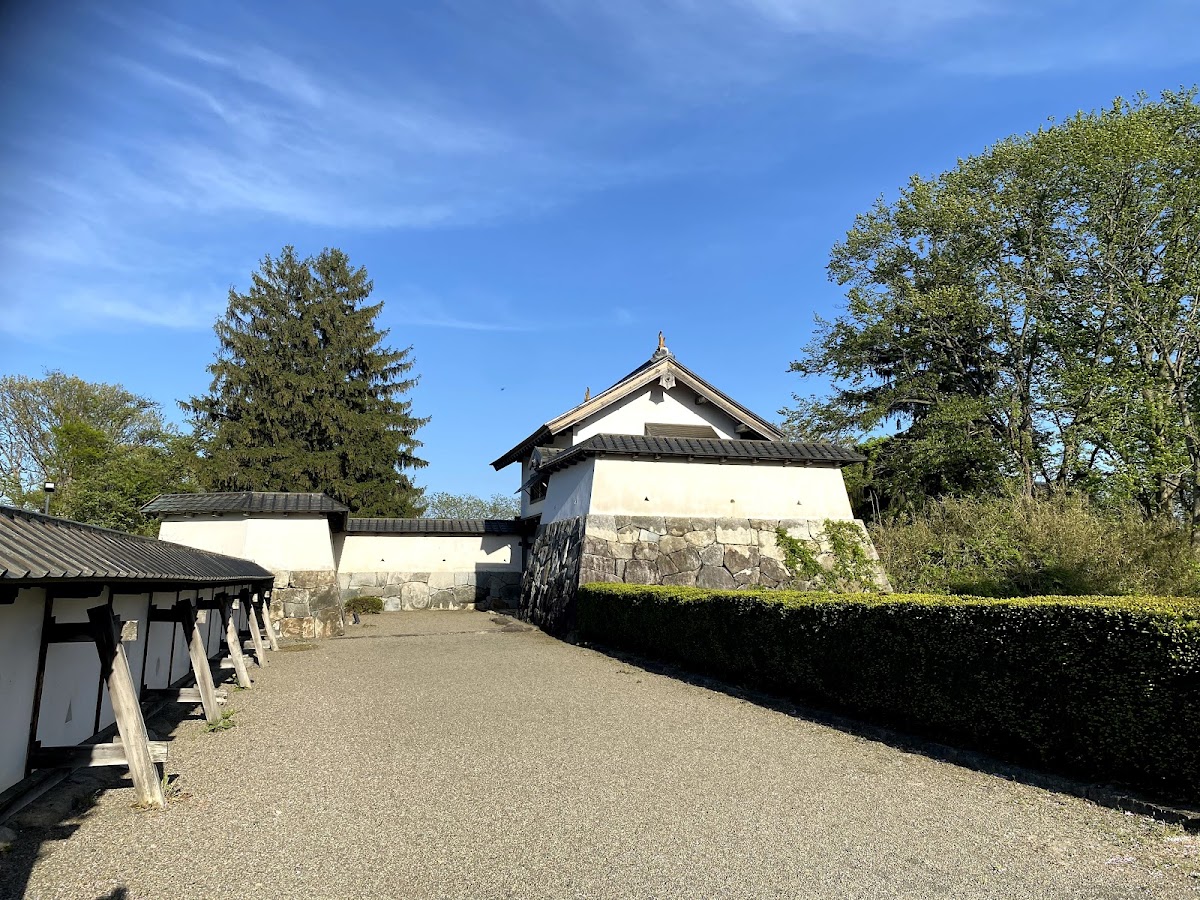
A fortified gate served as an entrance to the Honmaru, with the Nishi-Gomon (West Gate) being a particularly important entrance. Currently, this Nishi-Gomon has been restored, allowing visitors to imagine the castle gate’s appearance in its heyday.
Stone Walls and Earthworks
Excavation surveys have confirmed that stone walls were used at Hanamaki Castle. It is believed that the stone walls were constructed during renovations by the Nanbu clan in the late 16th to early 17th centuries to give the castle the appearance of a modern fortress.
Earthworks were also an important defensive feature of the castle. The earthworks surrounding the main keep and the second keep reached several meters in height, forming a strong barrier to prevent enemy intrusion. Even today, some of the earthworks remain in good condition, allowing visitors to appreciate the scale of the castle at that time.
Highlights of Hanamaki Castle Ruins
Restored West Gate
The first thing you’ll see when visiting Hanamaki Castle Ruins is the restored West Gate. This gate was one of the main entrances to the main keep and was restored in the Showa era based on excavation surveys and historical documents.
Restored in a wooden turret gate style, the West Gate clearly exhibits the characteristics of Edo period castle gate architecture and is an important structure that allows us to imagine the former appearance of Hanamaki Castle. The area around the gate is lined with stone walls and earthworks, giving it a strong sense of its former castle status.
Park on the Main Enclosure Site
The main enclosure site is now a park, serving as a place of relaxation for citizens. From the spacious lawn, you can enjoy a panoramic view of Hanamaki city, and it’s easy to imagine the former castle lords gazing upon this same scenery.
Within the park, there are information boards explaining the history of Hanamaki Castle, allowing visitors to learn about the castle’s evolution and structure. In spring, cherry blossoms bloom, making it a popular spot for cherry blossom viewing.
Remaining Earthworks and Moat Traces
Around the main enclosure site, well-preserved earthworks from the Edo period remain. The earthworks, approximately 3-4 meters high, give a real sense of the castle’s defensive capabilities at the time.
Parts of the moat traces can also be seen. While much of it is now filled in, the topography allows us to discern the original moat layout. For castle enthusiasts, these remains offer the pleasure of imagining the castle’s layout from that era.
Stone Monuments and Information Boards
Within the castle ruins, several stone monuments and detailed information boards are installed, telling the history of Hanamaki Castle. In particular, a stone monument marking “Hanamaki Castle Ruins” stands at the site of the main keep, making it a popular spot for commemorative photos.
The information boards not only cover the castle’s history but also introduce new findings revealed by archaeological excavations, offering new discoveries with each visit.
Surrounding Historical Landscape
The area surrounding Hanamaki Castle ruins retains the atmosphere of a castle town. Streets that evoke the former samurai residences and merchant districts offer a glimpse into the past, and exploring these areas in conjunction with the castle ruins allows for a deeper understanding of Hanamaki’s history.
Historical Episodes Related to Hanamaki Castle
The Night Attack on Hanamaki Castle
During the Battle of Sekigahara in 1600 (Keicho 5), an incident known as the “Night Attack on Hanamaki Castle” occurred at Hanamaki Castle. This event is an important episode that has been passed down through generations among the people of Iwate Prefecture and the local community.
During the Battle of Sekigahara, Nanbu Toshinao, the lord of the Morioka domain, sided with the Eastern Army (Tokugawa forces), but there were also movements within his territory siding with the Western Army (Toyotomi forces). It is said that various maneuvers and military actions unfolded at Hanamaki Castle amidst this tense situation.
Development of the Castle Town by Kitashosai
In the early Edo period, Kitashosai, who served as the castle lord of Hanamaki, is known for his significant contributions to the development of Hanamaki. He reorganized the castle town’s layout and worked to promote commerce.
Thanks to Kitashosai’s policies, Hanamaki developed into the economic and cultural center of the southern part of the Morioka domain, forming the foundation of the current Hanamaki city center. His achievements are still highly regarded locally.
Access Information to Hanamaki Castle Ruins
Basic Information
Location: Jōnai, Hanamaki City, Iwate Prefecture
Designation: Hanamaki City Designated Historic Site (Main Enclosure Ruins)
Admission Fee: Free
Opening Hours: Always open (as it is maintained as a park)
Parking: Public parking available nearby
Access by Public Transportation
From JR Tohoku Main Line Hanamaki Station:
- Approximately 15 minutes on foot
- If using the bus, get off at the “Jōnai” bus stop.
From JR Kamaishi Line Hanamaki Airport Station:
- Approximately 10 minutes by taxi
From Shin-Hanamaki Station:
- Approximately 15 minutes by taxi
- Take a local bus to Hanamaki Station, then walk or take a bus.
Access by Car
From Tohoku Expressway Hanamaki IC:
- Approximately 10 minutes (approximately 5 km)
From Hanamaki Airport:
- Approximately 15 minutes (approximately 8 km)
When using a car navigation system, it is convenient to search for “Hanamaki Castle Ruins” or “Jonai, Hanamaki City, Iwate Prefecture.”
Parking Information
There are several public parking lots around the castle ruins. You can use the parking lot of Hanamaki City Hall or other nearby public facilities. However, it may get crowded during events, so it is recommended to visit with plenty of time to spare.
Tourist Attractions Around Hanamaki Castle Ruins
Hanamaki Onsenkyo (Hanamaki Hot Spring Village)
Located about 15 minutes by car from Hanamaki Castle Ruins, Hanamaki Onsenkyo is known as one of Tohoku’s leading hot spring resorts. There are several hot spring areas, including Hanamaki Onsen, Dai Onsen, and Matsukura Onsen, where you can relax and soothe your fatigue after visiting the castle ruins.
Miyazawa Kenji Memorial Museum
Hanamaki City is famous as the hometown of Miyazawa Kenji, a children’s author and poet. At the Miyazawa Kenji Memorial Museum, located about 20 minutes by car from Hanamaki Castle Ruins, you can learn in detail about Kenji’s life and works.
Hanamaki City Museum
Located within walking distance of the Hanamaki Castle ruins, the Hanamaki City Museum exhibits the history and culture of Hanamaki. It also houses materials related to Hanamaki Castle, and visiting it in conjunction with a tour of the castle ruins will allow you to gain a deeper understanding of Hanamaki’s history.
Marukan Building Grand Cafeteria
The Marukan Building Grand Cafeteria, beloved by Hanamaki residents as a soul food spot, is located about a 10-minute walk from the Hanamaki Castle ruins. Their famous “10-tiered soft-serve ice cream” is well worth trying and makes for a memorable sightseeing experience.
How to Enjoy the Hanamaki Castle Ruins
Enjoying the Scenery of the Four Seasons
The Hanamaki Castle ruins show different faces throughout the four seasons.
Spring: The cherry blossoms at the main keep site are in full bloom, making it a popular spot for cherry blossom viewing, attracting many citizens and tourists. The contrast between the cherry blossoms and the restored Nishigomon gate makes for an excellent photo opportunity.
Summer: Surrounded by lush greenery, the castle ruins exude a cool and refreshing atmosphere. Early morning or evening strolls are recommended. Autumn: The autumn foliage colors the castle ruins, deepening the historical atmosphere. The view of the autumn leaves from the earthen ramparts is exceptional.
Winter: The snow-covered castle ruins are enveloped in silence, evoking the harsh winters of the Sengoku and Edo periods.
Historical Walking Course
A walking course starting from the Hanamaki Castle ruins and visiting the surrounding historical spots is recommended. Walking from the castle ruins through the old castle town and visiting former samurai residences and temples and shrines allows you to imagine what Hanamaki was like in the Edo period.
The course takes about 2-3 hours, allowing you to enjoy a leisurely stroll while immersing yourself in history.
Photography Tips
Here are some recommended spots for taking photos of the castle.
- Front of the West Gate: You can capture the entire view of the restored turret gate.
- View of the City from the Main Enclosure: A spectacular viewpoint offering a panoramic view of Hanamaki city.
- Earthwork Ridge: The undulating contours of the remaining earthworks create beautiful lines.
- Cherry Blossoms and Castle Gate: While only available in spring, the combination of cherry blossoms and the West Gate offers a fantastic photo opportunity.
Obtaining a Castle Stamp
Castle stamps have become popular at castle ruins nationwide in recent years, and Hanamaki Castle also issues them. They can be purchased at tourist facilities and souvenir shops in Hanamaki City, so please be sure to get one as a memento of your visit.
Points to Note and Manners for Visiting Hanamaki Castle Ruins
Cooperation for Historical Site Preservation
Hanamaki Castle Ruins are a valuable historical heritage site. Please note the following points when visiting.
- Do not climb on earthworks or stone walls.
- Do not damage the remains.
- Always take your trash with you.
- Walk only on designated paths.
For Safe Visiting
- Wear appropriate footwear as the ground can be slippery on rainy or snowy days.
- Bring a hat and sunscreen as the sun is strong in summer.
- Be careful of snow and ice in winter.
Consideration for Local Residents
The castle ruins are adjacent to residential areas. Please refrain from loud conversations and visits in the early morning or late at night, and be considerate of the lives of local residents.
Historical Significance of Hanamaki Castle and Future Preservation Activities
Importance in Local History
Hanamaki Castle is an indispensable part of the history of southern Iwate Prefecture. The process of the change of rulers from the Hienuki clan to the Nanbu clan symbolized Toyotomi Hideyoshi’s unification of Japan and the reorganization of the Tohoku region.
Furthermore, as a military base located at the southern end of the Morioka Domain, it played an important role throughout the Edo period. The castle town that developed around Hanamaki Castle forms the foundation of present-day Hanamaki City and is an important element in shaping the region’s identity.
Archaeological Excavations and New Discoveries
Recent archaeological excavations have revealed a steady stream of new insights into Hanamaki Castle. In particular, the discovery of remains related to renovation work from the late 16th to early 17th centuries provides crucial clues to understanding the actual state of castle development by the Nanbu clan.
Detailed investigations are also underway regarding the structure of the stone walls, the construction techniques of the earthworks, and the layout of the moats, and it is expected that even more information will be obtained in the future.
Efforts for Preservation and Utilization
Hanamaki City is actively working on the preservation and utilization of the Hanamaki Castle ruins. Efforts are underway to create an environment where citizens and tourists can enjoy the castle ruins, including the development of a park on the main keep site, the restoration of the West Gate, and the installation of information boards.
Furthermore, the site is also used as a place for local history education, with efforts being made to pass on history to future generations through local history lessons and history lectures for elementary and junior high school students.
Future Prospects
Future plans include multifaceted initiatives such as further archaeological excavations, expanded restoration and maintenance, and information dissemination utilizing digital technology. Providing historical experiences using cutting-edge technologies, such as recreating the castle as it once was using VR and AR, is also being considered.
It is hoped that the Hanamaki Castle ruins will be passed down to future generations as a valuable cultural asset of the region and continue to be a place loved by many people.
Summary: The Value of Visiting Hanamaki Castle Ruins
Located in Hanamaki City, Iwate Prefecture, the Hanamaki Castle ruins are a historical castle that began as Toriyagasaki Castle and developed into an important base for the Morioka Domain during the Nanbu clan’s era. Currently, the main keep site has been developed into a park, and visitors can imagine its former appearance from the restored West Gate and remaining earthworks.
Hanamaki Castle, with its geographical features as a natural stronghold surrounded by four rivers, its history deeply intertwined with important turning points in Japanese history—such as the change of rulers during Toyotomi Hideyoshi’s pacification of Oshu and the night attack on Hanamaki Castle related to the Battle of Sekigahara—is a must-see spot for castle enthusiasts and history buffs.
Its excellent accessibility, being within walking distance of JR Hanamaki Station, and its ease of combining with nearby tourist attractions such as Hanamaki Onsen and the Miyazawa Kenji Memorial Museum, are also attractive features. Enjoying the beautiful scenery of the four seasons while reflecting on the history of Tohoku will surely be a memorable experience.
When you visit Hanamaki, be sure to visit the Hanamaki Castle ruins and experience the rich history and culture etched into this land.