Complete Guide to the History and Highlights of Tsuchiura Castle | A Thorough Explanation of the Existing Turret Gate and Restored Turrets in Kijo Park
What is Tsuchiura Castle? | A Flatland Castle Resembling a Turtle Floating on Water
Tsuchiura Castle is a flatland castle located in the center of Tsuchiura City, Ibaraki Prefecture, and is affectionately known as “Kijo” (Turtle Castle). Built on the waterfront near the mouth of the Sakuragawa River, which flows into Lake Kasumigaura, in an area formerly called Mukaegaura, this castle is known as a water castle protected by wide, double moats.
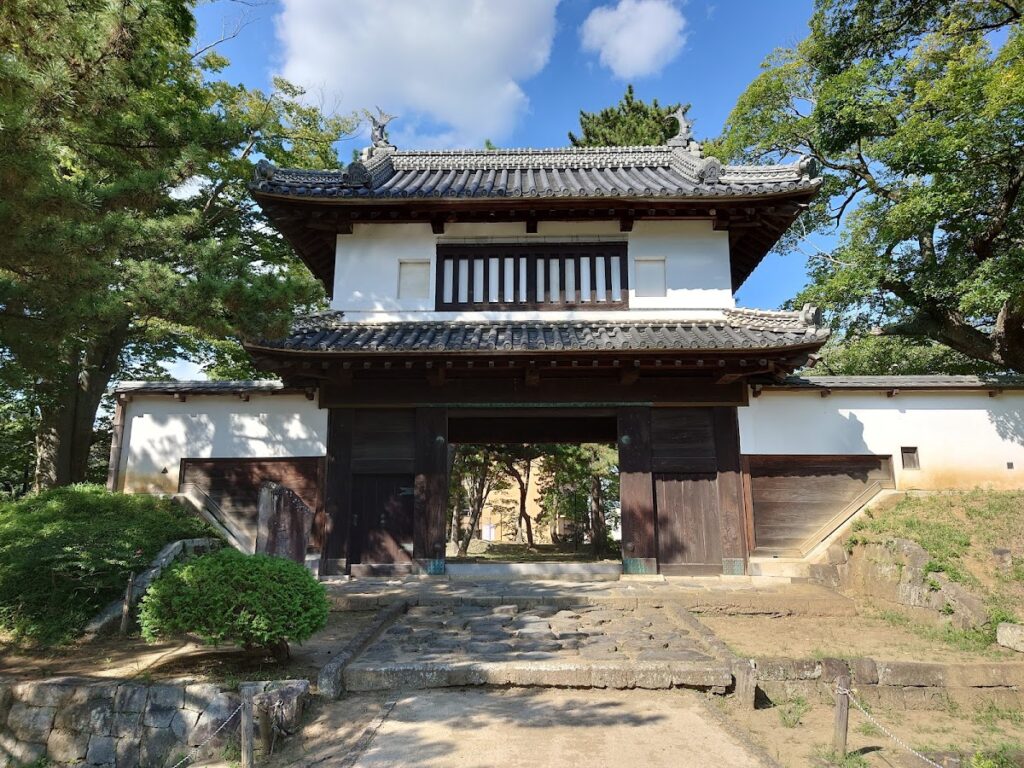
During the Edo period, the main keep was positioned within multiple layers of moats, and its appearance resembled a turtle floating on water, hence the nickname “Kijo” (Turtle Castle). Although a main keep was never built, the existing Taiko-yagura Gate and the restored East and West Turrets convey the castle’s former appearance.
Currently, the main and second baileys of Tsuchiura Castle have been developed into Kamejo Park, a place of relaxation for citizens. The Tsuchiura City Museum is located next to the park, making it an important historical site where visitors can learn about Tsuchiura’s history and culture.
History of Tsuchiura Castle | From the Muromachi Period to the Edo Period
From Construction to the Sengoku Period
There are various theories regarding the origin of Tsuchiura Castle, but legend says that Taira no Masakado built a fort there. However, it first appears clearly in historical records during the Eikyo era (1429-1441) of the Muromachi period, when it is believed to have been built by Wakazumi Saburo (also known as Imaizumi Saburo).
During the Sengoku period, the Sugaya clan, who were subordinates of the Oda clan, a powerful daimyo of Hitachi Province, used the castle as their residence. The Sugaya clan maintained their power base at Tsuchiura Castle, but during the turbulent Sengoku period, the castle’s lord changed hands from the Wakazumi clan to the Shinoda clan and then back to the Sugaya clan.
The Tensho Era Turmoil and the Change of Castle Lords
In 1590 (Tensho 18), during Toyotomi Hideyoshi’s siege of Odawara, Sugaya Norimasa, the lord of Tsuchiura Castle, allied himself with the Hojo clan, resulting in attacks by the forces of the Satake clan and Tokugawa Ieyasu. In this battle, the Sugaya clan, along with their lord the Oda clan, perished, and Tsuchiura Castle fell.
When Tokugawa Ieyasu was transferred to the Kanto region, Tsuchiura was given to Yuki Hideyasu, Ieyasu’s second son who had been adopted into the Yuki clan. Hideyasu was later transferred to Kitano-sho in Echizen (Fukui), and subsequently, Matsudaira Nobuichi of the Fujii Matsudaira family took up residence in Tsuchiura Castle.
Tsuchiura Castle and its Successive Lords in the Edo Period
During the Edo period, Tsuchiura Castle underwent gradual expansions and renovations, gradually taking on the form of a modern castle. The castle lords changed as follows:
- Yuki clan (Yuki Hideyasu)
- Matsudaira clan (Fujii Matsudaira family)
- Nishio clan
- Kutsuki clan
- Tsuchiya clan
- Matsudaira clan (Nobuoki)
- Tsuchiya clan (from Masanao until the end of the Edo period)
Of these, the Tsuchiya clan served as lords of Tsuchiura Castle twice, and especially from Tsuchiya Masanao onwards, the Tsuchiya clan ruled as feudal lords until the end of the Edo period. The Tsuchiura Domain had a rice yield of 95,000 koku, and developed into a relatively large domain in Hitachi Province.
The seventh lord, Tsuchiya Hidenao, established the domain school “Ikubunkan” within the castle grounds and focused on education. In 1839 (Tenpo 10), during the time of the tenth lord, Tsuchiya Toranao, Ikubunkan was rebuilt in its current location, becoming the center of learning in the Tsuchiura Domain.
From the Meiji Restoration to the Present
After the Meiji Restoration, Tsuchiura Castle was abandoned, and many of its buildings were demolished. However, the Taiko Yagura Gate miraculously escaped destruction and remains a valuable cultural asset as the only surviving turret gate in the Kanto region.
In the Showa era, the castle ruins were developed into a park and opened to the public as Kamejo Park. In the Heisei era, the East and West Turrets were restored, partially reviving the castle’s original appearance. Currently, it is designated as one of the Continued Top 100 Japanese Castles and is a popular tourist spot visited by castle enthusiasts and history buffs.
Structure of Tsuchiura Castle | A Flatland Castle Protected by Moats and Earthworks
Layout and Overall Structure
Tsuchiura Castle is a flatland castle built on the western estuary of Lake Kasumigaura. It is bordered by the Shinkawa River to the north and the Kami-numa and Shimo-numa marshes to the south, and is a typical water castle with multiple layers of moats surrounding the castle grounds. The basic structure of the castle is a concentric layout with the main keep (Honmaru) at the center, surrounded by the second and third baileys (Ninmaru and Sannomaru).
During the Edo period, the mouth of the Sakuragawa River was developed, and it flourished as a key point for water transport connecting Lake Kasumigaura, the Tone River, and the Edogawa River. This convenient water transport enhanced the strategic value of Tsuchiura Castle and contributed to the prosperity of the castle town.
Defensive System of Moats and Earthworks
The most distinctive feature of Tsuchiura Castle is its defensive system of wide, double moats. The inner and outer moats surrounded the main keep, making it difficult for attackers to penetrate. The water in the moats was drawn from the Sakuragawa River and Lake Kasumigaura, maintaining a constant water level.
Earthworks were built inside the moats, further enhancing its defensive capabilities. Walls were built on top of the earthworks, and turrets were placed at key locations. This structure allowed Tsuchiura Castle to function as a “fortress floating on water.”
Reasons Why No Keep Was Built
Tsuchiura Castle did not have a keep (Tenshu). This is thought to be related to the castle construction regulations of the Edo period, the topographical characteristics of a flatland castle, and the financial situation of the domain. Instead of a main keep, the Taiko Yagura Gate and various turrets functioned as symbols of the castle, serving both practical defense and demonstrating the domain’s prestige.
Highlights of Tsuchiura Castle | Existing Structures and Restored Turrets
Taiko Yagura Gate | The Only Existing Turret Gate in the Kanto Region
The greatest highlight of Tsuchiura Castle is undoubtedly the existing Taiko Yagura Gate. This turret gate was built during the Edo period and is a valuable structure that escaped destruction under the castle demolition decree after the Meiji Restoration. It is the only surviving turret gate in the Kanto region.
The Taiko Yagura Gate functioned as the main gate of the main enclosure and is a two-story turret gate. A drum was placed on the second floor of the turret, serving to announce the time and issue alarms in emergencies. Currently designated as an Ibaraki Prefecture Cultural Property, it is carefully preserved as a symbol of Tsuchiura Castle.
The turret gate is a two-story wooden structure built on top of a stone wall, featuring a hipped roof and tiled roofing. The pillars and beams showcase the architectural techniques of the time, making it an important resource for the study of castle architecture.
East Turret | Stamp and Castle Seal Hub
The East Turret is a two-story turret restored in 1991. Located on the east side of the main enclosure, it currently functions as an information center for Tsuchiura Castle. Here, you can obtain stamps for the Continued Top 100 Japanese Castles and castle seals, making it an important hub for castle enthusiasts.
Inside the East Turret, there are exhibits related to Tsuchiura Castle, allowing visitors to learn about the castle’s history and structure. From the second floor, you can also enjoy a panoramic view of Kamejo Park, giving you a real sense of the former scale of the castle.
West Turret | Defensive Base on the West Side of the Main Enclosure
The West Turret was restored in 1998 and is located on the west side of the main enclosure. It was positioned to complement the East Turret and played a crucial role in the defense of the main enclosure. The contrast between the white walls and black tiles is beautiful and is an important element that enhances the landscape of the park.
The West Turret is also a two-story structure, faithfully reproducing its original appearance. Along with the East Turret, it is an important structure that conveys the grandeur of Tsuchiura Castle to this day.
Kasumi Gate and Stone Walls
The Kasumi Gate (Kasumi-mon) functioned as the rear gate of the main enclosure and was named as such because it faced Lake Kasumigaura. Currently, the remains of the gate, along with the surrounding stone walls, convey the atmosphere of the past.
The stone walls of Tsuchiura Castle were built using relatively low-profile rough-hewn stonework and fitted stonework techniques, allowing us to see the changes in stonework technology from the early to mid-Edo period. The defensive system, combining moats, stone walls, and earthworks, is a valuable resource for learning about the construction techniques of flatland castles.
The Four Seasons of Kijo Park
The Tsuchiura Castle ruins, now developed as Kijo Park, showcase the beauty of each season. In spring, cherry blossoms bloom, making it a popular spot for cherry blossom viewing. In summer, the greenery deepens, and the reflection of the turret gate and turrets on the moat’s surface creates a refreshing scene. In autumn, the park is adorned with colorful autumn leaves, and in winter, the snow-covered castle ruins exude a tranquil atmosphere.
The park is small but well-maintained, making it an ideal space for strolling and relaxing. Benches are also provided, allowing visitors to slowly reflect on the castle’s history.
Tsuchiura City Museum | Learning about Tsuchiura’s History and Culture
Adjacent to Kijo Park is the Tsuchiura City Museum, a facility where you can learn in detail about the history of Tsuchiura Castle, the Tsuchiura Domain, and the development of the castle town. The permanent exhibition features models of Tsuchiura Castle, ancient documents, armor, and items related to the castle’s lords, allowing visitors to deepen their understanding of Tsuchiura Castle.
The exhibits, particularly those showing the castle’s history and its successive lords, are extensive, and visiting before or after exploring the castle will enhance your understanding. Special exhibitions are also held regularly, offering a multifaceted perspective on the region’s history and culture.
The museum building itself is designed to harmonize with the atmosphere of Tsuchiura Castle, making it well worth a visit in conjunction with exploring the castle ruins.
Access | How to Get to Tsuchiura Castle
Access by Train
Tsuchiura Castle is easily accessible by train. The nearest station is Tsuchiura Station on the JR Joban Line, approximately 50 minutes from Tokyo Station by express train and approximately 1 hour and 20 minutes by local train.
Tsuchiura Castle (Kijo Park) is approximately a 15-minute walk from the west exit of Tsuchiura Station. Leaving the station and heading west, cross National Route 6 and enter the city center where you’ll see signs. The road is relatively flat, allowing you to enjoy the atmosphere of a castle town as you walk.
If you’re short on time, you can also take a bus from Tsuchiura Station West Exit. Get off at the “Kijo Park-mae” bus stop on the Kanto Railway Bus, and you’ll arrive at the park entrance immediately.
Access by Car and Parking
If you’re visiting by car, it’s about 10-15 minutes from the Tsuchiura Kita IC or Sakura Tsuchiura IC on the Joban Expressway. Setting your car navigation system to “Kijo Park” or “Tsuchiura City Museum” is convenient.
There are several parking lots around Kijo Park:
- Kijo Park Parking: Free parking adjacent to the park (limited spaces)
- Tsuchiura City Museum Parking: Parking for museum visitors
- Nearby Coin Parking: Several paid parking lots are located in the city center.
Parking can get crowded on weekends and during cherry blossom season, so using public transportation is also recommended.
Map | Location and Surrounding Information of Tsuchiura Castle
Tsuchiura Castle is located in Chuo 1-chome, Tsuchiura City, Ibaraki Prefecture. Situated on the western shore of Lake Kasumigaura, near the mouth of the Sakuragawa River, it enjoys a favorable location for water transport and remains a thriving central area of Tsuchiura City today.
Address and Basic Information
- Address: 1-13 Chuo, Tsuchiura City, Ibaraki Prefecture
- Opening Hours: Always open (East Tower: 9:00 AM – 4:30 PM)
- Closed: East Tower: Mondays (or the following day if Monday is a public holiday), New Year holidays
- Admission Fee: Free
- Inquiries: Tsuchiura City Board of Education, Cultural Promotion Division
Nearby Tourist Attractions
There are other sights to see around Tsuchiura Castle:
- Tsuchiura City Museum: Comprehensively exhibits the history and culture of Tsuchiura
- Machikado Kura: A tourist information center utilizing an Edo-period storehouse
- Tsuchiura Machikado Kura “Daitoku”: A facility renovated from a Meiji-era storehouse
- Sakuragawa Embankment: A walking path lined with cherry trees in spring
- Lake Kasumigaura: Japan’s second-largest lake, perfect for cycling and strolling along the waterfront
These spots are within walking distance of Tsuchiura Castle, allowing you to enjoy Tsuchiura’s history and nature for half a day to a full day. ## The Charm of Tsuchiura Castle | Points of Interest to Castle Enthusiasts
Value as one of the Continued Top 100 Japanese Castles
Tsuchiura Castle was selected as one of the “Continued Top 100 Japanese Castles” by the Japan Castle Association in 2017. This selection recognized Tsuchiura Castle’s historical value, the preciousness of its existing Taiko Yagura Gate, and its unique characteristics as a water castle.
For castle enthusiasts, the stamp rally for the Continued Top 100 Japanese Castles is a major source of enjoyment. The Tsuchiura Castle stamp is located in the East Tower, attracting many castle fans.
A Typical Example of a Flatland and Water Castle
Tsuchiura Castle holds an important position in castle research as a typical example of a flatland and water castle. It showcases castle construction techniques from the transition period between the Sengoku period, when mountain castles were common, and the Edo period, when flatland castles became dominant.
In particular, you can learn about the characteristics of Edo-period flatland castles, such as the defensive system with wide double moats and earthen ramparts, the development of the castle town utilizing water transport, and the practical castle structure without a keep.
Position in the History of Castles in the Kanto Region
While there are many castle ruins in the Kanto region, Tsuchiura Castle is the only one with a surviving turret gate. In this respect, Tsuchiura Castle can be said to be a special place in the history of castles in the Kanto region.
Furthermore, as a castle that embodies the turning point in history from the Sengoku period to the Edo period—the conflict between the Satake and Oda clans in Hitachi Province, Toyotomi Hideyoshi’s siege of Odawara, and Tokugawa Ieyasu’s rule of Kanto—it holds historical significance.
How to Enjoy Tsuchiura Castle | Points to Note When Visiting
Estimated Time and Sightseeing Route
For a visit to Tsuchiura Castle, a stroll through the park alone takes about 30 minutes. Including a visit to the East Turret takes about 1 hour. If you also visit the Tsuchiura City Museum, allow 2-3 hours.
The recommended sightseeing route is as follows:
- Enter from the park entrance and first obtain a stamp and castle seal at the East Turret.
- View the exhibits inside the East Turret.
- Observe the Taiko Turret Gate from both the outside and the inside.
- Stroll around the main keep site and view the moat and stone walls.
- Admire the West Turret from the outside.
- Check out the Kasumi Gate site and earthworks.
- Learn about history at the Tsuchiura City Museum.
This route allows you to efficiently visit the main sights of Tsuchiura Castle.
Recommended Photo Spots
Tsuchiura Castle is a castle ruin suitable for photography. Recommended photo spots include:
- Taiko Yagura Gate and Moat: Photographing the gate across the moat creates a beautiful water castle atmosphere.
- East and West Yagura Towers: The contrast between the white walls and black tiles is stunning.
- Panoramic View of the Park During Cherry Blossom Season: The combination of cherry blossoms and castle architecture in spring is breathtaking.
- Gate Reflected in the Moat: On windless days, you can take photos that resemble a mirror on the water.
- Joint Between Stone Walls and Earthworks: You can photograph the castle’s architectural techniques up close.
Photographing in the soft light of early morning or evening will result in even more atmospheric photos.
Events and Special Openings
Tsuchiura Castle hosts various events throughout the year. Cherry blossom festivals, castle ruins guided tours, and historical lectures are held regularly. It is recommended to check the Tsuchiura City and Tsuchiura City Tourism Association websites for event information before visiting.
Especially during the autumn “Tsuchiura Castle Ruins Festival,” a samurai procession and traditional performing arts are held, attracting many tourists.
Exploring the History of Tsuchiura Castle and its Surroundings
Strolling Through Tsuchiura’s Castle Town
Tsuchiura Castle’s castle town retains a historic streetscape dating back to the Edo period. Within walking distance of the castle ruins, old merchant houses and storehouses are scattered, allowing visitors to experience the atmosphere of yesteryear.
The area around Nakajo Street, in particular, retains shops and historical buildings dating back to the Edo period, making it ideal for strolling through the castle town. Tourist facilities such as the “Machikado Kura” (street corner storehouses) are also well-maintained, allowing visitors to experience Tsuchiura’s history and culture.
The History of Lake Kasumigaura and Water Transport
The development of Tsuchiura Castle is closely related to water transport on Lake Kasumigaura. During the Edo period, a water transport route was established from Lake Kasumigaura through the Tone River and Edo River to Edo, and Tsuchiura flourished as an important port town.
Lake Kasumigaura remains a representative tourist resource of Ibaraki Prefecture, with well-maintained cycling paths allowing visitors to enjoy the lakeside scenery. Enjoying the natural beauty of Lake Kasumigaura in conjunction with a visit to Tsuchiura Castle is highly recommended.
Nearby Castles
There are other historical castle ruins around Tsuchiura Castle:
- Oda Castle: The base of the Oda clan, a castle ruin deeply connected to the history of Tsuchiura Castle.
- Ushiku Castle: A medieval castle located south of Tsuchiura.
- Makabe Castle: A Sengoku period castle ruin located to the west.
Visiting these castle ruins as part of a Kanto castle tour will provide a deeper understanding of the Sengoku period history of Hitachi Province.
Summary | Experience the Charm of Tsuchiura Castle
Tsuchiura Castle is a valuable castle ruin with the only remaining turret gate in the Kanto region. From its construction in the Muromachi period to its development in the Edo period and its transformations after the Meiji Restoration, it is now a beloved local park known as Kamejo Park.
In addition to its highlights such as the Taiko Yagura Gate, East Tower, and West Tower, Tsuchiura Castle ruins offer a variety of ways to enjoy the site, including its flatland/water castle structure with moats and earthworks, historical learning at the Tsuchiura City Museum, and strolling through the castle town.
Its easy accessibility, approximately one hour from Tokyo, is also a major draw, making it perfect for a day trip. Whether you’re participating in the Continued Top 100 Japanese Castles stamp rally, are interested in history and castle architecture, or simply want to enjoy sightseeing in Ibaraki Prefecture, Tsuchiura Castle is a must-see.
Experience the history and charm of Tsuchiura Castle in the beautiful Kamejo Park, which showcases the beauty of each season. Tsuchiura Castle, occupying an important position in the history of castles in the Kanto region, is sure to offer visitors many discoveries and inspiring experiences.