Tonomi-no-saku (Iwate Prefecture): The History and Full Extent of Archaeological Excavations of the Abe Clan’s Most Important Base
Basic Information on Tonomi-no-saku
Tonomi-no-saku is a Heian period fortification site located in Nishine-Tatekaido-minami, Harazoe-shita, Tonomi, and Ninomiya-go, Kanegasaki-cho, Isawa-gun, Iwate Prefecture. Known as one of the twelve fortifications built by the Abe clan, a powerful family that ruled the six northern districts in the 11th century, it is an important historical site that conveys the history of the Abe clan from its rise to its heyday.
Location and Geographical Conditions
The Tonomi-no-saku site is located approximately 2.5 kilometers west-northwest of the confluence of the Kitakami River and the Isawa River, near the southeastern edge of the Kanegasaki Terrace. Approximately 2 kilometers southeast of the site, across the Kitakami River, is the Chinju-fu (military headquarters) and Isawa Castle, an outpost of the imperial court. This geographical relationship illustrates the tense relationship between the Abe clan and the imperial court.
The fort was built on the tip of a plateau extending eastward from the north bank of the Izawa River, with a relative height of approximately 20 meters. Large valleys to the north and south make it a strategically advantageous fort, cleverly utilizing the natural terrain. This geographical advantage is one of the reasons it functioned as a military base for the Abe clan.
Common Names, Alternate Names, and Designated Name
The official designated name is “Tonomi-no-Saku Ato” (Tonomi Fort Ruins), and it was designated a National Historic Site on October 17, 2013. Locally, it is also known as “Tonomi-no-Saku” and has long been traditionally believed to be the site of the Abe clan’s residence.
Classification and Structure
- Former Province Name: Mutsu Province
- Classification: Residence and Fortification of a Powerful Family during the Heian Period
- Builder: Abe Clan (Abe Yoriyoshi or Abe Muneto)
- Structure: Hilltop castle utilizing the tip of a plateau
- Remains: Remains of post-and-beam buildings, earthworks, moats, and fence lines
Historical Background of Toriumi Fort
The Abe Clan and the Rule of the Six Oku Counties
In the first half of the 11th century, the Abe clan, a powerful family that ruled the six Oku counties (present-day inland Iwate Prefecture), built their own sphere of influence while being granted a certain degree of autonomy by the imperial court. The Abe clan held the position of “Oku Rokugun no Shi” (chief of the six Oku counties) for generations, overseeing the administration and military affairs of the region.
Abe Yoriyoshi (later Yoriyoshi) is known as the head of the Abe clan who built the clan’s golden age. He maintained a delicate relationship with the imperial court while establishing his own system of rule and building a network of strongholds known as the Twelve Forts. Toriumi Fort was considered the most important of these.
The Former Nine Years’ War and Toriumi Fort
The Former Nine Years’ War, which began in 1051 (Eisho 6), was a major military conflict between the Abe clan and the imperial court (the punitive force led by Minamoto no Yoriyoshi). The “Mutsuwa-ki,” a record of this war, describes the Abe clan’s Twelve Forts, and Toriumi Fort is mentioned as one of them.
Of particular note is the historical fact that Abe no Yoriyoshi met his end at Toriumi Fort. In 1057 (Tenki 5), after being defeated by Minamoto no Yoriyoshi’s army at the Battle of Ki no Umi, Abe no Yoriyoshi retreated to Toriumi Fort and is said to have died from his wounds. This fact indicates that Toriumi Fort was not merely a military base for the Abe clan, but also functioned as the residence of the clan head.
Abe Munetō and Toriumi Fort
After the death of Abe Yorito, his son, Abe Munetō, continued the resistance as the lord of Toriumi Fort. Munetō was known as a warrior of great bravery and played a central role in the later stages of the Former Nine Years’ War. He ultimately surrendered in 1062 (Kōhei 5) and was exiled to Ōshima Island in Chikuzen Province (present-day Fukuoka Prefecture).
With Munetō’s surrender, the Abe clan’s rule over the six northern counties came to an end. However, the Abe lineage did not die out; the mother of Fujiwara no Kiyohira, the founder of the Ōshū Fujiwara clan, was from the Abe clan, and thus the Abe legacy was passed down to the Hiraizumi culture.
Archaeological Findings and Remains
History of Archaeological Excavations
Full-scale archaeological excavations of the Toriumi Fort site have been conducted by the Kanegasaki Town Board of Education since the 1990s. By 2023, the 20th excavation had been conducted, and remains from the Abe era have been successively uncovered. These investigations have revealed the true nature of the fences, which could not be understood from historical documents alone.
Major Remains Discovered
Post-and-Beam Building Remains
The excavation has confirmed the remains of multiple post-and-beam buildings. The size and structure of these buildings can be estimated from the arrangement of the post holes, and they are thought to have contained residential buildings, warehouses, and administrative facilities. In particular, the large post-and-beam buildings are suggested to have been the residence of the lord or facilities for important ceremonies.
The arrangement of the buildings suggests a planned and partitioned use of space, revealing that it was not merely a military facility, but also functioned as a political and administrative center.
Fence Lines and Defensive Facilities
As the name “fence” suggests, traces of fence lines have been detected at the site. These were continuous wooden fences that functioned as defensive facilities to prevent enemy intrusion. The palisade lines are positioned along the edge of the plateau, indicating the construction of a defensive system that combined the natural terrain.
Moats and Earthworks
Traces of moats and earthworks have been confirmed at the base of the plateau. These are structures designed to separate the plateau and enhance its defensiveness, a common feature of castles and fortifications from the Heian period. The scale of the moats and the height of the earthworks suggest that a considerable amount of labor was mobilized to construct them.
Life and Culture as Seen from Excavated Artifacts
The excavation unearthed pottery such as Haji ware and Sue ware, iron artifacts, and stone tools. These artifacts date to the first half to mid-11th century, coinciding with the period when the Abe clan was active.
Of particular note is the discovery of pottery similar to that used at Izawa Castle. This suggests that there was not only hostility between the Abe clan and the imperial court, but also trade and cultural exchange.
Historical Significance of Toriumi Fort
Position within the Twelve Forts of the Abe Clan
Of the twelve forts of the Abe clan recorded in the “Mutsu Monogatari,” only Toriumi Fort has been archaeologically confirmed. The locations of the other forts remain difficult to determine, making the results of the Toriumi Fort excavation extremely valuable information for understanding the Abe clan’s system of rule.
The proximity of Toriumi Fort to Izawa Castle indicates that the Abe clan positioned their main base to monitor the imperial court’s outposts and, if necessary, to counter them. This location choice reflects the Abe clan’s strategic thinking.
Foundation of Oshu Hiraizumi Culture
After the fall of the Abe clan, the rulers of the six Oshu districts changed hands to the Kiyohara clan, and then to the Fujiwara clan. However, the system of regional rule and cultural foundation established by the Abe clan had a significant influence on the later formation of Hiraizumi culture.
In particular, since Fujiwara Kiyohira’s mother was from the Abe clan, the Abe clan’s lineage and culture were directly inherited by the Oshu Fujiwara clan. Toriumi-saku is an important historical site for exploring the roots of Hiraizumi culture.
Significance in the History of Japanese Castles
Toriumi-saku occupies an important position in the history of Japanese castles as a fortified settlement that preceded the development of medieval castles. It occupies a form intermediate between the fortified settlements of the Ritsuryo state (such as Izawa Castle) and the mountain castles of the Sengoku period, exhibiting characteristics of a base for regional control by a powerful local clan.
Its location on the tip of a plateau, structure centered on post-and-beam buildings, and defensive features of palisades are typical characteristics of fortified settlements of the late Heian period, making it a standard source for research on castles of this era.
Preservation and Development as a National Historic Site
History of Historic Site Designation
On October 17, 2013 (Heisei 25), the Toriumi-saku site was designated a national historic site. This was a result of the evaluation of the results of long-term archaeological excavations and its recognition as an important site that conveys the history of the Abe clan.
With its designation as a national historic site, the site now receives national subsidies for preservation and utilization, enabling more planned development. Kanegasaki Town is working to ensure the proper preservation and management of the historic site and to create an environment where visitors can learn about history.
Current Situation and Visiting
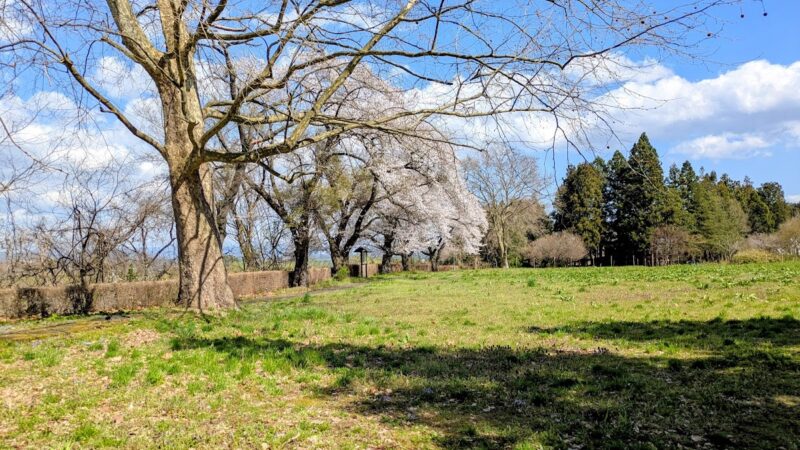
Currently, most of the Toriumi-saku site is used as farmland, but signs and explanatory panels have been installed as part of its national historic site designation. Visitors can appreciate the site’s location, which utilizes the natural terrain, including the plateau and surrounding streams.
While balancing the preservation and utilization of the site, there are plans to restore and exhibit some of the remains in the future. The site is expected to be developed as a historic park where visitors can experience the history of the Abe clan.
Related Historic Sites in the Surrounding Area
When visiting the Toriumi-saku site, visiting the related historical sites in the surrounding area will provide a deeper understanding.
- Izawa Castle Ruins: A base on the Imperial Court side, located approximately 2 kilometers across the Kitakami River. A national historic site.
- Yasaburo-kan: The remains of a medieval manor house within Kanegasaki Town. It is believed to belong to a descendant of the Abe clan.
- Kanegasaki Town Historical and Folk Museum: Exhibits artifacts and related materials excavated from the Toriumi Fort.
By visiting these sites, you can gain a comprehensive understanding of the history of Oshu from the Heian period to the medieval period.
Access
Access by Public Transportation
- Approximately 10 minutes by car or 40 minutes on foot from JR Tohoku Main Line “Kanegasaki Station”
- Approximately 20 minutes by car from JR Tohoku Shinkansen “Mizusawa Esashi Station”
- Due to limited bus service, using a taxi or rental car is recommended.
Access by Car
- Approximately 15 minutes via National Route 4 from Tohoku Expressway “Mizusawa IC”
- There are directional signs along National Route 4
- Parking: Visitor parking is available around the historical site (limited number of spaces)
Notes for Visitors
- The majority of the historical site is private land (farmland), so caution is required when entering.
- Please visit from the publicly accessible areas where explanatory signs are installed.
- Please be considerate and avoid interfering with farm work.
- Suitable time to visit: Spring to Autumn (difficult in winter due to snow)
Latest Trends in Toriumi-saku Research
Ongoing Archaeological Excavations
The archaeological excavations conducted by the Kanegasaki Town Board of Education are ongoing, and new discoveries are expected. In particular, further clarification is being made regarding the overall structure of the fortifications and the detailed layout of the Abe clan’s residence.
Recent investigations have uncovered remains in previously unknown areas, suggesting that the scale of the Toriumi Fortifications may have been larger than previously assumed.
Progress in Interdisciplinary Research
Research on the Toriumi Fortifications is being advanced by researchers from diverse fields, including archaeology, documentary history, geography, and architectural history. Attempts are being made to construct a more accurate historical image by comparing archaeological findings with historical documents such as the “Mutsu Monogatari.”
Furthermore, research from a broader perspective is progressing, including its relationship with Izawa Castle and its position within the Abe clan’s overall territory.
Utilization of Digital Technology
In recent years, digital technologies such as 3D scanning and drone surveying have been used for record preservation. This has led to the accumulation of detailed topographical data of the site, opening the way for future virtual reconstructions and educational applications.
References
For further information about the Toriumi Fort, please refer to the following references.
Major Academic Literature
- *Mutsu Waki* (A military chronicle from the Heian period, a fundamental historical source for the Former Nine Years’ War)
- Kanegasaki Town Board of Education, *Toriumi-saku Site Excavation Survey Report*, various editions (1st to 20th editions)
- Iwate Prefecture Board of Education, *Iwate Prefecture Cultural Property Survey Report*, related volumes
- *Iwate Prefecture History*, Medieval Period and Archaeological Materials Edition
Books for the General Public
- *The Abe Clan and the Former Nine Years’ War* (Similar books available from multiple publishers, including Yoshikawa Kobunkan)
- *The Origins of the Oshu Fujiwara Clan* (Explains the lineage from the Abe clan to the Fujiwara clan)
- *Japanese Castles* series (Volumes dealing with castles and fortifications from the Heian period)
Online Resources
- Cultural Heritage Online (Agency for Cultural Affairs): Detailed information on the Toriumi-saku Site
- Iwate Cultural Information Encyclopedia (Iwate Prefecture): Cultural property information within the prefecture
- Kanegasaki Town Official Website: Latest survey information and visitor guides
Related Literature
Related to the Former Nine Years’ War
- “The Former Nine Years’ War and the Oshu Fujiwara Clan”
- “Minamoto no Yoriyoshi, Yoshiie, and the Eastern Warrior Groups”
- “The Life of Abe no Muneto”
Related to Castles and Archaeology
- “Ancient Castles and Fortifications in Tohoku”
- “Residences of Powerful Clanes in the Heian Period”
- “The True Image of the Abe Clan as Seen from Archaeological Excavations”
Related to Local History
- “History of Kanegasaki Town”
- “History and Culture of the Six Oku Counties”
- “Medieval History of the Kitakami River Basin”
Through these documents, one can gain a multifaceted understanding of the history of Oshu during the Heian period, centered on the Toriumi Fort.
Summary
The Toriumi Fort (Kanegasaki Town, Iwate Prefecture) is a historical site that occupies an important position in Japanese history as the most important base of the Abe clan, who ruled the six Oku counties in the 11th century. This fort, the site where Abe Yoriyoshi met his end and the stage of the Former Nine Years’ War, is the only one of the twelve forts of the Abe clan to have been archaeologically confirmed, and was designated a National Historic Site in 2013.
Excavations have uncovered remains such as post-hole buildings, fence lines, moats, and earthworks, revealing the true nature of a powerful clan’s residence during the Heian period. Its location on the tip of a plateau and the defensive system utilizing the natural terrain clearly demonstrate the characteristics of fortifications of this era.
The Toriumi Fort was not merely a military facility, but also functioned as a political and administrative center. After the fall of the Abe clan, its legacy was passed down to the Oshu Fujiwara clan, forming the foundation of Hiraizumi culture. With ongoing excavations, new discoveries are expected, and it continues to play an important role in the study of Japanese castle history and medieval history.
When visiting Iwate Prefecture, be sure to visit the historically significant Toriumi Fort site and reflect on the history of Oshu during the Heian period.