Complete Guide to Kanegasaki Castle (Kanegasaki Town, Iwate Prefecture) | History, Lords, and Highlights Explained in Detail
What is Kanegasaki Castle?
Kanegasaki Castle is a mountain castle located in Shiraito, Nishine, Kanegasaki Town, Isawa District, Iwate Prefecture. Built on a terrace 52-54 meters above sea level, overlooking the Kitakami River, it is a historical fortress. Also known as Shiraito Castle, Kawasaki Castle, Kurumikan, and Kanegasaki Fortress, it was an important military base protecting the domain’s borders during the Edo period, serving as one of the 21 fortresses of the Sendai Domain.
Currently designated as a town historical site, it is an important cultural property that, along with the samurai residences in the castle town, forms the historical landscape of Kanegasaki Town. In particular, the Suwa-koji district in the castle town has been designated as an Important Preservation District for Groups of Traditional Buildings, preserving a valuable space that strongly retains the atmosphere of the past.
Location and Geographical Importance of Kanegasaki Castle
Kanegasaki Castle was built on a natural stronghold on a river terrace on the west bank of the Kitakami River, with the Kitakami River acting as a natural moat to the east. This location was also a crucial point on the Oshu Kaido road and was strategically extremely important, being close to the border between the Nanbu and Date domains.
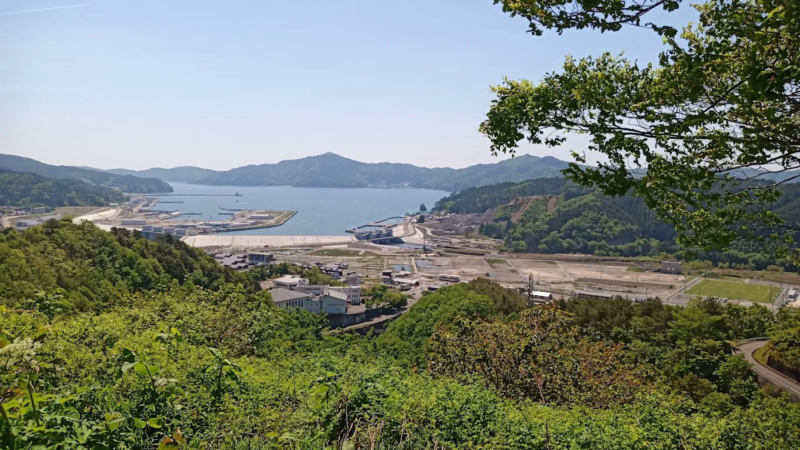
This location, which allowed control of water transport on the Kitakami River and monitoring key points on land routes, remained militarily and economically important from ancient times to the early modern period. Even today, the castle ruins offer a panoramic view of the Kitakami Basin, allowing one to appreciate its former strategic value.
History of Kanegasaki Castle
Ancient Legends and Shiraito Fort
Regarding the origins of Kanegasaki Castle, there is a legend that a residence built by Sakanoue no Tamuramaro during his campaign against the Emishi people occurred there in 802 AD. This legend is deeply rooted in the region and suggests that Kanegasaki was a military stronghold from ancient times. There is a theory that during the Heian period, the Abe clan’s Shiraito Fort (Shiraito-no-saku) was located in this area. Shiraito Fort is considered one of the forts that played an important role in the Former Nine Years’ War, and it has been suggested that it may have been a northern base within the Abe clan’s sphere of influence. It is also thought that the legend of this Shiraito Fort may have been the origin of the later alternative name, “Shiraito Castle.”
Kanegasaki Castle in the Middle Ages
Details of Kanegasaki Castle in the Middle Ages are scarce due to a lack of historical records, leaving many points unknown. However, during the period when it was under the control of the Kasai clan, it is believed that their vassals, such as the Onodera and Kashiwayama clans, resided there as castle lords.
The Kasai clan was a family appointed as the General Magistrate of Oshu by the Kamakura Shogunate after the fall of the Oshu Fujiwara clan, and they controlled a wide area of southern Mutsu Province. Kanegasaki was located at the northern edge of their territory and was an important base for protecting the border with northern forces.
During the Sengoku period (Warring States period), this region became a disputed territory with a complex web of powers, including the Kasai, Date, and Nanbu clans. During the Tensho era (1573-1592), Kanegasaki Castle increased in strategic importance amidst the struggle for supremacy in Oshu (northern Japan).
Date Clan Rule and the Establishment of Kanegasaki Fortress
In 1590, Toyotomi Hideyoshi’s pacification of Oshu led to the downfall of the Kasai clan, bringing about significant changes in the region. Subsequently, when Date Masamune established his base at Iwadeyama Castle (later Sendai Castle) and controlled the southern Tohoku region, Kanegasaki gained importance as the northernmost point of the Date territory.
In the Edo period, in 1602, Kuwori Kageyori (also known as Ishimoda Kageyori) became the first lord of Kanegasaki Fortress. From this point onward, Kanegasaki Castle was designated as “Kanegasaki Fortress,” one of the 21 fortresses within the Sendai Domain’s fortification system.
A fortress, while not a formal castle, is a military base built at a domain border or a strategic transportation hub, serving as a military stronghold comparable to a castle. Kanegasaki Fortress, in particular, was a crucial base for protecting the border with the Nanbu Domain, and the Date family and their senior retainers served as its lords for generations.
Successive Castle Lords and Border Guard
Throughout the Edo period, the following successive castle lords were stationed at Kanegasaki Fortress:
Early Castle Lords
- Kuwori Kageyori (Ishimoda Kageyori): Entered the domain in 1602
- Omachi Clan: A family particularly trusted by Date Masamune, responsible for keeping the Nanbu Domain in check.
The Omachi clan held an important social standing within the Date family, making them a suitable family to be entrusted with the heavy responsibility of guarding the domain border. The lord of Kanegasaki Fortress was not merely a local bureaucrat, but played a crucial role as a military commander confronting the Nanbu Domain in times of conflict.
Throughout the Edo period, tensions remained between the Sendai Domain and the Nanbu Domain, and Kanegasaki Fortress maintained a constant state of alert as the front line. Therefore, the lord was required to possess both military capability and political acumen.
Changes After the Meiji Restoration
After the Meiji Restoration and the abolition of the feudal domains and establishment of prefectures, Kanegasaki Fortress ceased to serve its military role. Many of the castle facilities were demolished, and the land was sold to private individuals or converted into public land.
However, the samurai residences of Suwa-koji, which developed as a castle town, were relatively well preserved, and from the Showa to the Heisei era, there was a growing movement to preserve the historical landscape. In 2001, “Kanegasaki-cho Jōnai Suwa-koji” was designated as an Important Preservation District for Groups of Traditional Buildings, and the samurai residences, gardens, and street trees are now carefully preserved and managed. Currently, the castle ruins themselves are protected as a town historical site, and some of the remains are being restored. As a core element of the region’s historical identity, Kanegasaki Castle and its castle town are preserved and utilized as a single entity.
Structure and Layout of Kanegasaki Castle
Basic Structure of the Castle
Kanegasaki Castle has the structure of a typical mountain castle (hill castle), skillfully utilizing the topography of a river terrace facing the Kitakami River. Although it is a relatively low hill at an elevation of 52-54 meters, it is clearly higher than the surrounding plains, ensuring a defensive advantage.
The Kitakami River served as a natural moat on the east side of the castle, while artificial moats and earthworks are thought to have been constructed on the west and south sides. Because the terrace continued to the north, multiple baileys were arranged to strengthen the defenses.
Arrangement of Baileys
The arrangement of baileys at Kanegasaki Castle can still be inferred from the topography and elevation changes of the terrain. It is believed that multiple enclosures were arranged in a stepped pattern around the main enclosure (honmaru).
From the main enclosure, one could see a wide area of the Kitakami Basin, and it also functioned as a lookout post for detecting enemy movements early. Furthermore, a signal fire station was likely established, used for communication with Sendai and other strongholds in times of emergency.
Existing Remains
Currently, the following remains can be confirmed at the Kanegasaki Castle site:
- Traces of Earthworks: Remnants of earthworks can be seen around some enclosures.
- Remains of Moats: The topography of moats that divided the ridge remains.
- Terrain: The terrain of terraces between enclosures is clearly visible.
- Well Remains: The remains of a well that secured water for daily life within the castle are said to exist.
There are almost no stone remains such as stone walls, indicating that it was an earthen castle. This is a common characteristic of castles in the Tohoku region from the medieval to early modern periods.
Highlights and Tourist Information of Kanegasaki Castle
Exploring the Castle Ruins
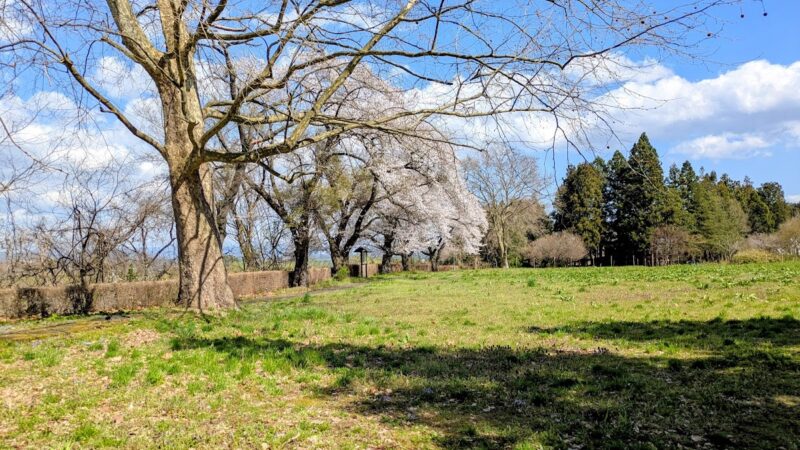
The Kanegasaki Castle ruins are currently maintained as a historical park where visitors can freely explore. It’s common to park your car at the town’s community center and access the site on foot. Asking the staff at the community center for directions will get you the best route to the castle ruins.
The castle grounds are relatively compact, and a visit takes approximately 20-30 minutes. Walking paths are well-maintained, making it enjoyable not only for history buffs but also as a leisurely stroll.
Kanegasaki Fortification History Museum
A must-visit in conjunction with the castle ruins is the Kanegasaki Fortification History Museum. Here, you can learn about the history of Kanegasaki Castle, the changes in its lords, and the development of the castle town in an easy-to-understand way using models and documents.
In particular, the museum features detailed exhibits on the Edo period’s fortification system and the relationship between the Sendai and Nanbu domains, allowing for a deeper understanding of the role Kanegasaki Castle played. Visiting the museum before exploring the castle ruins will enhance your experience.
Suwa-koji, a Preservation District for Important Traditional Buildings
The Suwa-koji district, which developed as a castle town for Kanegasaki Castle, is a valuable area where samurai residences are well preserved. Designated as an Important Preservation District for Groups of Traditional Buildings, this area offers the following attractions:
Samurai Residences
- Traditional samurai residences with thatched or shingle roofs line the streets.
- Some residences are open to the public, allowing visitors to learn about the lifestyle of the time.
- The gardens are beautifully maintained, offering beautiful scenery throughout the seasons.
Street Trees and Townscape
- Trees planted on both sides of the roads create a historical atmosphere.
- Waterways and stone walls retain their original appearance.
- A unified landscape is maintained, strongly preserving the atmosphere of an Edo-period castle town.
Access Information
Location
Shiraito, Nishine, Kanegasaki-cho, Isawa-gun, Iwate Prefecture
Transportation Access
- Approximately 15 minutes on foot from JR Tohoku Main Line “Rokuhara Station”
- Approximately 15 minutes by car from Tohoku Expressway “Mizusawa IC”
- Parking available at the Townscape Exchange Center (free)
Visiting Hours
- Castle Ruins: Always open (Avoiding nighttime visits is recommended for safety reasons)
- Kanegasaki Fortified Historical Museum: It is recommended to check opening hours and closing days in advance.
Fees
- Castle Ruins: Free
- Kanegasaki Fortified Historical Museum: Fee applies (See official website for details)
Points to Note When Visiting
- As the castle ruins are on a mountain path, comfortable walking shoes are recommended.
- Remember to take insect repellent in summer and warm clothing in winter.
- Please be careful not to damage the remains to protect the historical site.
- Please take all your trash with you.
Cultural Value of Kanegasaki Castle
Designation as a Town Historical Site
The Kanegasaki Castle Ruins are designated as a historical site of Kanegasaki Town and are an indispensable cultural asset for understanding the region’s history. Although not widely known nationwide, it is a valuable historical site for understanding the realities of border defense in the Tohoku region.
Research Materials on the Sendai Domain’s Fortification System
Kanegasaki Castle is an important case study for researching the Sendai Domain’s fortification system. Among the 21 fortifications, its military and political role is particularly noteworthy, especially as a fort located on the domain’s border.
Kanegasaki Castle and its surrounding town provide invaluable historical materials for understanding domain border management, local governance, and the realities of samurai society during the Edo period.
Integrated Value with the Castle Town
The value of Kanegasaki Castle lies not only in the castle ruins themselves, but also in the integrated historical landscape of the castle town, Suwa-koji. Examples of well-preserved castles and castle towns are rare nationwide, and the historical landscape of Kanegasaki town is highly valued.
Attractions for Visiting Kanegasaki Castle
Attractions for History Enthusiasts
Kanegasaki Castle lacks the magnificent stone walls and keeps of famous castles, but precisely because of this, it is a valuable historical site for understanding the realities of castles in the Tohoku region from the medieval to early modern periods.
The history of various eras is intricately etched into the site, including the legend of Sakanoue no Tamuramaro, its connection to the Former Nine Years’ War, the rule of the Kasai and Date clans, and the Sendai Domain’s fortification system, allowing for a multifaceted study of the flow of Japanese history.
Enjoying a Stroll Through the Castle Town
Beyond exploring the castle ruins, you can experience the life of a samurai during the Edo period by strolling through the samurai residences of Suwa-koji. Walking through the quiet streets, you can reflect on the lives of the people of that time.
The scenery is beautiful throughout the seasons, especially during the fresh green season and the autumn foliage season. The opportunity to enjoy both historical and natural walks simultaneously is another attractive feature.
Experiencing Local History and Culture
Kanegasaki Town is dedicated to preserving its castle ruins and castle town, and there is a strong sense of valuing history and culture throughout the community. Through interaction with local residents, you can gain a deeper understanding of Kanegasaki’s history.
At the Townscape Exchange Center and the Kanegasaki Fortress Historical Museum, staff members often provide detailed explanations, offering a deeper learning experience than simple sightseeing.
Summary
Kanegasaki Castle (Kanegasaki Town, Iwate Prefecture) is a historic castle that began with the legend of Sakanoue no Tamuramaro, passed through the rule of the Kasai clan in the Middle Ages, and served as one of the 21 fortresses of the Sendai Domain, protecting the domain’s borders during the Edo period. It has several other names, including Shiraito Castle, Kawasaki Castle, Kurumikan, and Kanegasaki Fortress, and played different roles throughout history.
Currently preserved as a town historical site, it forms the core of Kanegasaki Town’s historical landscape along with the castle town’s Suwa-koji alley. While no magnificent remains survive, it is a valuable historical site for understanding the reality of castles in the Tohoku region from the Middle Ages to the early modern period.
Combining learning at the Kanegasaki Fortress Historical Museum, strolling through the castle ruins, and visiting the samurai residences will provide a fulfilling historical experience. When you visit Iwate Prefecture, be sure to visit Kanegasaki Castle and its surrounding castle town to experience the history and culture of Tohoku.