Tomioka Castle (Amakusa, Kumamoto Prefecture) Complete Guide | History, Highlights, and Access Explained in Detail
Located in Reihoku-machi, Amakusa-gun, Kumamoto Prefecture, Tomioka Castle is a historical fortress built as a base for governing Amakusa. Also known as “Garyu-jo” (Sleeping Dragon Castle), it is a natural stronghold surrounded by the sea on three sides, and is known as an impregnable castle that repelled the fierce attacks of the rebel army during the Shimabara-Amakusa Rebellion. Currently, the Tomioka Visitor Center has been established, and it is a popular tourist spot where many people can learn about the history and nature of Amakusa.
History and Background of Tomioka Castle’s Construction
Construction by Terazawa Hirotaka
Tomioka Castle was built between 1601 and 1604 by Terazawa Shima-no-kami Hirotaka, the lord of the Hizen Karatsu Domain. Due to his achievements in the Battle of Sekigahara, Terazawa Hirotaka was granted the four districts of Amakusa (Amakusa District, 40,000 koku) by Tokugawa Ieyasu, and decided to construct Tomioka Castle as the base for governing Amakusa.
Since the Terazawa clan’s base was Karatsu Castle, they established a system of governing Amakusa by appointing a domain representative (daikan) to Tomioka Castle. Built on a hill in the southeastern part of the Tomioka Peninsula, this castle has the structure of a terraced flatland castle, with the main keep located at an elevation of approximately 52 meters.
Location as a Natural Fortress
The greatest feature of Tomioka Castle lies in its location. Surrounded by the sea on three sides, with only one side leading to the town, it was a natural fortress. To the south of the castle was Fukuroike Pond, which served as a moat, and to the east, Tomoe Bay, surrounded by a sand spit, acted as a natural earthen rampart, defending against enemies from the sea.
The Tomioka Peninsula is a tombolo, a unique geographical feature connected to the mainland by a sandbar. This geographical advantage made Tomioka Castle a formidable fortress capable of effective defense even with a small force.
The Shimabara-Amakusa Rebellion and the Battle of Tomioka Castle
General Attack by the Rebel Army
In 1637 (Kanei 14), the Shimabara-Amakusa Rebellion (Shimabara Revolt) broke out. This rebellion was a peasant uprising against the persecution of Christians and harsh tax collection, with approximately 37,000 people rising up under the command of Amakusa Shiro Tokisada.
The rebel army targeted Tomioka Castle as a key objective and besieged it with approximately 10,000 troops. In contrast, the defending forces, led by the domain’s representative, Miyake Shigetoshi, numbered approximately 3,000. Despite the overwhelming numerical disadvantage, Tomioka Castle stubbornly resisted, utilizing its natural fortifications.
An Impregnable Defense
The rebel army launched two large-scale attacks on Tomioka Castle, but failed to capture it either time. Due to its terrain surrounded by the sea on three sides and its robust fortifications, Tomioka Castle’s defenses were strong, and despite suffering heavy losses, the rebel army was unable to capture the castle.
Ultimately, the rebel army abandoned its attempt to capture Tomioka Castle and took refuge in Hara Castle (Minamishimabara City, Nagasaki Prefecture). The fact that Tomioka Castle did not fall was a crucial event that significantly impacted the course of the rebellion.
The Abandonment of Tomioka Castle and its Aftermath
The Terazawa Clan’s Dispossession and the Castle’s Demolition
After the Shimabara-Amakusa Rebellion, the Terazawa clan was held responsible for the rebellion and was dispossessed of their domain in 1643. Subsequently, Amakusa became a shogunate-controlled territory (tenryo), and Suzuki Shigenari was appointed as the first magistrate.
Even after Amakusa became a shogunate territory, Tomioka Castle continued to function as the center of Amakusa’s administration. However, it was officially abandoned following the Meiji Restoration’s decree abolishing castles. The castle’s structures gradually disappeared, leaving only the stone walls and remnants of the baileys.
Modern Development and Preservation
From the Showa to the Heisei era, the Tomioka Castle ruins were gradually developed. The Kumamoto Prefecture Tomioka Visitor Center was built on the site of the main keep, serving as an information hub for the natural landscape and cultural environment of the Amakusa region within Unzen-Amakusa National Park.
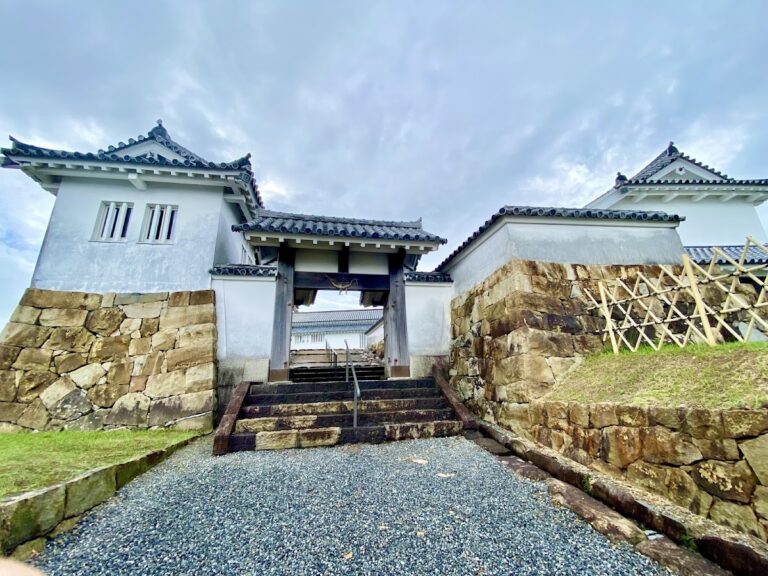
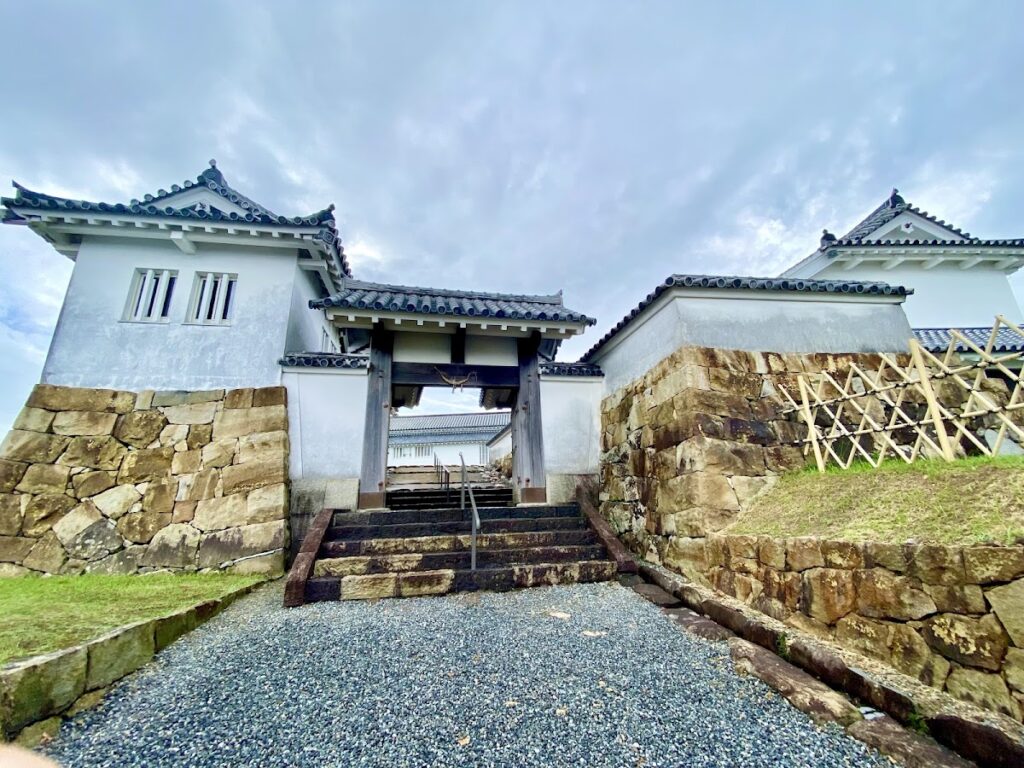
Furthermore, structures such as turrets and the Korean-style gate were restored, reviving the landscape that evokes the former appearance of the castle. Currently, it is developed as Tomioka Castle Park, an important tourist spot where visitors can learn about the history of Amakusa.
Attractions and Highlights of Tomioka Visitor Center
Facility Overview and Exhibits
The Kumamoto Prefecture Tomioka Visitor Center is a facility built on the site of the former main keep of Tomioka Castle, providing comprehensive information about the Amakusa region of Unzen-Amakusa National Park. The center features extensive exhibits on Amakusa’s nature, history, and culture, allowing visitors to learn in detail about the history of Tomioka Castle and the Shimabara-Amakusa Rebellion.
Exhibits include a reconstructed model of Tomioka Castle, weapons and daily life items from the period, and materials related to the Shimabara-Amakusa Rebellion. There are also exhibits on Amakusa’s rich natural environment and marine ecosystem, making it a facility where visitors can gain a deep understanding of not only history but also nature.
Restored Turret and Korean-style Gate
At the Tomioka Castle site, a turret (yagura) and a Korean-style gate have been restored, allowing visitors to experience the atmosphere of an Edo-period castle. From the turret, you can enjoy a panoramic view of the Amakusa sea and surrounding scenery, and appreciate its function as a lookout post at the time.
The Koraimon Gate, restored as the castle’s main gate, boasts a majestic appearance integrated with the stone walls, making it a popular photo spot. These restored structures are faithfully reproduced based on historical research, offering clues to imagining the castle’s former glory.
Spectacular Views from the Main Keep Ruins
The view from the main keep ruins of Tomioka Castle is one of its greatest attractions. From a hill approximately 52 meters above sea level, you can enjoy a magnificent panoramic view of the East China Sea and the Amakusa Sea. On a clear day, you can even see as far as Mount Unzen and the Shimabara Peninsula, and even gaze in the direction of Hara Castle, which was once attacked by the rebel army.
Seeing the terrain surrounded by the sea on three sides firsthand allows you to understand why Tomioka Castle was called an impregnable fortress. Furthermore, the beautiful scenery of Tomoe Bay symbolizes the richness of Amakusa’s natural environment.
Highlights and Walking Routes of Tomioka Castle
Remains of Stone Walls and Enclosures
At the Tomioka Castle ruins, the stone walls from the early Edo period remain in excellent condition. The layout of the main enclosure, second enclosure, and third enclosure can be clearly seen, allowing for an understanding of the structure of a terraced hill castle.
The stone walls were constructed using techniques such as rough-hewn stonework and fitted stonework, allowing for close observation of the castle-building techniques of the time. The stone walls around the main enclosure are particularly tall, making them a highlight that allows visitors to truly appreciate the castle’s defensive capabilities.
Fukuro Pond and the Defensive System
Located on the south side of the castle, Fukuro Pond played a crucial role in Tomioka Castle’s defensive system. This pond was constructed utilizing the natural terrain and functioned as a water moat to prevent attacks from the land.
Fukuro Pond still remains today, making it a valuable historical site for understanding the defensive structure of the time. A walk around the pond allows for a concrete understanding of Tomioka Castle’s defensive philosophy.
Walking Trails in Tomioka Castle Park
The Tomioka Castle ruins have been developed into Tomioka Castle Park, which features walking trails. Information boards and panels are installed throughout the park, allowing visitors to learn about the historical background and points of interest while strolling.
The walking trails center around the main keep site, circling the various baileys, and take approximately 30 minutes to 1 hour to complete. Depending on the season, visitors can enjoy natural scenery such as cherry blossoms, fresh greenery, and autumn leaves.
Access Information to Tomioka Castle
Access by Car
Tomioka Castle is most easily accessible by car. It is approximately 2 hours and 30 minutes from the Matsubashi Interchange on the Kyushu Expressway via National Route 266 and National Route 324.
From the center of Amakusa City, it is approximately 40 minutes via National Route 324 and Prefectural Route 26. Tomioka Castle Park has a free parking lot that can accommodate approximately 50 regular cars. The main keep site is approximately a 5-minute walk from the parking lot.
Access by Public Transportation
If using public transportation, take the Sanko Bus from Kumamoto City to Hondo Bus Center (approximately 2 hours and 30 minutes). From there, transfer to a bus bound for Tomioka (approximately 40 minutes), get off at the “Tomioka Port” bus stop, and walk for about 10 minutes.
However, since the number of buses is limited, it is recommended to check the timetable in advance. Extra buses may be operated during the tourist season.
Combining with Nearby Tourist Attractions
Many Amakusa tourist spots are scattered around Tomioka Castle. Thirteen Buddha Park, Myokenura, and Reihoku Town Historical Museum are nearby, and combining them into a model course allows you to fully enjoy the history and nature of Amakusa.
In particular, the Reihoku Town Historical Museum offers more detailed materials on Tomioka Castle and the Shimabara-Amakusa Rebellion, deepening your understanding of Tomioka Castle.
Tomioka Visitor Center Facility Information
Opening Hours and Closing Days
The Kumamoto Prefecture Tomioka Visitor Center is open from 9:00 AM to 5:00 PM. It is closed every Wednesday (or the following day if Wednesday is a public holiday) and during the New Year’s holiday period (December 29th to January 3rd).
Opening hours and closing days may change, so it is recommended to check official information before visiting.
Admission Fee
Admission to the Tomioka Visitor Center is free. You can also enjoy a stroll through Tomioka Castle Park for free, making it an easily accessible facility.
Contact Information
For inquiries regarding the Tomioka Visitor Center, please call 0969-35-1834 (Kumamoto Prefecture Tomioka Visitor Center). You can easily inquire about detailed information about the facility, group tours, and more.
To fully enjoy the charm of Tomioka Castle
Best season to visit
Tomioka Castle can be visited year-round, but the best times are spring (late March to early April) during cherry blossom season and autumn (October to November) during the autumn foliage season. The weather is mild during these times, and the view from the main keep ruins is at its most beautiful.
Summer is hot, but the sea breeze is pleasant, and you can enjoy the beautiful scenery with the contrast of the blue sea and sky. Winter has fewer visitors, allowing you to quietly reflect on history.
Using it as a learning plan
Tomioka Castle is also ideal as a place for educational trips and history learning. It is featured on the Kumamoto Prefecture Educational Travel website, and you can learn about the Shimabara-Amakusa Rebellion, an important event in Japanese history, firsthand.
The Tomioka Visitor Center also offers learning programs for groups, and you can receive explanations from expert staff by applying in advance. It is a comprehensive learning environment where you can learn not only about history but also about the natural environment and geographical features of Amakusa. ### Photography Tips
Tomioka Castle is a popular photography spot. There are many photo opportunities, including the combination of the restored Korean-style gate and stone walls, the ocean view from the main keep ruins, and the panoramic views from the turrets.
The silhouette of Tomioka Castle against the sunset over the East China Sea at dusk is particularly spectacular, attracting many photography enthusiasts. The combination of the stone walls and cherry blossoms is also beautiful during cherry blossom season, making a spring visit highly recommended.
Tourist Attractions Around Tomioka Castle
Reihoku Town Historical Museum
Located about a 5-minute drive from Tomioka Castle, the Reihoku Town Historical Museum offers detailed information on Amakusa’s history from ancient to modern times. It also boasts a wealth of materials related to Tomioka Castle and the Shimabara-Amakusa Rebellion, providing a deeper understanding when visited in conjunction with Tomioka Castle.
Jusanbutsu Park
Located about a 10-minute drive from Tomioka Castle, Jusanbutsu Park is a scenic spot on the west coast of Amakusa. You can enjoy the magnificent view of the East China Sea and the thirteen Buddha statues standing on the cliff face. Visiting this spot along with Tomioka Castle allows you to fully appreciate both the nature and history of Amakusa.
Myokenura
Myokenura, a nationally designated scenic spot and natural monument, is located about 15 minutes by car from Tomioka Castle. It is famous for its elephant-shaped rock formation known as “Myokenura’s Elephant,” and is a representative scenic spot of Amakusa’s coastal beauty.
The History of Amakusa as Told by Tomioka Castle
Tomioka Castle is a historical heritage site with value far beyond mere castle ruins. Built as a base for governing Amakusa, it experienced the Shimabara-Amakusa Rebellion, the largest rebellion in Japanese history, and subsequently remained the administrative center of Amakusa as a shogunate territory until the Meiji Restoration.
Its topography, a natural stronghold surrounded by the sea on three sides, conveys the castle-building techniques and strategic thinking of the time to the present day. Furthermore, the fact that it withstood attacks by the rebel army speaks to the castle’s strength and the valiant efforts of its defenders. The Tomioka Castle ruins, now developed as the Tomioka Visitor Center, are a popular comprehensive facility for learning about Amakusa’s history and nature. The restored turrets and Korean-style gate, the well-preserved stone walls, and the breathtaking views from the main keep continue to convey the charm of Amakusa to visitors.
When visiting Amakusa in Kumamoto Prefecture, be sure to visit Tomioka Castle and experience its history and scenery. This impregnable natural fortress, which bore the history of the Shimabara-Amakusa Rebellion, still quietly stands as an important place connecting Amakusa’s past and present.