Toichi Castle, Kashihara City (Nara Prefecture) Complete Guide: Visiting the Ruins of the Toichi Clan, a Sengoku Period Yamato Samurai
What is Toichi Castle?: A Base of the Five Strongest Yamato Samurai
Toichi Castle (Toichi-jo) is a medieval flatland castle located in Toichi-cho, Kashihara City, Nara Prefecture. From the late Kamakura period to the Edo period, it functioned as the residence of the Toichi clan, who ruled this area.
During the Sengoku period, five powerful samurai groups existed in Yamato Province (present-day Nara Prefecture), known as the “Five Strongest Yamato Samurai.” These were the Furuichi clan (around Nara City), the Tsutsui clan (around Yamato-Koriyama City), the Hashio clan (around Koryo Town), the Ochi clan (around Takatori Town), and the Toichi clan (around Kashihara City). Toichi Castle was an important fortress that served as the base of operations for the Toichi clan.
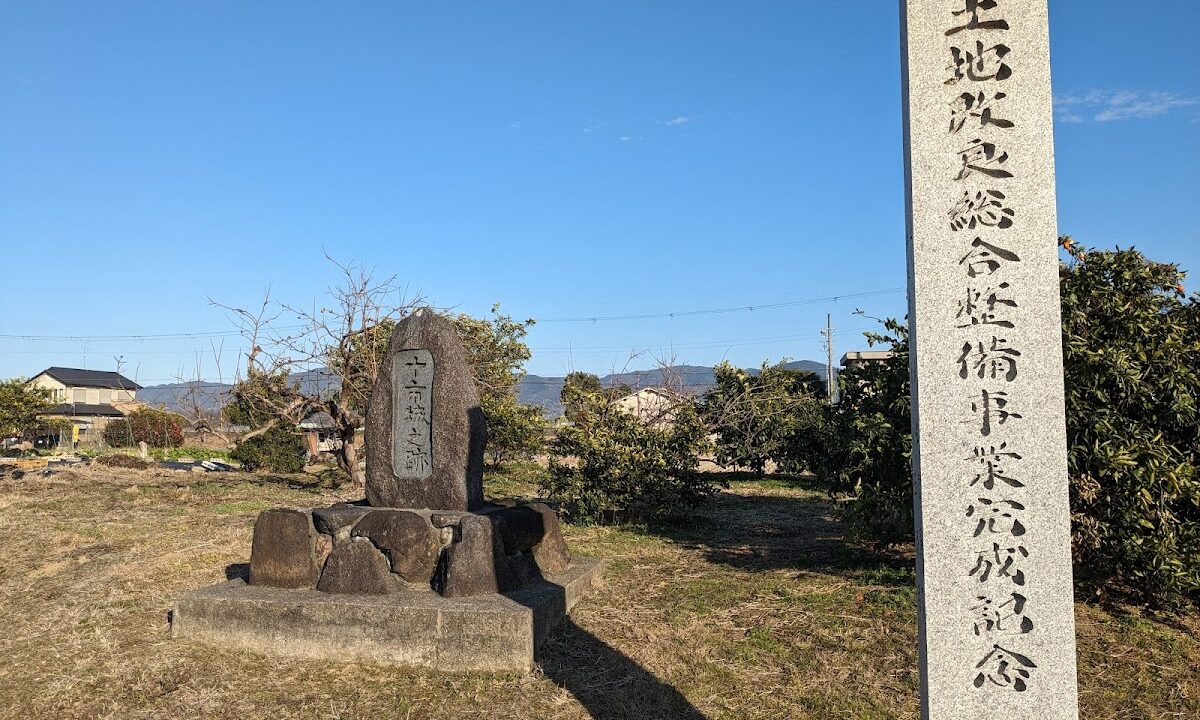
Currently, only a stone monument stands at the castle site, and no significant remains are visible on the surface. However, the layout of the land and the names of the sub-districts allow us to infer its former size. Furthermore, archaeological excavations have unearthed Chinese white and celadon bowls, attesting to the high cultural level of the Toichi clan.
Interestingly, Toichi Castle also appears in “History of Japan,” written by the Portuguese missionary Luis Frois (1532-1597), indicating that it was an internationally recognized fortress.
History of Toichi Castle: From Kofuku-ji Temple Officials to Sengoku Daimyo
Origins and Development of the Toichi Clan
The Toichi clan was a family that served as officials of Toichi Manor, a territory of Kofuku-ji Temple. During the Nanboku-cho period, they appear in historical records as a “kokumin” (a military organization of temples and shrines) affiliated with the Daijoin branch of Kofuku-ji Temple, and expanded their power within Yamato Province.
The Toichi clan’s base was built on a geographically advantageous location on a natural levee on the right bank of the Terakawa River. This location, like Tsutsui Castle (Yamato-Koriyama City), exhibits typical characteristics of a flatland castle in medieval Yamato Province. It offered advantages in terms of transporting goods using water and defensive capabilities by utilizing the river as a natural moat.
Toichi Castle in the Sengoku Period
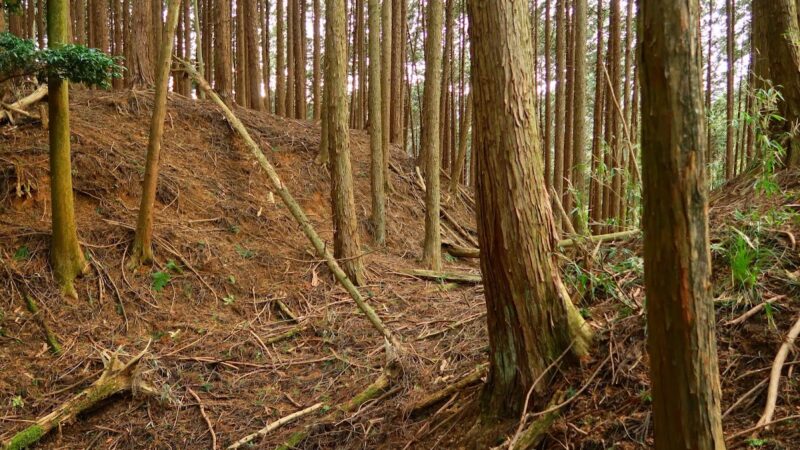
During the Sengoku period, the Toichi clan also built Ryuozan Castle, a mountain castle. While this served as a military base to cope with the wars of the time, it is believed that they continued to use Toichi Castle as their residence during peacetime. This “combination of flatland and mountain castles” is a typical pattern of castle management during the Sengoku period.
During the time of Toichi Totada, the Toichi clan served Tsutsui Junko and Junkei, father and son. However, a fierce power struggle was raging between the Tsutsui clan and Matsunaga Hisahide within Yamato Province, and the Toichi clan became embroiled in this conflict.
The Fall of Toichi Castle
Toichi Castle fell during the conflict with Matsunaga Hisahide. At this time, Yamato Province was in a complex political situation, with the forces of the Tsutsui, Matsunaga, and Oda Nobunaga intertwined. Because the Toichi clan sided with the Tsutsui clan, they became a target of attack from the Matsunaga faction.
The Toichi clan survived after the castle’s fall and continued into the Edo period, but their power as a Sengoku daimyo significantly declined.
Structure and Size of Toichi Castle
Main Enclosure
The central part of Toichi Castle (main enclosure) was located on a slightly elevated area approximately 70 meters square, north of the old settlement of Toichi Town. This slightly elevated area was about 1 meter higher than the surrounding area; although the difference in elevation was small, it was an important defensive element in a plain.
Overall Size of the Castle
The overall size of the castle is estimated from the small place names and land divisions remaining in the surrounding area. Specifically, the following place names suggest the extent of the castle grounds:
- Shiro (Castle): Indicates the central part of the castle
- Karabori (Dry Moat): Indicates the presence of a dry moat
- Furuichiba (Old Market): Site of the market below the castle
- Daimon (Great Gate): Location of the castle’s main gate
- Matoba (Archery Range): Archery training ground
- Shimodonoguchi (Lower Palace Entrance): Entrance to the palace
- Nakadouchi (Inner Palace): Interior of the palace
From these place names, it can be seen that Toichi Castle extended over a vast area of approximately 550 meters east-west and 430 meters north-south. This scale is among the largest for a flatland castle in Yamato Province, demonstrating the considerable power of the Toichi clan.
Characteristics as a Flatland Castle
Toichi Castle was a typical flatland castle, lacking structures such as stone walls and keeps found in later castles. Instead, it took the form of a medieval castle, with earthworks, moats, residences, and warehouses.
The Terakawa River functioned as the castle’s defensive line, and the layout skillfully utilized the natural terrain. Despite being a flatland castle, its design, which balanced the convenience of water transport with defensive capabilities, demonstrates the high level of castle construction technology in medieval Yamato.
Highlights and Current Status of Toichi Castle
Castle Site Monument
Currently, a castle site monument (stone monument) stands at the Toichi Castle ruins. This monument, erected during the Showa era, is inscribed with “Toichi Castle Ruins.” With almost no remains left on the surface, this monument is the only clear evidence of the castle site.
Land Divisions and Microtopography
Careful observation allows us to imagine the former extent of the castle from the remaining land divisions and subtle differences in elevation. In particular, the slightly elevated area of the main enclosure is slightly higher than the surrounding fields, retaining traces of its former appearance.
### Exploring Local Place Names
Since local place names related to the castle still remain, walking around with a map in hand offers the pleasure of imagining things like, “Was this the main gate?” or “Was this the archery range?” For history buffs, it provides the intellectual enjoyment of reconstructing the castle’s structure from the place names.
Results of Archaeological Excavations
Past excavations have unearthed valuable artifacts such as Chinese white porcelain bowls and celadon bowls. These artifacts indicate that the Toichi clan possessed a trading network and lived a culturally sophisticated life.
Unfortunately, no clear remains such as earthworks or moats have been confirmed, but there is a high possibility that buried cultural artifacts lie beneath, and future investigations are highly anticipated.
How to Access Toichi Castle
Access by Train
Nearest Station: Kintetsu Kashihara Line, Kasanui Station
- Approximately 20 minutes on foot from Kasanui Station
- Head northeast from the station
- Along the way, you will cross a bridge over the Terakawa River, where you can see how this river functioned as a defensive line for the castle.
Access by Car
- Approximately 20 minutes from the Nishimeihan Expressway “Koriyama IC”
- Approximately 15 minutes from the Keina-Wa Expressway “Kashihara Kita IC”
- Parking: There is no dedicated parking lot, so please use nearby public facilities or paid parking lots.
Address
634-0008 Toichi-cho, Kashihara City, Nara Prefecture
Notes for Visitors
- The castle ruins are located in a residential area and farmland, so please avoid trespassing on private property.
- The area around the stone monument is accessible, but please be considerate of local residents when taking photographs.
- Because very few remains are left, studying the history beforehand will deepen your understanding.
Nearby Tourist Spots and Related Castles
Ryuo-zan Castle (Tenri City)
A mountain castle built by the Toichi clan, it functioned as an auxiliary castle to Toichi Castle. Located on the summit of Mt. Ryuo (585.8 meters above sea level), it offers a spectacular panoramic view of the Yamato Basin. It’s also a popular hiking spot, attracting not only castle enthusiasts but also mountain climbing lovers.
Tsutsui Castle Ruins (Yamato-Koriyama City)
The base of the Tsutsui clan, whom the Toichi clan served. Similar to Toichi Castle, it’s a flatland castle, and comparing them will give you a good understanding of the characteristics of medieval Yamato castles. A bronze statue of Tsutsui Junkei currently stands there.
Imai-cho (Kashihara City)
A designated Important Preservation District for Groups of Traditional Buildings, located approximately 3 kilometers south of Toichi Castle. The townscape from the Edo period remains, and it was a town of wealthy merchants, where it was said, “Seven-tenths of Yamato’s wealth is in Imai.” Visiting Toichi Castle in conjunction with this location allows you to experience the transition from the medieval to the early modern period.
Kashihara Shrine (Kashihara City)
A shrine dedicated to Emperor Jimmu, the first emperor of Japan, and a representative tourist spot in Kashihara City. It is located about 4 kilometers southwest of Toichi Castle.
Fujiwara Palace Site (Kashihara City)
The site of Fujiwara-kyo, Japan’s first full-fledged capital city. Although it is a Nara period ruin, long before the time of Toichi Castle, it allows you to truly feel the depth of this region’s history. Beautiful flower fields spread throughout the seasons, making it a popular photo spot.
Points to Enjoy Toichi Castle
Connection to Historical Simulation Games
Toichi Castle appears in the historical simulation game series “Nobunaga’s Ambition,” making it a pilgrimage site for game fans. Comparing the depiction of Toichi Castle in the game with the actual location is also interesting.
The Joy of Walking with a Map
Walking while comparing current maps with Edo-period illustrations allows for a clearer understanding of the castle’s boundaries and structure. Materials published by the Kashihara City Board of Education are also helpful.
Using Your Imagination
Imagining the magnificent castle that once stood here, based on subtle topographical undulations and place names—this is the true pleasure of visiting castle ruins with few remaining structures. Standing before a stone monument and closing your eyes, you might even feel the presence of the samurai of the Sengoku period.
Seasons and Time of Day
Toichi Town, with its sprawling rural landscape, offers a tranquil Yamato scenery when visited during spring rice planting or autumn rice harvesting. Visiting in the soft light of early morning or evening is ideal for photography.
The Later History and Historical Significance of the Toichi Clan
After the Edo Period
Even after the fall of Toichi Castle, the Toichi clan continued their lineage. They survived as hatamoto (direct retainers of the shogun) during the Edo period and continued until the Meiji Restoration. Although their glory as a Sengoku daimyo (feudal lord) was lost, their bloodline is said to have continued to the present day.
Characteristics of Yamato Samurai
The Yamato samurai, including the Toichi clan, developed uniquely within the context of their relationship with the powerful temple and shrine of Kofuku-ji. Unlike samurai from other provinces, they occupied a complex position, maintaining independence while acting as subjects (military organizations) of the temple and shrine.
This unique environment created a political situation specific to Yamato Province, shaping the complex power dynamics of the Sengoku period. The history of Toichi Castle can be said to symbolize this way of life of the Yamato samurai.
Description in Frois’s “History of Japan”
The fact that the Portuguese missionary Luis Frois recorded Toichi Castle indicates that it was not merely the residence of a local powerful family, but a place of international interest. Frois’s description confirms that Toichi Castle was one of the important bases in Japan at that time.
The Cultural Value of Toichi Castle
Buried Cultural Property Site
The Toichi Castle ruins are registered as a buried cultural property site in Kashihara City. Medieval remains and artifacts lie buried underground, and further excavations are expected to yield new discoveries.
Local History Education
Local elementary and junior high schools conduct local history education using Toichi Castle as a subject. By learning the history of their own land, children develop a sense of attachment to their community and an interest in history.
Challenges of Preservation and Utilization
While the lack of prominent remains makes it difficult to utilize as a tourist resource, its value as a historical identity of the region is extremely high. In the future, if information boards are installed and walking paths are developed, more people will be able to experience the history of Toichi Castle.
Summary: Toichi Castle Tells the Story of Medieval Yamato History
Toichi Castle is an “invisible castle” with no prominent remains other than a stone monument. However, its historical value is extremely high, and it is an indispensable site for understanding Yamato Province during the Sengoku period.
The vast scale of the flatland castle, measuring 550 meters east-west and 430 meters north-south, the discovery of Chinese ceramics, and its appearance in Frois’s records—these all indicate that the Toichi clan was not merely a local powerful family, but a culturally sophisticated and internationally renowned entity.
Today, the castle ruins monument, standing quietly amidst the rural landscape, silently conveys the history of a magnificent castle that once stood here, a place where Sengoku warlords roamed. Perhaps the charm of Toichi Castle lies in the fact that the few remaining structures challenge the imagination of visitors.
When you visit Kashihara City in Nara Prefecture, be sure to visit the Toichi Castle ruins and reflect on the history of the Toichi clan, who were one of the five strongest samurai of Yamato. Though invisible to the eye, the memories of the Sengoku period are certainly etched into this land.