A Thorough Explanation of the History and Remains of Hachinohe Castle – The Center of the Hachinohe Domain Ruled by the Nanbu Clan
What is Hachinohe Castle?
Hachinohe Castle is a Japanese castle (hilltop castle) located in Uchimaru, Hachinohe City, Aomori Prefecture. Throughout the Edo period, it functioned as the political center of the Hachinohe Domain and served as the base of governance by the Nanbu clan. Currently, it is maintained as Miyagi Castle Park and serves as a place of relaxation for citizens.
Hachinohe Castle is a completely separate castle from Nejo Castle, also located in Hachinohe City. While Nejo Castle was the base of the Nanbu clan during the medieval period, Hachinohe Castle was built in the early modern period, and their roles and historical contexts are vastly different. This is an important point in understanding the history of Hachinohe.
Location and Geographical Characteristics of Hachinohe Castle
Hachinohe Castle is built on the south side of the Mabuchi River, at the northern end of a river terrace. Located just 3km from the Pacific Ocean, Hachinohe Castle occupies a strategically important position close to both the sea and a river. This location was excellent for transporting supplies and for defense, making it a suitable center for the domain’s administration.
The castle is classified as a flatland castle, built on a relatively flat plateau, but its layout cleverly utilized the surrounding terrain. The area around the current Hachinohe City Hall corresponds to the former main keep, located in the city center.
History of Hachinohe Castle
Before Construction – Nakadate Era
The site of Hachinohe Castle originally housed a residence called “Nakadate,” built as a branch castle by the Nejo Nanbu clan. The lord of this residence was known as the Nakadate clan, and it is believed to have functioned as a branch castle of Nejo. While detailed records of the Nakadate era are scarce, it is certain that some kind of military facility existed on this site from the Sengoku period to the early Edo period.
Construction of the Castle – 1627
The full-scale construction of Hachinohe Castle began in 1627 (Kanei 4) by Nanbu Toshinao, the first lord of the Morioka Domain in Mutsu Province. At that time, Hachinohe was still under the control of the Morioka Domain and was positioned as one of its important bases.
Nanbu Toshinao strengthened the Morioka Domain’s governance by constructing castles and fortified residences throughout the region. Hachinohe Castle was built as part of this effort and served as a base for governing the southeastern part of the Morioka Domain.
Establishment of the Hachinohe Domain – 1664 (Kanbun 4)
The most important turning point in the history of Hachinohe Castle occurred in 1664 (Kanbun 4). Following the death of Nanbu Shigenori, the second lord of the Morioka Domain, without an heir, the Morioka Domain was divided into the “Morioka Domain” and the “Hachinohe Domain.”
With the division of the domain, Hachinohe Castle became the administrative center of the newly established Hachinohe Domain. The first lord of the Hachinohe Domain, Nanbu Naofusa (originally named Naoyoshi), did not construct a new castle, but rather inherited and renovated existing buildings, developing them into Hachinohe Castle.
Hachinohe Domain Period – Throughout the Edo Period
Although the Hachinohe Domain was a small domain with a 20,000 koku (unit of rice production) yield, it held an important position as a branch of the Nanbu clan. Development of the castle town progressed, centered around Hachinohe Castle, and the organization of retainers was also carried out.
The Hachinohe Domain was ruled by the Nanbu clan until the end of the Edo period, and during that time, Hachinohe Castle continued to function as the political and administrative center of the domain. The lords of the domain resided in Hachinohe Castle for generations, governing the territory from there. Throughout the domain’s rule, Hachinohe developed as an important base for the Nanbu clan and as a port town facing the Pacific Ocean.
After the Meiji Restoration – The Castle’s Demolition and Present
Following the abolition of the feudal domains and the establishment of prefectures after the Meiji Restoration, the Hachinohe Domain was abolished, and Hachinohe Castle ceased to serve its purpose. In the Meiji era, many of the castle’s buildings were demolished or relocated, and the castle site gradually transformed.
Currently, the Hachinohe Castle site is maintained as Miyagi Castle Park. The name “Miyagi Castle” is an abbreviation of “Hachinohe Castle in Sannohe District,” reflecting the historical administrative division of the region. The park features an observation deck, a lawn area, an artificial hill, a gourd-shaped pond, and playground equipment, making it a popular recreational spot for citizens.
Structure of the Castle Grounds and Surroundings
Honmaru (Main Enclosure)
The Honmaru, the central part of Hachinohe Castle, is located in Miyagi Castle Park, next to the current Hachinohe City Hall. The Honmaru site features an artificial hill, a stone monument marking the castle ruins, and a statue of Nanbu Naofusa, all evoking the memory of its former status as the center of the domain’s administration.
At the back of the park is an observation deck, offering panoramic views of Hachinohe city. The view from this observation deck evokes the vistas of the former castle’s watchtowers, allowing visitors to truly appreciate the castle’s advantageous location.
While surviving documents are limited regarding the size and detailed structure of the main keep, it is believed to have been of a considerable size for a castle belonging to a small domain.
Structure of the Castle Town
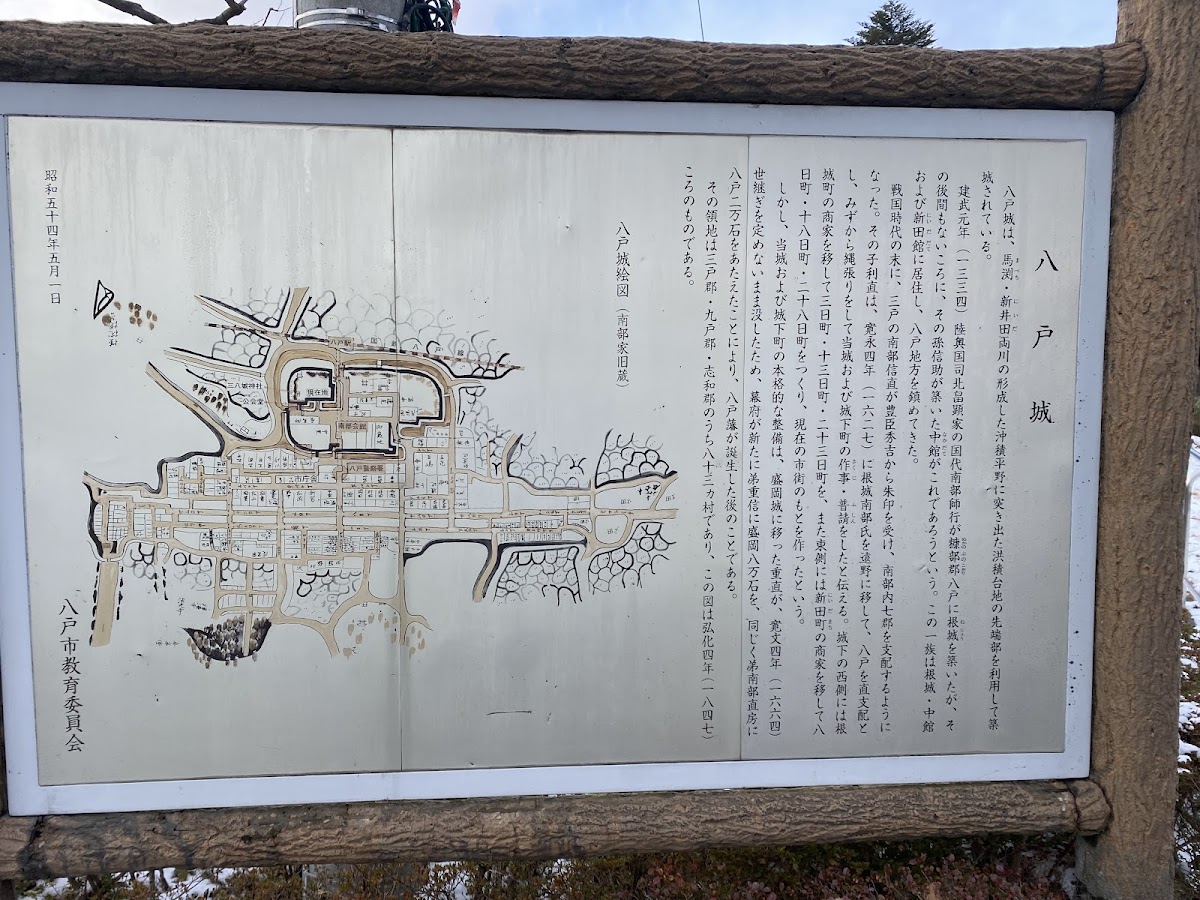
A planned castle town was formed around Hachinohe Castle. Samurai residences, merchant districts, and temple districts were arranged, creating an urban structure that supported the domain’s governing structure. The basic structure of the castle town was fully developed after the establishment of the Hachinohe domain.
The layout of the castle town still remains as a trace in the streets of present-day Hachinohe city center. Walking through Hachinohe’s old town, one can feel the remnants of the Edo-period castle town everywhere.
Remains and Existing Structures
Kakugoten Omotemon (Front Gate of the Corner Palace)
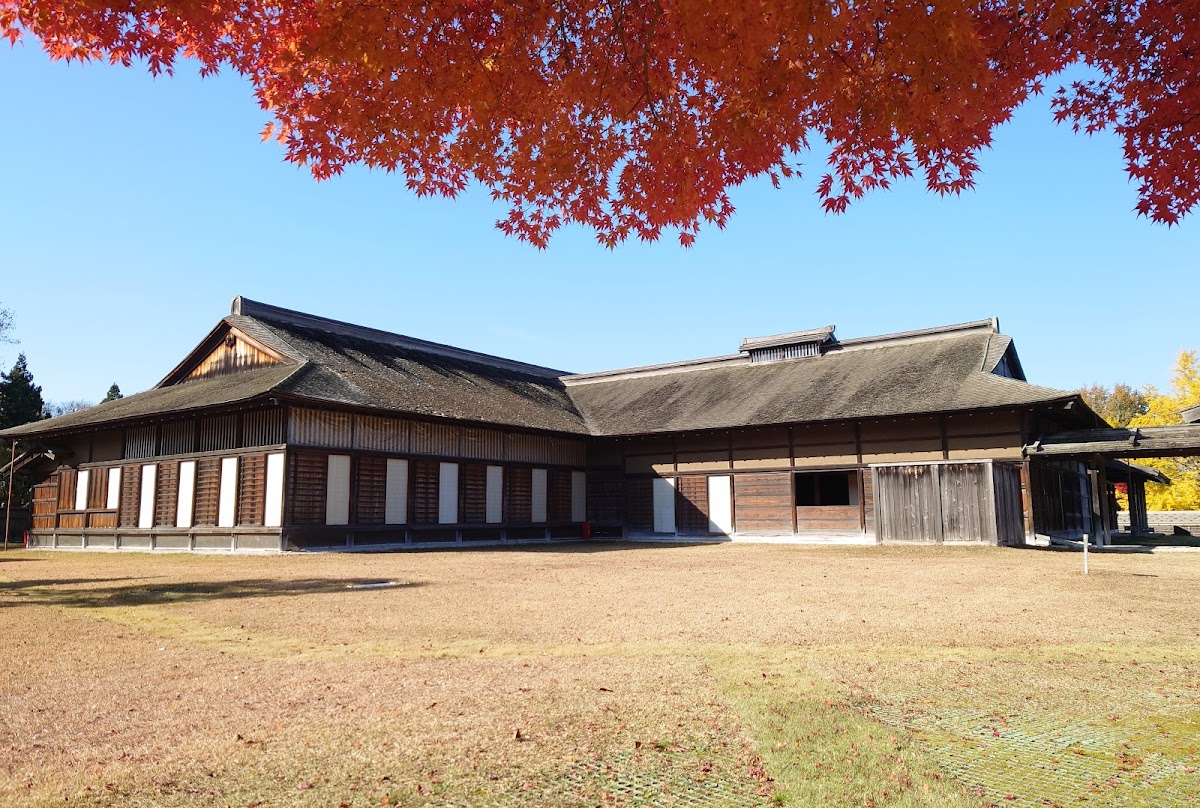
The most important remains of Hachinohe Castle are the Kakugoten Omotemon (Front Gate of the Corner Palace). This gate was used as a castle gate of Hachinohe Castle and has now been relocated and preserved. As one of the few remaining structures of Hachinohe Castle, the Kakugoten Omotemon is a valuable cultural asset.
A total of two castle gates remain, both relocated, but they are important remains that convey the style of Edo period castle architecture. These gates provide concrete evidence that Hachinohe Castle once existed.
Remains of the Moat
Within Sanpachi Castle Park, there are a few places where the remains of the moat can be seen. While most of the moat, which functioned as a defensive structure for the castle, has been filled in, some areas retain the original topography, providing clues to understanding the castle’s structure.
Other Remains
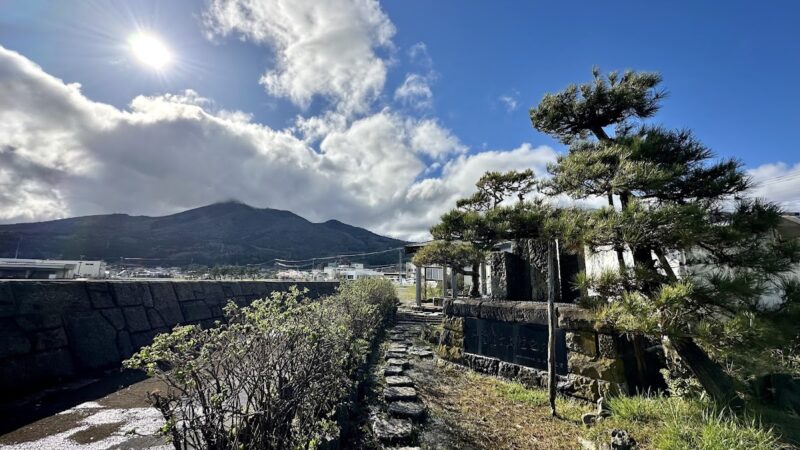
Currently, very few remains of Hachinohe Castle remain overall. Due to urban development since the Meiji era, much of the castle’s buildings and stone walls have been lost. However, it is possible to imagine its original appearance from the limited remains, such as the main keep site, which has been developed into Sanpachi Castle Park, and the relocated and preserved castle gate.
The artificial hills and ponds within the park were created in later periods, but they enhance the atmosphere of the castle ruins and increase its value as a historical site.
Differences between Hachinohe Castle and Nejo Castle
Besides Hachinohe Castle, there is another important castle site in Hachinohe City: Nejo Castle. These two castles are often confused, but they are completely separate fortresses.
Nejo Castle is a medieval castle built in 1334 during the Nanboku-cho period by Nanbu Moriyuki, and it functioned as the base of the Nanbu clan until the Sengoku period. On the other hand, Hachinohe Castle is a modern castle built in the early Edo period and was used as the administrative center of the Hachinohe Domain.
Nejo Castle is currently designated as a national historic site, and with the main keep restored, it is a valuable historical site that allows us to understand the appearance of a medieval castle. In contrast, Hachinohe Castle has few remaining structures and is maintained as a park.
These two castles, differing in era and role, each possess different values as important historical sites that tell the long history of Hachinohe.
Designated Cultural Properties
Currently, the Hachinohe Castle ruins themselves are not designated as a national or prefectural cultural property. The main reason for this is likely the scarcity of remaining structures.
However, preservation efforts are underway for structures such as the relocated and preserved Kakugoten Omote-mon (main gate) as historical buildings of the region. Further active preservation and utilization of these structures as Hachinohe’s historical heritage are expected in the future.
Highlights of Sanpachi Castle Park
Access and Basic Information
Sanpachi Castle Park (Hachinohe Castle Ruins) can be accessed by taxi from Hachinohe Station (approximately 30 minutes) or by local bus. Located in the center of Hachinohe City, it’s easily accessible as part of a city tour.
The park is open year-round, and admission is free. Parking is available, making it convenient to access by car.
Facilities within the Park
Sanpachi Castle Park features the following facilities and points of interest:
- Observation Deck: An observation deck offering panoramic views of Hachinohe city, allowing visitors to experience its former role as a watchtower for the castle.
- Lawn Area: A spacious lawn area suitable for picnics and recreation.
- Artificial Hill: An artificial hill that creates a Japanese garden-like landscape.
- Gourd Pond: A pond that adds color to the park’s scenery.
- Playground Equipment: Playground equipment for children is installed, making it enjoyable for families.
- Statue of Nanbu Naofusa: A bronze statue of the first lord of the Hachinohe domain.
- Castle Ruins Monument: A monument marking the site of Hachinohe Castle.
Japanese Garden
Sanpachi Castle Park also features a Japanese garden, creating a historical atmosphere befitting its connection to the Hachinohe Nanbu clan. While the garden was created later, it plays a role in enhancing the landscape of the castle ruins park.
Visitors can enjoy the scenery of each season, and many citizens visit especially during cherry blossom season and autumn foliage season.
Historical Significance of Hachinohe Castle
Hachinohe Castle may have limited value as a castle ruin due to the scarcity of remaining structures. However, from a historical perspective, it holds the following important significance:
Position in the History of the Nanbu Clan
Hachinohe Castle symbolizes a crucial turning point in the history of the Nanbu clan. The establishment of the Hachinohe Domain through the division of the Morioka Domain reflects the complex circumstances within the Nanbu family and is an interesting example of succession within a daimyo family in the early modern period.
Importance in Regional History
Hachinohe Castle functioned as the political, economic, and cultural center of the Hachinohe region throughout the Edo period. The existence of Hachinohe Castle was critically important in the urban development of Hachinohe, which developed as a castle town. The current urban structure and cultural characteristics of Hachinohe City strongly inherit the legacy of the castle town era centered around Hachinohe Castle.
Clues to Understanding the Reality of Small Domains
As the residence of a small domain with a 20,000 koku (unit of rice production) yield, Hachinohe Castle is a valuable example for understanding the realities of small domains during the Edo period. Unlike the magnificent castles of large domains, the history of Hachinohe Castle reveals the reality of a small domain that managed its affairs within limited financial resources.
Nearby Tourist Attractions
When visiting the Hachinohe Castle ruins, we recommend also visiting the following nearby tourist attractions.
Nejo Castle Ruins
As mentioned above, Nejo Castle, a separate castle from Hachinohe Castle, is designated as a national historic site, and its main keep has been restored. It is a valuable historical site where you can experience the appearance of a medieval castle, and visiting it together with Hachinohe Castle will deepen your understanding of Hachinohe’s history.
Hachinohe City Museum
Adjacent to the Nejo Castle ruins, the Hachinohe City Museum exhibits on the history and culture of Hachinohe. Materials related to Hachinohe Castle and the Hachinohe domain are also on display, and visiting before or after visiting the castle ruins will deepen your understanding.
Hachinohe City Center
The city center of Hachinohe, which developed as a castle town of Hachinohe Castle, is dotted with historical buildings and long-established shops. Visitors can enjoy strolling through the city while searching for traces of its castle town past.
Preservation and Utilization of Hachinohe Castle Ruins
Currently, the Hachinohe Castle ruins are popular with citizens as Sanpachi Castle Park, but efforts to further enhance its value as a historical heritage site are also expected.
Future Challenges
Given the current situation where very few remains are left, the challenge lies in clarifying the detailed structure and scale of the castle through archaeological excavations and documentary research. Furthermore, the appropriate preservation of the remaining remains and the improvement of explanatory signs conveying their historical value are also required.
Potential as a Tourism Resource
Hachinohe City possesses diverse tourism resources, including Nejo Castle Ruins, Kabushima Island, and Tanesashi Coast. The Hachinohe Castle Ruins have the potential to be more effectively utilized as part of a tourism route linked to these resources. For tourists interested in history, the Hachinohe Castle Ruins could become an indispensable spot for learning about Hachinohe’s early modern history.
Summary
Hachinohe Castle was an Edo period castle located in Hachinohe City, Aomori Prefecture, and functioned as the administrative center of the Hachinohe Domain for approximately 200 years. Built in 1627 by the Morioka Domain, it became the center of the Hachinohe Domain and the base of governance for the Nanbu clan after the domain’s division in 1664.
Although very few remains today, the site has been developed into Sanpachi Castle Park, a place of relaxation for citizens. Relocated structures such as the Kakugoten Main Gate and the faint traces of the moat serve as reminders of the castle’s former existence.
Hachinohe Castle is a completely separate castle from the medieval Nejo Castle located in the same city, and each is an important historical site that tells the story of Hachinohe’s history from different eras. Despite the scarcity of remains, it is an indispensable place for understanding Hachinohe’s early modern history, and it is hoped that it will continue to be carefully preserved and utilized in the future.
When you visit Hachinohe, why not take a moment to reflect on the Edo period’s center of government at Sanpachi Castle Park, and then enjoy the view of Hachinohe from the observation deck, experiencing the history of Hachinohe as a castle town?