Complete Guide to the History and Highlights of Yodo Castle | A Key Waterway Hub Built by the Edo Shogunate
What is Yodo Castle?
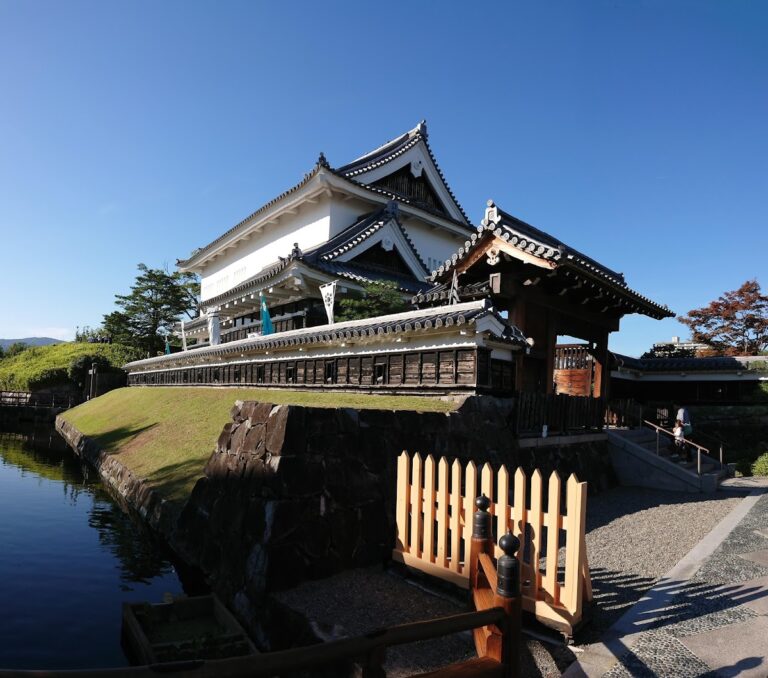
Yodo Castle (Yodo-jo) is a flatland castle located in Yodohonmachi, Fushimi-ku, Kyoto City, Kyoto Prefecture. It was built in 1623 (Genna 9) during the early Edo period. Built at a crucial transportation and waterway hub where the Kizu, Katsura, and Uji rivers converge to form the Yodo River, the castle played a vital role as a defensive base for attacks from Osaka to Kyoto.
Also known as “Tenjo” or “Shin-Yodojo,” it is located approximately 500 meters away from the original Yodo Castle (Old Yodo Castle) built by Toyotomi Hideyoshi. Currently, it is maintained as Yodo Castle Ruins Park, with the stone walls of the main keep and part of the inner moat remaining from its original form.
Throughout the Edo period, Yodo Castle flourished as the only daimyo residence in Yamashiro Province, with successive lords including the Hisamatsu-Matsudaira, Toda, Nagai, and Inaba families serving as its lords. It also played a crucial role as a turning point in history during the Battle of Toba-Fushimi at the end of the Edo period, when it repelled the former shogunate forces at its gates.
History and Development of Yodo Castle
Relationship with Old Yodo Castle
A castle existed in the Yodo area even before the current Yodo Castle was built. From the Muromachi period to the Sengoku period, Old Yodo Castle was built in the Nouso district, north of the current Yodo Castle site, and its strategic location led to numerous battles for control.
Toyotomi Hideyoshi renovated Old Yodo Castle as a birthing place for his concubine, Chacha (Yodo-dono). This castle, which gave rise to the nickname “Yodo-dono” for Chacha, is also where Tsurumatsu, the half-brother of Toyotomi Hideyori, was born. However, when Hideyoshi built Fushimi Castle, the old Yodo Castle was abandoned.
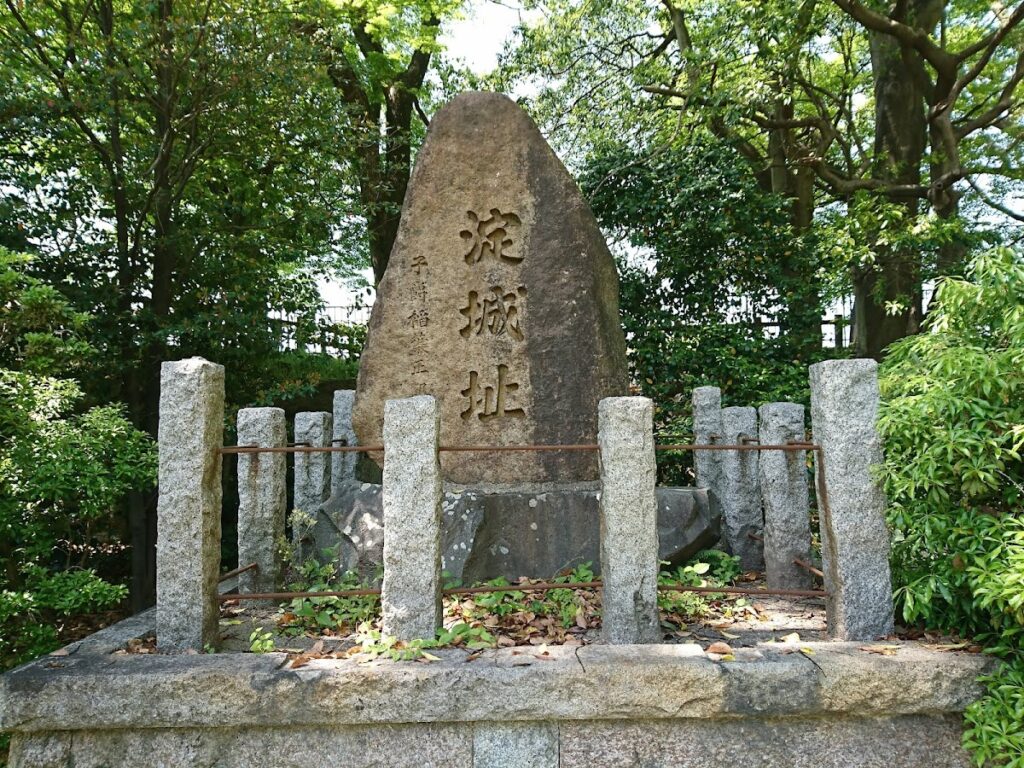
Currently, very few remains of the old Yodo Castle exist, and the area has been largely developed into residential land. However, a stone monument stands at Myokyo-ji Temple, allowing us to imagine its former glory.
Construction during the Edo Period
In 1623 (Genna 9), Matsudaira Sadatsuna built a new Yodo Castle at its current location by order of Tokugawa Hidetada. This was commissioned by the Edo Shogunate as a replacement for the Tokugawa clan’s Fushimi Castle, which had been abandoned on Kohatayama Mountain.
Materials from the abandoned Fushimi Castle were reused during its construction. In particular, it is said that the keep was relocated from Nijo Castle. This keep, with its three-story, four-tiered structure, became a symbolic building of the Yodo area. Yodo Castle was located in Shimanouchi, formed at the confluence of the Uji River (former riverbed) and the Kizu River (former riverbed), and functioned as a strategic point controlling water transport. It was an important base for defending against enemy attacks on Kyoto from the Osaka Hirakata area.
Changes in Successive Castle Lords
Matsudaira Sadatsuna, the first lord of Yodo Castle, was transferred to Ogaki in Mino Province in 1633 (Kanei 10). Afterward, Nagai Naomasa took over the castle and carried out renovations.
After the Nagai clan, the Toda clan became lords, then the Ishikawa clan, and from 1723 (Kyoho 8), the Inaba clan became lords. The Inaba clan ruled this area for 10 generations until the end of the Edo period, reigning as the lords of the Yodo Domain with a 100,000 koku stipend.
Throughout the Edo period, Yodo Castle remained an important base for the shogunate’s control of western Japan, serving as the residence of a fudai daimyo (hereditary vassal daimyo). Many of the castle’s successive lords held important positions in the shogunate, playing a significant political role.
The Turmoil of the Late Edo Period and the Castle’s Demolition
In January 1868 (Keio 4), the Battle of Toba-Fushimi broke out. This battle marked a crucial turning point in history for Yodo Castle.
When the former shogunate forces (Tokugawa Yoshinobu’s army), facing defeat, requested entry into Yodo Castle, the then-lord, Inaba Masakuni, closed the gates and refused entry. This decision, made by a fudai daimyo (hereditary vassal) to reject the former shogunate forces, is etched in history as a symbol of the decline of the shogunate’s authority.
After the Meiji Restoration, Yodo Castle was demolished in 1871 (Meiji 4) with the abolition of the feudal domains and establishment of prefectures. Subsequently, much of the castle was demolished, and most of the buildings were lost. However, the stone walls of the main keep and a portion of the inner moat escaped destruction, preserving their former appearance to this day.
The Castle Structure of Yodo Castle
Layout and Arrangement
Yodo Castle was a typical flatland castle, with a concentric layout featuring the main keep (Honmaru) at its center, surrounded by the second and third baileys (Ninmaru and Sannomaru). It was surrounded by a moat, and its defensive system took advantage of its strategic location as a water transport hub.
The main keep (Honmaru) measured approximately 200 meters east-west and 150 meters north-south, with a keep base located in the northwest corner. The second bailey (Ninmaru) was located south of the main keep, and housed the lord’s residence and buildings serving as the domain’s administrative offices.
The third bailey (Sannomaru) was the outer area, including the castle town, where samurai residences and merchant districts were located. The entire castle was surrounded by rivers of the Yodo River system, which functioned as a natural moat.
Keep and Keep Base
As mentioned above, Yodo Castle’s keep was a three-story, four-tiered structure said to have been relocated from Nijo Castle. Built on the castle tower base at the northwest corner of the main enclosure, it was a symbolic structure overlooking the Yodo area.
Although the castle tower building is now gone, the stone walls of the castle tower base remain in good condition. The base was constructed using a combination of rough-hewn stone masonry and fitted stone masonry techniques, making it a valuable historical relic that conveys the castle construction techniques of the early Edo period.
The castle tower base measures approximately 15 meters square and is about 8 meters high. The corners of the stone walls utilize the sanuki-zumi technique, enhancing structural strength.
Characteristics of the Stone Walls
The stone walls of Yodo Castle were constructed using materials repurposed from Fushimi Castle, resulting in a unique blend of construction techniques from multiple eras. The stone walls surrounding the main enclosure extend approximately 600 meters in total length, and much of it remains today.
Various techniques such as rough-hewn stone masonry, fitted stone masonry, and cut stone masonry were used in the construction of the stone walls. The stone walls on the east side of the main keep, in particular, are remarkably well-preserved, allowing for detailed observation of the stonework techniques of the time.
The stones used are primarily granite, with some repurposed from Fushimi Castle and Yodo Old Castle. Some of these stones bear markings, providing valuable evidence of the stonemason group that built the castle.
Moats and Water System
The core of Yodo Castle’s defense system was the moat surrounding the castle. The inner moat separated the main keep from the second keep, while the outer moat surrounded the entire castle grounds.
The inner moat was approximately 20 to 30 meters wide and 3 to 4 meters deep. Water was drawn from the Yodo River system, maintaining a constant water level.
Currently, a portion of the inner moat remains within Yodo Castle Ruins Park, allowing visitors to experience its former scale. Cherry trees are planted along the moat’s edge, offering a beautiful view in spring.
The water management system was used not only for defense but also for the town’s water supply and transportation, indicating that Yodo Castle was a crucial point for water transport.
Highlights of Yodo Castle Ruins Park
Main Enclosure Stone Walls
The most impressive feature of Yodo Castle Ruins Park is the stone walls surrounding the main enclosure. The eastern and northern walls, in particular, are well-preserved, boasting an imposing presence of approximately 6 to 8 meters in height.
Careful observation of the stone wall’s surface reveals differences in the degree of stone processing and stacking methods, indicating that repairs were carried out at multiple stages. Furthermore, some stones retain markings, revealing traces of the stonemason groups involved in the castle’s construction.
At the corners of the stone walls, a technique called “san-gi-zumi,” which involves alternating rectangular stones, is used, achieving both structural strength and aesthetic harmony.
Remains of the Castle Tower Base
Located in the northwest corner of the main enclosure, the castle tower base is one of the highlights of Yodo Castle Ruins Park. Although the castle tower itself is gone, the stone base remains in excellent condition, allowing us to imagine the imposing presence of the tower in its heyday.
Climbing to the top of the tower base offers panoramic views of the surrounding landscape. The former lords of the castle likely gazed upon the Yodo River’s water transport and the castle town from this very spot.
The stone walls of the tower base exhibit a mixture of rough-hewn and fitted stonework techniques, revealing both the original appearance and traces of later renovations.
Inner Moat Landscape
Within Yodo Castle Ruins Park, a portion of the inner moat is preserved in good condition. The moat is approximately 25 meters wide and currently about 2 meters deep.
Cherry trees are planted along the moat’s edge, creating a beautiful landscape in spring with the cherry blossoms, stone walls, and water surface. Many visitors come to enjoy the cherry blossoms during the season, creating a space where history and nature harmonize.
The moat’s water is still supplied from the Yodo River system, indicating that part of the original water management system is still functioning.
Stone Monuments and Information Boards
Within the park, there are information boards and stone monuments explaining the history of Yodo Castle. They provide detailed explanations of the castle’s history, structure, and successive lords, helping visitors deepen their understanding.
In particular, the information board explaining Yodo Castle’s role in the Battle of Toba-Fushimi is a valuable source of information for understanding the castle’s importance during the turbulent Bakumatsu period.
Cultural and Historical Value of Yodo Castle
The Edo Shogunate’s Base for Controlling Western Japan
Yodo Castle was an important base for the Edo Shogunate to control western Japan, especially the Osaka and Kyoto region. Located west of Osaka Castle and strategically situated to control the entrance to Kyoto, it was a place where fudai daimyo (hereditary feudal lords) were stationed.
As the only daimyo residence in Yamashiro Province, Yodo Castle was also the political, economic, and cultural center of the region. The castle town was a hub for merchants and artisans, and prospered as a center for the collection and distribution of goods utilizing the Yodo River’s water transport.
Role as a Key Point for Water Transport
The location where Yodo Castle was built is near the confluence of the Kizu, Katsura, and Uji Rivers to form the Yodo River, and has been known as a key point for water transport since ancient times.
During the Edo period, it functioned as an important transit point for the Yodo River water transport connecting Osaka and Kyoto, and landing places and wholesalers were established in the castle town. Goods such as rice, sake, and timber were transported via Yodo, playing an important economic role.
The lord of Yodo Castle had the authority to manage and control this water transport, and also collected tolls.
Importance in the History of the Late Edo Period
The role of Yodo Castle in the Battle of Toba-Fushimi holds significant meaning in modern Japanese history. The Inaba clan, a hereditary daimyo family, refusing entry to the former shogunate forces was a symbolic event demonstrating, both domestically and internationally, the already declining authority of the shogunate.
This decision significantly lowered the morale of the former shogunate forces, further shifting the tide of battle in favor of the new government forces. The refusal to allow entry at the gates of Yodo Castle truly marked a turning point in history.
Related Historical Sites Around Yodo Castle
Yodo Old Castle Ruins (Myokyo-ji Temple)
Myokyo-ji Temple now stands on the site of Yodo Old Castle, and a stone monument to Yodo Old Castle is erected within its grounds. It is the only place where one can still glimpse the castle’s appearance, which Toyotomi Hideyoshi renovated for Chacha.
Myokyo-ji Temple is located approximately 600 meters north of Yodo Castle and is accessible on foot. A visit to Myokyo-ji Temple is recommended when visiting Yodo Castle.
Yodo Waterwheel
Near Yodo Castle Ruins Park, there is a restored waterwheel that once supported water transport on the Yodo River. From the Edo period to the Meiji period, many waterwheels were installed in Yodo and used for rice milling and flour milling.
Waterwheels symbolized Yodo’s local industries and were important facilities supporting the economy of the castle town.
Yodo River Park
To the south of Yodo Castle lies Yodo River Park, where you can enjoy the majestic flow of the Yodo River. It’s a pleasant experience to stroll along the riverbank while imagining the view from Yodo Castle in the past.
Access to Yodo Castle
Access by Public Transportation
The nearest station to Yodo Castle Ruins Park is Yodo Station on the Keihan Main Line of the Keihan Electric Railway. The park is approximately a 5-minute walk from Yodo Station.
From central Kyoto, it’s about a 30-minute ride on the Keihan Railway, and from central Osaka, it’s about a 40-minute ride. Yodo Station is only served by local trains, but the frequency is relatively high, making it a convenient line to use.
If using the JR Tokaido Main Line, you can get off at Nagaokakyo Station or Kyoto Station and transfer to the Keihan Railway.
Access by Car
If accessing by car, it’s about a 15-minute drive from the Kyoto Minami Interchange on the Meishin Expressway, or about a 20-minute drive from the Kamitoba Exit on the Hanshin Expressway.
There is no dedicated parking lot at Yodo Castle Ruins Park, but there are several coin-operated parking lots nearby. However, since the number of spaces is limited, we recommend using public transportation.
Estimated Visiting Time
For a thorough visit to Yodo Castle Ruins Park, allow approximately 1 to 1.5 hours. You can observe the remains such as the stone walls, castle tower base, and moat, and learn about the history by reading the information boards.
If you also plan to visit Yodo Castle Ruins (Myokyo-ji Temple), we recommend allocating an additional 30 minutes or so.
Notes for Visitors
Yodo Castle Ruins Park is open year-round, and admission is free. However, lighting is limited at night, so daytime visits are recommended.
While the park is well-maintained, please avoid climbing on the stone walls or entering restricted areas, as this is dangerous.
The scenery is particularly beautiful during the cherry blossom season in spring and the autumn foliage season, but it can get crowded.
To Learn More About Yodo Castle
Recommended References
For those who wish to learn more about Yodo Castle, the following books and materials are helpful:
“History of Kyoto Prefecture” (Yamakawa Publishing) provides a detailed explanation of the history of castles in Kyoto Prefecture, including Yodo Castle. “Comprehensive Survey of Japanese Castles” Volume 11 (Shin Jinbutsu Oraisha) includes a detailed layout map and historical changes of Yodo Castle.
The excavation reports published by the Kyoto City Archaeological Research Institute record the results of the Yodo Castle excavations, allowing for an understanding of the castle’s structure from an archaeological perspective.
Related Castles
When visiting Yodo Castle, a deeper understanding can be gained by also visiting related castles in the surrounding area.
Fushimi Castle is the predecessor of Yodo Castle and played an important role during the eras of Toyotomi Hideyoshi and Tokugawa Ieyasu. Currently, a reconstructed keep stands there, known as Fushimi Momoyama Castle.
Nijo Castle is the original castle from which Yodo Castle’s keep is believed to have been relocated, and is a representative castle of Kyoto, registered as a World Heritage Site.
Osaka Castle was a key base in western Japan that Yodo Castle defended, and is a famous castle where the history of the Toyotomi and Tokugawa clans is etched.
Summary
Yodo Castle was a strategic base built by the Edo Shogunate at a crucial point for water transport, and played an important role throughout the Edo period as the only daimyo residence in Yamashiro Province. Built using materials from Fushimi Castle and incorporating the relocated keep from Nijo Castle, this castle is a valuable historical site showcasing early Edo period castle construction techniques.
Currently, the castle ruins, now known as Yodo Castle Ruins Park, retain the stone walls of the main keep, the keep’s foundation, and a portion of the inner moat, allowing visitors to imagine its former glory. The particularly well-preserved stone walls are an interesting example of a blend of construction techniques from various eras.
This site also marked a historic turning point in modern Japanese history, as it was the location where the former shogunate forces were refused entry at the gates during the Battle of Toba-Fushimi at the end of the Edo period.
With excellent access, just a 5-minute walk from Yodo Station on the Keihan Railway, it offers a tranquil environment for historical exploration. In spring, the beautiful scenery created by the stone walls, moat, and cherry blossoms captivates visitors.
Yodo Castle is an important fortress with multiple historical contexts: its role as the Edo shogunate’s control over western Japan, its importance as a key point for water transport, and its connection to the turmoil of the late Edo period. Through its history and remains, it can be said to be a valuable historical site from which one can learn about aspects of Japanese castle history and early modern and modern history.