A Thorough Explanation of the History and Highlights of Shirihachidate (Aomori Prefecture) – The Complete Picture of Honshu’s Northernmost Mountain Castle
Located in the Ushirogata district of Aomori City, Aomori Prefecture, Shirihachidate is known as a full-fledged mountain castle located at the northernmost tip of Honshu. Also known as Shirihachi Castle, Shirihachi Shield, Reiko Castle, and Shirihoro Chashi, this castle site was a base for the Ando clan, who played an important role in the history of Tohoku during the Middle Ages, and is a fascinating historical site where Ainu and Japanese cultures intersected.
This article comprehensively explains the detailed history of Shirihachidate, the characteristics of its remains, its highlights, and access methods, providing useful information for castle enthusiasts and history lovers.
Basic Information on Shirihachi Castle
Location: Sakurayama, Ushirogata, Aomori City, Aomori Prefecture
Other Names: Shirihachi Castle, Shirihachi Shield, Reiko Castle, Shirihoro Chashi, Shiriporo Chashi
Castle Structure: Mountain Castle
Construction Period: Around the Kanki era (1229-1232) or the second year of Ryakuō (1339)
Builder: Andō clan (various theories exist)
Elevation: Approximately 189.5m
Relative Height: Approximately 160m
Year of Abandonment: Eikyō 7 (1435)
Remains: Enclosures, moats, dry moats, earthworks
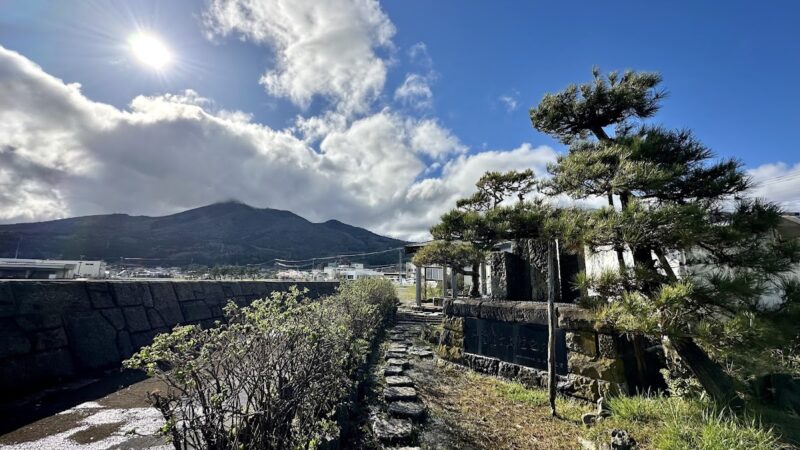
Shirihachi Castle is built on a ridge extending northeast from a mountain with an elevation of 189.5 meters, surrounded by the Ushirogata River and the Rokumaibashi River. It is located west of Ushirogata Station on the JR Tsugaru Line and is currently maintained as a mountain castle park.
The History of Shirihachi Castle
From Ainu Shirihoro Chashi to Japanese Castle
The most distinctive feature of Shirihachi Castle is that its origins lie in the Ainu fort “Shirihoro Chashi (Shiriporo Chashi).” “Shiriporo” means “between the mountains” in the Ainu language, and “chashi” refers to a “fence” or “fort.” This area was originally a high ground used by the Ainu people as a defensive structure.
In the Middle Ages, the Ando clan, who were expanding their power in northern Mutsu Province, are believed to have renovated this Ainu fort and developed it into a full-fledged mountain castle. The process of an Ainu defensive structure transforming into a Japanese castle is a valuable example illustrating the fusion and transformation of cultures in the northern region.
Shirihachi Castle as the Base of the Ando Clan
The Ando clan was a powerful family that held a vast sphere of influence from the Tsugaru region to southern Hokkaido. Their base was Tosaminato, an important trading port on the Sea of Japan side. During the medieval period, Jusan-minato flourished as a center of northern trade, and the Ando clan accumulated immense wealth through trade with the Ainu and their connections to Hokkaido.
Around the Kanki era (1229-1232), the Ando clan faced the prospect of being driven out of Jusan-minato. It is said that at this time, the Ando clan moved to southern Hokkaido, and in the process, they developed Shirihachi Castle as an important base. However, records from this period are limited, and there are various theories regarding the castle’s construction date.
The “Soga Sadamitsu Petition” from 1339 (Ryakuō 2) records that Soga Sadamitsu attacked Ando Shiro Michisada (Shiogata Michisada) of “Shirihachi Shield,” confirming that Shirihachi Castle was definitely functioning at this time. This document is considered one of the most reliable historical sources indicating the existence of Shirihachi Castle.
Conquest and Abandonment by the Nanbu Clan
Shirihachi Castle served as a base for the Ando clan for approximately 205 years, from the Kamakura period to the Muromachi period. However, in 1435 (Eikyo 7), it was attacked and finally fell to the forces of Nanbu Yoshimasa, who had advanced southward.
This battle marked a major turning point that significantly altered the power balance in the Tsugaru region. The Nanbu clan’s attack forced the Ando clan back north, and Shirihachi Castle ended its historical role. After its abandonment, the site was long forgotten, but recent investigations have revealed valuable remains, leading to a re-evaluation of its historical value.
Structure and Remains of Shirihachi Castle
Layout and Enclosure Arrangement
Shirihachi Castle is a typical mountain castle utilizing the ridge extending northeast from Mount Ushirogata. The main remains are arranged along the east-west ridge, with a structure centered around the eastern and western enclosures.
Honmaru (Main Enclosure): Located at the mountaintop, this was the most important defensive stronghold. Surrounded by earthen ramparts, it offered excellent views. On clear days, it offered a panoramic view of the Tsugaru Peninsula and Mutsu Bay, indicating its strategic importance as a military observation point.
Higashi-Kuruwa (Eastern Enclosure): A group of enclosures located east of the Honmaru, constructed in multiple terraced levels. A celadon incense burner with a peony design, attributed to the Longquan kiln in China, was unearthed from the south side of the second terrace, demonstrating the high cultural level of the castle lord.
Nishi-Kuruwa (Western Enclosure): Located west of the Honmaru, this enclosure, along with the Higashi-Kuruwa, played a crucial role in defending the Honmaru.
Characteristics of Defensive Facilities
The defensive facilities of Shirihachi Castle possess characteristics typical of a full-fledged mountain castle.
Horikiri (Moat): Multiple moats dug to cut across the ridge can be identified. This was the most effective defensive structure to prevent enemy intrusion, serving to stop enemies attacking along the ridge. The remains are still clearly visible today, and their depth and width reveal the formidable defenses of the time.
Dry Moat: A dry moat surrounds the enclosure. These moats were constructed to make it difficult for the enemy to approach and create favorable combat conditions for the defenders.
Earthwork: Earthworks were built along the edges of the enclosure, enhancing defensive capabilities and likely functioning as building foundations. Some of these earthworks remain in good condition today.
These remains indicate that while the castle was based on Ainu chashi (fortified settlements), it was significantly modified and strengthened by Japanese castle construction techniques. The planned arrangement of enclosures and defensive structures, rather than simple fences or earthen mounds, is befitting of its reputation as a full-fledged mountain castle at the northernmost tip of Honshu.
The Castle’s Reality as Told by Excavated Artifacts
Numerous valuable artifacts have been unearthed from Shirihachi Castle, providing clues to the castle’s character and the life of the people at the time.
Celadon Incense Burner with Raised Peony Design: This incense burner, made in the Longquan kiln of China, is an artifact symbolizing the wealth and cultural sophistication gained by the Ando clan through northern trade via Jusanminato. It indicates that the site was not merely a military base, but also a place where a culturally advanced lifestyle was maintained.
Tea Mill: The discovery of a tea mill used in daily life provides insight into the dietary habits within the castle.
Buried Coins: A group of 99 coins, totaling 194 coins including the latest Eiraku Tsuho, were unearthed. These are important materials suggesting economic activity within the castle and burial practices at the time of its abandonment. The Eiraku Tsuho coin circulated from the early 15th century, providing evidence supporting the final period of the Shirihachi-kan.
These artifacts are currently stored and displayed in local museums, serving as concrete evidence of the historical value of Shirihachi-kan.
Regarding the notation “Den Shirihachi-kan”
When examining materials related to Shirihachi-kan, you may encounter the notation “Den Shirihachi-kan.” This is because academic questions remain regarding whether the current castle ruins are exactly the same as the “Shirihachi-kan” described in historical records.
There is no definitive evidence that “Shirihachi-tate,” mentioned in the “Soga Sadamitsu Petition” of 1395, refers to the current castle ruins on Ushirogatayama or to a facility located elsewhere. Therefore, the prefix “traditional site” is sometimes cautiously added.
However, based on the location, the scale of the remains, and the age of the excavated artifacts, it is considered highly probable that the current castle ruins are the Shirihachi-kan described in historical records. Further archaeological investigations may resolve this question.
Highlights of Shirihachi-kan
View from the Main Enclosure
The greatest highlight of Shirihachi-kan is the magnificent view from the main enclosure. From the mountaintop at an altitude of 189.5 meters, you can enjoy a panoramic view of Mutsu Bay, the Tsugaru Peninsula, and the Hakkoda Mountains. On clear days, you can see as far as the mountains of Hokkaido, and this view truly highlights why it was such an important military observation point.
The scenery is especially beautiful in spring with its fresh greenery and in autumn with its vibrant foliage, making it the perfect season for exploring the castle ruins. While snow makes climbing difficult in winter, the snow-covered castle ruins also possess a unique charm.
Clearly Remaining Moats
As you proceed along the path to the castle, you’ll encounter moats that cut across the ridge. These deeply excavated moats remain clearly visible even after hundreds of years, allowing you to experience the reality of the defensive structures of the time. The terrain changes significantly before and after the moats, making it an important point of interest for understanding its function as a defensive structure.
Terraces and Earthworks of the Enclosures
The terraces of the eastern and western enclosures, as well as the surrounding earthworks, are also noteworthy. While skillfully utilizing the natural terrain, the artificially constructed flat areas and earthen mounds demonstrate the technological level of medieval castle construction. The multiple terraces in the eastern enclosure, in particular, demonstrate ingenuity in maximizing the limited mountaintop space.
Well-maintained climbing route
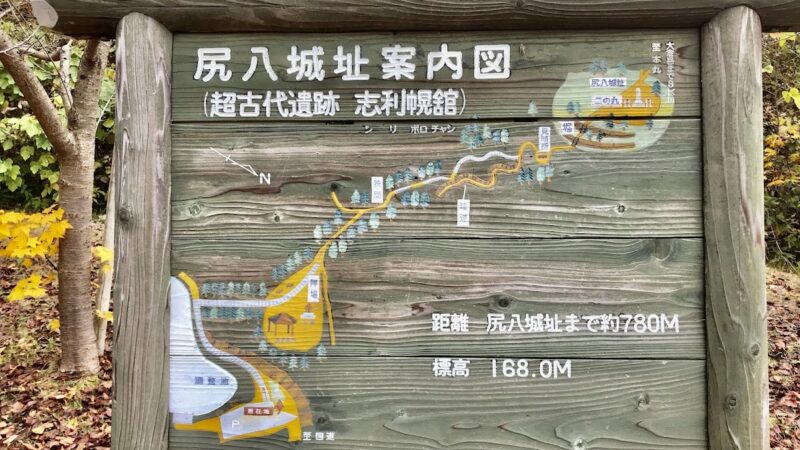
Currently, the Shirihachikan Castle ruins are maintained as a mountain castle park, and the climbing route is relatively easy to walk. Signposts and explanatory panels are also installed, so even first-time visitors can explore with ease. However, as it is a mountain castle, we recommend wearing comfortable shoes and clothing.
Access Information
Access by Public Transportation
JR Tsugaru Line: Take the JR Tsugaru Line from Aomori Station and get off at Ushirogata Station. The journey takes approximately 20 minutes. From Ushirogata Station, it’s about a 15-minute walk to the trailhead of the Shirihachikan Castle ruins.
From the station, head north along National Route 280 towards the Shinkansen overpass. After passing under the overpass, you will find Ushirogata Mountain, which is the site of the Shirihachikan Castle ruins. Signposts are installed, making it a relatively easy route to follow.
Access by Car
From central Aomori City: Head north on National Route 280 towards the Ushirogata area. The journey takes approximately 25 minutes.
Parking: There are a few parking spaces near the trailhead. However, it is not a proper parking lot, so it may be full on weekends and during peak tourist seasons.
Time Required for Climbing the Castle
From the trailhead to the main keep, it takes approximately 20-30 minutes at a normal hiking pace. If you take your time to carefully view the ruins, allow 1.5 to 2 hours for the round trip.
Nearby Attractions
Aburakawa Castle Ruins
Located approximately 8 kilometers south of Shirihachikan, Aburakawa Castle Ruins are also associated with the Ando clan. Visiting both Shirihachikan and Aburakawa Castle Ruins together will help you understand the Ando clan’s sphere of influence in the Tsugaru region.
Yomogita Castle Ruins
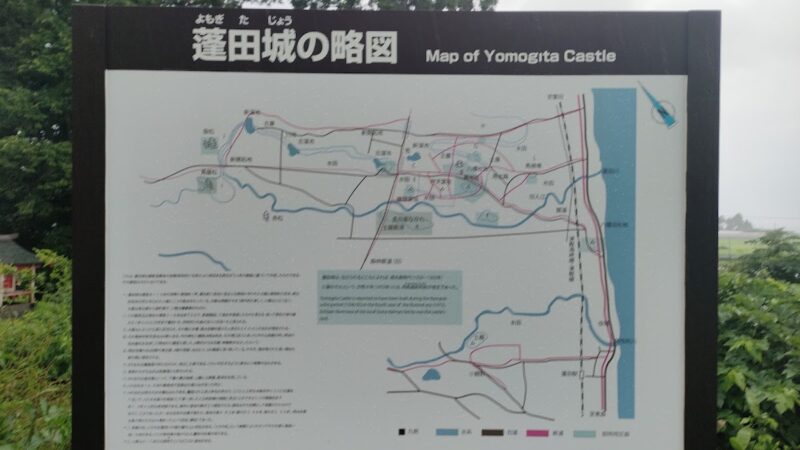
Located north of Shirihachikan, Yomogita Castle is also an important castle in medieval Tsugaru. This is also a mountain castle, and like Shirihachi-kan, the remains of moats and baileys are still visible.
Jusanminato Ruins
The ruins of Jusanminato, the base of the Ando clan, are an essential related historical site for understanding the history of Shirihachi-kan. Located in Goshogawara City, Aomori Prefecture, it offers traces of a medieval port city. Excavations have unearthed a large number of trade ceramics and wooden artifacts, making it a valuable site for understanding the realities of northern trade.
Notes for Visiting Shirihachi-kan
Clothing and Equipment
Since Shirihachi-kan is a full-fledged mountain castle, the following equipment is recommended.
- Footwear: Trekking shoes or athletic shoes (non-slip)
- Clothing: Long-sleeved shirt and long pants that are easy to move in and can withstand friction from branches and grass
- Other: Drinking water, towel, insect repellent (summer)
Best Time to Visit
Spring (April-June): Beautiful fresh greenery and mild weather, ideal for visiting the castle.
Autumn (September-November): Stunning autumn foliage and excellent views.
Summer (July-August): Overgrown vegetation and numerous insects make visiting somewhat difficult.
Winter (December-March): Heavy snowfall makes visiting the castle difficult.
Safety Precautions
- Avoid visiting alone; visit with others if possible.
- Be careful as the ground can be slippery during and after rain.
- Check your cell phone signal strength beforehand. – Plan your trip with ample time to descend before sunset.
Historical Significance of Shirihachi Castle
Shirihachi Castle is not merely a local castle ruin, but a historical site of significant importance in Japanese history.
Position in Northern History
Shirihachi Castle, which transformed from an Ainu fort to a Japanese castle, is an example of ethnic exchange and cultural fusion in the northern region. It is an indispensable site for understanding the history of the Tsugaru region, a contact area between the Ainu and the Japanese.
Important Center for Ando Clan Research
The Ando clan is a key family in medieval northern history, yet many aspects of their existence remain unclear due to limited historical sources. Shirihachi Castle is one of the few pieces of physical evidence that reveals the true nature of the Ando clan, and further research is expected.
Value in Medieval Castle History
As the northernmost full-fledged mountain castle on Honshu, Shirihachi Castle is a valuable example that marks the northern limit of medieval castles. It is an important comparative site in the study of castles in the Tohoku region.
Summary
Shirihachi Castle (Aomori City, Aomori Prefecture) is an important castle ruin at the northernmost tip of Honshu, originating from the Ainu Shirihoro Chashi and later remodeled into a full-fledged mountain castle by the Ando clan. This castle, which functioned for approximately 205 years from the Kanki era until its fall in 1435, retains clear remains such as moats, dry moats, and earthworks, making it a valuable historical site where one can experience the reality of a medieval castle.
Accessible on foot from Ushirogata Station, and developed as a mountain castle park, it’s a recommended spot not only for castle enthusiasts but also for history buffs and hiking lovers. The view from the main keep is magnificent, offering a panoramic view of Mutsu Bay and the Tsugaru Peninsula on a clear day.
When visiting Aomori Prefecture, be sure to visit the Shirihachi Castle ruins and experience the history and atmosphere of this northernmost mountain castle on Honshu. Here, you can feel the rise and fall of the Ando clan, the interaction between the Ainu and the Japanese, and the turbulent history of medieval Tohoku.