
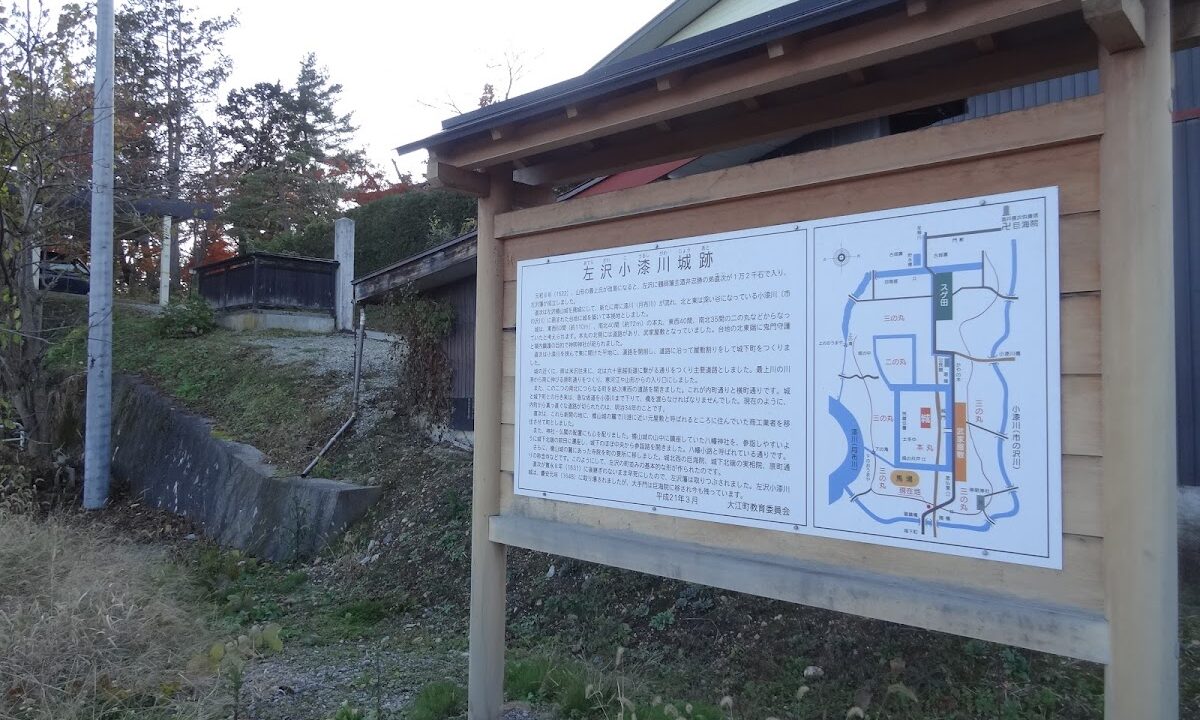
History and Highlights of Koshikawa Castle (Ōe Town, Yamagata Prefecture) | Visiting the Castle Ruins of the Aterazawa Domain and the Gate of Kyōkai-in Temple
Located in Ōe Town, Nishimurayama District, Yamagata Prefecture, Koshikawa Castle is a castle built in the early Edo period and is an indispensable historical site for understanding the history of Aterazawa, a key point on the Mogami River shipping route. Although the castle itself is no longer there, the gate, relocated to Kyōkai-in Temple, still conveys a glimpse of its former glory.
What is Koshikawa Castle? | The Castle that Became the Center of the Aterazawa Domain
Koshikawa Castle is a flatland castle built by Sakai Naotsugu, the lord of the Aterazawa Domain, between 1622 (Genna 8) and the early Kan’ei period. Located in the Koshikawa district of Ōe Town, it was constructed as a new base for the domain, replacing Aterazawa Tateyama Castle.
Castle Scale and Structure
Koshikawa Castle was built on a hill overlooking the Mogami River and was closely linked to the development of the castle town of Sagae. While historical records are limited regarding the detailed structure of the castle, it is believed to have been a full-fledged castle equipped with domain administrative functions.
One of the castle’s distinguishing features is its location, which allowed for the monitoring and management of Mogami River shipping. At the time, the Mogami River was a major artery for the transport of goods, and Sagae was an important transit point. Koshikawa Castle also played a role in controlling this shipping.
Background of Construction
There are believed to have been several reasons for the relocation from Sagae Tateyama Castle to Koshikawa Castle. Tateyama Castle was a medieval mountain castle located in what is now Tateyama Park. While suitable for defense during the Sengoku period, it had some inconveniences during the peaceful Edo period.
The relocation to Koshikawa made it possible to conduct administrative affairs in a location closer to flat land, and also facilitated the development of the castle town. In parallel with the construction of the castle, Sakai Naotsugu oversaw the town planning and road development in Sagae, promoting commercial growth.
History of Sakai Naotsugu and the Sagae Domain
About Sakai Naotsugu
Sakai Naotsugu was a daimyo who entered Sagae in 1622 (Genna 8) after the Mogami clan’s downfall. The Sakai family was known as a hereditary daimyo of the Tokugawa family, and Naotsugu, as the first lord of the Sagae Domain, made significant contributions to the region’s development despite having only 10,000 koku.
Naotsugu’s role in Sagae extended beyond mere rule. He is remembered in history as a figure who laid the foundation for the region through the construction of Koshikawa Castle, the development of the castle town of Sagae, and the promotion of Mogami River shipping.
Changes in the Sagae Domain
Although a small domain, the Sagae Domain possessed an important economic base through Mogami River shipping. From the Genroku era to the early Taisho period, Sagae flourished as a transit point for river transport, attracting many merchants and creating a bustling atmosphere.
However, around 1648 (Keian 1), Koshikawa Castle was demolished. This is presumed to have been related to the shogunate’s “One Castle Per Province” decree and the domain’s financial situation. Even after the castle’s abandonment, Sagae continued to function as the domain’s center.
Kokaiin Temple Gate | The Only Existing Remains of Koshikawa Castle
Kokaiin Temple and its History
After Koshikawa Castle was demolished, its main gate was relocated to a temple called Kokaiin. Kokaiin is located in the center of Sagae, and this gate is the only structure that still conveys the history of Koshikawa Castle.
The relocation to Kokaiin is estimated to have occurred around 1648 (Keian 1), roughly the same time as the castle’s abandonment. The temple gate is a valuable cultural asset that conveys the architectural techniques of the time and is designated as a cultural property of Ooe Town.
Architectural Features of the Temple Gate
The Kyokaiin Temple Gate is thought to have been built between 1622 (Genna 8) and the early Kan’ei period, and retains strong characteristics of the early Edo period style. Its imposing wooden structure still maintains the dignity of a castle gate.
The architectural style exhibits characteristics of castle architecture from that period, making it an important resource for historical research. Visitors who pass through this gate can reflect on the history of the Sagae Domain from approximately 400 years ago.
Relationship with Sagae Tateyama Castle
History of Sagae Tateyama Castle
Sagae Tateyama Castle was the predecessor of Koshikawa Castle. This castle, located in the present-day Tateyama Park (Tateyama Park), was a large-scale mountain castle that existed from the medieval period to the early modern period.
Tateyama Castle was built on a mountaintop approximately 200 meters above sea level overlooking the Mogami River and functioned as an important military base during the Sengoku period (Warring States period). It was also under the control of the Mogami clan and played a significant role in the history of this region.
Why was the castle relocated?
With the end of the warring states period in the Edo era, the convenience of administrative operations became more important than the defensive capabilities of mountain castles. Because Tateyama Castle was located on a steep mountaintop, it was unsuitable for daily administrative work and the development of the castle town.
Therefore, Sakai Naotsugu decided to build a new castle in Koshikawa, a location closer to flat land. This led to the development of the castle town and a revitalization of commercial activity.
Current status of Koshikawa Castle ruins
Status of the castle ruins
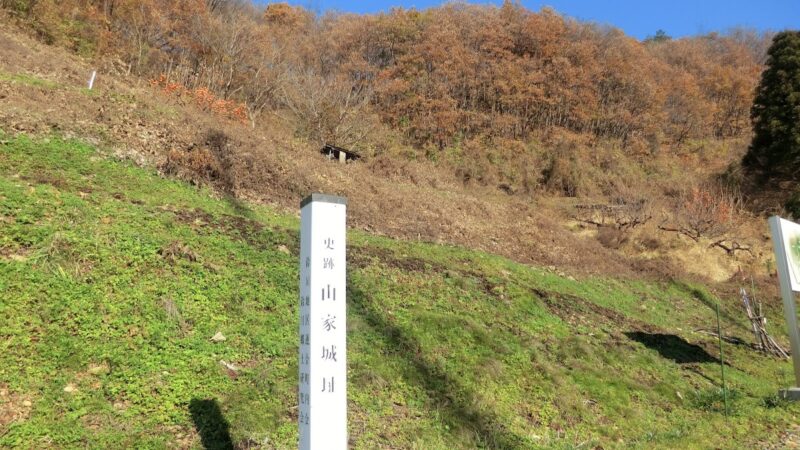
Currently, there are few clear historical records regarding the exact location of the main keep and other parts of Koshikawa Castle, and many details remain unknown. While few remains of the castle can be seen on the surface, local legends still tell of the castle’s location.
In Ooe Town, research and information dissemination continue to preserve this valuable historical heritage for future generations. The Kyokaiin Temple Gate is the only physical evidence proving the existence of Koshikawa Castle.
Nearby Historical Spots
To learn about the history of Koshikawa Castle, we recommend visiting the related spots in the surrounding area.
Ooe Town Historical and Folk Museum features exhibits on the history of the Sagae Domain and the Mogami River shipping route, and also displays materials about Koshikawa Castle. Detailed information about Sakai Naotsugu and the formation of the Sagae castle town can be found there.
Sagae Tateyama Castle Ruins (Tateyama Park) is the site of a castle that existed before Koshikawa Castle, and is now a park. The view of the Mogami River from here is spectacular, and you can truly appreciate why this area was militarily important.
The townscape along the Mogami River is one of the highlights. By strolling through the buildings that retain traces of its former prosperity from river transport, and the remains of the river port, you can experience the history of Sagae firsthand.
History and Culture of Ooe Town
Mogami River River Transport and the Prosperity of Sagae
Ooe Town, especially the Sagae district, flourished greatly due to river transport on the Mogami River, one of Japan’s three major rapid rivers. From the Genroku era to the early Taisho era, Sagae played an important role as a transit point for goods, bustling with many merchants and boatmen.
The Mogami River Boat Song is known as a folk song that conveys the history of this river transport. This song, sung by boatmen, has been selected as one of Japan’s 100 Soundscapes and is a cultural heritage of Ooe Town.
Town Designated as an Important Cultural Landscape
Ooe Town has been designated as a nationally important cultural landscape for its “Distribution and Traffic on the Mogami River and the Landscape of Sagae Town.” This is a recognition of the highly valued historical landscape associated with the Mogami River shipping route.
Koshikawa Castle is also an important element in forming this historical landscape. The town layout of Sagae, which was developed as a castle town, still retains its basic structure, allowing one to feel the layered history.
Town Cultural Assets
Besides those related to Koshikawa Castle, Ooe Town has many other cultural assets. In addition to the Kyokaiin Temple Gate, historical materials related to the Mogami River shipping route and folk materials convey the town’s history and culture.
These cultural assets demonstrate that Ooe Town is not merely a transit point, but a region with its own unique history and culture. The town carefully preserves and utilizes these as “cultural assets that tell the story of the town’s history, culture, and local characteristics.”
Access and Tourist Information
Access to Kyokaiin Temple Gate
Kyokaiin Temple is located in the town area of Sagae, Ooe Town, Nishimurayama District, Yamagata Prefecture.
Access by Car:
- Approximately 20 minutes from the Sagae Interchange on the Yamagata Expressway
- Take National Route 287 to the town center of Aterazawa
Public Transportation:
- Approximately 10 minutes on foot from Aterazawa Station on the JR Aterazawa Line
- Aterazawa Station is approximately 1 hour from Yamagata Station
Kyokaiin Temple is located in the heart of Aterazawa and is a suitable place for a stroll on foot. The surrounding area includes the Mogami River and historical townscapes, so we recommend taking your time to explore.
Tourist Hub Facilities
The Ooe Town Tourism and Products Association provides tourist information for the town. You can obtain brochures and check detailed tourist maps. Seasonal event information is also available.
Michi-no-Eki Ooe is a facility offering Ooe Town’s specialty products and fresh fruits and vegetables. It’s also an ideal rest stop for tourists, and you can enjoy dishes made with local ingredients.
Nearby Tourist Spots
Here are some spots you might want to visit in conjunction with a visit to the Koshikawa Castle Ruins.
Sagae Tateyama Castle Ruins (Tateyama Park): The ruins of a mountain castle that was the predecessor of Koshikawa Castle. From the observation deck, you can enjoy a panoramic view of the Mogami River and the townscape of Oe.
Oe Town Historical and Folk Museum: Extensive exhibits on the history of the Sagae Domain and the Mogami River shipping route. You can also view materials about Koshikawa Castle.
Mogami River Boat Cruise: Enjoy the magnificent natural scenery of the Mogami River from a boat. A boat trip while reflecting on the history of the river’s past is a special experience.
Yanagawa Onsen: A hot spring resort located in the mountainous area of Oe Town. Perfect for relaxing after a historical walk.
Notes for Visitors
Kyokaiin Temple is still a functioning religious facility. While it is possible to visit the main gate, please observe proper etiquette and view quietly.
Photography is generally permitted, but consideration is needed when taking pictures within the temple grounds. If you have any questions, we recommend contacting the Ooe Town Tourism and Products Association in advance.
The Charms of Ooe Town | A Town Where History and Nature Harmonize
A Rich Natural Environment
Ooe Town is located almost in the center of Yamagata Prefecture, in the western part of the Murayama Plain. It is a town rich in nature, overlooking the Mogami River to the east and the Asahi Mountain Range, the heart of Bandai-Asahi National Park, to the west. The landscape formed by the Tsukifu River, which connects these two areas, displays beauty in every season.
The town’s name was given by then-Governor of Yamagata Prefecture, Fujikichi Abiko, during the Showa-era municipal mergers. It embodies the meaning of “all rivers and streams return to one Ooe,” reflecting the geographical characteristic of this area where many rivers flow into the great Mogami River.
A Town of Fruit Cultivation
Ooe Town is also known as a region where fruit cultivation thrives. In particular, it is a major producer of cherries, apples, and La France pears, and is one of the leading production areas representing “Yamagata, the Kingdom of Fruit.”
There are many tourist farms, and you can enjoy fruit picking in every season. Combining historical walks with the taste of seasonal fruits is a highlight of sightseeing in Ooe Town.
Events and Festivals
Ooe Town hosts a variety of events throughout the year. There are numerous events where you can experience history and culture, such as the “Sagae Tateyama Castle Ruins Festival,” which tells the history of the Mogami River shipping route, and festivals showcasing local traditional performing arts.
Information on these events can be found on the Ooe Town Tourism and Products Association website and the town’s official website. Participating in events during your visit will allow you to experience the charm of Ooe Town more deeply.
The Historical Significance of Sagae as Told by Koshikawa Castle
Koshikawa Castle was a castle that existed for only about 26 years, but it holds extremely important significance in the history of Sagae.
The history of the castle’s construction and abandonment symbolizes a turning point in the history of Japanese castles. Within the small Sagae Domain, we can witness the evolution from the defensively-oriented mountain castles of the Sengoku period to the administratively-oriented flatland castles of the Edo period, and finally to the streamlining of castles under the “One Castle Per Province” decree.
Sakai Naotsugu’s construction of Koshikawa Castle and the development of the castle town of Sagae brought a breath of fresh air to the region. The development of the castle town, linked to the economic foundation of the Mogami River shipping route, supported Sagae’s prosperity throughout the Edo period.
Although the castle itself has now been lost, the preservation of its history in the form of the Kyokaiin Temple Gate is extremely valuable. Through this gate, we can imagine the Sagae Domain 400 years ago and feel the weight of the region’s history.
Summary | The Significance of Visiting Koshikawa Castle
Koshikawa Castle is an indispensable historical site when discussing the history of Ooe Town, Yamagata Prefecture. Although only the main gate of Kyokaiin Temple remains today, this quiet historical site encapsulates the history of the Sagae Domain, the prosperity of the Mogami River shipping route, and the characteristics of early Edo period castle architecture.
When visiting Ooe Town, be sure to stop by the main gate of Kyokaiin Temple and reflect on the history of the castle built by Sakai Naotsugu. Visiting it along with the nearby Sagae Tateyama Castle ruins and the Historical and Folk Museum will allow you to gain a deeper understanding of the region’s multifaceted history.
Nearby the majestic flow of the Mogami River, the beautiful mountain range of the Asahi Mountains, and the rural landscape of orchards, the history of Koshikawa Castle quietly breathes. We recommend a visit to Ooe Town not only to history buffs, but to everyone who wants to enjoy the nature and culture of Yamagata.


-800x450.png)