
-1360x720.png)
Aterazawa Tateyama Castle, Oe Town (Yamagata Prefecture) Complete Guide: History and Highlights of a Medieval Mountain Castle Designated as a National Historic Site
What is Aterazawa Tateyama Castle?
Aterazawa Tateyama Castle is a mountain castle site located in Oe Town, Nishimurayama District, Yamagata Prefecture, dating from the medieval to early modern period. Designated as a National Historic Site on February 12, 2009, this castle site remains in excellent condition, representing an important cultural property of the Murayama region of Dewa Province.
Built on Tateyama Mountain, approximately 120 meters above sea level, overlooking the Mogami River, this castle was a strategically important base controlling a military and transportation hub at the entrance to the Imokawa Valley, which connected the Okitama and Murayama regions. Its location, allowing for monitoring of water transport on the Mogami River and control of ship navigation, made it a central fortress for regional control during the medieval period.
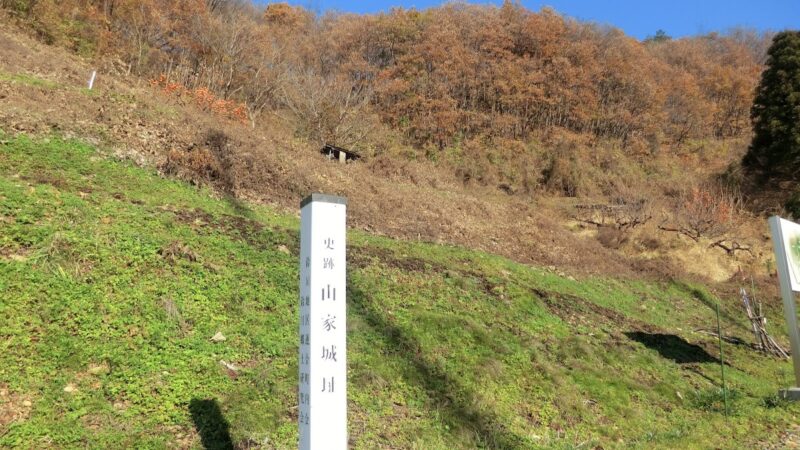
Currently, the site is maintained as Tateyama Park (Aterazawa Tateyama Castle Historical Park), making it a valuable historical site where visitors can observe castle remains such as baileys, cliffs, and moats up close.
History of Aterazawa Tateyama Castle
Construction and the Aterazawa Clan
Aterazawa Tateyama Castle is said to have been built during the Shohei era (1346-1368) of the Nanboku-cho period by Aterazawa Mototoki (Oe Mototoki), a member of the Sagae Oe clan. The Oe clan was a family that extended its power into Dewa Province from the late Heian period to the Kamakura period, and was based in Sagae-sho.
As a branch of the Oe clan, the Aterazawa clan built their castle at the strategically important location of the confluence of the Mogami River and the Iogawa River, and ruled this area for approximately 270 years. The place name Aterazawa is pronounced “Aterazawa,” and this unique pronunciation tells the story of the region’s long history.
To the south lay Tomizawa Tate (built by Oe Masatomo) and Fushikuma Tate (built by Nakayama Tadayoshi), both constructed during the Kamakura period. These castles, along with the surrounding fortresses, formed a network of regional control by the Oe clan. To the east, it offered a panoramic view of the Sagae Plain, providing an excellent vantage point for monitoring developments in the surrounding area.
The Conquest by Mogami Yoshiaki and the Downfall of the Sagae Clan
With the arrival of the Sengoku period, Mogami Yoshiaki, lord of Yamagata Castle, expanded his power in the Murayama region, intensifying conflicts with surrounding forces. The Sagae clan, along with the Sagae clan, opposed the Mogami clan, but in 1584, they were attacked by Mogami Yoshiaki and their castle fell.
As a result of this battle, the Sagae clan, along with the Sagae clan (the main branch of the Sagae Oe clan), was destroyed, and Sagae Tateyama Castle became a direct territory of the Mogami clan. During his unification of the Murayama region, Mogami Yoshiaki successively conquered the Sagae clan and other branches of the Oe clan, establishing his hegemony in the area.
The Mogami Clan Era and the Abandoned Castle
Archaeological excavations have revealed that Sagisawa Tateyama Castle was used for a certain period even after coming under the control of the Mogami clan. Excavated artifacts confirm that the castle was functional from the late 15th century to the early 17th century.
However, the situation changed dramatically when the Mogami clan was dispossessed in 1622. Sakai Naotsugu, the younger brother of Sakai Tadakatsu (who established the Shonai Domain), built a new castle, Koshikawa Castle (present-day Sagisawa area), and Sagisawa Tateyama Castle was abandoned. The transition from a mountain castle to a flatland castle symbolized the end of the Sengoku period and the transition to the peaceful Edo period.
Structure of Sagae Tateyama Castle
Layout and Enclosure Arrangement
Sagae Tateyama Castle is a typical medieval mountain castle that skillfully utilizes the natural terrain. The Mogami River was used as a natural moat, and the steep slopes served as a defensive line. The castle’s structure is a linear layout with multiple enclosures arranged around the main enclosure.
The main enclosures consist of the Honmaru (main enclosure), Ninomaru (second enclosure), and Sannomaru (third enclosure). The area around Sannomaru is currently developed as Tateyama Park. Each enclosure is clearly demarcated by steep cliffs, preserving the typical structure of a medieval mountain castle.
Defensive Structures
The following defensive structures remain in good condition:
Moat: Moats, constructed by cutting across ridges, are important defensive structures that prevent enemy intrusion. Multiple moats have been identified at Sagae Tateyama Castle, demonstrating the high level of medieval castle construction technology.
Cut Slopes: The steep, artificial slopes that demarcate each enclosure (kuruma) are still clearly visible today. These defensive lines, utilizing elevation differences, posed a significant obstacle during sieges.
Enclosures: The flat, leveled enclosures were used for building layouts and troop garrisons. Archaeological excavations have uncovered the remains of a post-and-beam building, presumably the main residence.
Archaeological Findings
Archaeological excavations conducted during the Heisei period uncovered important remains and artifacts. The remains of a post-and-beam building were discovered in the main enclosure, presumably the residence of the castle lord. A pond-like structure was also found, revealing aspects of the living space within the castle.
Among the unearthed artifacts, Chinese and Korean ceramics dating from the 15th to 17th centuries were discovered. These high-quality items provide valuable evidence that the Sagisawa and Mogami clans participated in a wide-area trade network via the Mogami River’s water transport system.
Domestic pottery, earthenware, and iron artifacts have also been unearthed, providing clues to the daily life and military activities within the castle.
Highlights of Sagae Tateyama Castle
Development as Tateyama Park
Currently, the Sagae Tateyama Castle ruins have been developed into “Tateyama Park” (also known as “Japan’s Best Park”) and are open to the public. Walking paths have been established, mainly around the San-no-maru area, allowing visitors to enjoy exploring the castle ruins.
From the park, you can enjoy a panoramic view of the majestic Mogami River and the town of Oe, experiencing the scenery that the former castle lords must have gazed upon. In spring, it is also known as a famous cherry blossom viewing spot, attracting many visitors.
Observation Points for the Remains
Observation of the Moats: The moats remaining within the castle grounds are the most important remains for understanding the defensive techniques of medieval mountain castles. Pay attention to the scale and technical skill of the moats, which are deeply excavated into the ridge.
Cliffs and Enclosures: The cliffs separating each enclosure remain clearly visible as artificially carved steep slopes. Observing the difference in elevation between the flat areas of the enclosures and the cliffs allows one to truly appreciate the structure of a medieval castle.
View: The view from near the main enclosure is breathtaking. The flow of the Mogami River, the entrance to the Iogawa Valley, and the expanse of the Sagae Plain make it immediately clear why this castle was built in such a strategic location.
Value as a Historic Site
The Sagisawa Tateyama Castle ruins were designated a National Historic Site in 2009, recognized as “an important castle site for understanding the developments in the Murayama region from the medieval to early modern periods, centered on the conflicts between the Sagisawa clan and their relatives, the Date clan, and the Mogami clan.”
As a representative medieval castle in the Murayama region of Dewa Province, it possesses high historical value in the following respects:
- A site that reveals the reality of regional governance from the medieval to the early modern period
- Function as a transportation hub that managed water transport on the Mogami River
- A historical site that tells the story of the rise and fall of the Oe clan and the regional history of the Sengoku period
- Well-preserved castle remains such as baileys, cliffs, and moats
- Academic value of building remains and excavated artifacts from archaeological excavations
Geographical Importance of Sagae
A Key Point for Water Transport and Transportation on the Mogami River
Sagae was an important base for water transport on the Mogami River. The Mogami River is a major river that flows north to south through Yamagata Prefecture and has long functioned as a major artery for the transport of goods. Sagae is located at a point where the Mogami River makes a large eastward meander, making it an ideal location for monitoring and managing ship navigation.
As a thriving hub for water transport, Sagae attracted various goods and enjoyed active commercial activity. The castle lord gained economic benefits and controlled a strategically important transportation route by controlling this waterway.
Route Connecting the Okitama and Murayama Regions
Sagae was also a key point on the land route connecting the Okitama region (Yonezawa Basin) and the Murayama region (Yamagata Basin) via the Iogawa Valley. This road was essential for the movement of people and goods between the two regions and held significant military importance.
During the Sengoku period, the Date clan, who ruled the Okitama region, and the Mogami clan, who ruled the Murayama region, were in conflict, and this region became a disputed territory between the two forces. Sagae Tateyama Castle functioned as an important strategic base amidst this geopolitical tension.
Genealogy of the Oe and Sagae Clans
Establishment of the Sagae Oe Clan
The Oe clan was a prestigious noble family descended from Oe no Masafusa, a scholar of the Heian period. Their descendants moved to Dewa Province and established the Sagae-Ōe clan (Sagae clan) as a samurai family based in Sagae Manor.
From the Kamakura period to the Nanboku-chō period, the Sagae clan expanded its power in the Murayama region, consolidating its control by placing family members in various locations. The Sagae clan, as part of this family, was entrusted with the strategic location at the confluence of the Mogami River and the Iogawa River.
History of the Sagae Clan
The founder of the Sagae clan, Sagae Mototoki (Ōe Mototoki), is believed to have built Sagae Tateyama Castle during the Shōhei era (1346-1368). Thereafter, the Sagae clan ruled this area for approximately 270 years, acting as an important family supporting the main Sagae clan.
During the Sengoku period, amidst increasing pressure from the Mogami clan, they continued to resist alongside the Sagae clan, but were destroyed in an attack by Mogami Yoshiaki in 1584. This battle became a symbolic event marking the end of the Sengoku period in the Murayama region.
Mogami Yoshiaki and the Unification of the Murayama Region
The Rise of Mogami Yoshiaki
Mogami Yoshiaki (1546-1614) was a Sengoku daimyo who was active at the end of the Sengoku period as the lord of Yamagata Castle in Dewa Province. Yoshiaki, the uncle of Date Masamune, advanced the unification of the Murayama region through skillful diplomacy and decisive military actions.
Yoshiaki successively conquered various forces that held sway in the Murayama region, such as the Sagae, Shiraiwa, and Yachi clans, expanding the Mogami clan’s sphere of influence. In this process, the capture of Sagae Tateyama Castle was one of the important military operations.
The Battle of Tensho 12
In Tensho 12 (1584), Mogami Yoshiaki attacked and captured Sagae Castle, the stronghold of the Sagae clan. Sagae Tateyama Castle was also captured during this series of battles, and the Sagae clan was destroyed.
This battle completely collapsed the power of the Sagae-Oe clan, and the Murayama region was unified under the control of the Mogami clan. Yoshimitsu continued to expand his power, and at his peak, he became a powerful daimyo controlling most of Dewa Province.
Transition to the Edo Period and Castle Abandonment
Dispossession of the Mogami Clan
After the death of Mogami Yoshimitsu, the Mogami family was plagued by internal conflict during the reigns of his successors, Mogami Iechika and Mogami Yoshitoshi. In 1622, the shogunate confiscated the Mogami clan’s territories and transferred them to Omi Province (dispossession of the Mogami clan).
As a result, the Murayama region of Dewa Province was divided into several domains, and the Sagae region came under the control of the Shonai Domain.
Construction of Koshikawa Castle and Abandonment of Sagae Tateyama Castle
Sakai Naotsugu, the younger brother of Sakai Tadakatsu, who established the Shonai Domain, was granted Sagae and built a new castle, Koshikawa Castle. Koshikawa Castle was built as a flatland castle in the town of Sagae and became the center of government during the Edo period.
Consequently, Sagae Tateyama Castle, a mountain castle, ceased its military role and was abandoned. This event symbolized the end of the Sengoku period and the arrival of the peaceful Edo period.
Access
Location
Address: Sagae, Oaza, Oe-cho, Nishimurayama-gun, Yamagata Prefecture
Access by Public Transportation
JR Sagae Line: It’s about a 15-20 minute walk from JR Sagae Station to the entrance of Tateyama Park. The Sagae Line runs from Yamagata Station to Sagae Station via Sagae Station, making it convenient to access from Yamagata City.
Aterazawa Station is the terminal station of the Aterazawa Line, known for its scenic route along the Mogami River. The route from the station to the castle ruins, walking along the Mogami River, offers beautiful views and is highly recommended.
Access by Car
Yamagata Expressway: Approximately 15 minutes from Sagae IC via National Route 287. Head towards Aterazawa town center and follow the signs to Tateyama Park.
Parking: Tateyama Park has a parking lot that is free to use. However, it can get full during peak seasons such as cherry blossom season, so it is recommended to visit with plenty of time to spare.
Nearby Tourist Facilities
Ooe Town Historical and Folk Museum: You can learn more about the history of Aterazawa Tateyama Castle and Ooe Town. There are also exhibits of excavated artifacts, and a visit in conjunction with the castle ruins is recommended.
Mogami River Boat Trip: A boat trip down the Mogami River is a popular tourist activity that allows you to experience what water transport was like in the past. Boat trips can also be enjoyed around Sagae.
Visiting Points and Manners
Precautions During Visits
Sagae Tateyama Castle Ruins are a valuable cultural property designated as a national historic site. Please observe the following points when visiting:
- Protection of Remains: Do not climb on or damage the remains such as baileys and cliffs.
- Take Your Trash Home: Always take your trash home to maintain the beauty of the historic site.
- Restricted Areas: Do not enter areas where excavation or maintenance work is underway.
- Protection of Flora and Fauna: The natural environment of the castle ruins is also an important element. Do not collect plants or feed wild animals.
Recommended Time to Visit
Spring (April-May): Tateyama Park is adorned with beautiful flowers during cherry blossom season. The scenery created by the Mogami River, cherry blossoms, and castle ruins is exceptional.
Autumn (October-November): The autumn foliage is beautiful, making it ideal for exploring the castle ruins. The weather is mild, allowing for focused observation of the remains.
Summer: While the season is lush and green, insect repellent and heatstroke prevention measures are necessary.
Winter: Footing becomes difficult during snowy season, so caution is advised when visiting. However, the castle ruins amidst a snowy landscape also have their own unique charm.
Estimated Time Required
If you plan to visit the main remains within Tateyama Park, allow approximately 1-2 hours. If you wish to observe the remains in detail or enjoy taking photographs, it is recommended to allocate more time.
Significance of Sagae Tateyama Castle as a Cultural Property
History of National Historic Site Designation
Sagae Tateyama Castle Ruins were designated a National Historic Site on February 12, 2009. The following points were evaluated as reasons for the designation:
- Importance of Local History: Important for understanding the developments in the Murayama region from the medieval to early modern periods, centered on the conflicts between the Sagisawa clan and their relatives, the Date clan, and the Mogami clan.
- Preservation of Remains: Enclosures, cliffs, and moats are well-preserved.
- Results of Archaeological Excavation: A post-and-beam building presumed to be the main hall was discovered, clarifying the castle’s structure.
- Value of Excavated Artifacts: Ceramics and other artifacts dating from the late 15th to early 17th centuries were unearthed, clearly indicating their period of use.
Positioning in the Medieval History of the Murayama Region of Dewa Province
Sagisawa Tateyama Castle is an indispensable archaeological site for understanding the medieval history of the Murayama region of Dewa Province. From this single castle site, one can glean a major historical flow from the medieval to early modern period of Japan, encompassing regional rule by the Oe clan, the warring states of the Sengoku period, unification by the Mogami clan, and the transition to the Edo period.
In particular, its function as a strategic point controlling the Mogami River, a major transportation artery, is important from the perspectives of economic and transportation history. The existence of a wide-area trade network via water transport is evidenced by the Chinese and Korean ceramics unearthed at the site.
Future Preservation and Utilization
Ooe Town, as the managing body for the historical site, is working on the preservation and utilization of the Sagae Tateyama Castle ruins. Progress is being made to create an environment where visitors can gain a deeper understanding of the castle ruins through continued archaeological excavations, preservation and maintenance of the remains, and improvement of explanatory signs and information facilities.
It is also used as a place for local history education, and has become a historical site enjoyed by a wide range of people, including elementary and junior high school students studying local history and history enthusiasts.
Summary
Sagae Tateyama Castle is a valuable medieval mountain castle site remaining in Ooe Town, Yamagata Prefecture. Since its construction during the Nanboku-cho period, it was ruled by the Sagae clan for approximately 270 years, and after the Mogami clan’s rule, it played an important role in the history of the Murayama region until its abandonment.
Located at the crucial transportation hub of the confluence of the Mogami and Iogawa rivers, this castle functioned as a strategic base controlling both water and land routes. Thanks to its well-preserved remains, including baileys, cliffs, and moats, and valuable discoveries from archaeological excavations, it was designated a National Historic Site in 2009.
Currently, it has been developed into Tateyama Park, a popular spot not only for history enthusiasts but also for its beautiful cherry blossoms. When visiting Yamagata Prefecture, be sure to visit this historic castle site and reflect on the transition from the medieval to the early modern period, and the history of the region nurtured by the Mogami River.

-800x450.png)
