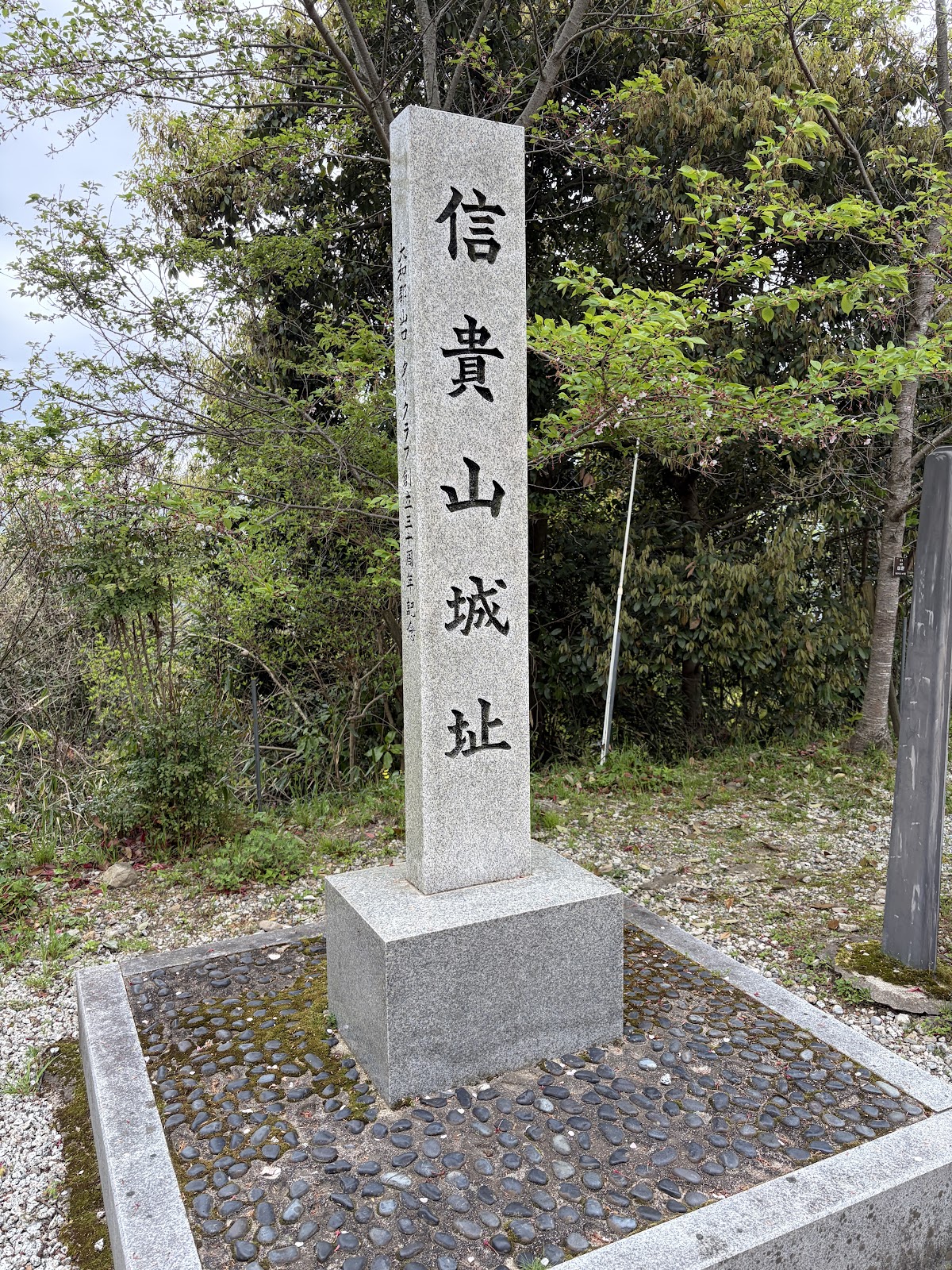
The Complete Picture of Takayasu Castle Ruins: The History and Remains of an Ancient Mountain Castle Built After the Battle of Baekgang
Takayasu Castle is an ancient mountain castle built during the turbulent late 7th century. Against the backdrop of the historical turning point of the defeat at the Battle of Baekgang, it occupies an important position in ancient Japanese history as one of the defensive facilities constructed by the Yamato court at the risk of national survival.
What is Takayasu Castle?: An Overview of an Ancient Mountain Castle
Takayasu Castle is an ancient mountain castle built on Mount Takayasu (elevation 487-488 meters), located on the border between Yao City, Osaka Prefecture, and Heguri Town, Ikoma District, Nara Prefecture. It is one of the Korean-style mountain castles mentioned in the *Nihon Shoki* (Chronicles of Japan), and it is clearly stated that it was built in 667 AD (the 6th year of Emperor Tenji’s reign) along with Kaneda Castle in Tsushima and Yashima Castle in Sanuki.
Located at the southern end of the Ikoma Mountains, this mountain castle was a strategic point overlooking the Yamato Basin and played an extremely important role in the ancient defense system. Even today, this location offers a panoramic view of the Osaka Plain and the Nara Basin, allowing us to appreciate the brilliance of the site’s original design.
Differences between Ancient and Medieval Takayasu Castle
There are actually two “Takayasu Castles” on Mount Takayasu. One is the “Ancient Takayasu Castle” from the time of Emperor Tenji, and the other is the “Medieval Takayasu Castle” built during the Sengoku period. While this article primarily focuses on the Ancient Takayasu Castle, the fact that castles were built in the same mountain area across different eras speaks to the high strategic value of this location.
Historical Background of the Battle of Baekgang and the Construction of Takayasu Castle
The Battle of Baekgang in 663
The direct trigger for the construction of Takayasu Castle was the Battle of Baekgang in 663 (the second year of Emperor Tenji’s reign). In this battle, the Yamato court army, dispatched to the Korean Peninsula to support the restoration of Baekje, suffered a crushing defeat at the hands of the combined forces of Tang China and Silla. This defeat brought an unprecedented crisis to Japan at the time.
The impact of the defeat was immeasurable. The Yamato court faced the possibility of an invasion of mainland Japan by the combined forces of Tang China and Silla, and was forced to drastically strengthen its national defense system.
Emperor Tenji’s Defense Policy
After the Battle of Baekgang, Emperor Tenji began the rapid and large-scale construction of defensive facilities. In 667, while relocating the capital to Ōtsu Palace in Ōmi Province, he constructed defensive facilities one after another at key locations from Tsushima to the Kinai region.
The defense line was constructed as follows:
- Frontline: Kaneda Castle in Tsushima
- Kyushu Defense: Ōno Castle and Kii Castle protecting Dazaifu
- Setouchi Defense: Yashima Castle in Sanuki
- Kinai Defense: Takayasu Castle in Yamato Province
Among these, Takayasu Castle was positioned as the last stronghold directly defending the central part of Yamato.
Structure and Scale of Takayasu Castle
Location and Geographical Characteristics
Takayasu Castle was built on Mount Takayasu, located at the southern end of the Ikoma Mountains, in a mountainous area forming the border between Yamato Province (Nara Prefecture) and Kawachi Province (Osaka Prefecture). From the summit, one could see the Yamato Basin to the east and the Kawachi Plain to the west, making it an ideal location for monitoring and controlling ancient transportation routes.
It is believed that the castle was constructed using the ridges and valleys, centered around the mountaintop at an altitude of approximately 488 meters. It is a typical structure of an ancient mountain castle that made maximum use of the natural terrain.
Warehouse Foundation Stones: The Core Facility of Takayasu Castle
The most important remains of Takayasu Castle are the warehouse foundation stones discovered in 1978 by the “Takayasu Castle Research Society.” This discovery was a groundbreaking achievement, physically proving the existence of Takayasu Castle as described in the *Nihon Shoki* (Chronicles of Japan).
The identified foundation stones indicate the remains of six warehouses. The size and arrangement of each building reveal the existence of a large-scale storage facility. It is estimated that these warehouses stored provisions, weapons, and various supplies necessary for defense.
The building reconstructed from the arrangement of the foundation stones is thought to have been a large, elevated warehouse, a structure designed to protect goods from moisture and allow for long-term storage.
Castle Scope and Defensive Structures
Research into the precise scope and location of Takayasu Castle’s walls is ongoing. While it is believed that stone walls and earthworks surrounded ridges and valleys, characteristic of Korean-style mountain castles, the confirmation of clear remains is limited.
Some researchers suggest the possibility of a large-scale castle encompassing multiple ridges of Mount Takayasu, and it is estimated that its scope was considerably vast.
Historical Changes of Takayasu Castle
From Construction to Renovation
According to the *Nihon Shoki* (Chronicles of Japan), Takayasu Castle was built in the 6th year of Emperor Tenji’s reign (667 AD). However, records show that the castle underwent several repairs after its construction. This indicates continuous efforts to maintain and strengthen its function as a defensive structure.
Initially, the castle was built at a rapid pace as an emergency defensive structure to prepare for invasions from Tang China and Silla. It is believed that a large amount of labor and materials were invested, and the main facilities were completed in a short period of time.
The Jinshin Rebellion and Takayasu Castle
Takayasu Castle also played an important role in the Jinshin Rebellion of 672. The Nihon Shoki (Chronicles of Japan) records that Otomo no Muraji Fukei, a general on the side of Prince Oama (later Emperor Tenmu), received information that the Omi court army was at Takayasu Castle while en route from Asuka to Nara, and attacked Mount Takayasu.
The Omi court army burned down the tax granaries and fled, but this account confirms that Takayasu Castle had important storage facilities for supplies. The existence of Takayasu Castle during the Jinshin Rebellion indicates that this mountain castle was not merely a defensive structure, but a politically and militarily important base.
Abandonment and Aftermath
Records indicate that Takayasu Castle was abandoned in 701 AD (Taihō 1). Approximately 40 years had passed since the Battle of Baekgang, and the decline of direct threats from Tang China and Silla, as well as the establishment of the Ritsuryo state system and the resulting changes in defense, are thought to be the reasons for its abandonment.
After its abandonment, the facilities of Takayasu Castle were left neglected and eventually returned to nature. However, the strategic value of Mount Takayasu continued to be recognized, and a castle was rebuilt there during the medieval period.
Remains and Current State of Takayasu Castle
Preservation Status of Warehouse Foundation Stones
Currently, the most clearly identifiable remains at the Takayasu Castle site are the warehouse foundation stones. These foundation stones have been protected as important historical heritage since their discovery. Located in the mountains, the site is affected by the natural environment, but the fact that the foundations of a building over 1300 years old can still be seen today evokes a sense of historical romance.
By observing the arrangement of the foundation stones, it is possible to infer the architectural techniques of the time and the scale of the warehouse. Visitors can experience a part of the magnificent defensive structure built by ancient people through these foundation stones.
Other Remains
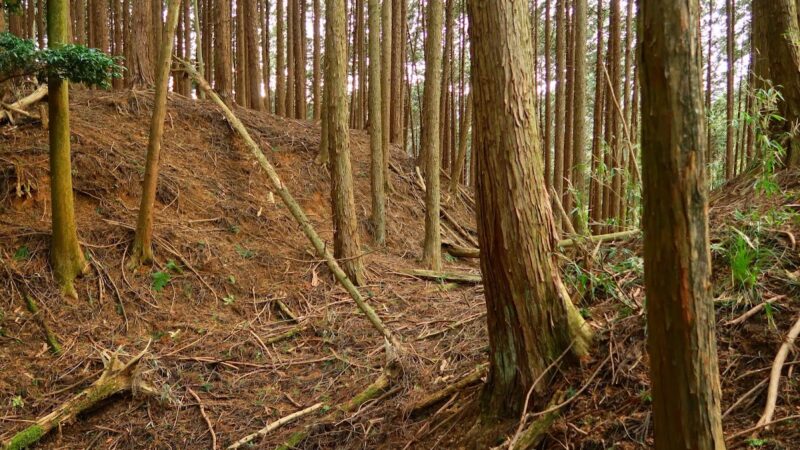
Besides the warehouse remains, there are places in the mountains where earthworks and trenches-like terrain remain. However, it is not easy to determine whether these belong to the ancient Takayasu Castle, the medieval Takayasu Castle, or are natural formations.
Archaeological excavations have been limited, and further research is needed to fully understand Takayasu Castle. There is a high possibility that undiscovered remains lie buried underground, and future discoveries are anticipated.
Historical Significance of Takayasu Castle
Position in Ancient Japan’s Defense System
Takayasu Castle is an indispensable site for understanding the national defense system of ancient Japan. Located in the final stage of the defense line established after the Battle of Baekgang, it was planned as the last stronghold protecting the heart of Yamato.
This defense system demonstrates the Yamato court’s sense of crisis regarding the international situation at the time and its national mobilization capabilities to respond. The construction of a wide-area defense network extending from Tsushima to the Kinai region speaks to the high level of organizational strength of the ancient state.
Importance in the Study of Ancient Mountain Castles
Takayasu Castle is an important example in the study of ancient mountain castles (Korean-style mountain castles) in Japan. As one of the mountain castles explicitly mentioned in the *Nihon Shoki*, it is a valuable site where documentary sources and archaeological evidence can be compared.
The discovery of the warehouse foundation stones is a concrete result that shows the reality of the ancient mountain castle described in the documents, and has had a significant impact on the study of other ancient mountain castles. The research results of Takayasu Castle are also used as reference to deepen the understanding of other ancient mountain castles such as Kaneda Castle, Ono Castle, and Kii Castle.
Significance in Local History
Takayasu Castle is an important historical site in the region spanning Yao City, Osaka Prefecture, and Heguri Town, Nara Prefecture. The fact that this area was a strategically important location since ancient times, and that it was the stage for large-scale national projects, is a crucial element of the region’s identity.
Local citizen groups, including the “Takayasu Castle Research Society,” are working to protect, research, and promote the ruins, continuing their efforts to preserve and pass on Takayasu Castle as a local historical and cultural resource.
Access and Visiting Information for Takayasu Castle
Access Method
The most common way to access the Takayasu Castle ruins is by using the Kintetsu Nishishigi Cable Car. Take the Kintetsu “Takayasu Station” to the Nishishigi Cable Car “Takayasu-yama Station,” and from there, it’s about a 15-minute walk to the warehouse foundation stone group.
While the hiking trail is well-maintained, since it is a mountain castle site, comfortable shoes and clothing are recommended. Particular caution is needed during rainy weather and winter, as the ground can become slippery.
Points to Note When Visiting Takayasu Castle Ruins
The main points of interest when visiting Takayasu Castle Ruins are as follows:
- Warehouse Foundation Stones: The main remains where the foundation stones of six buildings can be identified.
- View from the Mountaintop: A spectacular view overlooking the Yamato Basin and the Kawachi Plain.
- Surrounding Natural Environment: A mountainous landscape that retains the atmosphere of ancient times.
- Information Boards and Guide Boards: Facilities that explain the history and structure of the ruins.
When visiting, learning about the historical background of Takayasu Castle beforehand will allow you to understand the meaning of the remains more deeply.
Related Historical Sites in the Surrounding Area
There are several other historical sites scattered around Takayasu Castle:
- Shigisan Castle: A mountain castle from the Sengoku period, associated with Matsunaga Hisahide
- Shigisan Chogosonshi-ji Temple: An ancient temple said to have been founded by Prince Shotoku
- Hiking Courses in the Ikoma Mountain Range: Allows for a combination of historical exploration and nature walks
Combining a visit to Takayasu Castle with historical exploration of the surrounding area will make for a more fulfilling experience.
Current Status and Challenges of Takayasu Castle Research
Research Results to Date
Research on Takayasu Castle has progressed from both documentary and archaeological perspectives. Analysis of descriptions in ancient documents, including the *Nihon Shoki*, has clarified the circumstances, timing, and historical background of the castle’s construction.
Archaeologically, the discovery of the warehouse foundation stones in 1978 is the greatest achievement. This discovery physically proves the existence of Takayasu Castle, which had previously only existed in historical records, allowing for concrete discussion of its scale and function.
Unresolved Issues
However, many mysteries remain regarding Takayasu Castle:
- Precise Extent of the Castle’s Boundary: What was the exact extent of Takayasu Castle’s territory?
- Location of Walls and Gates: What was the specific layout of the defensive structures?
- Method of Securing Water Sources: What was the water supply system for a mountain castle?
- Size of Stationed Troops: How many personnel were stationed there?
- Existence of Other Buildings: What other facilities existed besides warehouses?
Continued archaeological excavations and research are essential to resolve these issues.
Future Prospects
Several directions can be considered for the research and preservation of Takayasu Castle:
- Planned Excavation: Systematic investigation of unexcavated areas
- Utilization of the Latest Technology: Topographic analysis using laser surveying and drone photography
- Promotion of Preservation and Development: Appropriate preservation and public use of the remains
- Education and Outreach Activities: Enhancement of historical education for local residents and visitors
- Comparative Research with Other Ancient Mountain Castles: Positioning from a national perspective
In particular, the use of recently developed non-destructive testing techniques may allow for the exploration of underground remains without excavation, and further progress in research is expected.
Characteristics of Takayasu Castle as an Ancient Mountain Castle
Korean-Style Mountain Castle Technology
Takayasu Castle is classified as a Korean-style mountain castle, indicating that its construction technology was introduced from the Korean Peninsula. Following the defeat at the Battle of Baekgang, refugees and engineers from Baekje (an ancient Korean kingdom) migrated to Japan, and their advanced fortification techniques were utilized in the construction of Japanese mountain castles.
The characteristics of Korean-style mountain castles are as follows:
- Stone walls (or earthen ramparts) surrounding mountain ridges and valleys
- Installation of multiple gates and water gates
- Securing water sources within the mountains
- Large-scale warehouse facilities
- Designed for long-term sieges
It is presumed that Takayasu Castle also possessed these characteristics, but the confirmation of remains is limited, and further research is needed.
The Final Stronghold of Yamato Defense
The most distinctive feature of Takayasu Castle lies in its location. Situated at the final stage of the defense line beginning at Kaneda Castle in Tsushima, it played a role in directly defending the Yamato Basin.
If the enemy army were to break through the defense lines in Kyushu and the Seto Inland Sea and approach Yamato, Takayasu Castle would have been the last line of resistance. Therefore, it is thought that large-scale supply storage facilities were built, and the castle was designed to prepare for a long-term siege.
Summary: Takayasu Castle Reveals the Image of Ancient Japan
Takayasu Castle is an ancient Japanese defense facility that emerged amidst the tensions of East Asian international affairs in the late 7th century. Facing the national crisis of the Battle of Baekgang, the Yamato court built a defense system with the full strength of the nation, occupying a significant position in Japanese history.
The foundation stones of the warehouses that still remain on Mount Takayasu are a valuable legacy that conveys the lives of people from over 1300 years ago. Through these remains, we can feel the crisis faced by ancient people and the efforts they made to confront it.
Research on Takayasu Castle is ongoing, and further discoveries and research findings will reveal much more. This ancient mountain castle, an indispensable site for understanding ancient Japanese history, will undoubtedly continue to tell us many things.
Visiting Mount Takayasu, located on the border of Osaka and Nara prefectures, and experiencing the remains of this ancient defense facility is a valuable opportunity to experience Japanese history. Takayasu Castle ruins will be an attractive destination not only for history enthusiasts but also for those who enjoy hiking and nature walks.