The Complete Picture of Kuriyagawa Castle (Iwate Prefecture): A Strategic Point in Morioka, Successively Held by the Abe and Nanbu Clans
What is Kuriyagawa Castle?
Kuriyagawa Castle (Kuriyagawa-jo) was a Japanese castle located in Abekan-cho, Morioka City, Iwate Prefecture (formerly Tate, Kuriyagawa Village, Iwate District, Mutsu Province). It is also known as Kuriyagawa Castle (Kuriyagawa-jo), and its archaeological site (buried cultural property site) is known as the “Abekan Ruins (Abekan-tei-seki).”
Located on a hill near the confluence of the Kitakami and Shizukuishi Rivers in the northeastern part of present-day Morioka city, this castle played a crucial role as an administrative center in the Morioka region for approximately 400 years, from the fall of Hiraizumi to the founding of Morioka. Known as the residence of the Kudo clan (Kuriyagawa clan), vassals of the Nanbu clan, it functioned as the political and military center of the region until its demolition in 1592 under the “One Castle Per Province” decree.
Location and Geographical Characteristics of Kurikawa Castle
Kurikawa Castle was built on a hill approximately 130 meters above sea level on the east bank of the Kitakami River. This location, near the confluence of the Kitakami and Shizukuishi Rivers, was strategically crucial as a key point for both water and land transportation. The surrounding area had a natural defensive line provided by the rivers, making it an ideal terrain for building a castle.
While the area around present-day Abekan-cho in Morioka City is now a residential area, it was once a complex terrain of intertwined floodplains and hills along the Kitakami River. It is believed that the castle’s layout made maximum use of this natural topography. The north and west sides of the castle were steep cliffs, while moats and earthworks were constructed on the south and east sides.
Heian Period: The Abe Clan and the Kurikawa Fort
The Power of the Abe Clan and the Kurikawa Fort
When discussing the history of Kurikawa Castle, it is impossible to ignore the existence of the Abe clan, a powerful family of the Emishi people during the Heian period. It is believed that the Kuriyagawa area was home to the Kuriyagawa Fort (or Ubado Fort), an important stronghold of the Abe clan.
The Abe clan was a powerful local family that controlled the six northern districts of Mutsu Province, and the Kuriyagawa Fort, along with the Koromogawa Fort, functioned as the northernmost residence (fortification) within the Abe clan’s sphere of influence. During this period, Kuriyagawa was a crucial stronghold located on the front lines of the Oshu region, where the imperial court’s control was less effective.
The Former Nine Years’ War and the Downfall of the Abe Clan
From 1051 (Eisho 6) to 1062 (Kohei 5), the Former Nine Years’ War (Zenkunen Kassaku) erupted between the imperial army and the Abe clan. The imperial army, centered around Minamoto no Yoriyoshi and his son Yoshiie, initially faced difficulties, but with reinforcements from the Kiyohara clan of Dewa Province, they reversed the tide of battle.
In September of the 5th year of Kōhei (1062), Kurikawa Fort was subjected to a full-scale attack by the imperial army. Abe Sadatō, the head of the Abe clan, was killed in battle, and the Abe clan’s power was annihilated. As a result of this battle, Kurikawa Fort was burned down, marking the end of Abe clan rule. While there are various theories regarding the exact location of Kurikawa Fort, the most widely accepted theory places it near present-day Tenshōji-chō in Morioka City.
Kamakura Period: Entry of the Kudō Clan and Establishment of Their Rule
Appointment of Kudō Yukimitsu as Jitō (Land Steward) of Iwate County
In the 5th year of Bunji (1189), Minamoto no Yoritomo defeated the Ōshū Fujiwara clan and pacified Ōshū. Following the precedent set by his ancestors’ pursuit of the Abe clan, Yoritomo visited Kurikawa and appointed Kudō Yukimitsu, who had distinguished himself in battle, as Jitō (Land Steward) of Iwate County. This marked the beginning of Kudō clan rule over Kurikawa.
Kudo Yukimitsu, as a retainer of the Kamakura Shogunate, moved to this area and adopted the name “Kuriyagawa” (also known as “Kurikawa”). The Kudo clan was a samurai family descended from the Kai Genji clan and was a trusted retainer of Yoritomo.
The Era of Sato-kan (Kurikawa-kan)
From the Kamakura period to the Muromachi period, the Kudo clan’s base was Sato-kan (Kurikawa-kan: near present-day Tenshoji Temple), located on the Shizukuishi River. Sato-kan was situated at a strategic transportation hub, making it suitable as a residence during peacetime. During this period, the Kudo clan established their control over the region as the jitō (land steward) of Iwate County, expanding their power as local lords.
The Kudo clan governed Iwate County for generations, and reigned as a powerful samurai family in the region even before the Nanbu clan advanced into Mutsu Province.
From the Muromachi Period to the Sengoku Period: Relationship with the Nanbu Clan
Expansion of the Nanbu Clan’s Power
During the Muromachi period, the Nanbu clan, descendants of the Kai Genji clan, expanded their power into northern Mutsu Province. The Nanbu clan established their base in Nukabe District (present-day eastern Aomori Prefecture to northern Iwate Prefecture) and gradually moved southward.
As the Nanbu clan’s power expanded, the Kudo clan came under their control. As vassals of the Nanbu clan, the Kudo clan continued to govern Iwate District, but their position shifted from independent lords to important retainers of the Nanbu clan.
Construction of Kurikawa Castle during the Sengoku Period
Archaeological excavations have revealed that the remains of Kurikawa Castle, currently at the Abe-kan ruins, were constructed during the Sengoku period. With the intensification of warfare during the Sengoku period, a stronger and larger castle was needed.
Therefore, the Kudo clan built a new castle on a hilltop, a more defensible location, away from their previous village residence. This is the castle now known as “Kurikawa Castle.” During the Sengoku period, Kurikawa Castle exhibited the characteristics of a medieval castle, with multiple baileys arranged around the main keep, and its defenses were fortified with earthworks and moats.
Structure and Remains of Kurikawa Castle
Castle Layout
Kurikawa Castle is a flatland castle that skillfully utilized the hilly terrain. It is believed that the main keep was located at the highest point, with baileys such as the second and third baileys arranged in a stepped pattern around it. Excavations at the current Abe-kan site have confirmed the remains of multiple baileys, earthworks, and moats.
The main keep measured approximately 80 meters east-west and 60 meters north-south, and was surrounded by earthworks. Entrances were located on the south and east sides, and it has been suggested that they may have been in the form of a masugata-style entrance.
Remains Revealed by Excavations
Excavations conducted from the Showa to Heisei periods have gradually revealed the true nature of Kurikawa Castle. The excavation has unearthed fragments of pottery from the Sengoku period, iron artifacts, and building foundations.
Of particular note is the large number of fragments of Chinese celadon and white porcelain. This indicates that the Kudo clan possessed considerable economic power and had access to a wide-area trade network. Furthermore, artifacts related to blacksmithing have been discovered, indicating that weapons and agricultural tools were manufactured within the castle.
Remaining Structures
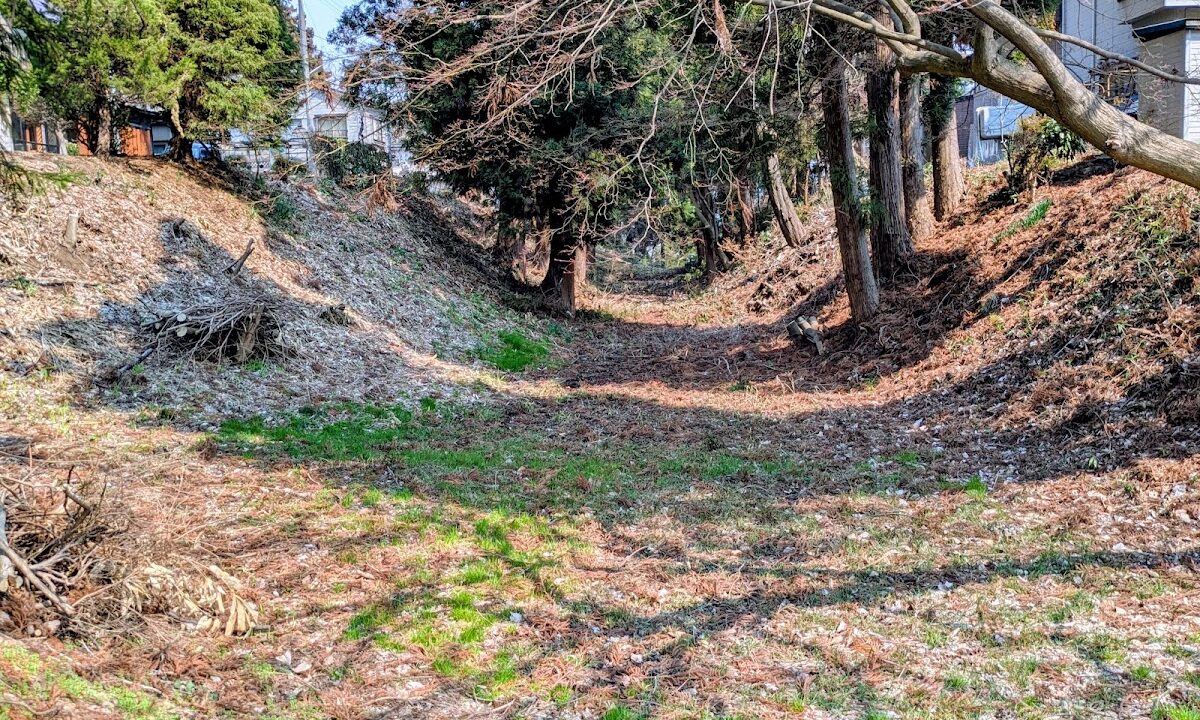
Currently, the site of Kurikawa Castle is a residential area, and very few clear remains are visible on the surface. However, careful observation of the topography reveals traces of the former baileys and moats.
A stone monument inscribed with “Abe-kan Site” stands at the site, indicating its historical importance. Additionally, place names related to castles, such as “kan” (house) and “hori” (moat), remain in the surrounding area, providing clues to estimating the former castle’s extent.
Demolition and Abandonment of Castles in 1592
Toyotomi Hideyoshi’s One Castle Per Province Decree
In 1592, Toyotomi Hideyoshi, having achieved the unification of Japan, issued the One Castle Per Province Decree to all daimyo throughout the country. This decree ordered the demolition of all castles except the daimyo’s main residence. Its purpose was to limit the military power of the daimyo and strengthen control by eliminating the numerous branch castles and vassal residences that had sprung up during the Sengoku period.
This decree also applied to the Nanbu clan’s territory, resulting in the demolition of all castles except for Sannohe Castle, the Nanbu clan’s main castle. Kurikawa Castle was no exception, and it was demolished and abandoned in 1592.
The Aftermath of the Kudo Clan
After the demolition of Kurikawa Castle, the Kudo clan continued to exist as vassals of the Nanbu clan. Having lost their main residence, the Kudo clan is thought to have either resided in the castle town of the Nanbu clan or established a jinya-style residence on their granted land.
During the Edo period, when the Nanbu clan built Morioka Castle and established the Morioka Domain, the Kudo clan participated in the domain’s administration as samurai. The Kurikawa area developed as a suburb of Morioka Castle, and the former castle site was transformed into farmland and residential areas.
Historical Significance of Kurikawa Castle in the Morioka Region
A Regional Hub for 400 Years
Kurikawa Castle (and its predecessor, Kurikawa-saku) served as the political and administrative center of the Morioka region for approximately 400 years, from the fall of Hiraizumi (1189) to the founding of Morioka (around 1598). This long-term continuity demonstrates the geographically and strategically advantageous location of the area.
Although the rulers changed from the Abe clan in the Heian period to the Kudo clan from the Kamakura period to the Sengoku period, the consistent importance of Kurikawa as a regional hub is crucial when considering the history of Morioka.
Influence on the Construction of Morioka Castle
When the Nanbu clan was building Morioka Castle, it’s possible that the Kurikawa area was considered as one of the candidate sites. Ultimately, Kozukata was chosen, and the current Morioka Castle was built there. However, there’s no doubt that the long-standing experience of governing Kurikawa influenced the formation of the Morioka castle town.
The regional governance know-how cultivated by the Kudo clan, and the transportation network and economic sphere centered around Kurikawa, became the foundation of the Morioka Domain. In that sense, Kurikawa Castle can be positioned as a precursor to Morioka.
Kurikawa Castle and the Abe Clan Legends
The Memory and Commemoration of the Abe Clan
Even today, many legends concerning the Abe clan remain in the Kurikawa area. The very name of the ruins, “Abe-kan,” indicates a deep connection between this area and the Abe clan. Although the Abe clan was destroyed in the Former Nine Years’ War, they have been remembered as heroic figures in the memories of the local people.
Several sites in the surrounding area are believed to be the tombs of the Abe clan, including Abe Sadatō, and these sites are part of the region’s identity. While these traditions do not necessarily coincide with historical facts, they are important elements in shaping the region’s historical consciousness.
Relationship between Kurikawa Fort and Kurikawa Castle
Kurikawa Fort and Kurikawa Castle are separate facilities from different eras and with different characteristics, but they are often confused because they share the same place name, “Kurikawa.” Kurikawa Fort was a fortified residence from the Heian period, while Kurikawa Castle is a castle from the Sengoku period. There is a time gap of approximately 500 years between the two.
However, it is certain that both existed in the same area, indicating that Kurikawa was consistently an important base from ancient to medieval times. While the possibility that the current Abe Residence ruins are the site of Kurikawa Fort cannot be completely ruled out, archaeological confirmation has not been obtained.
Current Status and Preservation of Kurikawa Castle Ruins
Current Status of Kurikawa Castle Ruins
Currently, most of the Kurikawa Castle ruins are residential areas, and many of the castle remains have been lost. While a portion of the Abe-kan ruins is preserved, it has not been developed as a full-fledged historical park.
Local history enthusiasts and researchers continue their investigations and studies, and awareness of the historical value of Kurikawa Castle is gradually increasing. However, with the progress of urbanization, there are concerns about further loss of remains.
Challenges for Preservation and Utilization
There are several challenges to the preservation and utilization of the Kurikawa Castle ruins. Firstly, the ruins cover a wide area, much of which is privately owned. Secondly, because no clear remains are left on the surface, the general public does not recognize it as a castle site.
In the future, it will be necessary to formulate an appropriate preservation plan based on the results of archaeological excavations, install explanatory and informational boards, and utilize digital technology to visualize the remains. Efforts are needed to pass on the value of Kurikawa Castle, which is indispensable to telling the history of Morioka, to future generations.
Access and Visiting Information for Kurikawa Castle
Access Method
Kurikawa Castle Ruins (Abe-kan Ruins) can be accessed by car in approximately 15 minutes from JR Morioka Station, or by taking the Iwate Kotsu bus to the “Abe-kan” bus stop and walking for approximately 5 minutes. It is also approximately 20 minutes by car from the Tohoku Expressway Morioka Interchange.
There is no dedicated parking lot around the castle ruins, but there are spaces where street parking is possible. However, since it is within a residential area, consideration should be given to avoiding disturbing nearby residents.
Points to Note When visiting Kurikawa Castle Ruins, it is recommended to first aim for the “Abe-kan Ruins” monument. The area around this monument is believed to have been the central part of the castle. By observing the topography, you can imagine the layout of the former baileys.
When strolling around the area, pay attention to the place names. Places with place names such as “kan” (mansion) and “hori” (moat) are likely to be locations where former castle facilities once stood. You can also enjoy the view towards the Kitakami River. The former castle lords likely gazed upon this same view. ## Summary: Morioka’s History as Told by Kurikawa Castle
Kurikawa Castle remained at the heart of Morioka’s history, from its origins as the Abe clan’s Kurikawa Fort during the Heian period, through its role as the Kudo clan’s residence during the Kamakura and Muromachi periods, to its demolition in 1592. The history of this castle is synonymous with the formation history of Morioka itself.
Major turning points in Japanese history—the fall of the Abe clan in the Former Nine Years’ War, the establishment of the Kamakura Shogunate’s control over Tohoku, the expansion of the Nanbu clan’s power, and the unification of Japan under the Toyotomi regime—are all etched into the land of Kurikawa.
Currently, the remains of Kurikawa Castle lie beneath a residential area, and its form cannot be directly seen. However, standing on this land and gazing at the flow of the Kitakami River and the surrounding topography, we can feel the weight of centuries of history. Kurikawa Castle continues to be a crucial key to understanding Morioka’s history.