Tate Castle (Hokkaido) Complete Guide | A Thorough Explanation of the History and Highlights of Japan’s Last Traditional Japanese Castle
What is Tate Castle? | An Overview of Japan’s Last Traditional Japanese Castle Construction
Tate Castle is a Japanese castle built in 1868 (Meiji 1) in Assabu-cho, Hokkaido. Constructed hastily by the Matsumae Domain just before the Hakodate War, this castle holds extremely important historical value as Japan’s last traditional Japanese castle construction.
Located in present-day Shirooka, Assabu-cho, Hiyama-gun, Hokkaido, it was also called “Shinjo” (New Castle) in contrast to the previous base, Matsumae Castle. Construction began on September 1st, 1868 (Meiji 1), and was completed in an astonishingly rapid pace, less than two months later on October 25th. However, it met a dramatic fate, falling immediately after completion to an attack by the former shogunate forces.
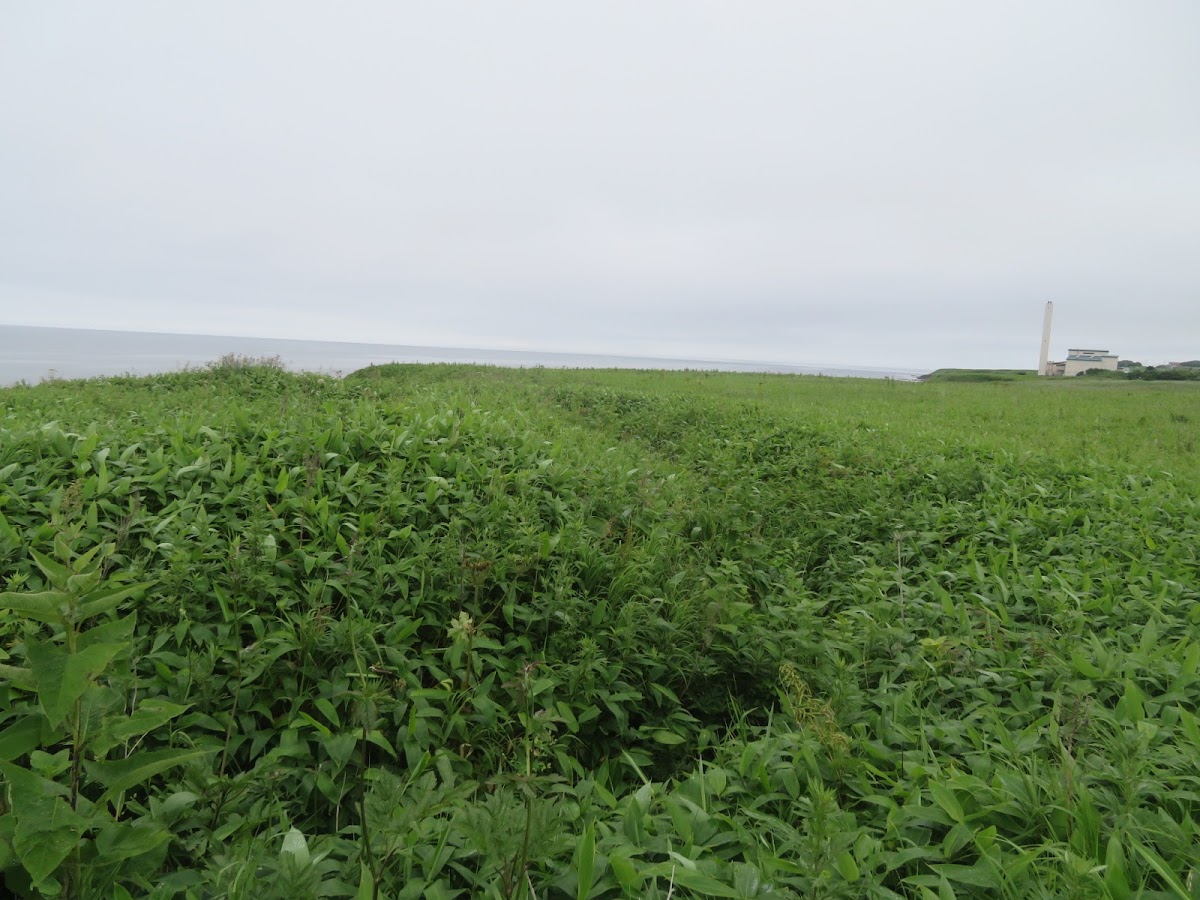
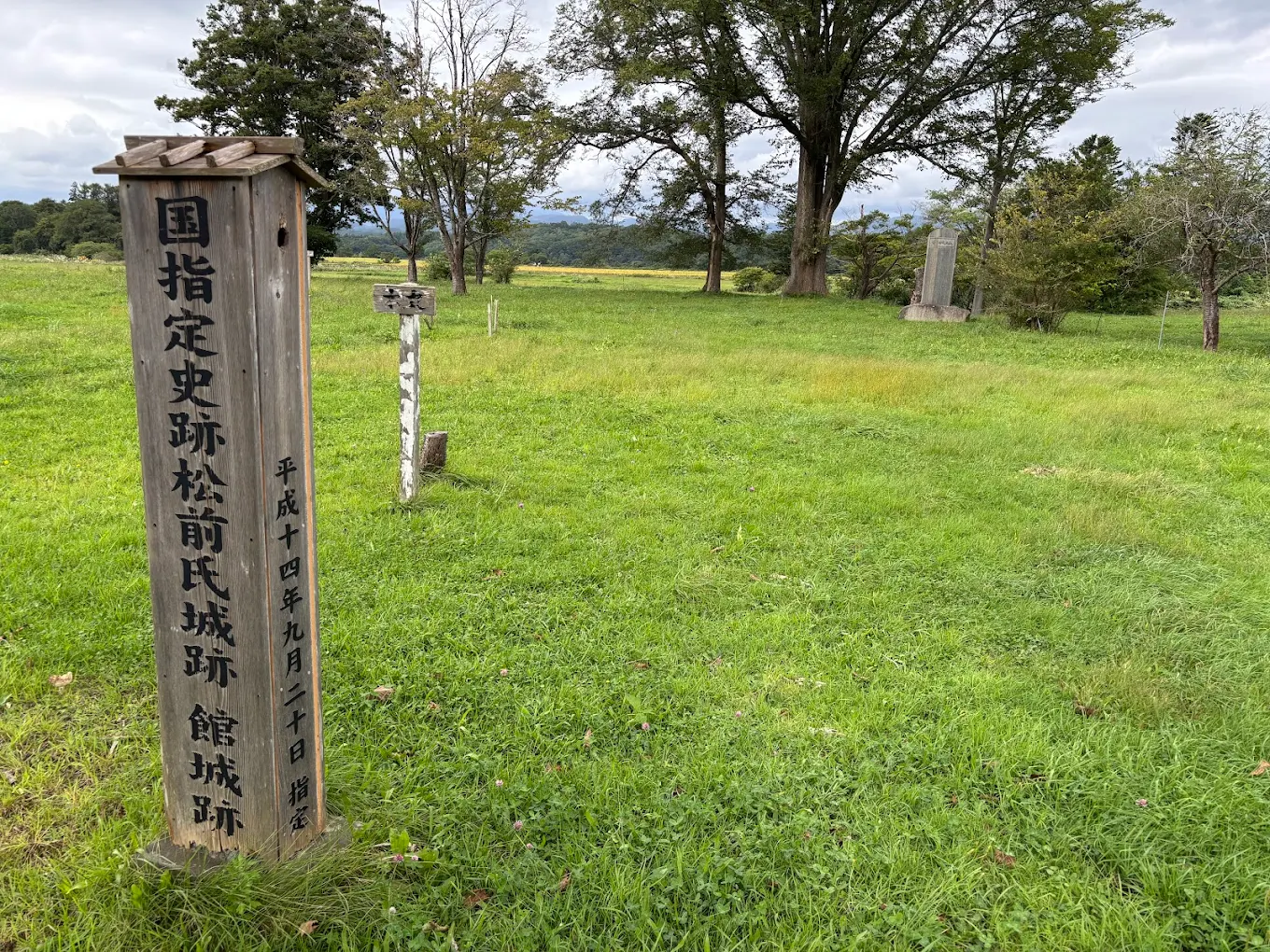
Currently, the Tate Castle ruins are designated as a national historic site, and remains such as earthworks, dry moats, and well remains still exist. Although the building no longer exists, ongoing archaeological excavations are gradually revealing the full scope of this legendary castle, born during the turbulent period of the late Edo and Meiji Restoration eras.
Historical Background of Tate Castle Construction
Why Did the Matsumae Domain Build Tate Castle?
In September 1868 (Meiji 1), the Matsumae Domain suddenly decided to relocate its base from Fukuyama (present-day Matsumae Town) to Tate Village in Atsusabetsu, far from its original location. This decision was deeply influenced by the political and military situation at the time.
The former shogunate forces, defeated in the Boshin War, were planning to advance into Ezo (Hokkaido) under the leadership of Enomoto Takeaki. As the Matsumae Domain sided with the new government, it needed to prepare for the former shogunate forces’ landing in Hokkaido. However, Matsumae Castle was located along the coast and vulnerable to naval bombardment. In fact, the experience of being bombarded by the Russian fleet in 1854 (Ansei 1) had highlighted the limitations of defense against attacks from the sea.
Strategy of Relocating Bases Inland
The Matsumae Domain chose Tate Village because its inland location allowed it to avoid direct attacks from the sea. The Tate district in Atsusawa was located midway between Matsumae and Hakodate, making it a strategically important transportation hub. Furthermore, the surrounding area had relatively flat terrain, suitable for constructing defensive structures.
Lord Matsumae Tokuhiro petitioned the Hakodate government for permission to build a castle and immediately commenced construction, mobilizing all his subjects to work day and night. This rapid construction was carried out under the tense circumstances of an imminent landing of the former shogunate forces.
Structure and Characteristics of Tate Castle
Design as a Japanese-Style Castle
Tate Castle, as the last Japanese-style castle built in Japan, was designed using traditional castle layout techniques. Excavations have revealed the following characteristics:
Main Defensive Structures:
- Earthworks: Defensive walls made of piled-up earth surrounding the castle
- Dry Moat: A moat that is not filled with water to prevent enemy intrusion
- Tiger’s Mouth: The entrance to the castle, a strategically important point for defense
- Kuruwa: A flat area demarcated by earthworks and moats
Layout and Scale
The layout (blueprint) of the castle was designed to efficiently enhance defensive capabilities within a limited construction period. Multiple kuruwa were arranged around the main keep, each demarcated by earthworks and dry moats.
Excavation surveys have uncovered multiple well remains, suggesting that the design was intended for siege warfare. Furthermore, foundation stones and post holes have been confirmed, suggesting that the main keep housed the lord’s residence and buildings with administrative functions.
Traces of Rapid Construction
The castle, constructed in less than two months, exhibits characteristics typical of rapid construction. Some parts of the earthworks were not sufficiently reinforced, and ideally, they should have been constructed more carefully and with more time. However, due to time constraints, the priority was to ensure a minimum level of defensive capability.
The Battle of Tate Castle | Fall of the Castle Immediately After Completion
The Attack of the Former Shogunate Army
On October 25, 1868 (Meiji 1), Tate Castle was largely completed. However, immediately afterward, on November 5, the former Shogunate army, led by Enomoto Takeaki, landed in Ezo (Hokkaido). The former Shogunate army acted swiftly, and on November 15, they captured Matsumae Castle.
Upon receiving news of the fall of Matsumae Castle, the Matsumae Domain attempted to prepare its defenses at the newly completed Tate Castle. However, the advance of the former Shogunate army was faster than expected, and a regiment led by Matsuoka Shirojiro approached Tate Castle.
The Battle and Fall of Tate Castle
The battle at Tate Castle occurred just a few weeks after its completion. The Matsumae Domain attempted a desperate resistance, but their defenses collapsed in the face of the former shogunate forces’ attack. While details of the battle are limited, it is certain that the castle fell quickly.
Lord Matsumae Tokuhiro was forced to abandon Tate Castle and retreat further inland. Thus, Tate Castle, the last remaining traditional Japanese castle, vanished from the stage of history without fulfilling its purpose.
Tate Castle in the Context of the Hakodate War
The Battle of Tate Castle was just one act within the larger context of the Hakodate War. The former shogunate forces occupied Ezo (Hokkaido) and established the “Ezo Republic” with Enomoto Takeaki as its president. However, in May of the following year, Meiji 2 (1869), the Hakodate War ended with a counterattack by the new government forces, marking the complete end of the Boshin War.
Tate Castle occupies a unique position in Japanese history as a phantom castle that existed for only a brief period during this turbulent era.
Current State of Tate Castle Ruins | Remains and Preservation Status
Remaining Remains
The following remains can be confirmed at the current Tate Castle ruins:
Earthworks: A portion of the earthworks surrounding the castle remains in good condition. The height varies depending on the location, but the best-preserved section retains a height of several meters.
Dry Moats: The remains of moats dug to prevent enemy intrusion are clearly visible. While some parts are currently filled in, archaeological excavations are revealing their original scale.
Well Sites: Multiple well sites have been discovered, some with stonework. These are thought to have been dug to secure a water source during sieges.
Enclosures: The layout of multiple enclosures centered around the main keep can be inferred from the topography. Some areas are currently developed as a park.
Results of Archaeological Excavations
Continuous archaeological excavations are being conducted at the Tate Castle ruins, primarily by the Atsusabetsu Town Board of Education. Previous investigations have yielded the following important discoveries:
- Estimation of the scale and structure of the main castle building based on the arrangement of foundation stones and post holes
- Clarification of daily life at the time based on excavated artifacts such as ceramics and iron products
- Detailed analysis of the construction methods and techniques of the earthworks
- Clarification of the overall layout of the castle grounds
Scientific analytical methods have also been introduced; for example, attempts are being made to locate buried remains using ground-penetrating radar.
National Historic Site Designation and Preservation Activities
The Tate Castle ruins have been designated a national historic site, recognized for their historical value as the last Japanese-style castle construction. This designation legally protects the preservation and utilization of the site.
Atsusabetsu Town has positioned the Tate Castle ruins as an important cultural property of the region and has formulated a preservation and development plan. Based on the results of the excavation, the town is also considering the future restoration and exhibition of some of the remains.
Highlights of Tate Castle Ruins
A Famous Cherry Blossom Spot in Spring
Tate Castle Ruins Park is known as one of Hokkaido’s leading cherry blossom viewing spots. In spring, approximately 500 Ezo cherry trees and Somei Yoshino cherry trees bloom, attracting many visitors. The contrast between the historical remains and the beautiful cherry blossoms leaves a deep impression on visitors.
The best time to see the cherry blossoms is usually from early to mid-May, and sometimes the trees are illuminated during the blooming season. Enjoying cherry blossoms in the historical space of a castle ruin will be a special experience unlike any other.
Exploring the Earthworks and Dry Moat
When visiting Tate Castle Ruins, be sure to walk along the earthworks. You can experience firsthand what the defensive structures were like at the time. The view of the dry moat from the earthworks provides a valuable perspective for understanding the castle’s defensive structure.
Information boards are also installed, allowing you to explore while reading explanations of the function of each part.
Views and Surrounding Scenery
From the hilltop of the castle ruins, you can enjoy a panoramic view of the rural landscape of Atsusabetsu Town. The contrast between this tranquil farming scene and the history of fierce battles fought here evokes a profound sense of awe.
On clear days, you can even see the Sea of Japan and the surrounding mountains in the distance, giving you a real sense of the geographical reasons why the Matsumae Domain chose this location.
Access and Tourist Information
Access to Tate Castle Ruins
Access by Car:
- Approximately 1 hour from Hakodate city via National Route 227
- Turn onto Prefectural Route 29 and head towards the Tate area
- Parking available (may be crowded during cherry blossom season)
Public Transportation:
- Take the Hakodate Bus from JR Hakodate Station towards Atsusabetsu
- Approximately 15 minutes on foot from the nearest bus stop
- *Since the number of buses is limited, it is recommended to check the timetable in advance.
Visiting Hours and Fees
- Visiting Hours:: No particular restrictions (daytime visits are recommended)
- Admission Fee:: Free
- Estimated Time Required:: Approximately 30 minutes to 1 hour
Nearby Tourist Facilities
Tate Castle Onsen Tate Area Relaxation House
This is a day-trip hot spring facility located near the Tate Castle Ruins. After exploring the castle ruins, you can relax and soothe your fatigue in the hot springs. It is a facility loved by locals, and its laid-back atmosphere is its charm. Atsusabe Town Local History Museum
This museum displays materials and excavated artifacts related to Tate Castle. Visiting before visiting the castle ruins will provide a deeper understanding.
Points to Note When Visiting
- To protect the ruins, please avoid any actions that could damage the earthworks or moats.
- Do not enter areas where excavation is underway.
- Remember to take insect repellent in summer and warm clothing in winter.
- Expect crowds during cherry blossom season (early to mid-May).
Related Historical Sites in the Surrounding Area
After visiting Tate Castle, we recommend also visiting other historical castles and sites in southern Hokkaido.
Matsumae Castle (Fukuyama Castle)
Matsumae Castle, the headquarters of the Matsumae Domain before the construction of Tate Castle, is known as the only Japanese-style castle in Hokkaido. Its keep still exists (reconstructed), and it would be interesting to visit it in comparison to Tate Castle. It is approximately a 40-minute drive from Tate Castle.
Goryokaku
Goryokaku, the site of the final battle of the Hakodate War, is a Western-style star-shaped fortress. As a castle that played an important role around the same time as Tate Castle, it is worth visiting both. Located within Hakodate City, it’s about an hour’s drive from Tate Castle.
Matsumae Domain Tokiri-chi Jinya Ruins
These are the ruins of a jinya (fortified residence) built by the Matsumae Domain during the late Edo period. Like Tate Castle, it’s a historical site related to the Hakodate War. Located in Hokuto City, it’s easily accessible along with Goryokaku.
Katsuyama-kan Ruins
Located in Kaminokuni Town, these are the ruins of a medieval mountain castle that served as a trading post with the Ainu in the 15th century. Although from a different era, it’s an important historical site for understanding the history of castles in Hokkaido.
What Tate Castle Teaches Us
Hokkaido in the Late Edo and Meiji Restoration Periods
The history of Tate Castle symbolically illustrates Hokkaido’s position during the turbulent period from the late Edo period to the Meiji Restoration. The fact that the Boshin War on Honshu spread to Ezo (present-day Hokkaido), becoming the final battlefield, speaks volumes about the high level of political tension at the time.
Limitations and Possibilities of Hastily Constructed Castles
Constructed in just two months, Tate Castle demonstrates both the possibilities and limitations of castle-building techniques in emergency situations. While utilizing traditional Japanese castle-building techniques, the lack of sufficient time likely affected its final defensive capabilities.
Significance of Japan’s Last Traditional Japanese Castle
After Tate Castle, no new traditional Japanese castles were built in Japan. With modernization after the Meiji Restoration, castles ceased to function as military facilities and were replaced by Western-style fortresses and barracks. In this sense, Tate Castle occupies an extremely important historical position as a culmination point in the history of Japanese castles.
Summary | Significance of Visiting Tate Castle
Tate Castle (Atsusabe Town, Hokkaido) is Japan’s last traditional Japanese castle, built in 1868 by the Matsumae Domain. Completed in a mere two months just before the Battle of Hakodate, this castle is truly a phantom castle, having fallen immediately after its completion to an attack by the former shogunate forces.
Currently designated a national historical site, remnants such as earthworks, dry moats, and well remains still exist. In spring, it becomes a popular cherry blossom viewing spot, attracting many visitors who can enjoy the beautiful scenery where history and nature harmonize. Continuous archaeological excavations are gradually revealing the full scope of this mysterious castle.
Visiting the Tate Castle ruins offers a valuable opportunity to reflect on the turbulent era of the late Edo period and the Meiji Restoration, and to touch upon the final chapter of Japanese castle history. Visiting it along with surrounding historical sites in Hakodate and Matsumae will provide a deeper understanding of Hokkaido’s history during the late Edo period.
When visiting Hokkaido, be sure to visit the Tate Castle ruins in Atsusabetsu Town and experience the historical significance of Japan’s last traditional Japanese-style castle.