Suzaki Castle (Hokkaido): The Historical Significance of Takeda Nobuhiro’s New Castle and the Twelve Castles of Southern Hokkaido
What is Suzaki Castle?
Suzaki Castle is the site of a medieval castle built in the mid-15th century in Kaminokuni Town, Hiyama District, Hokkaido. It is believed to have been located around the present-day Sunadate Shrine (near 92 Kitamura, Kaminokuni Town), and as one of the Twelve Castles of Southern Hokkaido, it became an important base for the Japanese expansion into Ezo (Hokkaido).
It is known as a castle newly built by Kakizaki Suehige in 1457, after Takeda Nobuhiro distinguished himself in the Battle of Koshamain. This castle holds special significance in the medieval history of Hokkaido as it is where Takeda Nobuhiro married Kakizaki Suehige’s adopted daughter and began his activities as a central figure in the Japanese forces in southern Hokkaido.
The Positioning of the Twelve Castles of Southern Hokkaido and the Suzaki Castle
Background of the Establishment of the Twelve Castles of Southern Hokkaido
In the 15th century, the Japanese advanced into the Oshima Peninsula and operated under the rule of the Ando clan of Tsugaru. In 1454, when Ando Masasue was driven out by the Nanbu clan and crossed to Ezo (Hokkaido), he stationed his subordinate warriors in 12 castles. This is considered the beginning of the Twelve Castles of Southern Hokkaido.
These castles served as bases for the Japanese to conduct trade and fishing in Ezo, and at the same time, as defensive facilities located on the border with the Ainu people. They remain an important group of historical remains that demonstrate the sphere of influence of the Japanese in the Southern Hokkaido region and are still the subject of historical research today.
Uniqueness of the Suzaki Castle
The Suzaki Castle is a unique existence among the Twelve Castles of Southern Hokkaido. While many castles were built by subordinates of the Ando clan, the Suzaki Castle was a “new castle” built in 1457, a specific year, as a reward for meritorious service after the Battle of Koshamain.
It was a castle specially prepared for the outstanding warrior Takeda Nobuhiro, and it holds historical significance different from other castles in that it laid the foundation for the later Kakizaki clan’s (Matsumae clan’s) rule over southern Hokkaido.
The Battle of Koshamain and the Construction of Suzaki Castle
Koshamain’s Uprising
In 1456, Koshamain, the chief of the Ainu people, rose up against the tyranny of the Japanese. In this battle, 10 of the twelve castles in southern Hokkaido fell, and the Japanese forces suffered a devastating blow. Only Hanazawa Castle and Mobetsu Castle remained, a critical situation.
The Achievements of Takeda Nobuhiro
It was the young warrior Takeda Nobuhiro who saved the day from this crisis. In 1457, Takeda Nobuhiro defeated Koshamain and his son at Nanaehama (near present-day Nanaehama, Hokuto City), securing a decisive victory for the Japanese forces.
Upon his triumphant return to the residence of Kakizaki Suehisa, the lord of Hanazawa Castle, Nobuhiro was rewarded for his military achievements and married to Kakizaki Suehisa’s adopted daughter. In August of the same year, the Suzaki Castle was newly constructed for Nobuhiro.
Significance of the New Castle Construction
The construction of the Suzaki Castle had significance beyond mere reward. Having lost many castles in the Koshamain War, building a new base symbolized the reconstruction of the Japanese forces. Furthermore, granting an independent castle to a capable general like Takeda Nobuhiro likely served a strategic purpose to strengthen Japanese control over southern Hokkaido.
Structure and Location of Suzaki Castle
Geographical Location
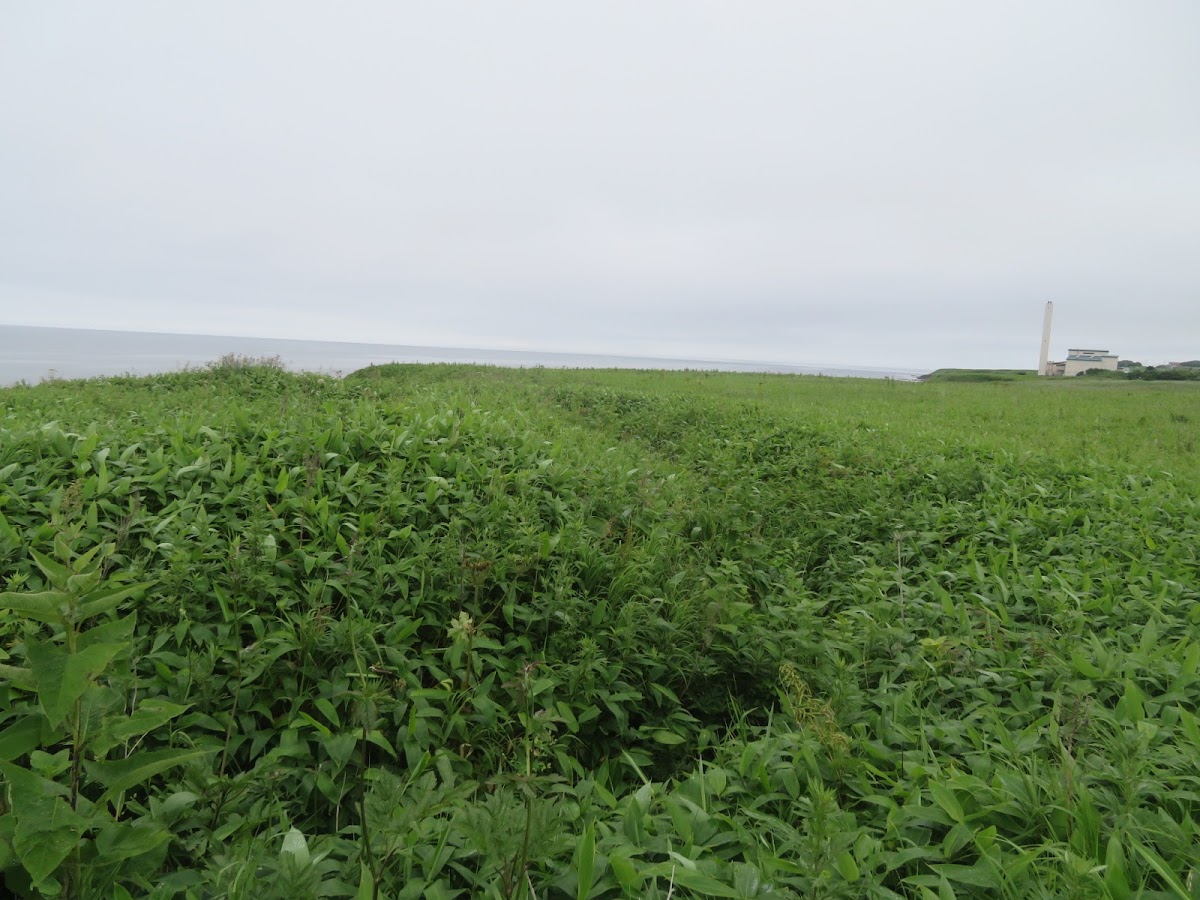
Suzaki Castle is believed to have been located near the present-day Kitamura 92, Kaminokuni-cho, around the area of Sunadate Shrine. This location, situated on a coastal terrace facing the Sea of Japan, was a strategically important location controlling a key point for maritime traffic.
Kaminokuni was one of the central areas of southern Hokkaido during the medieval period, a region where important castles such as Hanazawa Castle and Katsuyama Castle were concentrated. Suzaki Castle is thought to have functioned as a base for defense and trade in this region.
Size and Structure of the Castle
Currently, there are no clear records regarding the detailed structure of Suzaki Castle. However, given that it was built for an important figure, Takeda Nobuhiro, it is presumed to have been of considerable size.
Medieval castles were typically defensive structures surrounded by earthworks and dry moats, housing the lord’s residence, warehouses, and the residences of retainers. It is highly probable that Suzaki Castle had a similar structure.
Archaeological Discoveries and Excavated Artifacts
Results of Excavation
Numerous important artifacts have been discovered in the area surrounding the Suzaki-kan site during previous excavations. These excavated items provide valuable clues to understanding the reality of Japanese society in southern Hokkaido during the 15th century.
Discovery of Chinese Ceramics
The excavation has unearthed Chinese celadon and white porcelain. These are evidence of international trade at the time, indicating that Suzaki-kan was not merely a local fort but was integrated into a wider trade network.
Chinese ceramics were valuable items in medieval Japan, and these artifacts speak to the economic power and high social status of the fort’s owner. It suggests that Takeda Nobuhiro, as an important member of the Kakizaki clan, possessed a rich economic base.
Discovery of Buried Foreign Coins
Approximately 2,500 buried foreign coins have been discovered near the Suzaki-kan site. These are copper coins imported from China and were the main currency circulating in medieval Japan.
The discovery of such a large quantity of buried coins indicates that Suzaki Castle was an economically important base. It suggests that profits from trade and fishing were accumulated at the castle.
Domestic Pottery and Daily Necessities
A mortar and pestle made of Suzu ware was also unearthed. Suzu ware is pottery produced on the Noto Peninsula (present-day Ishikawa Prefecture) and was widely circulated in medieval Japan. The discovery of these daily necessities provides insights into daily life at Suzaki Castle.
Discovery of Human Remains
Human remains were also discovered during the investigation, offering clues to the lives and burial customs of the people at that time. Detailed analysis is needed to determine whether these remains belonged to people associated with the castle or were victims of battle.
Relationship between Takeda Nobuhiro and the Kakizaki Clan
Origins of Takeda Nobuhiro
There are various theories regarding Takeda Nobuhiro’s origins, but the most likely theory is that he was from the Wakasa Takeda clan. For some reason, he crossed over to Ezo (Hokkaido) and rose to prominence in the Battle of Koshamain.
Relationship with Kakizaki Suehige
Kakizaki Suehige, the lord of Hanazawa Castle, highly valued Takeda Nobuhiro’s military achievements and welcomed him into his family by having his adopted daughter marry him. This had more significance than a simple marriage, and it is believed that there was an intention to position Nobuhiro as the successor.
The construction of Suzaki Castle embodied this new relationship. By having an independent castle, Nobuhiro gained a firm position within the Kakizaki clan.
Development into the Matsumae Clan
The descendants of Takeda Nobuhiro inherited the Kakizaki clan and eventually adopted the name Matsumae, unifying southern Hokkaido. During the Edo period, they were officially recognized by the shogunate as the Matsumae Domain and ruled Ezo (Hokkaido), becoming a daimyo family that continued until the Meiji Restoration.
In that sense, Suzaki Castle can be said to be an important place as the origin of the Matsumae clan. Takeda Nobuhiro’s rule of southern Hokkaido, which began here, had a great influence on the later history of Hokkaido.
The Aftermath of Suzaki Castle
Changes in the Castle
It is unclear how long Suzaki Castle was in use. Takeda Nobuhiro later built Katsuyama Castle and made it his base, so the importance of Suzaki Castle is thought to have relatively declined.
In the 16th century, with the expansion of the Kakizaki clan’s power, the larger Katsuyama Castle became the center of control over southern Hokkaido. Suzaki Castle seems to have finished its role as an early base and gradually disappeared from the historical stage.
Current Situation
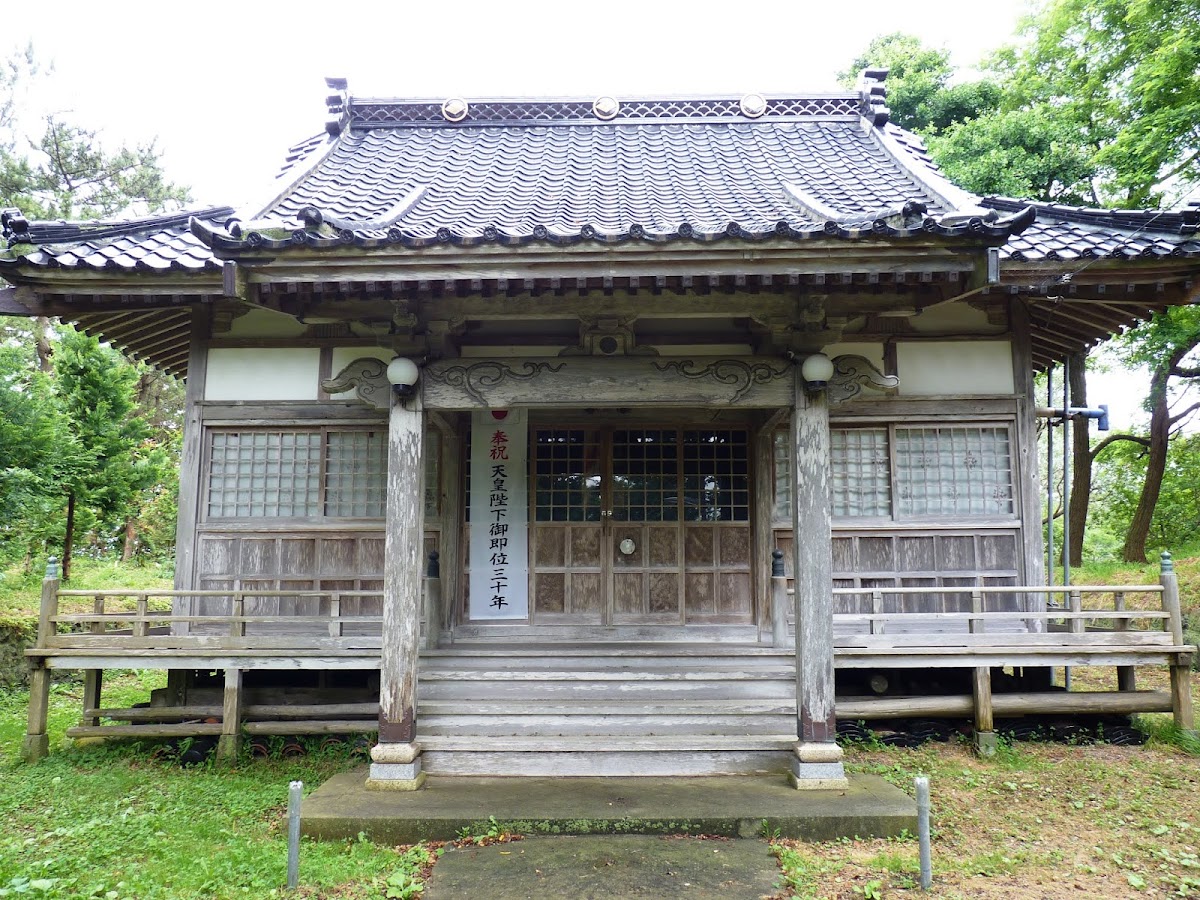
Currently, the Sunadate Shrine stands on the site of Suzaki Castle, making it difficult to imagine the castle’s former appearance. However, important artifacts, as mentioned above, have been unearthed in the surrounding area, suggesting the possibility of medieval remains lying underground.
While historical sites such as Hanazawa Castle and Katsuyama Castle are being preserved in Kaminokuni Town, Suzaki Castle has not yet undergone any full-scale preservation. It is a site where further investigation and preservation are anticipated.
Other Medieval Castle Sites in Southern Hokkaido
Hanazawa Castle Site (National Historic Site)
Located in Kaminokuni Town, Hanazawa Castle is an important castle site known as the base of Kakizaki Suehige. It did not fall even during the Battle of Koshamain and continued to function as a base for the Japanese forces. It is designated a national historic site, and its remains are still well-preserved.
Katsuyama Castle Site (National Historic Site)
Katsuyama Castle, built by Takeda Nobuhiro, served as the base of the Kakizaki clan from the late 15th to the 16th century. Extensive archaeological excavations have been conducted, confirming numerous artifacts and remains. A guidance facility has also been established, making it an important place to learn about the medieval history of southern Hokkaido.
Mobetsu Castle Site (National Historic Site)
Located in Yafurai, Hokuto City, Mobetsu Castle was the residence of Ando Iemasa. It did not fall even during the Battle of Koshamain and, along with Hanazawa Castle, became one of the last strongholds of the Japanese forces. This site is also designated a national historic site.
Shinori Castle Ruins
The Shinori Castle, located in Hakodate City, was a castle where Kobayashi Tarozaemon Yoshikage served as the lord. Situated in a strategic location facing the Tsugaru Strait, it played an important role as a trading base with Honshu.
Matsumae Odachi Ruins (Tokuyama Castle, National Historic Site)
The Odachi Castle, located in Matsumae Town, was situated near the site where Matsumae Castle was later built. It was an important base during the expansion of the Kakizaki clan’s power.
Medieval History of Southern Hokkaido as Told by Suzaki Castle
Relationship Between the Japanese and the Ainu
The history of Suzaki Castle tells the story of the complex relationship between the Japanese and the Ainu people in the medieval period. The Battle of Koshamain was an Ainu resistance against Japanese advances, but Takeda Nobuhiro’s victory established Japanese superiority.
However, this was not a simple conquest; mutual dependence through trade continued afterward. The abundant trade goods unearthed from Suzaki Castle also demonstrate the economic ties between the Japanese and the Ainu.
A Hub of Northern Trade in the Middle Ages
Suzaki Castle was an important hub for northern trade in medieval Japan. Seafood and furs from Ezo (Hokkaido) were transported to Honshu, and in return, rice, handicrafts, and coins were brought back.
The excavated Chinese ceramics indicate that this trade was part of an East Asian-wide network. The castle in southern Hokkaido was the northern terminus of the trade route connecting the Japanese archipelago and the continent.
The Northern Expansion of Samurai Society
The establishment of Suzaki Castle represents the process of medieval samurai society expanding northward. Samurai defeated in battles on Honshu crossed to Ezo (Hokkaido) to build a new base of power.
Takeda Nobuhiro is a prime example; his success in Ezo led to the later prosperity of the Matsumae clan. Suzaki Castle is a symbolic location of this samurai expansion northward.
Access and Visiting the Suzaki-kan Ruins
Access Method
To reach the Suzaki-kan Ruins (around Sunadate Shrine), head north from Hakodate City on National Route 228 towards Kaminokuni Town. It’s approximately a 1 hour and 30 minute drive from central Hakodate.
If using public transportation, take a Hakodate Bus bound for Kaminokuni from JR Hakodate Station and get off in Kaminokuni Town. However, since the number of buses is limited, it is recommended to check the timetable in advance.
Points to Note During Visit
The current Suzaki-kan Ruins are now occupied by Sunadate Shrine, making it difficult to directly see the remains of the former castle. However, the surrounding topography allows you to appreciate its strategic location on a terrace overlooking the sea.
Kaminokuni Town also has many other important medieval sites, such as the Hanazawa-kan Ruins and the Katsuyama-kan Ruins. Visiting these together will allow you to gain a deeper understanding of the medieval history of southern Hokkaido.
Katsuyama-kan Site Guidance Facility
The Katsuyama-kan site in Kaminokuni Town houses the “Katsuyama-kan Site Guidance Facility,” which features exhibits on the Twelve Castles of Southern Hokkaido and Takeda Nobuhiro. Information about the Suzaki-kan castle is also available, so it’s recommended to visit before your trip.
Expectations for Future Research and Preservation
Need for Archaeological Excavation
The Suzaki-kan site is a valuable archaeological site that has not yet undergone full-scale excavation. While numerous artifacts have been unearthed from the surrounding area, many aspects of the castle’s exact location and structure remain unclear.
Further systematic excavation would shed more light on life during Takeda Nobuhiro’s time and the realities of the Japanese society in Southern Hokkaido. Its academic value is extremely high.
Path to Historic Site Designation
While sites such as Hanazawa-kan, Katsuyama-kan, and Mobetsu-kan are designated as national historic sites, Suzaki-kan has not yet received this designation. As a castle directly linked to the important figure Takeda Nobuhiro, it has considerable value in aiming for historic site designation.
If designated as a historical site, funding for preservation and utilization will be secured, enabling more detailed investigations and development. It could also be utilized as a local historical resource for tourism.
Utilization in Local History Education
The history of Suzaki-kan serves as important teaching material for understanding the origins of Hokkaido. It allows for learning about history from diverse perspectives, including the relationship between the Japanese and Ainu, medieval trade, and the development of samurai society.
By utilizing Suzaki-kan and other medieval sites in southern Hokkaido in local school education and lifelong learning settings, it will deepen understanding of and affection for the local area.
Summary
Suzaki-kan was an important residence built in the mid-15th century in southern Hokkaido for the outstanding warrior, Takeda Nobuhiro. This residence, given to Nobuhiro after he saved the country from the crisis of the Koshamain Rebellion, became the starting point for the Matsumae clan’s later rule of southern Hokkaido.
Although it is now the Sunadate Shrine and its original form cannot be directly seen, the abundant artifacts unearthed from the surrounding area convey the state of medieval trade and life. The presence of Chinese ceramics and a large quantity of imported coins indicates that Suzaki Castle was not merely a frontier fort, but a hub of a wide-area trade network.
The history of Suzaki Castle, which holds a special place among the twelve castles of southern Hokkaido, encompasses important themes in Hokkaido history, including the northward expansion of the Japanese, relations with the Ainu, and the realities of medieval trade. Further investigations and research are expected to reveal even more facts.
When visiting Kaminokuni Town, why not also visit the area around the Suzaki Castle ruins, along with the Hanazawa Castle and Katsuyama Castle ruins, and reflect on the place where Takeda Nobuhiro began his new life? A significant page in Hokkaido’s history is etched there.