Takatori Castle (Nara Prefecture) Complete Guide | History, Highlights, and Access to Japan’s Highest Relative Height Mountain Castle
Located on the summit of Mt. Takatori in Takatori-cho, Takaichi-gun, Nara Prefecture, Takatori Castle is a magnificent mountain castle counted among Japan’s three greatest mountain castles. Its relative height (the difference in elevation from the foot of the mountain to the main keep) of 390m is the highest in Japan, and the stone walls, comparable in scale to those of Himeji Castle, still remain on the mountain. This article provides a detailed introduction to everything about this famous castle, from its history and highlights to its seasonal charms and access methods.
What is Takatori Castle? | Overview of Japan’s Three Great Mountain Castles
Takatori Castle is a mountain castle built on Mt. Takatori, which is 583.6m above sea level. It is also known as “Takatori-yama Castle” or “Fuyo-jo Castle.” During the Edo period, it functioned as the administrative center of the Takatori Domain, and is now designated as a national historical site.
Positioned as one of Japan’s Three Great Mountain Castles
Takatori Castle, along with Bitchu Matsuyama Castle in Okayama Prefecture and Mino Iwamura Castle in Gifu Prefecture, is counted among Japan’s “Three Great Mountain Castles.” Of these three castles, Takatori Castle’s relative elevation of 390m is the highest, truly deserving of the title “Japan’s No. 1 Mountain Castle.”
The castle grounds are estimated to have a circumference of approximately 30km, and the inner bailey (within the stone walls) circumference of approximately 20km, a scale comparable to Himeji Castle. Despite its remote mountain location, the fact that the main bailey retains its massive stone walls is extremely rare, and it is highly regarded as a representative castle of Nara Prefecture.
Designated as one of Japan’s Top 100 Castles
In 2006, it was selected as one of “Japan’s Top 100 Castles” (No. 61) by the Japan Castle Association. Along with its designation as a National Historic Site in 1953, its historical and cultural value is widely recognized.
History of Takatori Castle | From the Nanboku-cho Period to the Edo Period
Construction Period (Nanboku-cho Period)
The origins of Takatori Castle date back to 1332 (Genkō 2), when Ochi Kunizumi, a powerful local lord of Yamato Province who sided with the Southern Court, built it as a branch castle of Kaifukiyama Castle. At this time, Takatori Castle was a simple mountain castle known as a “kakiage-jo,” lacking buildings such as a keep or turrets.
The Ochi clan played a significant role as a powerful local lord in Yamato Province during the Nanboku-cho period, and Takatori Castle functioned as one of the Southern Court’s strongholds.
Changes During the Sengoku Period
Even after the end of the Nanboku-cho period, the Ochi clan maintained their power using Takatori Castle as their base. However, with the advent of the Sengoku period, the power dynamics within Yamato Province changed dramatically, and Takatori Castle was also tossed about by the tides of the times.
Major Renovations under the Toyotomi Regime (Azuchi-Momoyama Period)
Takatori Castle was transformed into the magnificent stone-walled castle we see today in 1585 (Tensho 13). Honda Tarozaemon (Honda Toshihisa), a senior retainer of Toyotomi Hidenaga, who became the lord of Koriyama Castle in Yamato Province, was appointed lord of Takatori Castle, and full-scale construction began.
As a retainer of Toyotomi Hidenaga, the Honda clan developed and expanded Takatori Castle as an important base in southern Yamato Province. The castle tower, numerous turrets, and high stone walls were constructed one after another, transforming it into a modern castle of unprecedented scale for a mountain castle.
During this period, Takatori Castle was also called “Fuyo Castle” (Hibiscus Castle) due to its beauty, and was celebrated in the poem, “Takatori in the southeast, looking like snow, but it’s not snow—the castle of Tosa.” This poem describes how the cluster of white-walled buildings on the mountaintop looked like snow from a distance. ### Takatori Domain in the Edo Period
During the Edo period, Takatori Castle functioned as the administrative center of the Takatori Domain. The Uemura clan became the lords and ruled for 14 generations until the end of the Edo period. The final assessed yield was 25,000 koku (a unit of rice production).
During the Edo period, Takatori Castle had as many as 27 turrets, and its high stone walls reached 12 meters in some places. A three-story keep stood in the northwest corner of the main enclosure, with a complex structure connected by a smaller keep and a multi-story turret.
Abandonment of the Castle After the Meiji Restoration
After the Meiji Restoration, Takatori Castle was abandoned in 1873 (Meiji 6) due to the castle abolition decree. The buildings were demolished or relocated, and only the stone walls remain today. However, the state of preservation of these stone walls is extremely good, conveying the magnificent scale of its former glory.
Structure and Scale of Takatori Castle | Japan’s Highest Relative Height Mountain Castle
Relative Height of 390m | Japan’s Largest Elevation Difference
The most distinctive feature of Takatori Castle is its overwhelming elevation difference of 390m from the foot of the mountain to the main keep. This is the highest elevation difference among Japanese castles, making it an extremely difficult fortress to attack.
The layout, with the main keep located on the summit of Mount Takatori (elevation 583.6m) and numerous baileys (kuruwa) arranged along the ridge, maximizes the defensive capabilities of a mountain castle.
Scale of Stone Walls Comparable to Himeji Castle
The castle’s perimeter is approximately 30km, and the perimeter of the baileys is approximately 20km, comparable to Himeji Castle, a flatland castle. Such a large scale for a mountain castle is extremely rare, highlighting Takatori Castle’s uniqueness.
The total length of the stone walls is also very long, with numerous baileys, including the main keep, second bailey, and third bailey, stretching throughout the mountain.
Main Enclosures and Building Layout
Takatori Castle’s layout centered around the main enclosure (Honmaru), with numerous enclosures and defensive structures arranged around it, including the second enclosure (Ninmaru), third enclosure (Sanmaru), Shin-yagura (New Turret), Kunimi-yagura (Viewing Turret), and Otemon (Main Gate).
The Honmaru had a three-story keep and a smaller keep, connected by a multi-story turret. The stone walls of the keep’s base remain well-preserved, allowing visitors to appreciate its immense scale.
The Ninmaru and Sanmaru also had numerous turrets, each surrounded by stone walls, making them strong defensive strongholds.
The Kunimi-yagura, as its name suggests, served as an observation deck overlooking the surrounding area, and even today, the Nara Basin can be seen from this location.
Highlights of Takatori Castle | Magnificent Stone Walls and Spectacular Views
Stone Walls of the Keep Base
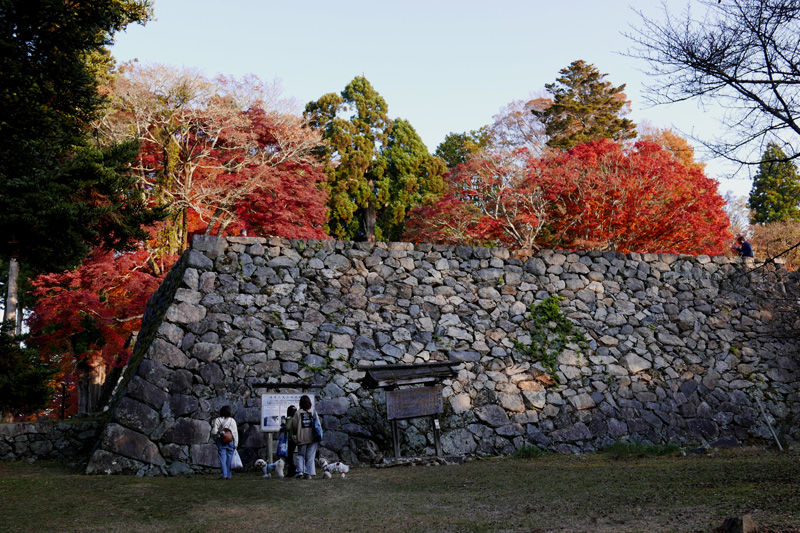
The most impressive feature when visiting Takatori Castle is the stone walls of the keep base in the Honmaru. A magnificent stone wall, approximately 10 meters high, remains in excellent condition, evoking the grandeur of the three-story keep that once stood here.
The stone wall exhibits different construction methods from “nozurazumi” (rough-stone masonry) to “uchikomi-hagi” (roasted stone masonry), reflecting the changing times and making it a valuable resource for studying the evolution of castle architecture.
Stone Walls of the Second and Third Baileys
Not only the stone walls around the main bailey, but also those of the second and third baileys are remarkably well-preserved. The high stone walls of the second bailey, in particular, reach a height of 12 meters in some places, an overwhelming scale unexpected for a mountain castle.
The stone walls of the koguchi (gateways) connecting the baileys are also intricately constructed, demonstrating their high level of defensive capability.
View from the Kunimi-yagura (Observation Tower)
From the site of the Kunimi-yagura, a spectacular panoramic view of the Nara Basin unfolds. On a clear day, you can see from Nara city to the Yamato Sanzan mountains and even as far as Osaka. This excellent view is one of the reasons why Takatori Castle was a strategically important base. Its location, allowing for monitoring surrounding movements and early detection of enemy approaches, was a major advantage for a mountain castle.
Main Gate Ruins and Ascent Route
There are several routes to Takatori Castle, but the official main road is the one leading from the castle town. Stone walls remain at the main gate ruins, and by tracing the stone steps and layout of the baileys leading from here to the main keep, one can understand the castle’s structure in its heyday.
Along the ascent route, stone walls and bailey ruins are scattered throughout, allowing visitors to experience the true charm of a mountain castle walk.
Recalling the Past with Takatori Castle Maps and Fortification Diagrams
Several castle maps and fortification diagrams drawn during the Edo period remain at Takatori Castle. These documents provide insights into the building layouts and the appearance of the castle town in its heyday.
Reproductions of these illustrations can be viewed at the Takatori Town Tourist Information Center and the Takatori Town Library. Studying them before your visit will allow you to understand Takatori Castle more deeply.
Takatori Castle in its Four Seasons | Seasonal Charms
Spring | Takatori Castle in Cherry Blossoms and Fresh Greenery
In spring, Takatori Castle is enveloped in cherry blossoms and fresh greenery. Cherry trees are planted along the path leading to the castle, creating a beautiful contrast between the stone walls and the blossoms. The best time to see them is from early to mid-April.
In the season of fresh greenery, the entire mountain is dyed in vibrant green, allowing you to enjoy a stroll through the castle ruins in refreshing air.
Summer | A Mountain Castle in Deep Greenery and a Summer Retreat
In summer, Takatori Castle is covered in deep green, offering a coolness unique to mountain castles. Due to its high altitude, the temperature is several degrees lower than at the foot of the mountain, making it a comfortable summer retreat.
However, in summer, the vegetation grows so thick that some parts of the stone walls may be difficult to see.
Autumn | Spectacular Views of Autumn Leaves and Sea of Clouds
Takatori Castle in autumn is also known as a famous spot for autumn foliage. From mid- to late November, maple and other trees change color, adorning the stone walls.
Furthermore, in the early mornings from autumn to winter, if the conditions are right, a sea of clouds can form, creating a fantastical sight of Takatori Castle floating as a “castle in the sky.” The view of the sea of clouds from the Kunimi-yagura (watchtower) is exceptional.
Winter | Snow-Covered Fuyo Castle
In winter, when covered in snow, Takatori Castle displays a beauty befitting its name, “Fuyo Castle” (Lotus Tree Castle). The stone walls covered in white snow evoke the appearance of yesteryear, as described in the poem, “I thought it was snow.”
However, in winter, the path to the castle can freeze, so adequate equipment and caution are necessary.
Winter | Snow-Covered Fuyo Castle
In winter, when covered in snow, Takatori Castle displays a beauty befitting its name, “Fuyo Castle” (Lotus Tree Castle). The stone walls covered in white snow evoke the appearance of yesteryear, as described in the poem, “Is it snow?”
However, in winter, the path to the castle can freeze, so adequate equipment and caution are necessary. ## The Charm of Takatori Castle Town
The Atmosphere of the Tosa Road and Traditional Townhouses
At the foot of Takatori Castle, the former castle town still remains. Especially along the Tosa Road, traditional townhouses dating back to the Edo period line the streets, strongly preserving the atmosphere of yesteryear.
Traditional architectural styles such as white-walled townhouses, lattice doors, and insect-cage windows are preserved, making a stroll through the area feel like stepping back in time to the Edo period.
Tourist Facilities in Takatori Town
Yumesokan is a tourist hub in Takatori Town, offering exhibits on the history of Takatori Castle and the town, as well as tourist information. Visiting before visiting Takatori Castle will deepen your understanding.
Townhouse cafes and general stores are also scattered throughout the area, making them perfect for taking a break during your stroll through the castle town.
Takatori Castle Festival
Every autumn, the “Takatori Castle Festival” is held, featuring samurai processions, historical processions, and local traditional performing arts. The entire castle town is enveloped in a festive atmosphere, bustling with many tourists.
Takatori Mountain Visibility Area | Military Importance
From Takatori Mountain, where Takatori Castle was built, you can see almost the entire Nara Basin. The vastness of this visibility area speaks to the military importance of Takatori Castle.
To the north, you can see Nara City; to the west, towards Osaka; to the east, towards Sakurai and Uda; and to the south, towards Yoshino. It was in an excellent position to monitor the major roads of Yamato Province.
It is believed that Toyotomi Hidenaga’s emphasis on Takatori Castle and his orders for large-scale renovations to his retainers stemmed from this strategic location.
Access to Takatori Castle
Access by Public Transportation
Nearest Station: Kintetsu Yoshino Line “Tsubosakayama Station”
It takes approximately 90 minutes to walk from the station to the Takatori Castle ruins (main keep). Those confident in their physical fitness can enjoy a pleasant walk through the castle town on the way to the castle.
By Bus: From Tsubosakayama Station, take the Nara Kotsu bus bound for “Tsubosakadera” and get off at “Tsubosakadera-mae.” From there, it’s about a 60-minute walk to the main keep.
By Taxi: From Tsubosakayama Station, take a taxi to Hachiman-guchi (the entrance to the castle) (approximately 15 minutes). From there, it’s about a 30-minute walk to the main keep.
Access by Car
From Osaka: Approximately 30 minutes from the Minami-Hanna Expressway “Katsuragi IC” via National Route 169.
From Kyoto/Nara: Approximately 20 minutes from the Keina-Wa Expressway “Kashihara-Kita IC” via National Route 169.
Parking: There is free parking at Hachiman-guchi (approximately 10 cars). From here, it’s about a 30-minute walk to the main keep.
Recommended Route
Beginner-Friendly: The route from Hachiman-guchi to the main keep is the quickest (approximately a 30-minute walk).
For History Buffs: The route from the castle town through the main approach road allows you to experience the castle’s historical route and soak up the atmosphere of history (approximately 90 minutes on foot).
For Those with Strong Footwork: There is also a route starting from Tsubosaka-dera Temple, allowing you to combine temple visit with exploring the castle ruins (approximately 60 minutes on foot).
Important Points When Visiting Takatori Castle
Clothing and Equipment
Takatori Castle is a full-fledged mountain castle, so the following equipment is recommended:
- Hiking boots or trekking shoes: The path to the castle is a mountain trail, so non-slip shoes are essential.
- Comfortable clothing: Long sleeves and long pants are recommended (to prevent insect bites and abrasions).
- Drinking water: There are no vending machines in the mountains, so bring plenty of water.
- Rain gear: The weather can change quickly, so rain gear is recommended.
- Hat and sunscreen: Especially necessary in summer.
Estimated Time Required
- Round trip from Hachiman-guchi to the main keep: Approximately 1.5 to 2 hours
- Via the main road from the castle town: Approximately 3 to 4 hours
- For a thorough visit: Half a day to a full day
Best Season for Visiting
Spring (April): Cherry blossom season with pleasant weather
Autumn (November): Beautiful autumn foliage and comfortable temperatures
Early Morning (Autumn-Winter): Possibility of seeing a sea of clouds
In summer, due to the heat and numerous insects, early morning visits are recommended. In winter, caution is needed regarding snow and ice.
Tourist Spots Around Takatori Castle
Tsubosaka-dera Temple
Located approximately 2km from Takatori Castle, this ancient temple is known for its healing properties for eye diseases. With many attractions such as the large Kannon stone statue and the three-story pagoda, it’s ideal to visit in conjunction with a visit to Takatori Castle.
Asuka Region
Approximately 20 minutes north of Takatori Town by car lies Asuka Village, dotted with historical sites from the Asuka period. You can experience the history of ancient Japan at sites such as the Ishibutai Kofun, Takamatsuzuka Kofun, and Asuka-dera Temple.
Yoshino Mountain
Approximately 30 minutes south of Takatori Town, you’ll arrive at Yoshino Mountain, famous for its cherry blossoms. It’s especially beautiful during the spring cherry blossom season, and many tourists visit it in conjunction with Takatori Castle.
Summary | Experience the Charm of Takatori Castle
Takatori Castle, boasting the highest elevation in Japan and being one of Japan’s three greatest mountain castles, is a must-visit for castle enthusiasts and beyond.
The magnificent stone walls, breathtaking views, the beauty of nature throughout the seasons, and the weight of history spanning from the Nanboku-cho period to the Edo period—all of these contribute to the charm of Takatori Castle.
Climbing the castle requires considerable physical strength, but the rewards are well worth the effort. The sense of accomplishment upon reaching the main keep after climbing the mountain path and seeing the stone walls gradually appear is exceptional.
When visiting Nara Prefecture, be sure to visit Takatori Castle and experience the charm of Japan’s greatest mountain castle. By combining a stroll through the castle town with a visit to Takatori Town, you’re sure to fully enjoy the charm of this town where history and nature blend seamlessly.