Takahata Castle (Hino City, Tokyo) Complete Guide: A Thorough Explanation of History, Remains, Access, and its Relationship with Hijikata Toshizo
What is Takahata Castle?: A Medieval Mountain Castle Remaining in Hino City, Tokyo
Takahata Castle is a medieval flatland castle located in Takahata-cho, Hino City, Tokyo. It was built on an isolated hill approximately 130m above sea level, with a relative height of 40-50m, behind Takahata Fudo-son (Kongoji Temple), known as one of the three great Fudo temples of the Kanto region. Currently, it is part of the Tokyo Metropolitan Tama Hills Natural Park and is also part of the 88-temple pilgrimage route.
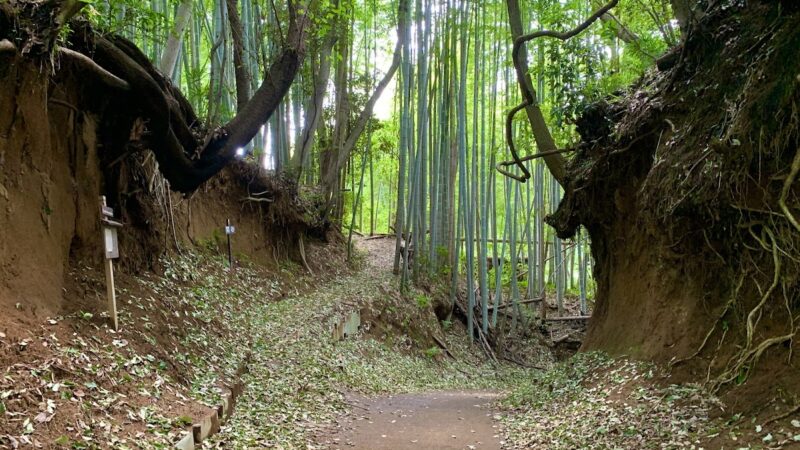
The castle ruins are located on Fudogaoka Hill, which rises south of Takahata Fudo-son. The place name “Negoya” remains at the foot of the hill, further supporting its function as a medieval castle. Although historical records are scarce and many details remain unclear, the remains of structures such as baileys, moats, vertical trenches, and earthworks can still be seen today, making it a valuable historical site that conveys the structure of a castle from the Sengoku period.
History of Takahata Castle: From the Hirayama Clan to the Retainers of Hojo Ujiteru
Construction Period and Builder
Regarding the construction period and builder of Takahata Castle, there are few reliable historical records, so the exact details are unknown. Generally, it is believed to have been the residence of either the Hirayama or Takahata clan, who ruled this region. The Hirayama clan was a samurai group belonging to the Nishito, one of the seven Musashi clans, and was a powerful local family.
Based on the castle’s structure, it is thought to have been developed as a full-fledged mountain castle during the Sengoku period, but it has also been suggested that facilities such as a residence or fort existed before that time.
The Kyōtoku Rebellion and the Battle of Bubaigawara (1455)
The oldest historical record of Takahata Castle is related to the Battle of Bubaigawara during the Kyōtoku Rebellion. In 1455 (Kyōtoku 4), the combined forces of Ashikaga Shigeuji, the Kantō Kubō (governor of the Kantō region), and the Yamanouchi Uesugi and Ōgigayatsu Uesugi clans, the Kantō Kanrei (deputy shogun of the Kantō region), clashed at Bubaigawara.
It is said that Uesugi Noriaki (some sources say Uesugi Noriaki), who led the vanguard of the defeated Uesugi army in this battle, fled to the site of Takahata Castle and committed suicide. This event is important evidence that Takahata Castle was already recognized as a military base in the mid-Muromachi period.
Sengoku Period: Under the Control of the Hōjō Clan
With the start of the Sengoku period, Takahata Castle came under the influence of the Later Hōjō clan. This region was under the control of Hōjō Ujiteru, the lord of Hachiōji Castle, and it is believed that Takahata Castle was managed by Ujiteru’s retainers.
Battle of Takahata Castle: Siege of Odawara (1590)
Takahata Castle comes to the forefront of history during Toyotomi Hideyoshi’s Siege of Odawara in 1590 (Tenshō 18). At this time, Takahata Castle was defended by Takahata Juemon, a retainer of Hojo Ujiteru.
It is said that the Toyotomi forces from the northern provinces, namely the forces of Maeda Toshiie and Uesugi Kagekatsu, attacked Takahata Castle, and a fierce battle ensued. Ultimately, Takahata Castle fell, ending its historical role with the downfall of the Hojo clan. This battle is recorded in local history as the “Battle of Takahata Castle.”
After the Edo Period
After the Siege of Odawara, Takahata Castle was abandoned and lost its function as a military facility. The castle site became the temple grounds of Takahata Fudōson (Kongōji Temple) and has been preserved as a sacred mountain to this day. During the Edo period, it was developed as a sacred site for the 88-temple pilgrimage, attracting many pilgrims.
Structure and Layout of Takahata Castle
Overall Layout
Takahata Castle is a flatland castle that skillfully utilizes the terrain of an isolated hill. The castle features a series of interconnected enclosures (kuruma) along the ridge from northwest to southeast. The main enclosure is located at the highest point of the hill, surrounded by smaller enclosures (koshikuruma).
The castle grounds measure approximately 200m east-west and 300m north-south, making it a medium-sized mountain castle. Viewed from the grounds of Takahata Fudo-son temple, it’s clear that the entire hill behind the temple was the castle grounds.
Major Remains
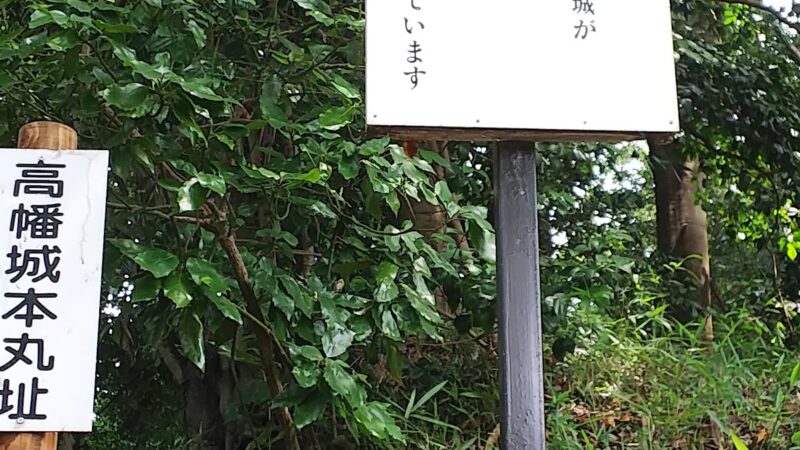
Main Enclosure (Honmaru)
The main enclosure is located at the highest point of the hill and is currently maintained as an observation deck. From here, one can see a panoramic view of the Tama region, giving a real sense of its importance as a strategic point for defense and surveillance. The main enclosure measures approximately 30m east-west and 40m north-south, and traces of earthworks can be seen around it.
Enclosures (Kuruwa) Group
Several enclosures are arranged in a stepped fashion along the ridge from the northwest of the main enclosure. These enclosures were constructed on relatively flat ground and are thought to have been used for garrisoning soldiers and storing supplies. Although currently covered in vegetation, the layout of the enclosures can be deciphered from the topography.
Lower Enclosures
Lower enclosures are located around the main enclosure, particularly on the north and east sides. These were defensive structures designed to protect the main enclosure and prevent enemy intrusion.
Moats
Multiple moats dividing the ridge can be identified. Moats are important defensive structures that prevent enemy intrusion and demarcate the castle area. While the moats at Takahata Castle are difficult to discern due to overgrown vegetation, their locations can be identified from the abrupt changes in the terrain.
Vertical Moats
Several vertical moats dug vertically into the slopes have also been identified. Vertical moats are defensive structures that hinder lateral movement of enemies and make attacks from slopes difficult. The vertical moats at Takahata Castle are important remains that demonstrate the castle construction techniques of the Sengoku period.
Earthworks
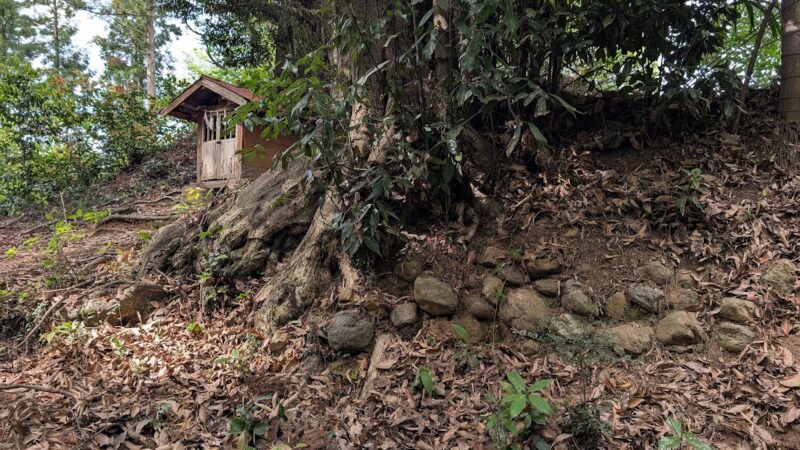
Traces of earthworks remain around the main enclosure and each of the baileys. These earthworks functioned as defensive walls and were also used as foundations for fences and walls. Although weathered, their locations can be estimated from the topographical elevations.
Access Routes
Currently, there are several routes to reach Takahata Castle ruins. The most common route is from the grounds of Takahata Fudo-son Temple, following the 88-temple pilgrimage course. The well-maintained walking path makes it easy to navigate.
While the medieval access routes are not clearly defined, it is presumed that the ridge on the northwest side was the main approach. It is also thought that there were paths leading from the foot of the mountain to each bailey.
Highlights of Takahata Castle: Points for Exploring the Castle Ruins
Exploring the Castle Ruins Using the 88-Temple Pilgrimage Course
Takahata Castle ruins are part of the 88-temple pilgrimage course, allowing visitors to enjoy both religious practices and castle exploration simultaneously. A major attraction is the opportunity to observe the remains of the castle, such as baileys and moats, while visiting each pilgrimage site.
The pilgrimage course is approximately 1.5 km long and takes about an hour to complete. It features moderate ups and downs, making it enjoyable as a light hike.
View from the Observation Deck (Main Bailey Site)
From the observation deck located at the main bailey site, you can enjoy a magnificent view of the Tama region. On a clear day, you can see the Tama River and even the skyscrapers of Shinjuku in the distance. The castle lords of the Sengoku period likely surveyed their territories from this very spot.
Unity with Takahata Fudo-son Temple
The Takahata Castle ruins form a landscape that is integrated with Takahata Fudo-son Temple. The harmonious scenery, with the temple buildings such as the five-story pagoda and Niomon gate within the grounds, and the castle ruins rising in the background, creates a unique atmosphere unlike any other castle site.
A Place Associated with Hijikata Toshizo
Takahata Fudo-son Temple is the family temple of Hijikata Toshizo, the vice-commander of the Shinsengumi. Within the temple grounds are a statue and grave of Hijikata Toshizo. The opportunity to reflect on this hero of the late Edo period before or after exploring the castle ruins is a major attraction of Takahata Castle.
Every year on the second weekend of May, the “Shinsengumi Festival” is held, attracting many fans. Visiting during this time allows you to enjoy both the castle ruins and the festival.
Observation Points for the Ruins
While some parts of the Takahata Castle ruins are difficult to discern due to being covered in vegetation, keeping the following points in mind will make it easier to find the remains:
- Sudden changes in terrain (possible moats)
- Flat areas (possible baileys)
- Long, narrow depressions (possible vertical moats)
- Gentle rises (possible earthworks)
Although information boards are limited, carefully observing the terrain offers the enjoyment of deciphering the castle structure of the Sengoku period.
Access Information: How to Get to Takahata Castle
Access by Train
Using the Keio Line
- Get off at Takahatafudo Station on the Keio Line, approximately 10 minutes on foot from the South Exit
- There are well-maintained signs from the station to Takahatafudo Temple, so you won’t get lost.
Using the Tama Monorail
- Get off at Takahatafudo Station on the Tama Monorail, approximately 10 minutes on foot
- It connects to the Keio Line, making access very convenient.
Access by Car
Using the Chuo Expressway
- Approximately 15 minutes from Kunitachi-Fuchu IC
Parking
- There is a parking lot for visitors at Takahatafudo Temple (paid, approximately 200 spaces)
- It gets crowded during New Year’s and festivals, so we recommend using public transportation.
Entrance to the Castle Ruins
From the grounds of Takahatafudo Temple, follow the signs for the 88-temple pilgrimage course. The main routes to the site are as follows:
- The route from near the five-story pagoda (most common)
- The route from behind the Daishido Hall
- The route from the east side of the Fudo Hall
All routes have well-maintained walking paths, and hiking equipment is not necessary, but comfortable walking shoes are recommended.
Actual Visit: Visiting Hours and Precautions
Estimated Visiting Time
- Visiting Takahata Fudo-son Temple only: 30 minutes to 1 hour
- Exploring the Castle Ruins (88-Temple Pilgrimage Course): 1 hour to 1 hour 30 minutes
- Total: 1 hour 30 minutes to 2 hours 30 minutes
If you wish to carefully observe the remains, you will need more time.
Best Time to Visit
Spring (March-May)
- Beautiful fresh greenery, mild weather, ideal for strolling
- The Shinsengumi Festival is held in May
Autumn (October-November)
- Beautiful autumn foliage, excellent views
- Moderate temperature, easy to walk
Summer (June-September)
- Abundant greenery, but many mosquitoes and insects
- Heatstroke prevention is necessary
Winter (December-February)
- Leaves have fallen from the trees, making it easier to observe the ruins
- Clear air and excellent views
Precautions
- The castle ruins are on a mountain path, so wear comfortable shoes
- Bring insect repellent in summer
- Don’t forget drinks (vending machines only at the foot of the mountain)
- Be careful as the ground can be slippery during and after rain
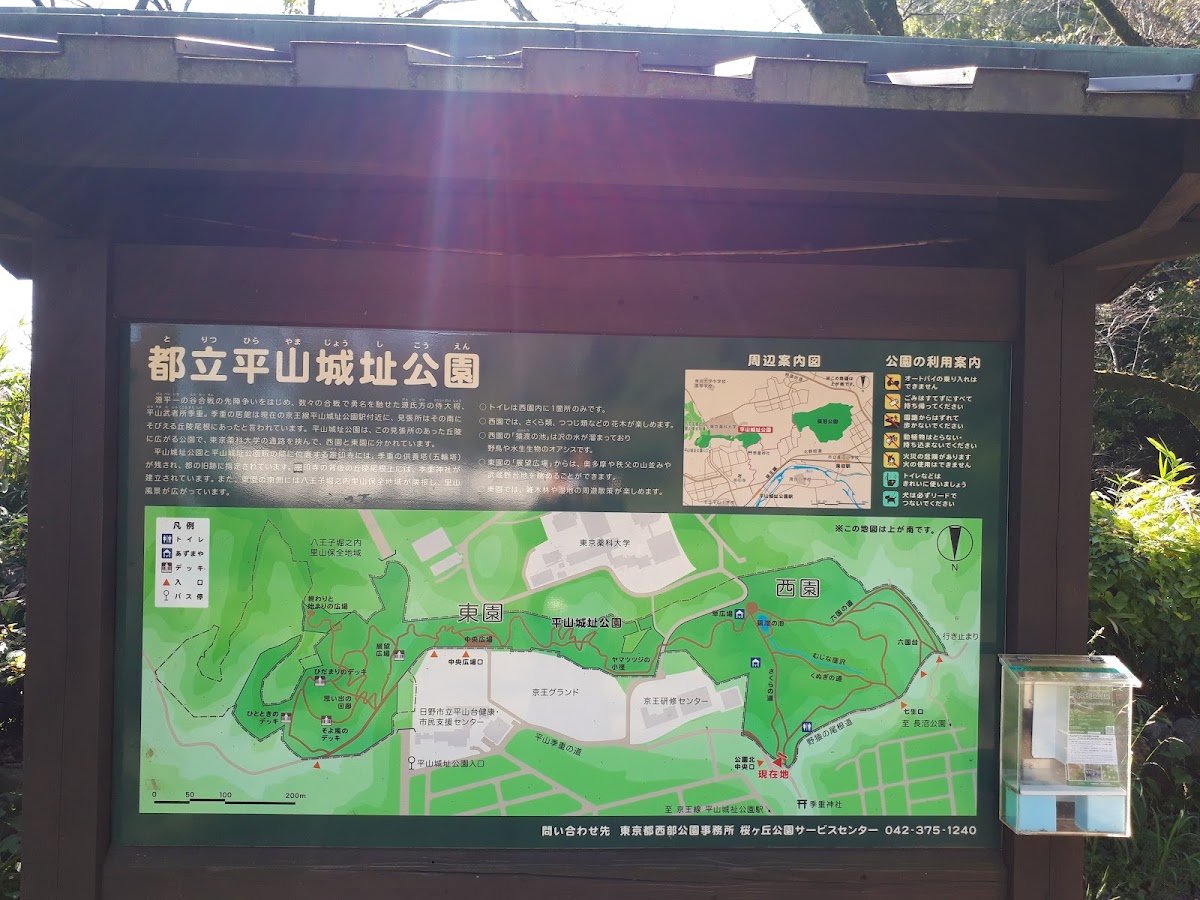
- There are few signposts, so it’s a good idea to check the castle layout map beforehand
- The remains are protected; please do not dig or destroy them unnecessarily.
About Takahata Fudo-son (Kongoji Temple)
One of the Three Great Fudo Temples of the Kanto Region
Takahata Fudo-son is a renowned temple counted among the three great Fudo temples of the Kanto region, along with Naritasan Shinshoji Temple and Oyama Fudo-son. Its official name is Takahatasan Myooin Kongoji Temple, and it is a temple of the Shingon Chizan sect.
History and Origin
It is said to have been founded during the Nara period by Gyoki Bodhisattva. In the early Heian period, Jikaku Daishi Ennin, at the request of Emperor Seiwa, built a Fudo Hall and enshrined Fudo Myoo, leading to its reputation as Takahata Fudo-son.
Main Temple Buildings
Fudo-do Hall (Important Cultural Property)
- The oldest Fudo-do hall in the Kanto region
- Preserves the architectural style of the Muromachi period
Nio-mon Gate
- Welcomes visitors as the temple gate
- Houses Kongo Rikishi statues on either side
Five-Storied Pagoda
- A relatively new pagoda built in 1990
- Approximately 45m tall, a landmark of the Tama area
Dainichi-do Hall
- enshrines Dainichi Nyorai as its principal deity
Relationship with Hijikata Toshizo
Takahata Fudo-son is known as the family temple of Hijikata Toshizo, the vice-commander of the Shinsengumi. The Hijikata family has been parishioners of this temple for generations, and the following related facilities are located within the temple grounds:
- Bronze statue of Hijikata Toshizo (in front of the Dainichi-do Hall)
- Grave of Hijikata Toshizo (behind the inner sanctuary)
- Hijikata Toshizo Museum (on the temple grounds, open only on weekends and holidays)
This place is considered a sacred site for Shinsengumi fans, attracting many visitors from all over Japan.
Nearby Attractions and Tourist Spots
Hino City Local History Museum
Located about a 15-minute walk from Takahatafudo Station, it introduces the history and culture of Hino City. There are also exhibits related to Takahata Castle, and visiting before your visit will deepen your understanding.
Hyakusōen Garden
A Japanese garden located at Hyakusōen Station, one stop from Takahatafudo Station on the Keio Line. Known for its plum blossoms, it is bustling with tourists in the spring.
Hijikata Toshizo Museum
Located within the grounds of Takahata Fudo Temple, this museum displays items related to Hijikata Toshizo. Open only on Saturdays, Sundays, and public holidays; prior confirmation is required.
Tama Zoological Park
Located approximately 10 minutes from Takahata Fudo Station on the Keio Line, this is one of Japan’s leading zoos. Ideal for family visits.
Other Surrounding Castles
Hirayama Castle
- The base of the Hirayama clan, located approximately 2km northeast of Takahata Castle.
- Although few remains remain, it is important for understanding the Hirayama clan.
Momokusa Castle
- A small castle located approximately 1.5km north of Takahata Castle.
- Possibly functioned in conjunction with Takahata Castle.
Kawabe Horinouchi Castle
- A branch castle of the Hirayama clan located along the Tama River.
- Currently a residential area, with almost no remains remaining.
Evaluation and Reviews of Takahata Castle
Evaluation as a Castle
Takahata Castle has an average rating of ★★★☆☆ (around 2.70) on castle evaluation sites such as Kojodan. This is due to the following reasons:
Points of High Rating
- Good access
- Can be visited in conjunction with Takahata Fudoson Temple
- Added value as a place associated with Hijikata Toshizo
- A certain amount of remains are preserved
Reasons for Lower Rating
- Remains are overgrown with vegetation and difficult to see
- Few information boards, making it difficult to enjoy without prior knowledge
- Lack of prominent remains such as stone walls
- Few historical materials, making the historical background unclear
Visitor Comments
“It’s great that you can visit it together with Takahata Fudoson Temple. You can stroll around the castle ruins while doing the 88-temple pilgrimage.”
“The remains are difficult to see, but if you carefully observe the topography, you can understand the castle structure of the Sengoku period.”
“A must-visit place for Hijikata Toshizo fans. The view from the castle ruins is also wonderful.”
“I think even beginners could enjoy it if there were more information boards.”
Prior Knowledge for Enjoying Takahata Castle
About the Hirayama Clan
The Hirayama clan was a samurai group belonging to the Nishito clan, one of the seven Musashi clans. They held power in the Tama region from the late Heian period to the Kamakura period. During the Genpei War, they sided with the Minamoto clan, and Hirayama Suehige is known for his distinguished service.
During the Sengoku period, they became vassals of the Later Hojo clan and are believed to have been entrusted with governing this region. Takahata Castle is considered highly likely to have functioned as one of the Hirayama clan’s branch castles.
The Tama Region in the Siege of Odawara
In the 1590 Siege of Odawara, Toyotomi Hideyoshi mobilized daimyo from across the country to attack the Later Hojo clan. While the main battlefield was Odawara Castle, the Hojo clan’s branch castles were also captured one after another.
In the Tama region, Hachioji Castle was the site of the fiercest fighting, attacked by the Northern Army led by Maeda Toshiie and Uesugi Kagekatsu. Takahata Castle is also believed to have been attacked at this time, and it is presumed to have surrendered or fallen around the time of the fall of Hachioji Castle.
How to Appreciate Medieval Castles
To enjoy medieval mountain castles like Takahata Castle, it’s helpful to understand the following points:
- Utilization of Terrain: Defensive structures that utilize the natural terrain
- Arrangement of Enclosures: Creating flat areas to secure space for soldiers’ encampments
- Moats and Vertical Ditches: Excavating ridges and slopes to prevent enemy incursions
- Earthworks: Raising earth to create defensive walls
- Line of Sight: Placing the main enclosure in a location that allows for surveillance of the surroundings
Walking through castle ruins while keeping these elements in mind will help you understand the castle-building techniques and strategies of the Sengoku period.
The Future of Takahata Castle: Preservation and Utilization
Current Challenges
Takahata Castle ruins are protected as part of the Tokyo Metropolitan Tama Hills Natural Park, but the following challenges exist:
- Weathering and burial of remains by vegetation
- Lack of information boards and explanatory signs
- Lack of academic research
- Low awareness
Efforts Towards Preservation
Research and preservation activities are being carried out by local history enthusiasts and castle researchers. Furthermore, utilization as a tourist resource in collaboration with Takahata Fudoson Temple is being considered.
Expected Future Developments
- Creation of a detailed castle layout map through surveying
- Improvement of information boards and explanatory signs
- Balancing the development of walking trails with the preservation of remains
- Strengthening collaboration with Shinsengumi-related tourism
- Restoration of the castle’s appearance using digital technology
Summary: The Charm of Takahata Castle
Takahata Castle is a valuable historical site that preserves the remains of a Sengoku period castle, despite being located in Hino City, Tokyo, close to the city center. While historical records are scarce and many details remain unclear, this very scarcity sparks the imagination and adds to its allure.
Takahata Castle, with its landscape integrated with the renowned Takahata Fudo-son temple, its added value as a place associated with Hijikata Toshizo, and its aspect as a place of faith through the 88-temple pilgrimage, is a place with multifaceted charm that goes beyond mere castle ruins.
With its excellent accessibility, Takahata Castle can be enjoyed by everyone from beginners to experts. Why not take a leisurely stroll, immersing yourself in the history of the Tama region and reflecting on the Sengoku period?
Enjoying the views from the castle ruins, purifying your mind at Takahata Fudo-son, and following in the footsteps of Hijikata Toshizo—Takahata Castle is a place where you can spend such a fulfilling day.