Complete Guide to Takahara Suwa Castle (Gifu Prefecture) | The History of the Ema Clan’s Base and the Battle of Yokamachi
What is Takahara Suwa Castle?
Takahara Suwa Castle is a Muromachi period mountain castle located in Tono, Kamioka-cho, Hida City, Gifu Prefecture. Built on a mountaintop at an altitude of 622 meters and a relative height of approximately 170 meters, this castle played an important role as the base of the Ema clan, who ruled northern Hida.
Also known as Kyokujitsu Castle, Asahiyama Castle, and Ema Castle, it was designated a National Historic Site on March 21, 1980, as part of the “Ema Clan Castle Site.” The Ema clan’s castle ruins consist of seven castle sites: Takahara Suwa Castle, Shimodate Castle, Tsuchijo Castle, Terabayashi Castle, Masamoto Castle, Dojo Castle, and Ishigami Castle. These are highly valued as precious remains that illustrate the reality of medieval Hida lord residences and mountain castles.
History of Takahara Suwa Castle
Construction and Prosperity by the Ema Clan
The exact construction date of Takahara Suwa Castle is unclear, but it is believed to have been built during the Muromachi period by Ema Tokimori and Ema Tokitsune. The Ema clan were powerful local lords who ruled northern Hida Province from the Kamakura period. They used Takahara Suwa Castle as their main mountain castle base, with their residence, Shimodate, located at the foot of the mountain.
The Ema clan reigned as the dominant power in northern Hida throughout the Muromachi period, and Takahara Suwa Castle functioned as a fortified stronghold. A “tsume-jiro” is a type of castle where, in peacetime, the lord conducted his affairs at a residence at the foot of the mountain, and in wartime, he would take refuge in a strong castle on the mountaintop. This dual structure allowed the Ema clan to achieve both efficient territorial control and strong defense.
The Battle of Yokamachi and the Downfall of the Ema Clan
The Battle of Yokamachi, which took place in October of Tensho 10 (1582), brought an end to the history of Takahara Suwa Castle. This battle, also known as the “Sekigahara of Hida,” was a decisive battle between the Ema clan of northern Hida and the Miki clan of southern Hida.
The then-lord of Takahara Suwa Castle, Ema Terumori, clashed with the Miki army led by Miki Yoritsuna, but was killed in this battle. Having lost its main force, the Ema clan’s power rapidly declined, and the following day, Takahara Suwa Castle was captured by Kojima Tokimitsu, the lord of Kojima Castle, who was aligned with the Miki clan.
With this fall, the Ema main family effectively perished, and Takahara Suwa Castle was abandoned. Afterward, remnants of the Ema clan continued their activities for a while, but in 1585, when Kanamori Nagachika entered Hida Province, the Ema clan was completely wiped out, and Hida came under the control of the Kanamori clan.
Structure and Layout of Takahara Suwa Castle
Characteristics as a Mountain Castle
Takahara Suwa Castle is built as a typical multi-bailey mountain castle. Centered around the mountaintop at an altitude of 622 meters, it features a structure with multiple baileys arranged in a continuous pattern, characterized by a highly defensible layout that skillfully utilizes the steep terrain.
The castle’s height of 170 meters created a formidable barrier for attackers, greatly enhancing its defensive capabilities as a mountain castle. From the summit, one could overlook the Ema clan’s lower residence below, providing an ideal location for monitoring surrounding roads and movements within the territory.
Major Remains
Many remains of Takahara Suwa Castle remain in excellent condition today.
Main Enclosure (Shukaku): This is the central enclosure of the castle, located at the highest elevation. From here, one can look down on the Ema clan’s lower residence at the foot of the mountain, and it is believed to have functioned as the lord’s living quarters and command post.
Moat (Horikiri): These are dry moats dug to cut across the ridge, serving as important defensive structures to prevent enemy intrusion. Multiple moats have been identified at Takahara Suwa Castle, with a double moat particularly visible near the castle entrance. These moats are deeply excavated, demonstrating the advanced civil engineering techniques of the time.
Vertical Moats: These are moats dug vertically along the slope, serving to restrict the enemy’s lateral movement. Numerous vertical moats are strategically placed along the path leading to the main enclosure, demonstrating a design intended to make sieges difficult.
Earthworks: These are defensive walls built by piling up earth, surrounding the enclosures. Earthworks served to protect against projectiles such as arrows and stones.
Stone Walls: Remains of stone walls have been confirmed in some areas, indicating that relatively advanced construction techniques were used for a mountain castle of the Muromachi period.
Layout Design 工夫
The layout of Takahara Suwa Castle incorporates various ingenious features to effectively defend against enemy attacks. The enclosures are arranged in stages, creating a multi-layered defensive structure where even if one enclosure is breached, the next can provide defense.
Furthermore, the approach to the castle is intentionally winding, preventing a direct, straight-line charge. This complex layout can still be experienced when climbing the castle, making it a valuable historical site that allows visitors to experience the defensive philosophy of a medieval mountain castle.
Highlights of Takahara Suwa Castle
Double Moat
The double moat near the entrance to the castle ruins is one of the most representative highlights of Takahara Suwa Castle. Two deeply excavated moats are positioned in succession, forming a strong defensive line that hindered enemy intrusion. The sheer scale and technical sophistication of the moats leave a strong impression on visitors.
View from the Main Enclosure
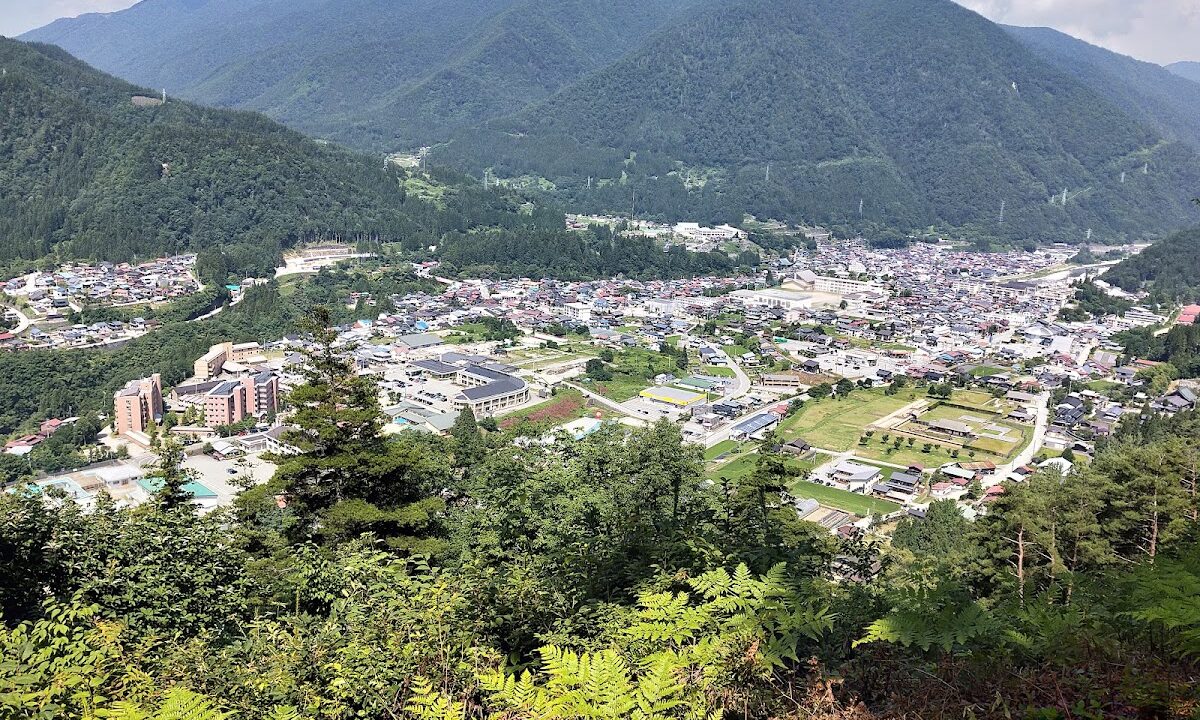
The view from the main enclosure is arguably the greatest highlight of Takahara Suwa Castle. The scenery overlooking the mountaintop at an altitude of 622 meters is breathtaking, offering a panoramic view of the Ema clan’s lower residence ruins below. This view provides a valuable opportunity to relive the perspective from which the former lord surveyed his territory.
On clear days, you can enjoy panoramic views of the Hida Mountains and the townscape of Kamioka, truly appreciating why the Ema clan chose this location as their base.
Numerous Moats and Vertical Ditches
The path leading to the main enclosure is lined with multiple moats and vertical ditches. These remains are well-preserved and serve as excellent learning materials for studying the defensive systems of medieval mountain castles. Bringing a castle layout map will help you better understand the relative positions and roles of each structure.
Arrangement of Enclosures
The tiered arrangement of the numerous enclosures demonstrates the skillful design of Takahara Suwa Castle. By observing the size and arrangement of each enclosure, you can glean insights into the castle design philosophy and military strategy of the time.
Relationship with the Ema Clan’s Lower Residence
Understanding Takahara Suwa Castle is crucial to understanding its relationship with the Ema Clan’s Lower Residence (Emashishimoyakata) located at the foot of the mountain. The Ema clan’s Shimodate residence functioned as their peacetime residence and was the center of politics and economy. Currently, archaeological excavations and restoration work are underway at the Shimodate site, allowing visitors to see gardens and building foundations.
The combination of Shimodate and Takahara Suwa Castle occupies an important position in castle history research as a classic example of how medieval lords differentiated between peacetime and wartime operations. Visiting both sites provides a deeper understanding of the Ema clan’s system of rule.
The Shimodate site has been developed into the “Ema Clan Residence Site Park,” which includes a guidance facility. When visiting Takahara Suwa Castle, we highly recommend also visiting the Shimodate site.
Access
Access by Car
Takahara Suwa Castle is easily accessible by car. Although it is a mountain castle with a relative elevation of 170 meters, you can drive very close to the castle ruins using the forest road.
Address: Tono, Kamioka-cho, Hida City, Gifu Prefecture
Nearest Parking: Sky Dome Kamioka (Hida Space Science Museum Kamioka Lab) Parking Lot 2
Parking Address: 531 Tono, Kamioka-cho, Hida City, Gifu Prefecture 506-1121
Sky Dome Kamioka also functions as a roadside station, and parking is free. From the parking lot, walk to Enjoji Temple, and the path to Takahara Suwa Castle begins from there.
Travel Time from Major Cities:
- From Takayama City: Approximately 40 minutes via National Routes 41 and 471
- From Toyama City: Approximately 1 hour 20 minutes via National Route 41
- From Nagoya City: Approximately 3 hours via the Chuo Expressway and Takayama
Access by Public Transportation
If using public transportation, the nearest stations are JR Takayama Line’s “Hida-Furukawa Station” or “Inotani Station,” but you will need to take a bus or taxi from there. Since the number of services is limited, it is recommended to check the timetable in advance.
Nohi Bus operates routes towards Kamioka, but the number of services is limited, so renting a car is more convenient.
Entrance and Path to the Castle
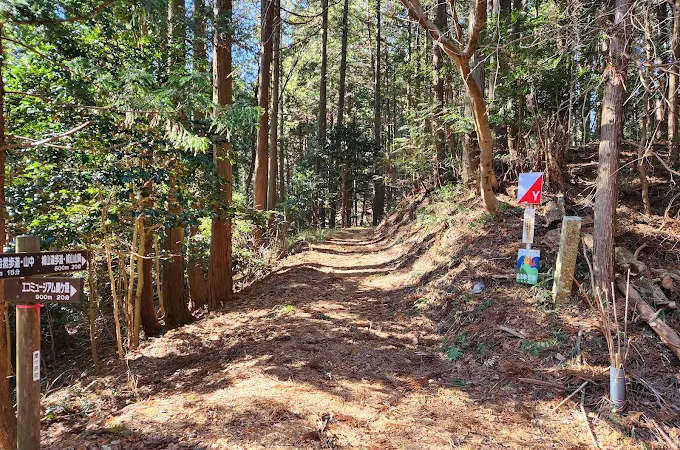
From the parking lot, you will pass through the grounds of Enjoji Temple and reach the entrance to Takahara Suwa Castle. An information board is installed at the entrance, and the actual climb to the castle begins from here.
While you can reach near the castle ruins by car using the forest road, if you plan to hike to the castle, allow approximately 1 hour 30 minutes to 2 hours round trip. The trail is well-maintained, but since it’s a mountain path, comfortable shoes and clothing are necessary.
Notes for Visitors
- Season: During winter (December to March), snow makes climbing difficult. Visiting from spring to autumn is recommended.
- Equipment: As it’s a mountain castle, bring comfortable walking shoes such as trekking shoes, drinking water, and insect repellent (in summer).
- Time Required: It’s recommended to allocate about half a day to visit both the castle ruins and the lower residence ruins.
- Fortification Map: Obtaining a fortification map beforehand will enhance your visit and help you understand the castle’s structure.
Nearby Tourist Attractions
Ema Clan Residence Ruins Park (Ema Clan Lower Residence Ruins)
This is the site of the Ema clan’s residence, located at the foot of Takahara Suwa Castle. Based on archaeological excavations, parts of the gardens and buildings have been restored, allowing visitors to experience the appearance of a medieval samurai residence. A free guidance facility is also available, where visitors can see exhibits on the history of the Ema clan and Takahara Suwa Castle.
Sky Dome Kamioka/Hida Space Science Museum Kamioka Lab
This facility exhibits information about the Super-Kamiokande neutrino observation device located underground in the Kamioka Mine. Visitors can learn about Nobel Prize-winning research and enjoy a sightseeing experience that combines historical exploration with scientific learning.
Former Kamioka Mine Related Facilities
Kamioka Town flourished as a mining town from the Edo period. Industrial heritage sites related to mining are scattered throughout the area, making it a worthwhile visit for those interested in history.
Other Castle Ruins in Hida City
Other castle ruins that make up the Ema clan’s castle site (Tsuchijo Castle Ruins, Terabayashi Castle Ruins, Masamoto Castle Ruins, Dojo Castle Ruins, Ishigami Castle Ruins) are also designated as National Historic Sites. If you have time, visiting these castle ruins will provide a clearer overall picture of the Ema clan’s rule over their territory.
The Significance of Visiting Takahara Suwa Castle
Takahara Suwa Castle is a historical heritage site with value far exceeding that of a mere castle ruin. Through its actual remains, visitors can learn about the realities of local lords during the Muromachi period, the construction techniques of medieval mountain castles, and the history of regional conflicts during the Sengoku period.
The “Ema Clan Castle Site,” designated a National Historic Site, is a nationally rare example of a residence and mountain castle complex preserved as a single entity, occupying an important position in the study of medieval castles. Excavation surveys and maintenance are continuously being carried out, and its value is expected to increase further in the future.
In the tranquil environment surrounded by the mountains of Hida, the time spent contemplating the rise and fall of the Ema clan, who once ruled northern Hida, will undoubtedly leave visitors with a profound sense of awe.
Summary
Takahara Suwa Castle is a valuable Muromachi period mountain castle ruin remaining in Hida City, Gifu Prefecture. This castle, which flourished as the base of the Ema clan and was abandoned after its fall in the Battle of Yokamachi, is an important historical site that conveys the history of medieval Hida.
It boasts numerous attractions, including the structure of a multi-bailey mountain castle built on a mountaintop at an altitude of 622 meters, defensive remains such as double moats, and the view from the main bailey. Visiting it together with the Ema clan’s lower residence ruins at the foot of the mountain will provide a deeper understanding of the medieval lord’s system of rule.
Access is convenient by car, and parking is available at Sky Dome Kamioka. Visiting from spring to autumn is recommended; be sure to wear comfortable clothing and allow ample time.
Kogen Suwa Castle, where you can enjoy both the history and nature of Hida, is an attractive spot recommended not only for castle enthusiasts but also for anyone interested in history.