Complete Guide to Ema-shi Shimoyakata (Gifu Prefecture) | Highlights of the Restored Medieval Samurai Residence and Garden
What is Ema-shi Shimoyakata?
Ema-shi Shimoyakata is the site of a medieval residence located in Tono, Kamioka-cho, Hida City, Gifu Prefecture. It functioned as the base of the Ema clan, a samurai family that ruled northern Hida from the Muromachi period to the Sengoku period. It is now maintained as the “Ema-shi Shimoyakata Historic Site Park.”
In 1980, it was designated a national historic site as part of the “Ema-shi Castle Site,” and in October 2017, the “Ema-shi Shimoyakata Garden” was also designated a national scenic spot. This dual designation demonstrates the extremely high historical and cultural value of Ema-shi Shimoyakata.
Historical Positioning of the Ema Clan’s Shimodate
The Ema clan first appears in historical records in the “Yamashina Family Documents” in 1372 (Ōan 5), and were a powerful medieval clan based in Yoshiki District, northern Hida Province. Shimodate was built on a river terrace on the right bank of the Takahara River. It was used as a base for government affairs and residence during peacetime, with Takahara Suwa Castle, located on the southeastern mountaintop, serving as a refuge (a place of refuge in times of emergency).
In 1489 (Entoku 1), the poet-monk Banri Shūkyū was entertained by the Ema clan and recorded the event in his work, “Baika Mujinzō.” This record indicates that a magnificent mansion already existed and cultural activities were taking place by the end of the 15th century.
It is believed that the mansion was abandoned in 1564 (Eiroku 7) when the Ema clan moved their residence to Kamioka Castle, and during the Edo period, it was used as rice paddies.
Structure and Characteristics of the Ema Clan Castle Site
The Ema Clan Castle Site is a comprehensive castle system consisting of multiple castles and residences, centered around the Ema Clan Lower Residence. The following eight castles and residences are designated as a National Historic Site.
Overview of the Castle Complex
- Ema Clan Lower Residence: The main residence (Kamioka-cho-dono)
- Takahara Suwa Castle: A mountain castle that functioned as an outpost (Hokido-daira mountaintop)
- Kasamatsu Castle: A castle built on the summit of Kannon-yama mountain
- Tsuchi Castle: A castle located on Ushikubi Castle Mountain
- Terabayashi Castle: A castle built on Genba-yama mountain
- Masamoto Castle: A castle on a hill overlooking the Etchu-Higashi Highway
- Hora Castle: A castle on a hill along the highway to Kamitakara
- Ishigami Castle: A castle for monitoring the highway
These castle complexes were strategically positioned throughout northern Hida, forming a defense network protecting the vast territory controlled by the Ema clan. A clear division of roles existed: the Lower Residence served as the center of administration and residence, while the mountain castle complex was responsible for military defense and highway monitoring.
History of Excavation and Restoration
A Great Discovery of the Showa Era
In 1974 (Showa 49), an excavation survey was conducted by the Kamioka Town Board of Education in conjunction with land improvement work. This survey uncovered the remains of a medieval samurai residence with a garden, as traditionally described. The remains of buildings, earthworks, moats, and a samurai garden using massive stones—a rare sight nationwide—were confirmed.
This discovery was a groundbreaking achievement in the study of medieval castles and residences, providing valuable material that concretely illustrates the lifestyle of medieval samurai, which had previously only been documented in written records.
Restoration and Development Project
Based on the results of the excavation survey, Hida City implemented a long-term restoration and development project. Referring to various historical materials and similar examples from the same period, the garden of the lower residence site, the meeting hall for viewing the garden, the main gate, and the earthen walls were restored. In particular, this medieval samurai residence, with its garden and meeting hall restored together, is extremely valuable as it is the only one of its kind in the country.
In the restoration, emphasis was placed on accurately recreating the original appearance while protecting the excavated remains as much as possible. ## Structure and Facilities of the Ema Clan’s Lower Residence
Basic Structure of the Residence
The Ema Clan’s Lower Residence consisted of the following four main buildings:
Meeting Hall (Kaisho)
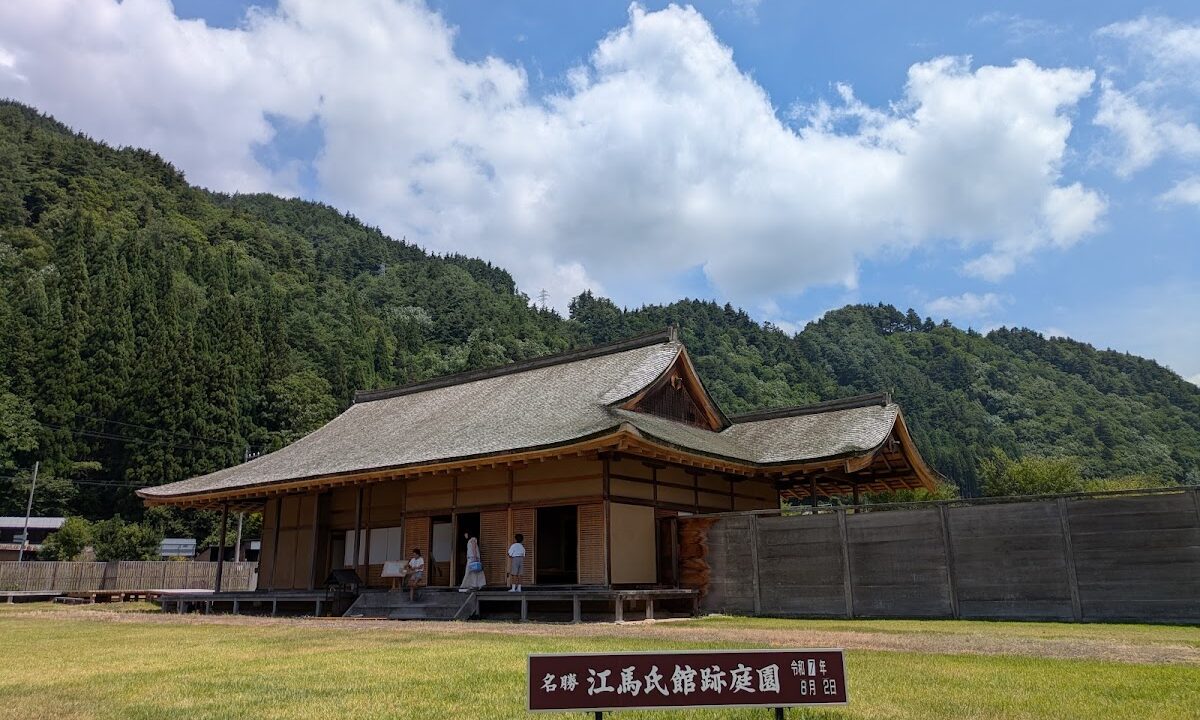
A building for receiving guests and admiring the garden. Currently restored, it offers a panoramic view of the majestic Hida mountains and beautiful garden from within. It’s a valuable space where you can experience the view the lord of the time enjoyed.
Main Residence (Tsunegoten)
The lord’s living space for daily life. It was the central building for both official duties and private time.
Rest House (Tainoya)
A building for the residence of family members and senior retainers. It was the living space for those who supported the operation of the residence.
Kitchen (Kitchen)
A practical facility for cooking and preparing meals. It is believed to have been equipped to handle large-scale banquets.
Defensive Facilities
Except for the eastern side facing the mountains, the residence was protected by earthen walls, moats, and earthen ramparts.
- Moat Structure: The west side of the main gate features a V-shaped moat (Yagenbori), while the north and south sides employ a box-shaped moat (Hakobori), employing different moat configurations.
- Earthen Wall: Restored primarily around the main gate, providing a visual understanding of the defensive system of the time.
- Earthen Embankment: An earthen wall protecting the residence in combination with the moat.
These defensive structures clearly demonstrate the characteristics of a medieval samurai residence, which, while serving as a residence in peacetime, possessed a certain level of defensive capability in times of conflict.
National Scenic Spot Designated Garden
Characteristics of the Dry Landscape Garden
The garden of the Ema Clan Lower Residence is a dry landscape garden in the style of a samurai residence, utilizing large stones. It was designated a National Scenic Spot, “Ema Clan Residence Site Garden,” in October 2017.
Main Features of the Garden:
- Arrangement of Large Stones: Large stones are effectively placed to express a landscape of mountains and water.
- Harmony with the Background: Designed so that the garden and the Hida Mountains behind it appear as one when viewed from the meeting hall.
- Medieval Aesthetics: A simple yet powerful beauty influenced by the Zen Buddhist culture of the Muromachi period.
- Characteristics of a Samurai Garden: Reflects the aesthetic sensibilities of the samurai, distinct from the gardens of court nobles and temples.
Points to Note When Viewing the Garden
Viewing the garden from the restored meeting hall allows you to relive the scenery that the lord of that time would have experienced. The garden, which shows different expressions depending on the season, allows you to enjoy the beauty of each season: the fresh green of spring, the deep green of summer, the autumn leaves, and the snowscape of winter.
In particular, sitting on the veranda of the meeting hall and quietly gazing at the garden will be a precious experience that allows you to forget the hustle and bustle of modern life.
Highlights of the Ema Clan Residence Ruins Park
Restored Medieval Samurai Residence
The biggest highlight of the Ema Clan Residence Ruins Park is the medieval samurai residence, the only one in Japan to have both its garden and meeting hall restored together.
Experience the Restored Meeting Hall
You can enter the meeting hall and observe the architectural style and spatial configuration of the time up close. You can learn about medieval architectural techniques, from the structure of the pillars and beams to the floor finishes and the details of the fittings.
Restored Main Gate
The main gate, which served as the front entrance to the residence, has also been restored, recreating the dignified appearance that welcomed visitors. Passing through the gate gives you the feeling of being invited into a medieval samurai residence.
Restored Earthen Wall
The earthen wall around the main gate has also been restored, enhancing the overall atmosphere of the residence. The view of the meeting hall and garden over the earthen wall is a popular spot for photography.
Historical Experience Zone
The park is developed as a “Historical Experience Zone,” offering more than just a historical site visit; it’s designed to allow visitors to experience medieval life and culture.
- Exhibits showcasing the results of archaeological excavations
- Panels explaining the restoration process
- Explanatory boards for learning about the history of the Ema clan
- Models and maps showing the relationship with surrounding castles and residences
By utilizing these facilities, you can gain a deeper understanding of the history of the Ema clan and northern Hida.
Related Historical Sites in the Surrounding Area
If you visit the Ema clan’s lower residence, you should definitely also visit the related historical sites in the surrounding area.
Takahara Suwa Castle
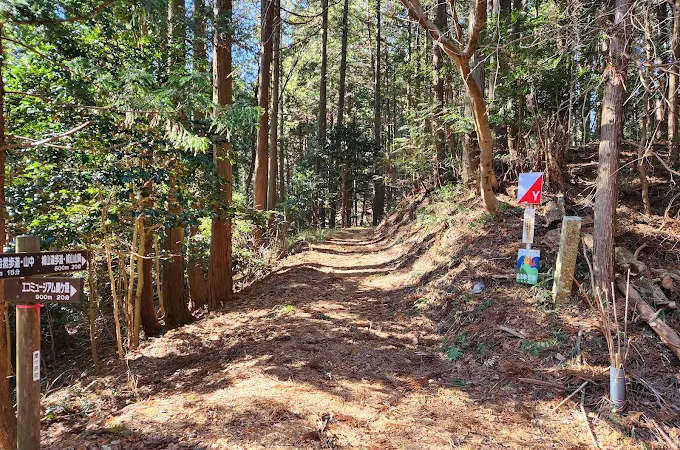
A fortified castle located on the summit of Hokido-daira Mountain, southeast of the lower residence. It’s accessible on foot from the lower residence, and from the summit you can enjoy a panoramic view of the town of Kamioka and the lower residence. It’s an important spot to experience the relationship between the fortified castle and the residence.
Ema Clan’s Family Temple
Temples associated with the Ema clan are scattered throughout the surrounding area, providing clues to the Ema clan’s faith and cultural activities.
Kamioka Castle
This castle served as the residence of the Ema clan after 1564 (Eiroku 7). Visiting it together with Shimodate allows you to trace the historical changes of the Ema clan.
History of the Ema Clan and their Rule over Northern Hida
Origins and Development of the Ema Clan
The Ema clan first appears in the “Yamashina Family Documents” of 1372 (Oan 5). This document lists the Ema clan as envoys to stop the unruly behavior in the Yamashina family’s territory, indicating that they already possessed considerable power at this time.
Throughout the Muromachi period, the Ema clan expanded their power, primarily in the Yoshiki district of Northern Hida. With Takahara Suwa Castle as their main base, they built several branch castles in the surrounding area, growing into a regional daimyo who controlled the entire Northern Hida region.
Cultural Activities
The “Baika Mujinzō,” a record of the visit of the poet-monk Banri Shūkyū to the Ema clan in 1489, reveals that the Ema clan was not merely a military force, but a lord with cultural refinement.
The record describes their active adoption of Kyoto culture, including entertaining guests in magnificent mansions, appreciating gardens, and exchanging poetry. This indicates that, despite being a regional warlord, they were also cultured individuals well-versed in central culture.
The Sengoku Period and the Ema Clan’s Transformation
With the arrival of the Sengoku period, the Ema clan became embroiled in conflicts with surrounding forces. Their relationship with the Anekōji clan (Miki clan) of southern Hida and the forces of Etchū was particularly important.
In 1564, the Ema clan moved their castle from Shimodate to Kamioka Castle. This is thought to be because they needed a more defensible mountain castle as their base to cope with the rising military tensions of the Sengoku period. This relocation resulted in the closure of the Shimodate residence.
Subsequently, the Ema clan declined amidst the turmoil of the Sengoku period and is believed to have ultimately perished during the Tensho era (1573-1592), caught up in the power struggles between the Anegakoji, Uesugi, and Oda clans.
Visitor Guide
Basic Information
Location
1179 Tono, Kamioka-cho, Hida City, Gifu Prefecture
Opening Hours
9:00 AM – 5:00 PM (Last entry 4:30 PM)
*Hours may vary depending on the season; please check in advance.
Closed Days
Mondays (or the following day if Monday is a public holiday)
New Year’s Holidays (December 29th – January 3rd)
Admission Fee
General: Approximately 300 yen
High school students and younger: Free
*Fees may change; please check before visiting.
Access
Access by Car
- Approximately 50 minutes from Hida-Kiyomi IC on the Tokai-Hokuriku Expressway via National Routes 41 and 471
- Approximately 90 minutes from Toyama IC on the Hokuriku Expressway via National Route 41
- Free parking available (approximately 20 regular cars)
Access by Public Transportation
- From JR Takayama Line “Hida-Furukawa Station,” take the Nohi Bus Kamioka Line for approximately 30 minutes, get off at “Kamioka Shinko Jimusho-mae” bus stop, and walk for approximately 10 minutes.
- Alternatively, take a taxi from “Hida-Furukawa Station” for approximately 25 minutes.
Important Note: Kamioka-cho in Hida City is located in a mountainous area, so there is snowfall in winter. If visiting in winter, snow tires or snow chains are essential.
Estimated Visiting Time
- Only the Castle Ruins Park: Approximately 45 minutes to 1 hour
- Including Takahara Suwa Castle: Approximately 2 hours to 2.5 hours
- Visiting the surrounding Ema Clan Castle Ruins: Half a day to a full day
To fully appreciate the gardens and experience the atmosphere of the time at the meeting hall, you should allocate at least one hour.
Points to Note When Visiting
Best Time to Visit
- Spring (Late April to May): Beautiful fresh greenery and mild weather
- Autumn (October to Early November): The most beautiful season, with autumn leaves coloring the garden
- Winter: The snow-covered garden is also charming, but be careful of heavy snowfall
Recommended Photo Spots
- The garden and the mountains behind it as seen from the meeting hall
- A full view of the main gate and earthen wall
- The arrangement of the large stones and plants in the garden
- The ruins of the lower residence as seen from Takahara Suwa Castle
Clothing and Items to Bring
- Comfortable walking shoes (hiking boots recommended if climbing Takahara Suwa Castle)
- Seasonal clothing (temperatures are lower than in urban areas due to the mountainous location)
- Camera, binoculars (useful for viewing the scenery)
- Drinks (especially in summer)
Nearby Tourist Attractions
Highlights of the Kamioka Area
Kamioka Castle (Tenryozan Castle) This castle was moved to by the Ema clan in 1564. Currently, a replica of the castle tower stands here, and it is used as a local history museum.
Former Kamioka Mine Related Facilities
Kamioka was a mining town that flourished from the Edo period to the Showa era. Industrial heritage related to the mining can also be viewed.
Sky Dome Kamioka (Former Kamioka Mine Site)
This is an exhibition facility related to the Super-Kamiokande neutrino observation facility, which won the Nobel Prize.
Other Tourist Attractions in Hida City
Furukawa Town Area
- Hida Furukawa’s Old Townscape: A beautiful traditional townscape with white-walled storehouses
- Setogawa River and White-Walled Storehouse District: A picturesque landscape along the Setogawa River where carp swim
- Enkoji Temple: A famous temple in Hida Furukawa
Miyagawa Area
- Hida Mountains: Enjoy mountain climbing and hiking
- Hot Springs: A hot spring resort known as a therapeutic retreat in Hida
Gourmet Information
Around Kamioka Town in Hida City, you can enjoy local Hida cuisine such as Hida beef, Takayama ramen, and Hoba miso. There are also many restaurants serving dishes made with local ingredients.
Research Value of the Ema Clan’s Lower Residence
Contribution to Medieval Castle Research
The excavation and restoration of the Ema Clan’s Lower Residence holds significant importance in the study of medieval castles in Japan.
Excellent Preservation of the Remains
Due to the conversion of the area into rice paddies during the Edo period, the medieval remains were preserved in relatively good condition. This allowed for an accurate understanding of the building layout, garden structure, and details of the defensive facilities.
Comparative Study with Historical Documents
By comparing the excavated remains with contemporary historical records such as the *Baika Mujinzō*, we were able to concretely verify the life of medieval samurai as described in the documents.
Educational Effects of Restoration
By restoring the garden and meeting hall together, the general public can now visually and experientially understand the reality of a medieval samurai residence. This is a highly valuable initiative in history education.
Deepening Regional History Research
Research on the Ema Clan Castle Site has made a significant contribution to elucidating the medieval history of northern Hida.
- Clarifying the reality of the Ema clan’s ruling system
- Its function as the political, economic, and cultural center of northern Hida
- Specific examples of the transmission of Kyoto culture to the provinces
- The process of change in regional power during the Sengoku period
These research findings are of great significance in deepening our understanding of Japanese medieval history as a whole.
Summary: The Charm of the Ema Clan’s Lower Residence
The Ema Clan’s Lower Residence is a valuable medieval samurai residence site remaining in Hida City, Gifu Prefecture. This site, designated as both a national historic site and a place of scenic beauty, is an important cultural heritage that conveys the history of northern Hida from the Muromachi period to the Sengoku period.
As the only medieval samurai residence in Japan with a garden and meeting hall restored together, it is a must-see spot not only for history buffs, but also for those interested in architecture and gardens, and those who want to learn about Japanese culture. The view of the garden and the Hida mountains from the restored meeting hall will allow you to relive the scenery seen by the lord more than 500 years ago—a truly timeless experience.
Visiting the Ema clan’s Shimokan (lower residence) site, along with other castle ruins in the surrounding area, including Takahara Suwa Castle, will give you a deeper understanding of the Ema clan’s system of rule and the realities of regional power in the Middle Ages. The Ema clan’s Shimokan, where Hida’s rich nature and historical culture blend together, is a valuable historical site where you can experience Japanese medieval history, and we hope many people will visit.
When you visit Hida City, be sure to stop by the Ema Clan Residence Site Park and experience the world of medieval samurai. Spending time in the tranquil garden will allow you to forget the hustle and bustle of modern life and truly appreciate the depth of history and the richness of culture.