
Exploring the History of Tako Castle and Tako Town | The Final Resting Place of the Chiba Clan in Katori District, Chiba Prefecture
Tako Town, located in Katori District, Chiba Prefecture, is a town of approximately 15,000 people situated east of Narita International Airport. This area is home to Tako Castle, where the main branch of the Chiba clan met its end during the Muromachi period, and traces of its history remain to this day. This article provides a comprehensive explanation, from the historical background of Tako Castle to the current charms of Tako Town.
Geography and Location of Tako Town
Tako Town is located in the northeastern part of Chiba Prefecture, on the eastern side of the Hokuso Plateau. The Kuriyama River flows through the center of the town, and its basin is covered with fertile rice paddies. Its location, approximately 110 minutes by express bus from Tokyo Station and about 30 minutes by car from Narita Airport, makes it a popular “urban-rural” area, combining easy access to the city center with a rich natural environment.
Topographical Characteristics of Tako Town
Tako Town, located on a corner of the Hokuso Plateau, consists of a plateau with an elevation of 20 to 40 meters and lowlands along the Kuriyama River. This topography played an important role as a location for castles in the medieval period, and several castles, including Tako Castle, were built there. The edges of the plateau became natural strongholds, forming a terrain suitable for defense.
History of Tako Castle
Relationship between Chida Manor and the Chiba Clan
The middle reaches of the Kuriyama River, where Tako Castle is located, was a manor called “Chida Manor” from the late Heian period to the medieval period. From the Kamakura period onward, this Chida Manor functioned as an important base for the main branch of the Chiba clan. The Chiba clan was a powerful samurai group based in Shimosa Province and played an important role in Minamoto no Yoritomo’s uprising.
Chida Manor was not only an economic base for the Chiba clan but also a center of their religious faith. Income from the manors supported the Chiba clan’s military power, and the Tako region could be considered the “inner sanctuary” of the main Chiba family.
The Kyōtoku Rebellion and the Split of the Chiba Clan
Tako Castle first appears on the historical stage during the Kyōtoku Rebellion, which began in 1455 (Kyōtoku 4). This rebellion was a large-scale conflict centered on the rivalry between Ashikaga Shigeuji, the Koga Shogun, and the Uesugi clan, the Kantō Kanrei (deputy shogun of the Kantō region).
The Chiba clan also became involved in this conflict. Makuwari Yasutane, a member of the family, gained the support of the Koga Shogun and rebelled against the main Chiba family. The head of the family, the 16th generation Chiba Tanenao, was defeated in the internal conflict and driven out of his residence, Chiba Castle (present-day Chuo Ward, Chiba City).
The End of the Chiba Main Family
Having lost Chiba Castle, Tanenao and his family fled to the Tako region of Chida Manor. It is said that Tanenao took refuge in Shima Castle, while his eldest son, Chiba Tanenobu, took refuge in Tako Castle. However, both castles fell to an attack by forces led by Makari Yasutane. Both Tanenao and Tanenobu committed suicide, marking the end of the main Chiba family.
This event cemented Tako Town’s place in history as the site of the Chiba clan’s demise. Subsequently, the Chiba family headship passed to the lineage of Makari Yasutane (Chiba-no-suke Yasutane), continuing into the Sengoku period.
The Aftermath of Tako Castle
While many details about Tako Castle after the fall of the Chiba main family remain unclear, it is believed to have functioned as a regional base throughout the Sengoku period. During the Edo period, it lost its function as a castle, and much of its remains were converted into farmland.
Structure and Remains of Tako Castle
Scale and Layout of the Castle
Regarding the detailed structure of Tako Castle, there is currently little information available in historical documents, leaving many aspects unclear. However, it is possible to reconstruct it to some extent based on the remains and topography that remain on site.
The castle was built utilizing the edge of a plateau, and its structure skillfully makes use of the natural terrain. Multiple baileys were arranged around the main bailey, and its defenses were strengthened by dry moats and earthen ramparts.
Existing Remains
Even today, the Tako Castle site retains some remains that exhibit the characteristics of a medieval castle.
Earthen Ramparts: Parts of earthen ramparts built as defensive structures for the castle still exist. The height varies depending on the location, but ramparts of up to 2-3 meters can be seen. The structure of the earthen ramparts provides insight into the castle-building techniques of the time.
Dry Moats: Traces of dry moats excavated to demarcate the baileys also remain. Although some parts are now buried or shallow, it is estimated that a moat several meters deep once protected the castle.
Arrangement of Enclosures: Observing the terrain reveals that multiple flat areas (enclosures) were arranged in a stepped pattern. These are thought to have been used as living spaces for samurai and defensive positions.
Activities of the Tako Castle Preservation and Utilization Association
To pass on the historical value of Tako Castle to future generations, the “Tako Castle Preservation and Utilization Association” is active in the region. This association conducts preservation activities of the castle ruins, historical research, and public awareness campaigns, promoting the value of medieval castles in the region, including Tako Castle and Shima Castle.
They work in cooperation with townspeople to protect historical heritage through regular tours and lectures, and maintenance of the remains.
History and Culture of Tako Town
History of Tako Rice
“Tako Rice” is indispensable when talking about Tako Town. Blessed with fertile soil and abundant water resources provided by the Kuriyama River, Tako Town has a long history of rice cultivation dating back to the Yayoi period.
Tako rice has been known for its high quality since the Edo period and has a history of being selected as tribute rice for the Shogunate. Even today, it enjoys a high reputation nationwide as a brand rice that has been recognized as the best-tasting rice in Japan.
In the paddy fields along the Kuriyama River, rice cultivation continues today, combining traditional rice farming techniques with the latest agricultural technologies.
Tako Gion Festival
The Tako Gion Festival is a summer tradition in Tako Town. This festival is a traditional event that has continued since the Edo period and is held every year in late July.
The highlight of the festival is the sight of elaborately decorated floats and portable shrines parading through the town. Especially at night, the floats illuminated by lanterns create a fantastical atmosphere, captivating many spectators. This festival, deeply intertwined with the faith of the townspeople, plays a vital role in strengthening the bonds of the local community.
Other Cultural Properties and Historic Sites
Besides Tako Castle, Tako Town has numerous other historical cultural properties scattered throughout the area.
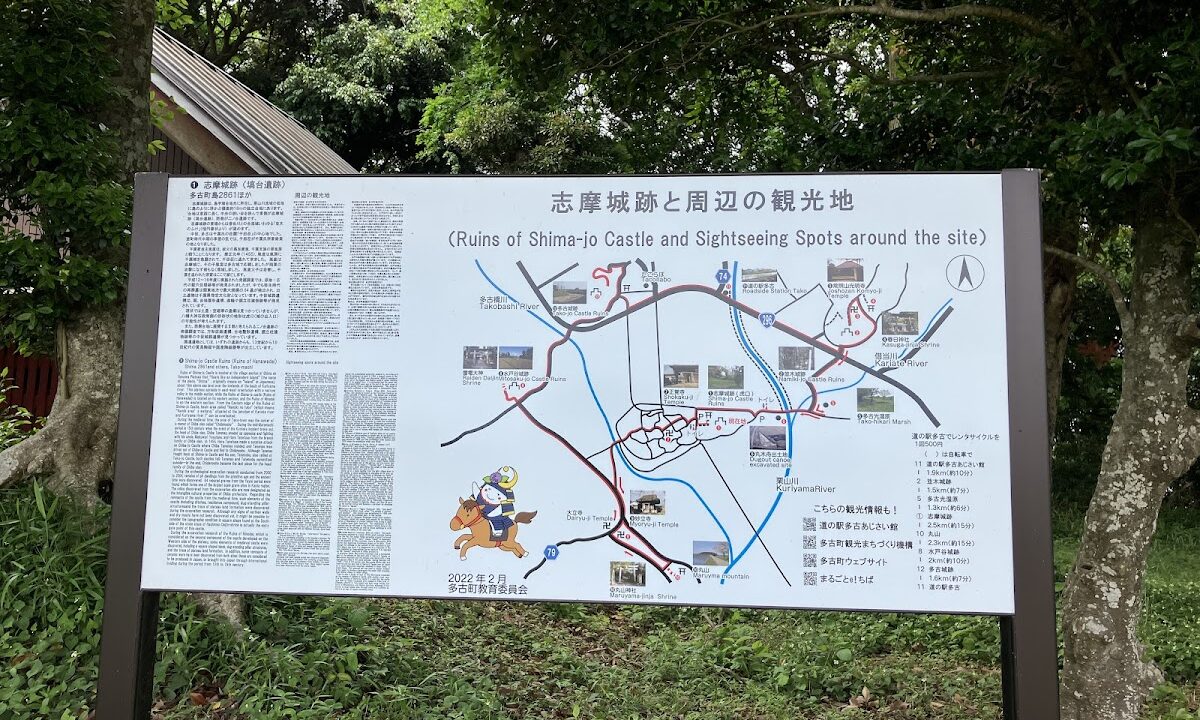
Shima Castle Ruins: A historical site of equal importance to Tako Castle, as it is the castle where Chiba Tanenao met his end.
Nihonji Temple: An ancient temple with a deep historical connection to the Chiba clan.
Hydrangea Promenade: A promenade along the Kuriyama River, planted with approximately 10,000 hydrangea bushes. The “Hydrangea Festival” is held in June, allowing visitors to enjoy the beautiful scenery.
Tako Town Today
A Town with Agriculture as its Core Industry
Agriculture is the core industry of Tako Town. In addition to Tako rice, it boasts one of the highest production volumes of “Yamato yam” in Japan. Yamato yams are known for their strong stickiness and rich flavor, and are used as a high-end ingredient in restaurants and other upscale establishments.
Sweet potato production is also thriving, and various agricultural products are branded as “Tako’s Blessings that Bring Happiness.”
Tako Roadside Station “Ajisai-kan”
The Tako Roadside Station “Ajisai-kan” serves as a hub for promoting the charms of Tako Town. In addition to rest facilities such as a 24-hour parking lot and restrooms, the “Fureai Market” offers the opportunity to purchase local agricultural products and processed goods.
The restaurant serves dishes made with local ingredients, including Tako rice, providing a place to experience Tako Town’s food culture.
Enhanced Childcare Support and Welfare
Tako Town boasts one of the best childcare support systems in Chiba Prefecture. It focuses on creating an environment where young generations can live comfortably, including medical expense subsidies and enhanced childcare services.
Furthermore, elderly welfare support is also comprehensive, aiming to create a town where everyone can live with peace of mind.
Regional Revitalization Initiatives
In Tako Town, regional revitalization initiatives are thriving, involving not only the local government but also local students and residents. Through information dissemination sites such as “Tako Town All About Web,” the town’s attractions are conveyed from multiple perspectives, including work, food, and tourism.
Town development is progressing in line with the new era, including tourism promotion leveraging its proximity to Narita Airport and encouraging migration from urban areas.
Access to Tako Castle and Tako Town
Access by Public Transportation
From Tokyo Station: Approximately 110 minutes by express bus “Tako Main Line,” alight at Tako Town Hall.
From Narita Airport: Approximately 30 minutes by local bus or taxi.
From JR Narita Station: Approximately 40 minutes by local bus.
Access by Car
From Tokyo Area: Approximately 20 minutes via National Route 296 from Narita IC on the Higashi-Kanto Expressway.
From Choshi Area: Approximately 40 minutes west on National Route 296.
To reach Tako Castle Ruins, aim for Tako Town Hall. Parking is limited around the castle ruins, so it is recommended to inquire with the Tako Town Tourism Association or the Tako Castle Preservation and Utilization Association in advance.
Points to Note When Visiting Tako Castle and Tako Town
Precautions When Visiting
While Tako Castle Ruins are protected as a historical site, some areas are privately owned. Please observe the following points when visiting:
- Avoid trespassing on private property
- Be careful not to damage the ruins
- Always take your trash with you
- Check the Tako Castle Preservation and Utilization Association’s tour information in advance
Recommended Time to Visit
Spring (Late March to Early April): Cherry blossoms along the Kuriyama River are in full bloom. You can also enjoy cherry blossoms around the castle ruins.
Early Summer (June): The Hydrangea Festival is held, with approximately 10,000 hydrangea plants in full bloom.
Summer (Late July): The Tako Gion Festival is held, and the entire town is enveloped in the festive atmosphere.
Autumn (October): This is the harvest season for Tako rice, a time when the golden rice fields are a beautiful sight.
Nearby Tourist Attractions
When visiting Tako Castle and Tako Town, we recommend also visiting nearby tourist attractions.
Naritasan Shinshoji Temple: A representative temple of the Kanto region, located about 30 minutes away by car.
Aviation Science Museum: An aviation-focused museum adjacent to Narita Airport.
Sawara Townscape: A preservation district for important traditional buildings that retains the atmosphere of the Edo period.
Tako Town’s Initiatives for the Future
Utilization of Historical Heritage
Tako Town is working to utilize historical heritage, including Tako Castle, as a regional resource. Efforts are being made to connect past heritage to the future, such as promoting historical tourism and using it in educational programs.
Promotion of Sustainable Agriculture
While preserving the traditional production of Tako rice, efforts are also being made to promote environmentally conscious and sustainable agriculture. We are building a new agricultural model for the modern era, including the introduction of organic farming methods and smart agriculture utilizing ICT technology.
Promoting Migration and Settlement
We are also working to promote migration and settlement, leveraging our excellent access to the city center and our rich natural environment. With the spread of teleworking, the appeal of Tako Town as a “city-rural” area is being re-evaluated.
Summary
Tako Castle is a historically important castle where the main branch of the Chiba clan met its end during the Kyōtoku Rebellion of the Muromachi period. Remains such as earthworks and dry moats still exist today, conveying the history of the Middle Ages.
Tako Town cherishes this historical heritage while offering a variety of attractions, including abundant agricultural products such as Tako rice, traditional culture such as the Tako Gion Festival, and comprehensive childcare support. Located close to Narita Airport and easily accessible from the city center, Tako Town is an ideal place to enjoy historical exploration and rural scenery.
As the final resting place of the Chiba clan, and a town where rich agriculture and culture thrive, Tako Town offers visitors many discoveries and inspiring experiences. It’s a recommended destination not only for those interested in history, but also for those who want to enjoy nature, food, and traditional culture.


.png)