Sunomata Castle (Sunomata One-Night Castle) Complete Guide | A Thorough Explanation of the Truth and Highlights of the Gifu Hideyoshi Legend
Sunomata Castle, located in Sunomata-cho, Ogaki City, Gifu Prefecture, is a historical site known nationwide as “Sunomata One-Night Castle.” The legend that Toyotomi Hideyoshi (Kinoshita Tokichiro) built it in a single night is passed down as one of the most famous rags-to-riches stories in Japanese history.
This article comprehensively explains everything you need to know before visiting Sunomata One-Night Castle, from its historical background and the truth behind the legend to the highlights of the current Sunomata One-Night Castle Historical Museum and surrounding tourist information.
The History of Sumata One-Night Castle | Oda Nobunaga’s Conquest of Mino and Hideyoshi’s Rise to Power
The Strategic Importance of Sumata
Sumata was a strategically important transportation hub located near the confluence of the Nagara, Ibi, and Kiso Rivers, on the border between Owari Province (present-day Aichi Prefecture) and Mino Province (present-day Gifu Prefecture). Due to these geographical conditions, Sumata has long been considered a militarily crucial location.
During the Sengoku period, when Oda Nobunaga was conquering the Saito clan of Mino Province, Sumata possessed ideal locational features for a forward base. Securing a base at Sumata was essential for attacking Inabayama Castle (later Gifu Castle), the center of Mino, from the Owari side.
Oda Nobunaga’s Strategy for Conquering Mino
During the Eiroku era (1558-1570), Oda Nobunaga was engaged in fierce battles with the Saito clan, aiming to unify Mino Province. Conquering Mino required capturing Inabayama Castle, which necessitated a forward base.
Nobunaga repeatedly attempted to build a castle at Sunomata, but each attempt failed due to fierce interference from the Saito army. He was repeatedly attacked during construction, forcing him to retreat before completion.
The Appearance of Kinoshita Tokichiro (Toyotomi Hideyoshi)
In 1566, the young Toyotomi Hideyoshi, then known as Kinoshita Tokichiro, took on this difficult challenge. Hideyoshi declared to Oda Nobunaga that he could build a fort at Sunomata in just a few days.
Hideyoshi’s proposal was innovative, differing from conventional castle-building methods. The strategy involves meticulous preparation beforehand to minimize on-site work time.
What is the Legend of Sumata One-Night Castle? | The Boundary Between Historical Fact and Fiction
The Content of the Legend
The legend of “Sumata One-Night Castle” is described in detail in the *Ehon Taikoki*, a picture book compiled in the late Edo period. According to this story, Hideyoshi built the castle using the following method:
The Legendary Method of Castle Construction:
- Preparation: With the cooperation of Hachisuka Koroku, the leader of the ronin (masterless samurai), timber was felled in the mountains of Mino Province.
- Transportation of Timber: The felled timber was prepared upstream of the Kiso River and floated down the river to Sunomata.
- Assembly: The timber was assembled on-site, and the fort was completed in just one night (or a few days).
- Saito’s Army’s Astonishment: Saito’s army was surprised by the castle that appeared overnight and hesitated to attack.
This legend is also considered a precursor to modern-day “prefabricated construction.” The efficient method of processing materials in advance and simply assembling them on-site was a groundbreaking idea at the time.
Sunomata Castle as Historical Fact
Modern historical research suggests that the descriptions in the “Ehon Taikoki” (Illustrated Chronicle of Toyotomi Hideyoshi) cannot be accepted as historical fact at face value. Edo period war chronicles and storytelling often contain significant embellishments to enhance entertainment value.
What can be confirmed as historical fact:
- Oda Nobunaga established a base in Sunomata for the conquest of Mino Province.
- Kinoshita Tokichiro (Hideyoshi) likely had involvement in the construction of this castle.
- The Sunomata base played a crucial role in the conquest of Mino.
What remains unclear:
- Whether it was actually completed in one night.
- Details of the castle’s size and structure.
- The exact date of construction (there are theories of 1561 and 1566).
Some historians question the very existence of Sunomata Castle. However, it is certain that Oda Nobunaga succeeded in conquering Mino, and that Hideyoshi played a significant role in that process.
Why did the “One-Night Castle” legend originate?
Several factors contributed to the widespread belief in the legend of Sunomata One-Night Castle.
- Demand for Hideyoshi’s Rise to Power: Hideyoshi’s life, from peasant origins to becoming a ruler of Japan, was a fascinating story for the common people of the Edo period.
- Actual Speed of Castle Construction: While not as dramatic as the legend, it’s highly probable that Hideyoshi completed the fort in a short period, and this was exaggerated in the story.
- Military Success: Securing the base at Sunomata was indeed a turning point in the conquest of Mino Province, and its importance was emphasized.
Toyotomi Hideyoshi’s Rise to Power | The Role of Sunomata Castle
Hideyoshi’s Career and Position at the Time of Sunomata Castle Construction
Toyotomi Hideyoshi (then known as Kinoshita Tokichiro) was born the son of a farmer in Nakamura, Owari Province (present-day Nakamura Ward, Nagoya City, Aichi Prefecture). Despite his humble origins, he entered the service of the Oda family, and his talent was recognized, gradually allowing him to rise through the ranks.
At the time of the construction of Sunomata Castle, Hideyoshi was still a low-ranking samurai, but he was gaining the trust of Oda Nobunaga. The success of the construction of Sunomata Castle is considered a crucial turning point in Hideyoshi’s career.
Hideyoshi’s Rise After the Construction of Sunomata Castle
Using Sunomata Castle as his base, Oda Nobunaga captured Inabayama Castle in 1567, pacifying Mino Province. This success significantly raised Hideyoshi’s profile.
Subsequently, Hideyoshi:
- His achievements in the campaigns against the Asai and Asakura clans
- His appointment as commander-in-chief of the Chugoku region campaign
- His unification of Japan after the Honnoji Incident
He steadily climbed the ladder of success. The success of Sunomata Castle proved Hideyoshi’s superior abilities as a strategist and pragmatist.
Did prefabricated construction and division of labor speed up the construction period? | The Innovative Nature of Castle Construction Technology
Castle Construction Technology of the Time
Construction of castles and fortresses during the Sengoku period (Warring States period) was a large-scale project that typically took several months to several years. This was because it required many processes, including civil engineering, stone wall construction, and building construction.
Hideyoshi’s Innovative Approach
According to legend, Hideyoshi adopted the following innovative methods:
1. Thorough Preparation
- Felling and processing timber in the mountains of Mino Province
- Gathering all necessary materials in advance
- Meticulously planning the work procedure
2. Transportation Using Rivers
- Efficiently transporting large quantities of timber using the Kiso River
- Significantly reducing the effort required for manual transportation
3. Rapid Assembly on-site
- Simply assembling pre-processed timber on-site
- Mobilizing numerous workers for simultaneous, parallel work
- Maximizing efficiency through division of labor
4. Cooperation with Hachisuka Koroku
- Obtaining cooperation from local samurai groups
- Utilizing personnel familiar with the geography
- Securing personnel
This method is a pioneering concept in modern architecture, particularly prefabricated and modular construction. The idea of manufacturing components in a factory and simply assembling them on-site was groundbreaking at the time.
Verification of Feasibility
Some modern researchers are attempting to verify the contents of this legend. Regardless of whether it was actually completed “in one night,” it is considered highly probable that Hideyoshi completed the fort in a significantly shorter period than usual.
Depending on the size of the fort, some argue that if it consisted of simple wooden watchtowers and fences, completion in a few days was not impossible with sufficient preparation and manpower.
The Aftermath of Sumomata Castle | From the Edo Period to the Present
Sumomata in the Edo Period
After Oda Nobunaga’s conquest of Mino Province, the military importance of Sumomata Castle declined. During the Edo period, the area came under the control of the Ogaki Domain, and the castle lost its function.
The place name Sumomata and the legend of Hideyoshi were passed down throughout the Edo period and became widely known through literary works such as the “Ehon Taikoki” (Illustrated Chronicle of Hideyoshi).
After the Meiji Era
After the Meiji era, almost no remains of the castle remained in Sumomata. River improvements to the Nagara River and other projects significantly altered the topography.
Construction of a Replica Castle Tower in the Showa Era
During the Showa era, the restoration of castles and the construction of replica castle towers began throughout Japan. In Sumomata, too, there was a growing momentum to rebuild the castle as a historical symbol of the region.
In 1991 (Showa 66), a replica castle tower was constructed as the Sumomata One-Night Castle Historical Museum. This building is designed to resemble the Ogaki Castle that once stood in Kuruwa-machi, Ogaki City.
Sumomata One-Night Castle Historical Museum | Current Highlights
Facility Overview
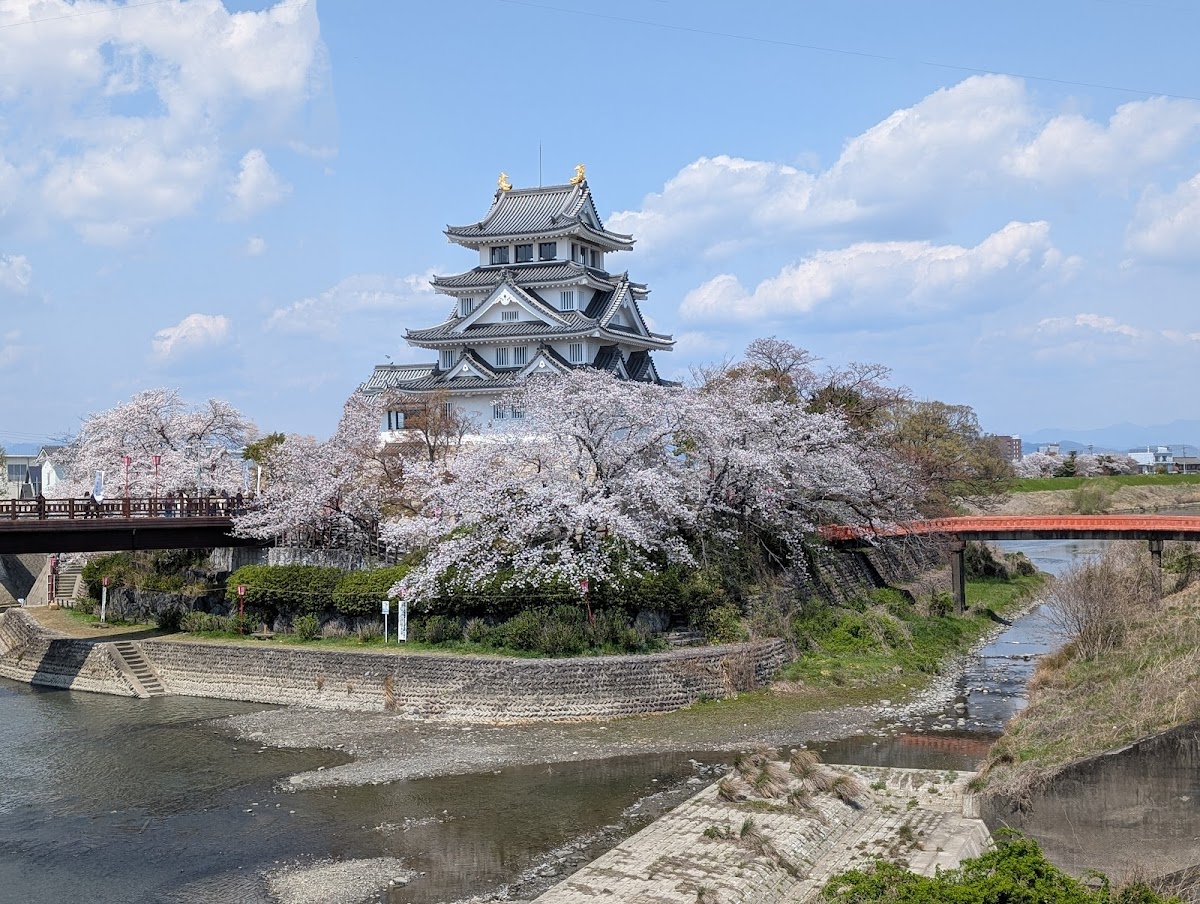
Currently, the Sumomata One-Night Castle Historical Museum stands on the site of the former Sumomata Castle. The three-story, four-level replica castle tower has a striking presence even from afar, making it a landmark of Sumomata.
Basic Information:
- Location: Sumimata-cho, Ogaki City, Gifu Prefecture
- Construction Year: 1991 (Heisei 3)
- Structure: Reinforced concrete, 3 stories, 4 floors
- Model: Ogaki Castle keep
Exhibition Contents
The historical museum features exhibits on materials related to the Sumimata One-Night Castle and the life of Toyotomi Hideyoshi.
Main Exhibits:
- The History of Sumata One-Night Castle
- Introduction to the history of its construction and the legend surrounding it
- Materials related to Oda Nobunaga’s conquest of Mino Province
- A glimpse into the Sengoku period
- The Footsteps of Toyotomi Hideyoshi
- Exhibits tracing Hideyoshi’s life
- The story of his rise from farmer to ruler of Japan
- Items related to Hideyoshi (including reproductions)
- Weapons and Daily Life Items of the Sengoku Period
- Weapons and armor of the time
- Materials revealing the lives of Sengoku warlords
- Dioramas and Models
- Diorama recreating the construction of Sumata Castle
- A topographical model of the area around Sumata at the time
View from the Top Floor
From the top floor of the historical museum, you can enjoy a panoramic view of the Nagara River and the surrounding scenery. On clear days, you can even see towards Gifu Castle (Inabayama Castle), giving you a real sense of the strategic location of the time.
This view is extremely helpful in understanding why Sunomata was militarily important. You can enjoy imagining the scenery seen by warlords of the Sengoku period, including the flowing river, the expansive plains, and the distant mountains.
Sunomata Ichiyajo Castle Ruins Park | Beauty in Every Season
A Famous Cherry Blossom Spot
The area around the Sunomata Ichiyajo Castle Historical Museum is developed as “Sunomata Ichiyajo Castle Ruins Park,” and is particularly known as a famous cherry blossom spot.
In spring, approximately 400 Somei Yoshino cherry trees bloom, and the combination of the castle tower and cherry blossoms makes for an excellent photo opportunity. The trees are also illuminated at night, creating a magical atmosphere.
Beautiful Seasonal Flowers
Besides cherry blossoms, you can enjoy flowers throughout the seasons at Sunomata Ichiyajo Castle Ruins Park.
- Spring: Cherry blossoms, azaleas
- Summer: Fresh greenery, hydrangeas
- Autumn: Autumn leaves, cosmos flowers
- Winter: Camellias, plum blossoms
Especially during the autumn foliage season, the scenery of the autumn leaves with the castle tower in the background is beautiful, attracting many photography enthusiasts.
A Stroll Along the Nagara River
The park is located along the Nagara River, and a walking path is maintained along the river. It’s a pleasure to stroll leisurely along the riverbank and reflect on the Sengoku period (Warring States period).
Access Information | How to Get to Sumomata Ichiyajo Castle
Access by Public Transportation
By Train and Bus:
- From JR Tokaido Main Line, Ogaki Station:
- Take the Meihan Kintetsu Bus “Gifu Shotoku Gakuen University Line”
- Get off at the “Sumomata” bus stop and walk for about 10 minutes
- Travel time: Approximately 30 minutes
- From Meitetsu Takehana Line, Takehana Station:
- Approximately 10 minutes by taxi
- Approximately 40 minutes on foot
Access by Car
From Major Roads:
- Approximately 15 minutes from Meishin Expressway, Gifu-Hashima IC
- Approximately 20 minutes from Tokai-Kanjo Expressway, Ogaki-Nishi IC
- Accessible via Prefectural Road from National Route 21
Parking:
- Free parking available within Sumomata Ichiyajo Castle Ruins Park
- Accommodates approximately 50 regular cars
- During peak seasons such as cherry blossom season, temporary parking lots are also available.
Nearby Tourist Attractions
When visiting Sumomata Castle, it is recommended to also visit nearby tourist attractions.
Ogaki Castle
- Approximately 15 minutes by car from Sumomata Castle
- A castle that served as a base for the Western Army in the Battle of Sekigahara
- The castle that served as the model for the replica keep of Sumomata Castle
Gifu Castle (Inabayama Castle)
- Approximately 30 minutes by car from Sumomata Castle
- A castle named “Gifu” by Oda Nobunaga
- The view from the summit of Mt. Kinka is spectacular
Sekigahara Battlefield
- Approximately 40 minutes by car from Sumomata Castle
- The stage of the battle that decided the fate of Japan
- There are courses that visit the encampment sites of various warlords
Points to Note When Visiting Sumomata Castle
Best Time to Visit
Sumomata One-Night Castle can be visited throughout the year, but the following times are especially recommended.
Spring (Late March to Early April)
- Peak cherry blossom season
- Beautiful collaboration of the castle tower and cherry blossoms
- Nighttime illumination available
- Early visit recommended due to expected crowds
Autumn (Mid-to-Late November)
- Beautiful autumn foliage season
- Pleasant weather
- Relatively uncrowded
Summer/Winter
- Fewer tourists, allowing for a more leisurely visit
- Summer requires heat protection, winter requires warm clothing
Estimated Time Required
- Visit to the Historical Museum: 30 minutes to 1 hour
- Stroll through the park: 30 minutes to 1 hour
- Total: Approximately 1 to 2 hours
If you plan to carefully view the exhibits and enjoy taking photos, allow around 2 hours.
Photography Tips
Sumomata Ichiyajo Castle is a great spot for taking beautiful photos from various angles.
Recommended Photo Spots:
- From the Opposite Bank of the Nagara River
- A panoramic view of the castle keep with the river in the foreground.
- Particularly beautiful at sunset.
- From the Cherry Blossom Trees in the Park
- A spring-only sight: the collaboration of cherry blossoms and the castle keep.
- Especially popular when in full bloom.
- From the Top Floor of the Castle Keep
- A panoramic view of the surrounding scenery.
- The Nagara River and distant mountains.
- During Illumination
- A magical atmosphere at night.
- A tripod is recommended.
Summary | The Charm and Historical Significance of Sumomata Castle
Sumomata Castle (Sumomata One-Night Castle) is an intriguing historical spot where historical facts and legends intertwine. While the veracity of the legend that it was “built in one night” is uncertain, it is certain that this site played a crucial role in Oda Nobunaga’s conquest of Mino Province and was a turning point in Toyotomi Hideyoshi’s rise to power.
The current Sunomata Ichiyajo Historical Museum is a valuable facility where you can learn about the history of the Sengoku period and trace the footsteps of Hideyoshi. The surrounding park displays beauty in every season, and is especially bustling with tourists during cherry blossom season.
When visiting Gifu Prefecture, why not stop by Sunomata Castle and reflect on the romance of the Sengoku period and the story of Hideyoshi’s rise to power? By visiting nearby castles such as Ogaki Castle and Gifu Castle, you can gain a deeper understanding of the overall picture of Oda Nobunaga’s conquest of Mino Province.
The great historical footprints remaining in the small town of Sunomata are also valuable lessons that convey to the present day the importance of strategy, execution, and preparation.