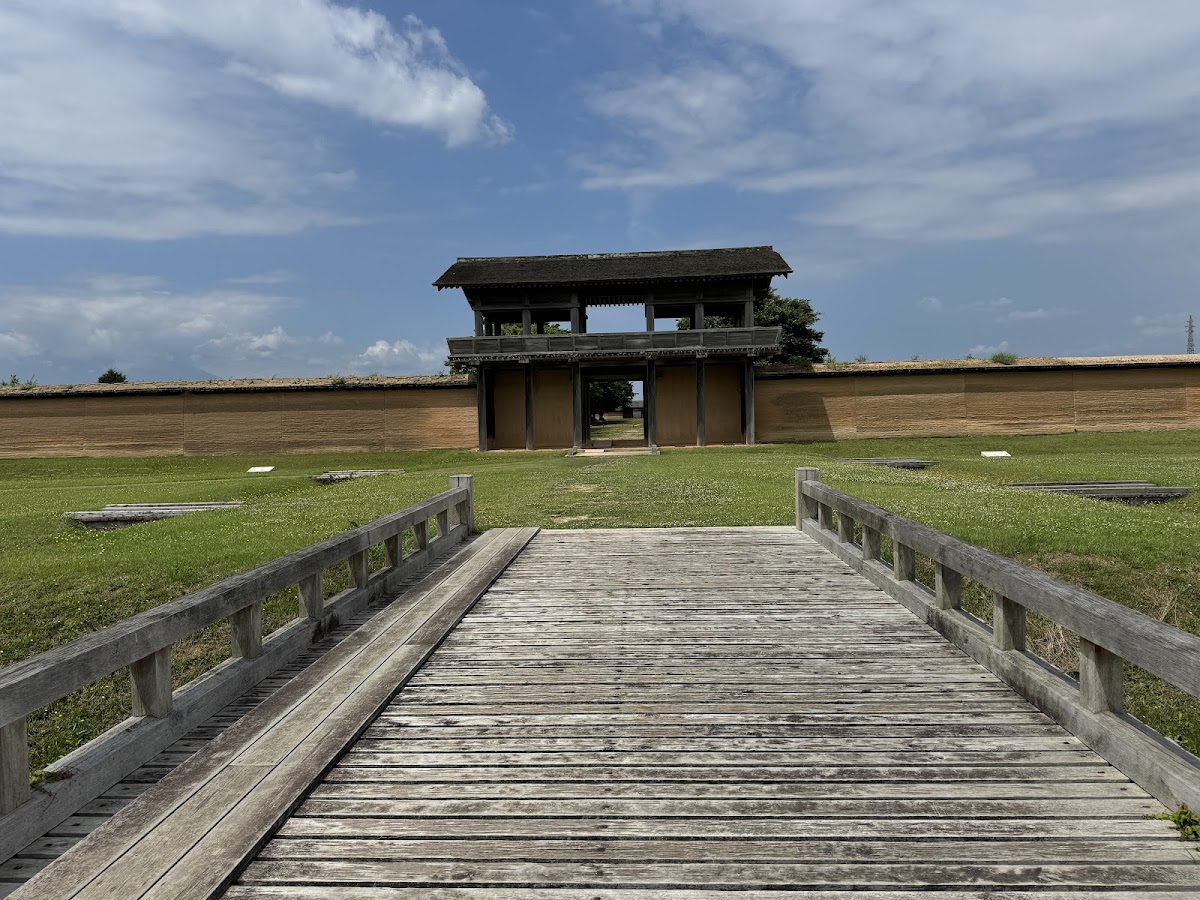
Shiwa Castle (Iwate Prefecture): An ancient fortified settlement at the northernmost tip of Mutsu Province, built by Sakanoue no Tamuramaro, and its magnificent reconstructed southern gate.
Located in the southwestern part of Morioka City, Iwate Prefecture, Shiwa Castle is an extremely important fortified settlement site in ancient Japanese history, built in the early Heian period by Sakanoue no Tamuramaro, the Shogun. Designated a national historic site, it is now maintained and open to the public as the “Shiwa Castle Ancient Park.” Through its reconstructed southern gate, earthen walls, and government buildings, it offers a valuable historical space where visitors can experience the realities of ancient Tohoku administration approximately 1200 years ago.
This article thoroughly introduces the charm of this ancient fortified settlement, from its historical background to details of the reconstructed facilities, highlights, and access information.
The History of Shiwa Castle: The Management of Tohoku in the Early Heian Period and the Northernmost Fortress of Mutsu Province
Background of Construction and the Role of Sakanoue no Tamuramaro
Shiwa Castle was built in 803 (Enryaku 22) by Sakanoue no Tamuramaro, the Shogun. In the early Heian period, the imperial court was managing the Tohoku region (then known as Ezo territory), and established several fortresses as frontline bases.
Sakanoue no Tamuramaro conquered the Izawa region in 802 (Enryaku 21), built Izawa Castle, and then advanced further north, constructing Shiwa Castle on the banks of the Shizukuishi River (a tributary of the present-day Kitakami River). As a result, Shiwa Castle became the northernmost ancient fortress of Mutsu Province, a frontline base for the imperial court’s control of Tohoku.
A Short-Lived Fortress: Floods and Relocation to Tokutan Castle
Shiwa Castle, at the time of its construction, was a massive fortress demonstrating the prestige of the imperial court in the Tohoku region, but its existence was short-lived. Frequent floods caused by the Shizukuishi River led to its abandonment after only about 10 years.
Subsequently, the functions of the fortress were transferred to Tokutan Castle (present-day Yahaba Town), built in 812 AD. Shiwa Castle’s short history illustrates the importance of geographical conditions in the selection of ancient fortresses.
Archaeological Excavation and Historic Site Designation
The existence of Shiwa Castle has been recorded in historical documents since ancient times, but its exact location remained unknown for a long time. Since 1976, archaeological excavations of the “Otakata Hachicho Site” by Morioka City have been underway, revealing outer structures and the remains of the government office.
This excavation confirmed that the Otakata Hachicho site was the site of Shiwa Castle, and it was designated a national historic site in 1984. Since then, continuous research and development have been carried out, leading to its current opening as Shiwa Castle Ancient Park.
Structure of Shiwa Castle: A well-organized rectangular fortress and administrative center layout
Outer enclosure and castle area size
Shiwa Castle is a rectangular fortress with a typical structure of ancient castle fortifications. Excavations have revealed the following dimensions:
- Outer Enclosure Dimensions: Approximately 900 meters east-west, 1,000 meters north-south
- Total Area: Approximately 90 hectares (equivalent to about 19 Tokyo Domes)
- Earthen Wall: An earthen wall surrounding the outer enclosure, approximately 4 meters high and 3 meters wide at the base
- Outer Enclosure Gates: Estimated to have had one gate each on the east, west, north, and south sides.
This scale surpasses that of Izawa Castle (approximately 72 hectares) from the same period, indicating that it was one of the largest fortified settlements in the Tohoku region during the Heian period.
Arrangement of Government Offices and Government Buildings
A central facility for conducting government affairs, known as the Government Office, was located in the center of the castle. The government office had the following structure:
- Government Office Area: An area approximately 120 meters east-west and 140 meters north-south
- Main Hall: The central building of the government office, where ceremonies and government affairs were conducted
- Side Halls: Auxiliary buildings located to the east and west of the main hall
- Government Office Gate: Gates were located on the south, east, and west sides
Around the government office, government buildings, pit dwellings (soldier quarters), and warehouses were neatly arranged. Archaeological excavations have confirmed numerous remains of these buildings, allowing for a detailed reconstruction of the layout within the castle grounds at that time.
South Main Road: The main road within the castle
The South Main Road, leading from the outer south gate to the government office south gate, was the main street of Shiwa Castle. It was a straight road approximately 12 meters wide, and it is believed that processions passed through it during ceremonies. This South Main Road has been restored in the current Shiwa Castle Ancient Park, allowing visitors to experience the magnificent scenery of the past.
Highlights of the Restored Facilities: Structures that Convey the Grandeur of Ancient Times
At Shiwa Castle Ancient Park, buildings and facilities from that era have been faithfully restored based on the results of archaeological excavations. Below are some of the main restored facilities.
Outer Gate South Gate: A Massive Gate Second Only to the Heijo Palace Site
The greatest highlight of Shiwa Castle is undoubtedly the Outer Gate South Gate. This gate boasts an overwhelming scale, as follows:
- Gate Entrance: Approximately 15 meters
- Depth: Approximately 6 meters
- Height: Approximately 11.1 meters
- Structure: Double-story gate with eight pillars
This scale is second only to the Suzaku Gate at the Heijo Palace Site in Nara, and it was a structure that symbolized the authority of the imperial court in the ancient Tohoku region. The contrast between the vermilion-painted pillars and white walls is beautiful, and you can truly appreciate the high level of castle construction technology of the time.
The Outer South Gate was restored in 1997 and now welcomes many visitors as a symbol of Shiwa Castle Ancient Park.
Earthen Wall: The earthen wall surrounding the outer enclosure
Earthen walls have been restored on both sides of the Outer South Gate. Earthen walls are walls constructed by compacting earth and were a standard defensive structure surrounding ancient castles and palaces.
The earthen walls of Shiwa Castle have the following characteristics:
- Height: Approximately 4 meters
- Base Width: Approximately 3 meters
- Structure: Rammed earth construction (a technique of compacting earth in layers)
- Roof: A tiled eaves was attached
Currently, approximately 120 meters of the southern part of the outer enclosure has been restored, conveying the grandeur of the ancient castle. A turret has also been restored on top of the earthen wall, allowing for a visual understanding of its function as a defensive structure.
Government Buildings: Central Facilities for Government Administration
Within the government area, the following buildings have been restored:
- South Gate of the Government: The main gate to the government, an eight-legged gate.
- East and West Gates of the Government: Gates located to the east and west of the government.
- Government Office Buildings: Part of the government office buildings surrounding the government.
These buildings have been faithfully reproduced based on the locations of postholes and the size of the buildings confirmed through archaeological excavations. The buildings with red pillars and white walls are valuable historical materials that convey the atmosphere of the Heian period government to the present day.
Pit Dwellings: Dwellings for Soldiers
Within the castle grounds, pit dwellings where soldiers and laborers lived have also been restored. Pit dwellings are simple dwellings built by digging a floor into the ground and placing a roof over it, and were widely used from ancient times to the Middle Ages.
In the reconstruction of the pit dwelling at Shiwa Castle, replicas of hearths and daily life tools are placed inside to allow visitors to concretely imagine what life was like at the time.
Guidance Facility: Learning about the History of Shiwa Castle
Within Shiwa Castle Ancient Park, there is a Guidance Facility (information center) where you can learn in detail about the history of Shiwa Castle and the results of the archaeological excavations.
Exhibits
The Guidance Facility features the following exhibits:
- Excavated Artifacts: Actual exhibits of pottery, ironware, roof tiles, etc.
- Models: A reconstructed model of the entire Shiwa Castle and building models
- Video Materials: Videos introducing the history of Shiwa Castle and the archaeological excavations
- Panel Displays: Explanations about ancient Tohoku administration and Sakanoue no Tamuramaro
In particular, the roof tiles and pottery excavated during the excavations are valuable materials that show the level of technology and cultural exchange at the time.
Experience Programs
The guidance facility regularly holds programs where you can experience ancient culture:
- Magatama (comma-shaped bead) making experience
- Fire-making experience
- Ancient costume try-on
These experience programs are especially popular with children and are also used as a place for history learning.
Visitor Guide to Shiwa Castle Ancient Park
Opening Hours and Admission Fee
- Opening Hours: 9:00 AM – 5:00 PM (until 4:00 PM from November to March)
- Closed Days: Mondays (or the following day if Monday is a public holiday), New Year’s holidays (December 29th – January 3rd)
- Admission Fee: Free
- Parking: Free (approximately 50 regular cars)
Shiwa Castle Ancient Park is free to enter and easily accessible. Use of the guidance facility is also free.
Access Information
Access by Train and Bus
- Approximately 20 minutes by Iwate Kotsu Bus “Yahaba/Ioka Line” from JR Morioka Station, get off at “Shiwa Castle Ancient Park” bus stop, and it’s a short walk from there.
- Approximately 15 minutes by taxi from JR Morioka Station.
Access by Car
- Approximately 10 minutes from Tohoku Expressway “Morioka Minami IC”
- Via National Route 4 and Prefectural Road Morioka-Waga Line
Parking is available in front of the Shiwa Castle Ancient Park Information Center and is free of charge.
Estimated Visiting Time
The standard visiting time for Shiwa Castle Ancient Park is as follows:
- Short Visit: 30 minutes to 1 hour (focusing on the outer southern gate and earthen wall)
- Standard Visit: 1 hour to 1 hour 30 minutes (overall visit including guidance facilities)
- Detailed Visit: 2 hours or more (participation in experiential programs and detailed observation)
The park is vast, so we recommend wearing comfortable shoes.
Nearby Tourist Attractions and Related Historical Sites
Major Tourist Attractions in Morioka City
When visiting Shiwa Castle Ancient Park, we recommend also visiting other tourist attractions in Morioka City:
- Morioka Castle Ruins Park (Iwate Park): The site of the Nanbu clan’s castle, with remaining stone walls.
- Iwate Bank Red Brick Building: A Western-style building from the Meiji era.
- Kohara-sha: A bookstore and craft shop associated with Kenji Miyazawa.
- Morioka Hachimangu Shrine: The guardian shrine of Morioka.
Related Ancient Castles and Fortifications
Besides Shiwa Castle, there are other important ancient castle and fortification sites in Iwate Prefecture:
- Tokutan Castle Ruins (Yahaba Town): A fortification that took over the functions after Shiwa Castle was abandoned.
- Izawa Castle Ruins (Oshu City): A fortification built by Sakanoue no Tamuramaro before Shiwa Castle.
Visiting these sites together will give you a deeper understanding of the overall picture of Tohoku’s administration during the Heian period.
Historical Significance and Modern Value of Shiwa Castle
A Valuable Archaeological Site Conveying the Reality of Ancient Tohoku Administration
Shiwa Castle is an important archaeological site that concretely demonstrates the imperial court’s administration of Tohoku in the early Heian period. Its scale and structure reveal how much effort the imperial court put into controlling the Tohoku region at that time.
In particular, as the northernmost fortification in Mutsu Province, its historical significance as the northernmost limit of the imperial court’s sphere of influence is extremely great.
A Place for Historical Education Through Restoration and Development
The restoration and development of Shiwa Castle Ancient Park goes beyond mere archaeological preservation; it also has value as an educational site where ancient history can be learned experientially. Large-scale restored structures such as the outer southern gate and the earthen wall visually convey the reality of ancient architecture, which is difficult to understand from textbooks and documents alone.
Many schools utilize it as a field trip site, making a significant contribution to local history education.
Regional Identity and Tourism Resource
Shiwa Castle is one of the archaeological sites that symbolizes the historical identity of Morioka City and Iwate Prefecture. As a cultural heritage site that conveys the region’s history from ancient times to the present day, it is a source of pride for local residents.
It is also an important tourist resource, attracting many visitors, including history enthusiasts and castle fans. In particular, the recent “castle-touring” boom has increased interest in ancient castles and fortifications, raising the profile of Shiwa Castle.
Archaeological Findings and Future Prospects
Ongoing Research
Even after its designation as a historical site, archaeological excavations have been continuously conducted at the Shiwa Castle ruins, leading to ongoing discoveries. Recent investigations have reported the following findings:
- Clarification of the detailed structure of the outer enclosure
- Understanding of the overall layout of buildings within the castle
- Refinement of dating based on excavated artifacts
- New insights into the circumstances of the castle’s abandonment
These research findings have been published in academic papers and reports, contributing to the study of ancient Japanese history.
Future Development Plans
Morioka City is planning further development of Shiwa Castle Ancient Park. Future development plans include the following:
- Restoration of unrestored buildings
- Renewal of guidance facilities
- Enhancement of exhibits utilizing digital technology
- Expansion of experiential programs
These developments are expected to make Shiwa Castle Ancient Park an even more attractive historical learning and tourist facility.
Summary: Experiencing Heian Period Tohoku at Shiwa Castle
Shiwa Castle in Morioka City, Iwate Prefecture, occupies an extremely important position in ancient Japanese history as the northernmost ancient castle and fortification of Mutsu Province, built by Sakanoue no Tamuramaro. The restored facilities, including the outer southern gate (second only in scale to the Heijo Palace site), the neatly arranged earthen walls, and the government building, are valuable historical heritage that conveys the reality of ancient Tohoku administration approximately 1200 years ago.
Shiwa Castle Ancient Park, which is open to the public free of charge, is ideal not only for history enthusiasts but also for families and students seeking learning opportunities. When visiting Morioka, be sure to visit Shiwa Castle and experience the magnificent historical romance of the Heian period.
With archaeological excavations and restoration work progressing, Shiwa Castle is sure to become even more fascinating in the future. Here, you can directly experience the relationship between ancient Tohoku and the central government, the great achievements of Sakanoue no Tamuramaro, and the pinnacle of architectural technology of the time.