Ushioe Castle (Kochi Prefecture) Complete Guide: A Thorough Explanation of its History and Remains from the Nanboku-cho Period to the Sengoku Period
Located in Fudeyama-cho, Kochi City, Kochi Prefecture, Ushioe Castle is a mountain castle that played an important role in the history of Tosa Province from the Nanboku-cho period to the Sengoku period. Although now maintained as Fudeyama Park, valuable remains, including a group of ridged vertical moats, still remain, making it an unmissable spot for castle enthusiasts and history buffs.
This article will introduce the charm of this castle site in its entirety, from its historical background and structure to its notable remains, access methods, and surrounding tourist information.
Overview and Historical Background of Ushioe Castle
Basic Castle Information
Ushioe Castle is a flatland castle built on the summit of Fudeyama Hill, approximately 145 meters above sea level, overlooking the Kagami River, southwest of the center of Kochi City. The place name “Shioe” is pronounced “Ushioe” and originates from the fact that this area once flourished as Shioe Village on the right bank of the Kagami River estuary.
The current site of Shioe Castle is maintained as Fudeyama Park and is known as a viewpoint offering panoramic views of Kochi city and Kochi Castle. With an elevation difference of approximately 100 meters, and accessibility by car close to the summit, it is a relatively easy castle site to visit.
Nanboku-cho Period: A Key Base for the Southern Court
The exact construction date of Shioe Castle is unclear, but it is believed to have existed during the Nanboku-cho period (14th century). During this period, Shioe Castle functioned as a crucial base for the Southern Court.
The Nanboku-cho period saw intense turmoil in Tosa Province, and Shioe Castle, due to its strategic location, was utilized as a base for the Southern Court forces. Its location overlooking the Kagami River estuary was extremely important for monitoring incursions from the Urado Bay area, and it played a vital role in the Southern Court’s defense line in Tosa.
Sengoku Period: Under the Control of the Motoyama Clan
During the Sengoku period (Warring States period), Shioe Castle came under the control of the Motoyama clan, a powerful local lord of Tosa Province. A ridge beam inscription from 1550 (Tenbun 19) lists the names of Katayama Hanbei and Nagahisa Hyoe, suggesting they were the lords of Shioe Castle.
Local forces such as the Kataoka and Naga clans are believed to have served as castle lords, and these warriors defended Shioe Castle under the auspices of the Motoyama clan. The Motoyama clan held a vast sphere of influence across central and northern Tosa, and Shioe Castle was positioned as an important branch castle controlling the southern part of the Kochi Plain.
Chosokabe Motochika’s First Battle and the Capture of Shioe Castle
The most dramatic turning point in the history of Shioe Castle was its capture by Chosokabe Motochika.
In 1560, the young Chosokabe Motochika clashed with the Motoyama clan’s forces in his first battle, the Battle of Nagahama. Motochika achieved a resounding victory, demonstrating such bravery that he earned the nickname “Oni Wakako” (Demon Young Man). Following this, the Chosokabe clan expanded its power, and Shioe Castle came under their control.
After the Chosokabe clan gained control of Shioe Castle, it underwent extensive renovations. In particular, the ridged vertical moat system constructed on the northern slope is considered to represent the pinnacle of the Chosokabe clan’s castle-building techniques during this period.
The Chosokabe Clan Era and Mori Takayori
Shioe Castle, under the control of the Chosokabe clan, was given to their vassal, Mori Takayori. Mori Takayori was known as a senior retainer of the Chosokabe clan and is believed to have governed the southern part of the Kochi Plain from Shioe Castle.
During this period, Shioe Castle functioned as an important subsidiary castle, coordinating with Okotoyo Castle, the Chosokabe clan’s main base, and later Urado Castle. It was indispensable for controlling traffic in the Kagami River basin and forming a defensive line for the Kochi Plain.
From the Early Modern Period Onward: Castle Abandonment and Park Transformation
After the Battle of Sekigahara, when the Chosokabe clan was dispossessed of their domain, Yamauchi Kazutoyo entered Tosa Province. The Yamauchi clan developed Kochi Castle (originally Otakasakayama Castle) as their new residence, and it is believed that Shioe Castle was abandoned after its military role ended.
Throughout the Edo period, the Shioe Castle site was left as a forest, but in the modern era, it was developed into Fudeyama Park. Currently, it is a place of relaxation for Kochi citizens, with playground equipment and an observation deck. While some remains have been altered due to the park’s development, important remains, particularly on the northern slope, are well preserved.
Structure and Layout of Shioe Castle
Overall Structure of the Castle
Shioe Castle is a mountain castle built around the summit of the Fudeyama Hill, and it has a typical medieval mountain castle layout. Multiple baileys are arranged around the main enclosure, and defensive structures are skillfully placed on the slopes.
The castle’s location utilizes the Kagami River as a natural moat, with steep slopes on the north and east sides, and relatively gentle terrain on the south and west sides. This terrain was utilized to construct a defensive line anticipating an attack.
Main Enclosure and Baileys
The main enclosure is located at the mountaintop, surrounded by multiple baileys arranged in a stepped pattern. Currently, the main enclosure area has a park observation deck and playground equipment, making it difficult to imagine its original appearance, but the layout of the baileys can be inferred to some extent from the topography.
The main enclosure is not particularly large, suggesting that it was more of a siege base during emergencies rather than a place to permanently station a large number of soldiers. Earthen ramparts and steep slopes were constructed between the baileys, intended to utilize the elevation differences for defense.
Earthen Ramparts and Moats
Traces of earthen ramparts can be seen in various places at Shioe Castle. In particular, earthen ramparts were built along the edges of the baileys, serving to prevent enemy intrusion and protect the interior of the baileys.
Furthermore, moats that cut off the ridgeline have been confirmed in multiple locations. Moats are important facilities that hinder enemy advances and enhance the castle’s defensive capabilities. Although some have been filled in due to the park’s development, traces of the moats can still be found with careful observation.
Ridge-shaped Vertical Moats: Chosokabe Clan’s Castle Construction Techniques
The greatest highlight of Shioe Castle is the ridge-shaped vertical moat remaining on the northern slope. This is a defensive structure believed to have been constructed when the Chosokabe clan renovated the castle, consisting of multiple vertical moats dug continuously parallel to the slope.
The ridged vertical moats were designed to restrict the movement of enemy soldiers climbing the slope, allowing castle defenders to launch effective attacks from above. Similar ridged vertical moats are frequently found in the castles of the Chosokabe clan in Tosa Province, making them an important historical feature demonstrating their castle-building techniques.
Currently, the northern slope has been less affected by park development, and the ridged vertical moats are preserved in relatively good condition. When visiting the castle ruins, be sure to examine these valuable historical remains.
Access Routes and Entrances
While it is believed that there were multiple access routes to the castle, the main entrances that can be identified today are on the north and south sides. In particular, traces of a gate (castle gate) remain near the northern entrance, suggesting this may have been the main entrance.
Traces of earthworks and stone walls can be seen around the gate, indicating that the castle was well-defended. When climbing the mountain path, paying attention to the placement of these defensive structures will allow you to appreciate the ingenuity of the castle’s layout.
Highlights and Photo Spots of Shioe Castle
View from the Observation Deck
From the observation deck in Fudeyama Park, you can enjoy a magnificent panoramic view of Kochi city. In particular, you can see the keep of Kochi Castle in the distance, allowing you to visually understand the historical relationship between Shioe Castle and Kochi Castle (Ootakasaka Mountain), which once faced each other as strategic points in Tosa.
On some days, you can see the flow of the Kagami River, the Urado Bay area, and even the Pacific Ocean, giving you a real sense of how militarily important this location was. At dusk, the lights of Kochi city illuminate the area, creating a romantic atmosphere.
Exploring the Ridge-Shaped Vertical Moat Group
For castle enthusiasts, the biggest highlight is the aforementioned Ridge-Shaped Vertical Moat Group. Carefully walking along the mountain path on the northern slope, you can clearly see a series of vertical trenches.
Unlike ordinary vertical trenches, these trenches are characterized by their regularly spaced arrangement of multiple trenches. Witnessing these remains firsthand is a testament to the advanced castle-building techniques of the Sengoku period and the ingenuity of the Chosokabe clan’s defensive strategy.
When taking photographs, choosing angles that clearly show the slope’s angle and the arrangement of the trenches will effectively capture the features of the remains.
Traces of Earthworks and Enclosures
Although some parts have been altered due to the park’s development, careful observation reveals remnants of earthworks and enclosures in various locations. Clear earthworks are particularly visible around the main enclosure and along the northern approach to the castle.
By observing the height and width of the earthworks and the arrangement of the enclosures, you can understand the castle’s defensive structure. Comparing this with maps and layout diagrams will allow for a deeper understanding of the castle’s structure.
Remains Around the Cemetery
While there is a cemetery on Mt. Fudeyama, castle remains also exist in the surrounding area. Although some have been lost due to the construction of the cemetery, traces of cliffs and flat areas can still be seen.
When visiting the cemetery, please maintain quiet and be considerate of the local residents.
Traces of Stone Walls
Shioe Castle is basically an earthen castle, but traces of stone walls have been found in some areas. While these may be later modifications, the stone walls found around the gate and on the edges of the baileys may have been used to strengthen the castle’s defenses.
Observing the techniques and methods of stonework can provide clues to the timing of castle renovations and the changes in castle construction technology over time.
Access and Visiting Guide
Access by Public Transportation
If using Tosa Electric Railway (tram), the nearest station is Umenotsuji Station on the Sanbashi Line. It’s approximately a 20-minute walk from the station to the entrance to Fudeyama Park.
The route from Umenotsuji Station to the castle entrance is relatively easy to follow, as it passes through a residential area and is marked with signs. However, the climb from the entrance to the summit is on foot, so be sure to wear comfortable shoes and clothing.
Access by Car
From the Kochi Interchange on the Kochi Expressway, it takes approximately 20 minutes to reach Fudeyama Park. The park has a parking lot that is free to use.
The parking lot is near the summit, so you can reach the main enclosure quickly by car. However, if you wish to view the remains on the northern slope, such as the ridged trenches, you will need to walk from the parking lot.
Parking Information
The Fudeyama Park parking lot is free to use and can accommodate several dozen regular cars. You can also enjoy views of Kochi city and Kochi Castle from the parking lot, so it’s recommended to enjoy the scenery here before exploring the castle ruins.
It can get crowded on weekends and during cherry blossom season, so it’s best to visit earlier in the day.
Estimated Visiting Time
If you only plan to visit the observation deck area of the main enclosure, approximately 30 minutes is sufficient. If you wish to thoroughly explore the entire site, including the ridged trenches, allow 1.5 to 2 hours.
Bringing a site plan and confirming the location of each structure as you walk will make for a more fulfilling visit.
Points to Note When Visiting
- Clothing and Equipment: Since you will be walking on mountain paths, comfortable clothing and non-slip shoes are essential. Particular caution is needed on the steep northern slopes.
- Season: In summer, there are many insects and vegetation, so wearing long sleeves and long pants and carrying insect repellent is recommended.
- Weather: The ground becomes slippery during and after rain, so avoid visiting or exercise extreme caution.
- Maps and Site Plans: To effectively view the remains, it is advisable to obtain a site plan beforehand. These are available in castle-related books and websites.
Nearby Tourist Attractions and Related Castles
Kochi Castle
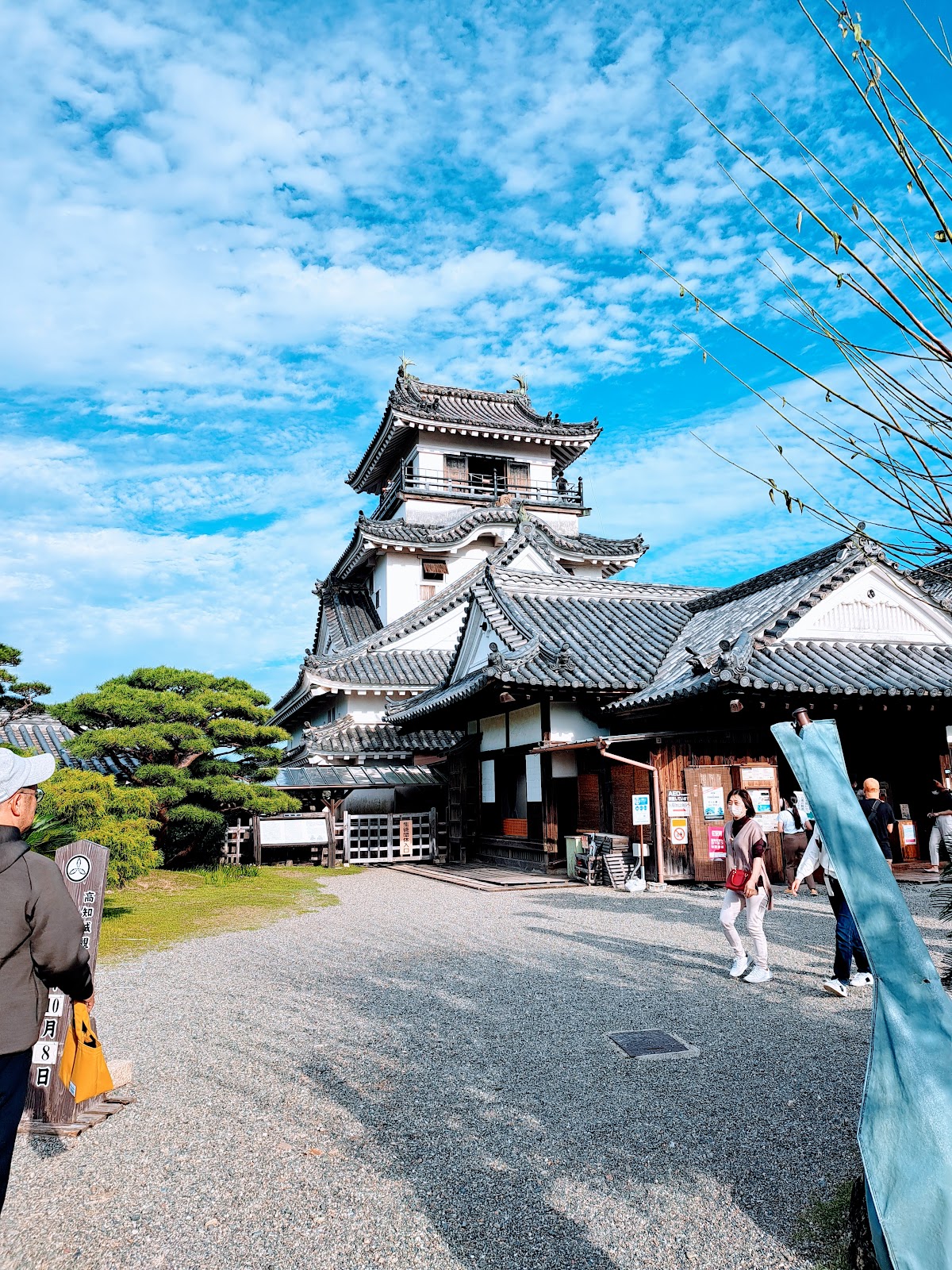
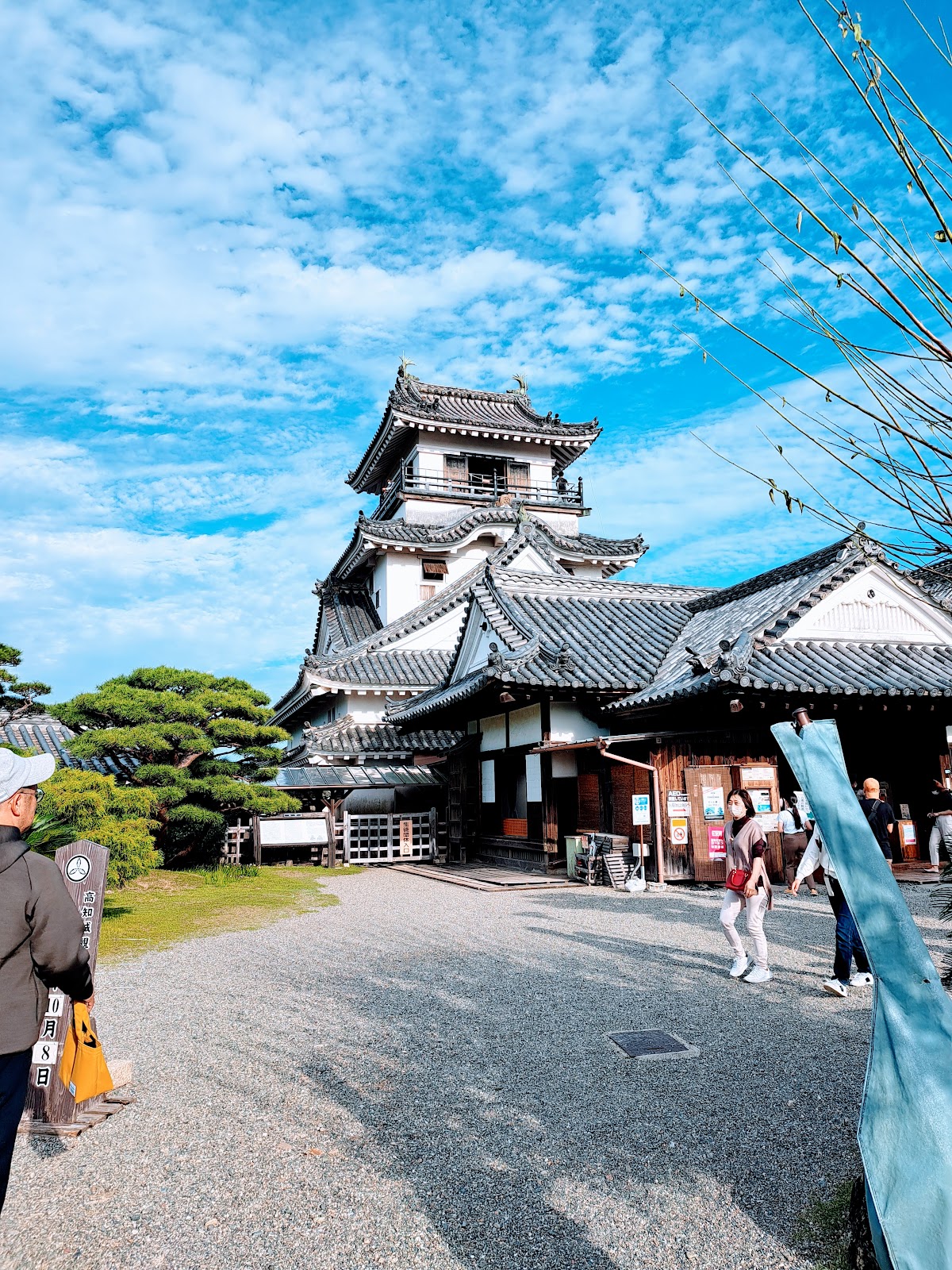
Located approximately 3 kilometers northeast of Shioe Castle, Kochi Castle is a famous castle known as one of the 12 remaining original castle keeps. Built by Yamauchi Kazutoyo, it is a modern castle and the only castle in Japan with its main keep completely intact, designated as a National Important Cultural Property.
Visiting Kochi Castle before or after visiting Shioe Castle will allow you to compare the differences between medieval mountain castles and modern flatland castles, and appreciate the development of castle architecture.
Kochi Prefectural Kochi Castle History Museum
Located at the foot of Kochi Castle, the Kochi Prefectural Kochi Castle History Museum displays a wealth of materials related to the history of the Tosa Domain and the Yamauchi family. There are also exhibits on the Chosokabe clan, which are helpful in gaining a deeper understanding of the historical background of Shioe Castle.
Urado Castle Ruins
Located south of Kochi City, facing Urado Bay, Urado Castle Ruins was the base of Chosokabe Motochika. Motochika moved his base from Okotoyo Castle to Urado Castle, making it his base for unifying Shikoku.
It is believed that Shioe Castle and Urado Castle were under the control of the Chosokabe clan and worked in conjunction with each other. Visiting both castles allows you to experience the Chosokabe clan’s sphere of influence.
Okotoyo Castle Ruins (Kochi Prefectural Museum of History and Folklore)
Located in Nankoku City, east of Kochi City, the Okotoyo Castle Ruins are an important castle site known as the residence of the Chosokabe clan. Currently, the Kochi Prefectural Museum of History and Folklore is located on the site, featuring detailed exhibits on the Chosokabe clan.
Visiting the base of Chosokabe Motochika, who conquered Shioe Castle, will allow you to gain a deeper understanding of Motochika’s strategies and his path to unifying Shikoku.
Shioe Tenmangu Shrine
In the Shioe area is the Shioe Tenmangu Shrine, which is the center of local faith. This shrine, dedicated to Sugawara no Michizane, the god of learning, is bustling with visitors during New Year’s and exam season.
Visiting it while touring Shioe Castle will allow you to experience the history and culture of the region more broadly.
Advice for Castle Enthusiasts Visiting Shioe Castle
Use of a Castle Layout Map
Because the topography of Shioe Castle has been partially altered due to its development as a park, bringing a castle layout map will make it easier to understand the relative positions of the remains. It is recommended to obtain a castle layout map in advance from castle-related books or websites and compare it with the map while walking around the site.
As Part of a Shikoku Mountain Castle Tour
Besides Shioe Castle, many other medieval mountain castles remain in Tosa. Visiting castle ruins related to the Chosokabe and Motoyama clans, such as Okotoyo Castle, Urado Castle, and Motoyama Castle, will provide a more comprehensive understanding of Tosa’s history during the Sengoku period.
When planning a Shikoku mountain castle tour, be sure to add Shioe Castle to your list.
Using Map Apps
Using map apps on-site makes it easier to understand your current location and the relative positions of the ruins. Especially when exploring the ridged trenches on the northern slope, it’s safer to walk while checking your location with GPS.
Photography Tips
When photographing the ruins, choose angles that show the continuity of the ridged trenches and the height of the earthworks. The view of Kochi city and Kochi Castle from the observation deck is also an excellent photo opportunity.
Early morning and twilight offer good lighting conditions for taking beautiful photos.
Books and Reference Materials on Shioe Castle
For those who want to learn more about Shioe Castle and the Chosokabe clan, the following books are helpful:
- “Castles of Tosa” (Kochi Prefectural Board of Education): A comprehensive collection of materials introducing castles in Kochi Prefecture, including detailed information on the layout and historical background of Shioe Castle.
- “Chosokabe Motochika” (Various history books): Books depicting Motochika’s life include descriptions of the siege of Shioe Castle and the Battle of Nagahama.
- “Comprehensive Survey of Japanese Castles,” Volume 15 (Shikoku Edition): This is an academic resource that provides detailed explanations of castles in Shikoku, and includes an entry on Shioe Castle.
These books are available at libraries and bookstores, and some are also available online.
Summary: The Charm of Shioe Castle and the Significance of Visiting It
Shioe Castle is an important castle site that tells the history of Tosa from the Nanboku-cho period to the Sengoku period. The historical changes—the rule of the Motoyama clan, the siege by Chosokabe Motochika, and the large-scale renovation by the Chosokabe clan—indicate that this castle was a stage for power struggles in Tosa.
The remaining ridged vertical moats are valuable relics that convey the Chosokabe clan’s castle-building techniques and are indispensable for understanding the characteristics of mountain castles in Tosa. Although some parts have been altered due to the park’s development, careful observation allows one to imagine its former appearance.
Shioe Castle, conveniently located near Kochi city center and easily accessible, is a recommended spot not only for castle enthusiasts but for anyone interested in history. Visiting it along with Kochi Castle, Okotoyo Castle, and Urado Castle will allow you to experience the historical transformation of Tosa from the Sengoku period to the early modern era.
From the observation deck of Fudeyama Park, gaze upon Kochi city and imagine the battles that once took place here, as well as Nagahama, the site of Chosokabe Motochika’s first battle. There, you will find the history of Motochika’s ambition to unify Shikoku and the lives of the Tosa samurai.
Please visit Shioe Castle and experience the history of Tosa and the charm of its castles.