Complete Guide to Kano Castle Ruins (Tottori) | A Stroll Through a Castle Town Amidst Sengoku History and Cherry Blossom Viewing Spots
Located in Kano-cho, Tottori City, Tottori Prefecture, the Kano Castle Ruins are a valuable historical site that conveys the history of the Sengoku period (Warring States period). Situated at a strategic point on the border between Inaba and Hoki provinces, this castle was the site of numerous battles. Today, it attracts many tourists as a famous cherry blossom viewing spot and for its charming castle town. This article provides detailed information you should know before visiting, from the history of Kano Castle to its highlights, surrounding tourist spots, and access information.
History and Origin of Kano Castle
Kano Castle Before the Sengoku Period
The exact date of Kano Castle’s construction is unclear, but it is said to have been the residence of the Shikanu clan (Kano clan), local lords of Inaba Province. Also known as “Ōshajō,” it was built as a flatland castle. The castle’s strategic location, on the border between Inaba and Hoki provinces and a crucial point for inland transportation, would significantly influence later history.
Battles of the Tensho Era
Kano Castle first appeared on the historical stage in 1544 (Tenbun 13). Shikano Nyudo, a samurai of the Yamana clan, the governors of Inaba province, was surrounded by a massive army of over 30,000 led by Amago Haruhisa and perished in battle with only about 300 men.
An even more significant turning point came in 1580 (Tensho 8). During Hashiba Hideyoshi’s (later Toyotomi Hideyoshi’s) first attack on Tottori Castle, Kano Castle became an Oda-controlled castle, and Kamei Korenori, a former retainer of the Amago family, was appointed as its commander. During this period, the entire Inaba region was the stage for fierce conflict between the Oda and Mori forces, and Kano Castle was caught in the middle of it all.
Kano Castle in the Edo Period
During the Edo period, Kano Castle functioned as a branch castle of the Inaba-Tottori Domain. While maintaining the structure developed during the Sengoku period, the castle town flourished as a post town on the “Shikano-ōrai,” part of the San’in-dō road connecting Kyoto and Yamaguchi along the Sea of Japan. The town layout and waterway system formed during this period remain largely unchanged even after more than 400 years.
Highlights of Kano Castle Ruins
Remains of Stone Walls and Moats
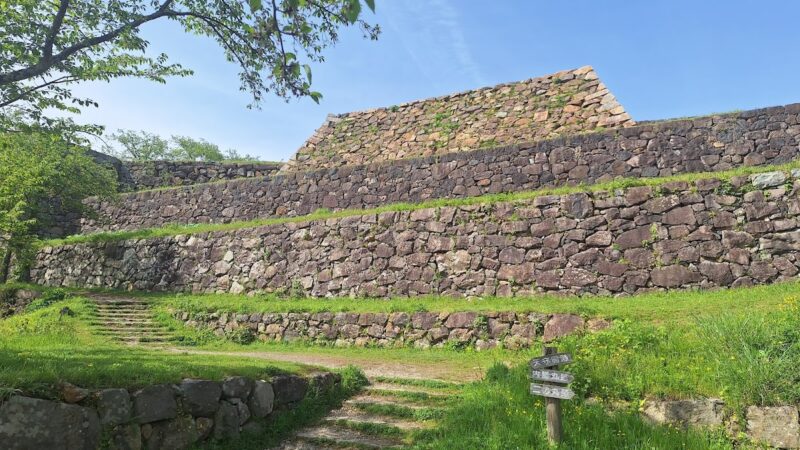
Although no buildings such as the keep remain at the current Kano Castle ruins, the inner and outer moats, as well as the stone walls, which are rare for a Sengoku period castle in the San’in region, strongly retain the atmosphere of the time. The stone walls, in particular, are valuable remains that convey the castle-building techniques from the Sengoku period to the early Edo period.
Walking around the moats, you can appreciate the functionality of the castle as a defensive structure and the design philosophy that skillfully utilized water. The access routes to the castle were cleverly designed, with numerous T-junctions and L-shaped intersections, evidence of its military strategic importance.
View from the Castle Hill Summit
The summit of the castle hill, where the castle tower once stood, can be reached via a well-maintained walking path. From the top, you can enjoy a panoramic view of the castle town of Kano, and on clear days, you can even see the Sea of Japan in the distance. The townscape below retains almost the original layout, making it a historically valuable landscape.
Kano Castle Ruins Park as a Cherry Blossom Spot
Kano Castle Ruins is known as one of the best cherry blossom spots in Tottori Prefecture. Approximately 500 Somei Yoshino cherry trees are planted along the castle moat, forming a cherry blossom avenue stretching approximately 1,100 meters.
In spring, the cherry blossoms paint the entire area pink, and their reflection on the water is breathtaking. Especially during the nighttime illumination period, visitors can enjoy the fantastical sight of cherry blossoms reflected on the mirror-like surface of the water, attracting many tourists and photography enthusiasts. The best time to see the cherry blossoms is usually from early to mid-April, and this period is expected to be particularly crowded.
The Charm of Kano Castle Town
A Townscape Inherited from a Castle Town to a Post Town
Kano’s castle town, based on a town layout established during the Sengoku period, flourished as a post town on the San’in Road during the Edo period. Even today, traditional townhouses with Kyoto-style latticework and residences of those of high status who bore surnames and swords, with their white walls and wainscoting, are scattered throughout the area, creating a charming historical landscape.
The renowned author Ryotaro Shiba, in his book “Kaido wo Yuku” (Traveling the Highways), described Kano as follows: “There are no people. The streets are as quiet as the bottom of water, and occasionally you can see townhouses with Kyoto-style latticework, or residences of people of the status of those who bore surnames and swords, with white walls and wainscoting. Overall, it is a settlement with an indescribable elegance.” He highly praised its unique atmosphere.
Waterways Flowing for 400 Years
One of the major characteristics of the castle town of Kano is the network of waterways that crisscross the town. These waterways were developed after the Edo period, and even now, more than 400 years later, pure water continues to flow through them. Famous spring waters, including Fuse no Shimizu, nourish the town, playing an important role as a source of water for daily life and for fire prevention.
Strolling along the waterways, you can enjoy the historical townscape accompanied by the sound of babbling brooks, providing visitors with a moment of peace and tranquility.
Kyoto-Style Latticework and Traditional Architecture
What particularly catches the eye in the townscape of Kano is the “Kyoto-style latticework,” a carpentry technique introduced from Kyoto. The beautiful design of the finely woven lattices speaks to the town’s history as a post town with ties to Kyoto.
Furthermore, the “ox-tethering stones” and “horse-tethering stones” found throughout the town are remnants of its former prosperity as a post town. These stones were used by travelers to tether their livestock, and are valuable historical remains that convey the lifestyle of that time.
Traditional House Cafes and Experience Facilities
In recent years, the Kano castle town has seen an increase in traditional house cafes and souvenir shops utilizing historical buildings. These facilities, utilizing original buildings, offer a chance to spend a relaxing time in a traditional atmosphere.
It’s recommended to use them as a rest stop during your stroll through the castle town, enjoying lunch made with local ingredients or sweets unique to Tottori. Some facilities also offer traditional craft experience programs, making them attractive not only as tourist destinations but also as places for cultural experiences. ## Nearby Tourist Attractions
Shiroyama Shrine
Located near the ruins of Kano Castle, Shiroyama Shrine has long been revered as the guardian deity of the region. From the shrine grounds, you can overlook the castle town and worship in a tranquil atmosphere.
Koseiji Temple and Unryuji Temple
Kano Castle town is dotted with historical temples. Koseiji Temple and Unryuji Temple are ancient temples that have existed since the formation of the castle town, and their grounds preserve buildings and cultural assets of high historical value. Visiting these temples and shrines will allow you to gain a deeper understanding of Kano’s history.
Kachiya Shrine
Kachiya Shrine has been revered as the local tutelary deity. Traditional festivals are held here, making it a valuable spot to experience local culture.
Tottori Onsenkyo (Tottori Hot Spring Village)
There are also facilities where you can enjoy day trips to hot springs around Kano Town. It’s perfect for relaxing after exploring the castle town or visiting the castle ruins. This hot spring facility, beloved by locals, offers a relaxing time while experiencing Tottori’s nature and history.
Access and Basic Information
Access by Car
- From JR Tottori Station: Approximately 30 minutes by car
- Via Sayo JCT on the Chugoku Expressway: Approximately 20 minutes after exiting Tottori Nishi IC on the Tottori Expressway
- Parking: Free parking available around Shikano Castle Ruins Park
Access by Public Transportation
- From JR Hamamura Station: Approximately 10 minutes on foot after getting off at “Shikano-cho General Branch Office” bus stop
- From JR Tottori Station: Approximately 50 minutes by bus
Sightseeing buses may also operate from within Tottori City, so it is recommended to check the latest information on the Tottori City Tourism website in advance.
Basic Information
- Location: Shikano-cho, Tottori City, Tottori Prefecture
- Designation: Tottori City Designated Historic Site
- Visiting Hours: Open all day (nighttime illumination only during cherry blossom season)
- Admission Fee: Free
- Inquiries: Tottori City Tourism Convention Association
Best Season and Events for Visiting
Spring (Cherry Blossom Season)
The most popular time to visit is from early to mid-April when the cherry blossoms are in full bloom. The sight of approximately 500 Somei Yoshino cherry trees blooming simultaneously is breathtaking, and not to be missed not only for daytime cherry blossom viewing but also for the nighttime illumination. Local events such as cherry blossom festivals are sometimes held during this period.
Season of Fresh Greenery
The season of fresh greenery from May to June is also a great time to fully appreciate the charm of Shikano Castle Ruins. Enjoy a pleasant stroll through the castle ruins and the castle town in the refreshing weather.
Autumn Foliage
In autumn, the surrounding trees change color, allowing you to enjoy a historical stroll in a tranquil atmosphere. The relatively low number of tourists makes it ideal for a leisurely visit.
Winter Silence
In winter, the Kano Castle ruins are less crowded, allowing you to enjoy the serene atmosphere of the castle town all to yourself. The snow-covered castle ruins and townscape are picturesque and highly recommended for photography.
Model Course for Enjoying the Kano Castle Ruins
Half-Day Course (Approx. 3 Hours)
- Arrive at Kano Castle Ruins Park Parking Lot (9:00)
- Visit Kano Castle Ruins (9:00-10:00): Stone walls, moat, and climb to the top of the castle hill
- Stroll through the Castle Town (10:00-11:30): Kyoto-style lattice townhouses, stroll along the waterway, and take a break at a traditional house cafe
- Temple and Shrine Visit (11:30-12:00): Shiroyama Shrine, Koseiji Temple, Unryuji Temple, etc.
- Lunch (12:00-13:00): Enjoy local cuisine at a local restaurant
Full-Day Course (Approx. 6 Hours)
In addition to the half-day course, add the following:
- Exploring the History of the Kano Highway: Tracing the history of the post town
- Visiting nearby tourist spots: Kachiya Shrine, Fuse no Shimizu, etc.
- Relax at a hot spring: Relax at a day-trip hot spring facility
- Choosing souvenirs: Purchase local specialties and crafts
Points to note when visiting Kano Castle Ruins
Clothing and belongings
If you plan to climb to the top of the castle hill, comfortable shoes and clothing are essential. Particular caution is needed on rainy days and in winter, as the ground can be slippery. In summer, the sun is strong, so bring a hat, sunscreen, and drinks for hydration.
Photography etiquette
The castle town is still inhabited by people. When taking photographs, please be considerate of privacy and avoid trespassing on private property. Also, during busy times such as cherry blossom season, please be considerate of other tourists.
Estimated time required
If you only plan to visit Kano Castle Ruins, it will take about an hour, but if you plan to explore the castle town, you should allow 2-3 hours. If you want to fully immerse yourself in history and explore the surrounding attractions, we recommend planning a half-day to full-day trip.
Summary: Experiencing the Romance of the Sengoku Period at Shikano Castle Ruins
Shikano Castle Ruins is a valuable historical site that conveys the turbulent history of the Sengoku period, and at the same time, it continues to fascinate visitors as a famous cherry blossom viewing spot, along with its charming castle town. The spring scenery with approximately 500 cherry trees in full bloom, the tranquil streets of the castle town, the clear waterways that have flowed for over 400 years, and the traditional architecture represented by Kyoto-style latticework—all of these harmonize to form a unique space with an “indescribable elegance.”
Despite its convenient access, being only about 30 minutes by car from the center of Tottori City, the calm atmosphere where time seems to slow down offers a special experience away from everyday life. Visiting it in conjunction with major tourist spots such as the Tottori Sand Dunes and Tottori Castle Ruins will allow you to gain a deeper understanding of Tottori’s history and nature.
With its stone walls and moats that retain the atmosphere of the Sengoku period, the townscape of the castle town praised by Ryotaro Shiba, and the natural beauty that changes with the seasons, Kano Castle Ruins is a recommended tourist spot not only for history buffs, but also for those who want to enjoy photography, strolling around, or simply relax. Why not visit this place full of historical romance at least once?