Complete Guide to Shiinagusuku (Okinawa Prefecture): History, Location, and Highlights Explained in Detail
Okinawa Prefecture is home to numerous gusuku (castle ruins), but Shiinagusuku is one of the most important historical sites that tells the story of the region. This article provides a detailed explanation of Shiinagusuku’s historical background, location, access methods, and highlights.
What is Shiinagusuku?
Shiinagusuku is one of the gusuku (castle ruins) located in Okinawa Prefecture, a valuable cultural heritage site that conveys the history of the Ryukyu Kingdom era. “Gusuku” means “castle” or “sacred place” in the Ryukyuan language, and it is said that there are over 300 such gusuku throughout Okinawa.
Shiinagusuku is sometimes referred to as “Shiina Castle” or “Shiinagusuku” depending on the region, and is a historical spot that has been cherished by local people.
Definition and Importance of Gusuku
Gusuku were not merely military facilities, but possessed diverse functions such as:
- Political Center: The residence of the local Aji (local lord)
- Place of Worship: Sacred sites such as Utaki (sacred groves)
- Economic Center: A center for managing trade and agriculture
- Defense Facility: A defensive function against external enemies
Shiina Gusuku is also believed to have played an important role in the local community as a facility with these complex functions.
History of Shiina Gusuku
Construction Period and Background
While the exact construction period of Shiina Gusuku cannot be definitively stated due to limited documentary sources, it is estimated to have been built during the “Gusuku period” from the 12th to the 15th centuries, similar to many other Okinawan gusuku.
This period is known in Ryukyuan history as the “Three Mountains Period,” a time when Okinawa Island was divided into three powers: Hokuzan, Chuzan, and Nanzan, and engaged in conflict. Local lords built many gusuku (castles) to protect their territories and demonstrate their authority.
Changes after the unification of the Ryukyu Kingdom
When the Ryukyu Kingdom was unified by Sho Hashi in 1429, many local gusuku lost their military importance and were gradually abandoned. It is highly likely that Shiina Gusuku ceased functioning as a castle around this time.
However, the sites of gusuku continued to be cherished by people as objects of worship or symbols of regional identity.
Preservation and Research in Modern Times
After the war, as the value of Okinawa’s cultural heritage was re-recognized, research and preservation activities for gusuku in various regions progressed. The historical value of Shiina Gusuku has also been evaluated by local historians and cultural property protection organizations.
Location and Access to Shiina Gusuku
Location Information
There may be multiple possible locations for the exact location of Shiina Gusuku. Because there are multiple gusuku (castles) and historical sites with the same or similar names within Okinawa Prefecture, it is recommended to check with the local board of education or tourist association beforehand when planning a visit.
Generally, gusuku were built in locations with the following geographical features:
- High ground or hills: A location with good views and suitable for defense
- Near water sources: A location where water for daily life could be secured
- Near the coast or port: A location convenient for trade
- Near sacred sites: A location of religious importance
Access Methods
Access to Shiina Gusuku is similar to visiting other historical sites in Okinawa:
Access by Car
Traveling by car is the most convenient way to get around Okinawa. If using a rental car:
- Rent a car from Naha Airport
- Set your destination using a car navigation system or smartphone map app
- Using the Okinawa Expressway provides convenient access to various parts of the prefecture
Access by Public Transportation
If using a local bus, you will need to walk from the nearest bus stop. However, since many gusuku (castles) are located in mountainous areas or on high ground, they may be a distance from bus stops.
Taxi and Sightseeing Tours
If you request a taxi from a local taxi company, the driver may also provide guidance. Alternatively, joining a sightseeing tour themed around history and culture is another option.
Points to Note When Visiting
- Footwear: Many gusuku ruins are undeveloped, so wear comfortable walking shoes.
- Weather Check: Be careful as the ground can be slippery in rainy weather.
- Insect Repellent: Bring insect repellent spray, especially in areas with abundant nature.
- Hydration: The Okinawan sun is strong, so bring plenty of water.
- Respect for Private Property: Some areas around gusuku are private property, so be mindful of restricted areas.
Highlights of Shiina Gusuku
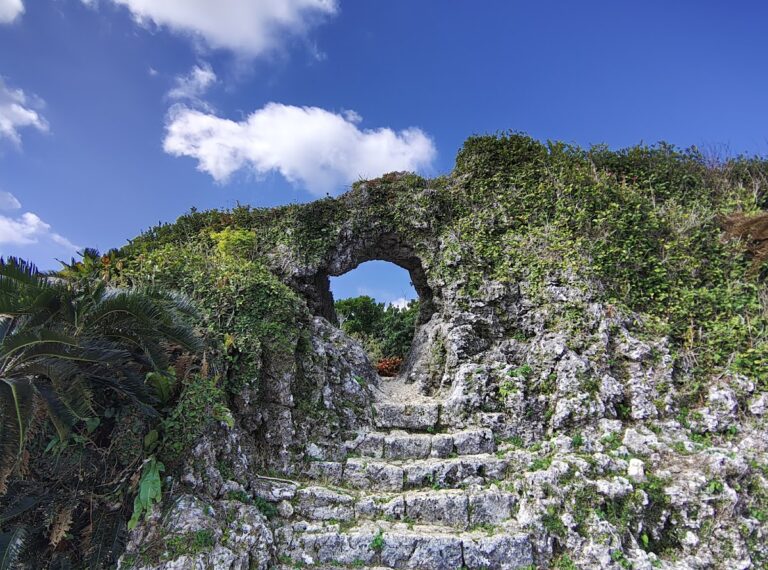
Castle Walls and Stone Remains
The main highlight of the gusuku is the stone walls constructed using Ryukyu limestone. The stonework techniques used in Okinawan gusuku (castles) are highly developed and have the following characteristics:
- Nozurazumi: The oldest technique of stacking natural stones as they are.
- Nunozumi: A technique of stacking stones horizontally and neatly.
- Aikatazumi: A technique of combining stones of different sizes.
- Kikko Ranrezumi: An advanced technique of stacking stones beautifully, resembling a turtle’s shell.
The stonework remaining at Shiina Gusuku allows us to infer the level of technology at the time and the age of its construction.
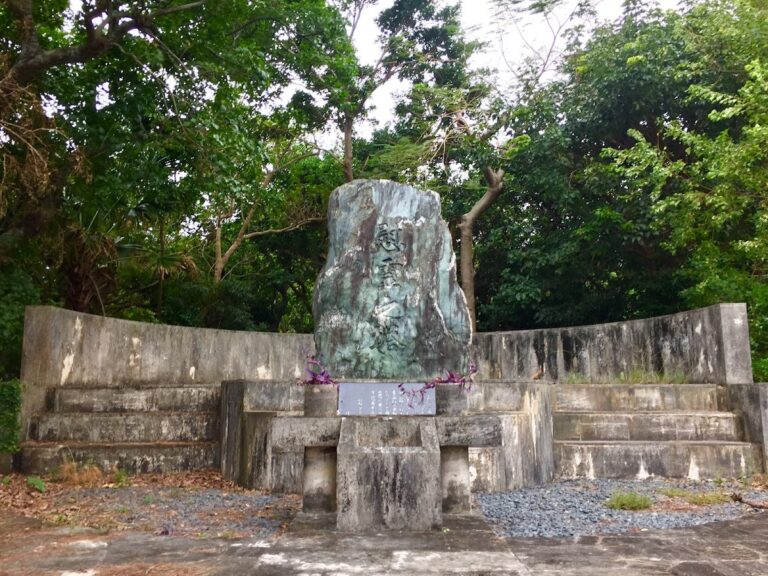
Uganju (Sacred Sites) and Utaki (Sacred Groves)
Many gusuku have uganju and utaki, which are objects of worship. These are still cherished by local people, and rituals are sometimes performed there.
When visiting, please observe the following points:
- Respect for the sacred place: Refrain from shouting or disrespectful behavior.
- Consideration for photography: Photograph sacred sites and utaki (sacred groves) sparingly.
- Do not touch offerings: Do not touch offerings used in rituals.
Views and Scenery
Gusuku (castles) are often built on high ground, making them spectacular viewpoints offering panoramic views of the surrounding landscape. From Shiina Gusuku, you may be able to see the surrounding nature, settlements, and possibly even the sea.
The Anji (lords) of the Ryukyu Kingdom era may have contemplated governing their territories while gazing upon this view. Experiencing such historical romance is one of the charms of visiting a gusuku.
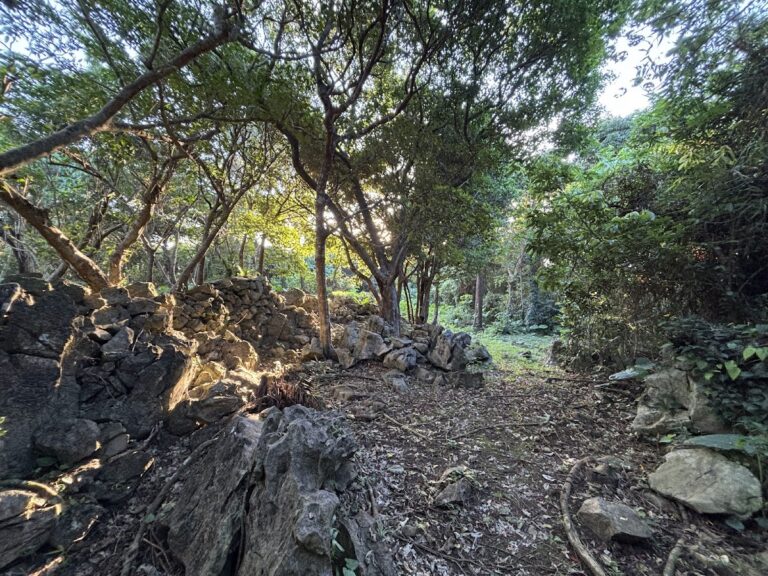
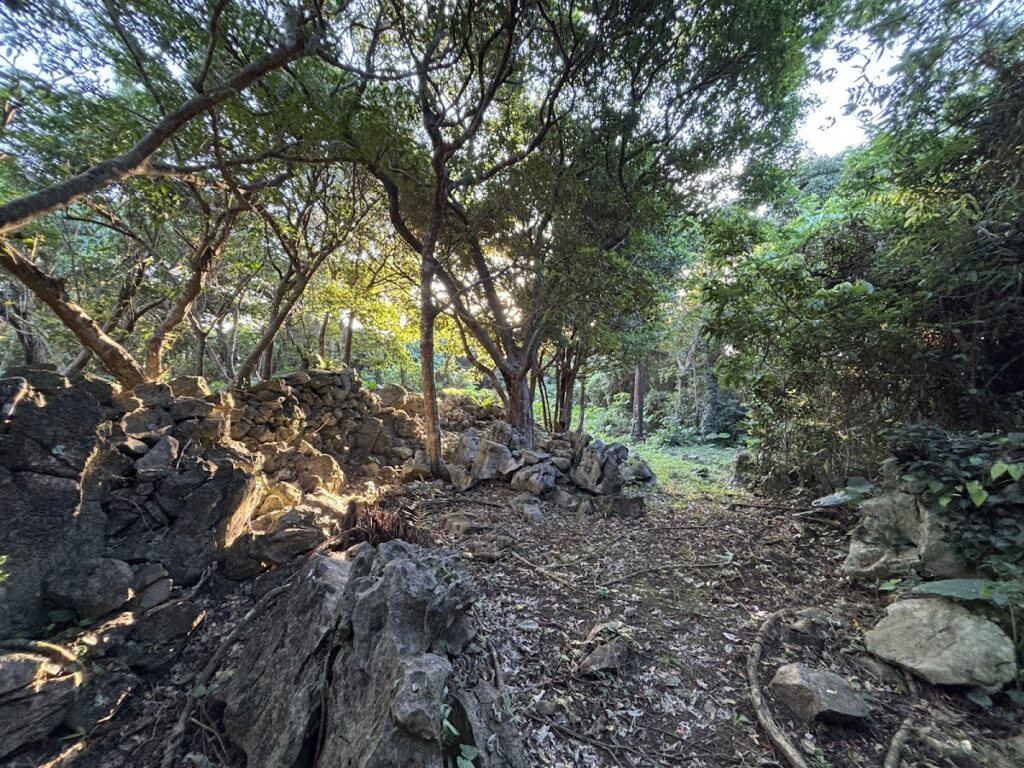
Surrounding Natural Environment
The area around the gusuku (castle) is lush with subtropical plants unique to Okinawa:
- Banyan Tree: A representative tree of Okinawa, believed to be inhabited by spirits.
- Cycad: An indispensable plant in the Okinawan landscape.
- Hibiscus: A brightly colored tropical flower.
- Ferns: Plants adapted to the humid environment.
These plants harmonize with the stone walls of the gusuku, creating a unique landscape.
Tourist Attractions Around Shiinagusuku
Other Gusuku Sites
Okinawa has many castle ruins, including gusuku registered as World Heritage Sites:
- Shuri Castle: Royal castle of the Ryukyu Kingdom (World Heritage Site)
- Nakijin Castle Ruins: Base of Hokuzan (World Heritage Site)
- Zakimi Castle Ruins: Known for its beautiful stonework (World Heritage Site)
- Katsuren Castle Ruins: Gusuku with a spectacular view overlooking the sea (World Heritage Site)
- Nakagusuku Castle Ruins: Well-preserved gusuku (World Heritage Site)
Visiting these gusuku in conjunction with a visit to Shiinagusuku is a highlight of any trip to Okinawa.
Local Cultural Facilities
To gain a deeper understanding of Okinawa’s history and culture, the following facilities are also recommended:
- Okinawa Prefectural Museum & Art Museum: A comprehensive learning experience of Okinawa’s history, culture, and nature.
- Historical and Folk Museums of Each City and Town: Detailed information on local history.
- Peace Memorial Museum: Learning about the history of the Battle of Okinawa.
Natural Scenic Spots
Enjoy Okinawa’s beautiful nature in conjunction with your gusuku (castle) visit:
- Beautiful Beaches: Emerald green sea.
- Yanbaru Forest: Subtropical primeval forest.
- Limestone Caves: A mysterious underground world.
- Mangrove Forests: A unique ecosystem.
Current Status and Challenges of Gusuku Research
Progress in Academic Research
Regarding Okinawa’s gusuku, multifaceted research is progressing in archaeology, history, architecture, and other fields. In recent years, the following research methods have also been utilized:
- Archaeological excavation: Unraveling history from remains and artifacts
- Surveying: Creating accurate drawings and structural analysis
- Literature research: Searching for historical facts from ancient documents
- Scientific dating: Determining the construction date of the castle using radiocarbon dating, etc.
- 3D scanning technology: Record preservation using digital technology
Challenges in Preservation and Utilization
There are many challenges in preserving gusuku (Okinawan castles):
- Weathering: Ryukyu limestone is susceptible to weathering
- Erosion by plants: Tree roots destroy the stonework
- Compatibility with development: Balancing with urban development
- Securing funding: Preservation and restoration require significant costs
- Shortage of experts: Passing on traditional stonework techniques
Connection with the local community
Gusuku are an important cultural identity for local communities. Cleaning activities, preservation efforts, and the continuation of rituals by local residents greatly contribute to the preservation of gusuku.
Understanding Okinawa’s Gusuku Culture
Social Structure of the Gusuku Period
During the Gusuku period, Okinawa was a decentralized society where local lords (Anji) held independent power. These Anji engaged in:
- Management of Agricultural Production: Development of rice paddies and fields
- Control of Trade: Trade with China, Japan, and Southeast Asia
- Presidency of Religion: Legitimization of rule through religious ceremonies
- Maintenance of Military Power: Conflict with other Anji
These activities were centered around gusuku (castles).
The Establishment of the Ryukyu Kingdom and Changes in Gusuku Castles
After the unification of the Ryukyu Kingdom in 1429, local gusuku castles changed as follows:
- Loss of Military Function: Local military power was reduced due to centralization.
- Transfer of Administrative Function: Introduction of the Magiri (administrative division) system.
- Continuation as a Place of Worship: Became an object of worship as an Utaki (sacred grove).
- Preservation as a Place of Memory: Inherited as a place that conveys the history of the region.
Significance of Gusuku Castles in Modern Times
In modern times, gusuku castles have the following significance:
- Value as Cultural Heritage: A valuable legacy that conveys the history of Okinawa.
- Utilization as a Tourism Resource: Contributing to the local economy.
- Place of Education: A practical place for learning history.
- Source of Identity: Cultural pride of the Okinawan people.
- Symbol of Peace: Inheritance of culture that has overcome the history of war.
Best Season to Visit Shiina Gusuku Castle
Seasonal Characteristics
Spring (March-May)
- Temperature: 20-25 degrees Celsius, pleasant
- Advantages: Beautiful fresh greenery, perfect for strolling
- Disadvantages: Crowded during Golden Week
Summer (June-September)
- Temperature: 28-32 degrees Celsius, hot
- Advantages: Okinawa’s characteristic blue skies and greenery
- Disadvantages: Typhoon season, strong sunshine
Autumn (October-November)
- Temperature: 23-27 degrees Celsius, comfortable
- Advantages: Few typhoons, perfect for sightseeing
- Disadvantages: None in particular (best season)
Winter (December-February)
- Temperature: 15-20 degrees Celsius, cool
- Advantages: Few tourists, quiet
- Disadvantages: Many cloudy and rainy days
Choosing the Right Time of Day
- Early Morning: Cool, and the gusuku (castle) illuminated by the morning sun is beautiful.
- Late Morning: Comfortable before the temperature rises.
- Evening: The sunset creates a magical atmosphere.
- Time to Avoid: The sun is strong and hot around noon.
Tips for Enjoying Your Gusuku Visit More
Recommended Pre-Visit Study
Learning the following before your visit will enhance your enjoyment:
- Basic Knowledge of Ryukyu History: The history of the Ryukyu Kingdom from the Gusuku period.
- Stone Masonry Techniques: Characteristics of gusuku construction techniques.
- Okinawan Beliefs: The concept of Utaki (sacred groves) and Nirai Kanai (mythical land).
- Regional History: The individual history of the gusuku you will visit.
Recommended Items to Bring
- Comfortable Walking Shoes: Sneakers or trekking shoes.
- Hat and Sunscreen: Protection from strong sunlight.
- Insect Repellent Spray: Protection from mosquitoes and venomous snakes.
- Water: Prevention of heatstroke.
- Towel: For wiping sweat
- Camera: For commemorative photos
- Binoculars: For enjoying the scenery
- Map/Guidebook: For checking local information
Photography Tips
- Details of the Stonework: Close-up shots to record the arrangement of the stones
- Overall View: Wide shots to express the scale of the castle
- Scenery: Photographing the view from the castle
- Harmony with Plants: Including Okinawan plants such as banyan trees
- Use of Light: Utilizing the soft light of morning and evening
Manners and Etiquette
- Take your trash home: Protection of the natural environment
- Do not damage plants: Protection of valuable vegetation
- Do not climb on the stonework: Preservation of the ruins
- Do not shout: Maintaining a quiet environment
- Show respect at places of worship: Respect for places of worship
- Do not trespass on private property: Consideration for local residents
Deeper Understanding of Okinawa’s History and Culture
Related Historical Events
To understand Okinawan gusuku (castles), including Shiinagusuku, it is helpful to know the following historical events:
- Three Kingdoms Period (14th Century): Conflict between Hokuzan, Chuzan, and Nanzan
- Unification of the Ryukyu Kingdom (1429): Unification by Sho Hashi
- Satsuma Invasion (1609): Beginning of Shimazu clan rule over Ryukyu
- Ryukyu Disposition (1879): Establishment of Okinawa Prefecture
- Battle of Okinawa (1945): A fierce battleground of the Pacific War
- Reversion to Japan (1972): Return from American rule
Unique Culture of Ryukyu/Okinawa
Gusuku are deeply connected to the following unique Okinawan cultures:
- Utaki Faith: A belief system that fuses nature worship and ancestor worship
- Noro (Priestess) System: Rituals performed by female priests
- Nirai Kanai Concept: Belief in an ideal land beyond the sea
- Eisa: Dance for honoring ancestors
- Kumiodori: Classical Ryukyuan performing arts
- Ryukyuan Cuisine: Unique food culture
Modern Okinawa and Gusuku
In modern Okinawa, gusuku (castles) hold more significance than mere tourist attractions:
- Cultural Identity: Pride as an Okinawan
- Place of Peace Education: Memory of war and the preciousness of peace
- Core of the Local Community: Center of festivals and events
- Subject of Academic Research: Continuous research and new discoveries
- Center of International Exchange: Dissemination as a World Heritage Site
Summary: The Value and Future of Shiina Gusuku
Shiina Gusuku is a valuable heritage site that conveys Okinawa’s rich history and culture to the present day. It has played various roles throughout its long history, from the gusuku era before the Ryukyu Kingdom to the present day.
What Shiinagusuku Tells Us
- Witness to History: A glimpse into Ryukyuan society from ancient to medieval times
- Crystal of Architectural Technology: Advanced stonework techniques
- Place of Worship: Okinawa’s enduring spiritual culture
- Local Memory: Community identity
- The Preciousness of Peace: The importance of cultural inheritance after overcoming war
Prospects for Preservation and Utilization
The following initiatives are expected for the preservation and utilization of Okinawan gusuku, including Shiinagusuku:
- Continuous Research: New discoveries and deepening understanding
- Appropriate Preservation and Restoration: Scientific preservation by experts
- Collaboration with the Community: Resident-participatory preservation activities
- Enhancement of Educational Programs: Passing on knowledge to future generations
- Sustainable Tourism: Balancing preservation and utilization
- Digital Archiving: Record preservation using the latest technology
A Message to Visitors
When visiting Shiinagusuku, please treat it not merely as a tourist attraction, but with respect as a cultural heritage site carefully preserved by the people of Okinawa. Every stone, every lush plant, and every view stretching out below tells a story of centuries of history.
Standing at the gusuku and gazing upon the same view as the Anji who once ruled this land, we can connect with the history of Ryukyu across time and space. And we will feel the responsibility to pass on this precious heritage to future generations.
We hope that your visit to Shiinagusuku will deepen your understanding of Okinawa’s history and culture and provide an opportunity to rediscover the charm of this beautiful island.
—
Notes: For the exact location and current status of Shiinagusuku, we recommend contacting the Cultural Properties Division of the respective municipal board of education in Okinawa Prefecture, or the Okinawa Prefectural Buried Cultural Properties Center, before your visit. Also, please remember to be considerate of the local residents and the natural environment, and enjoy your visit while observing proper etiquette.