Tamagusuku Gusuku (Okinawa Prefecture) Complete Guide | The Charm of the Sacred Site of Ryukyu’s Creation and the Sky Gate
What is Tamagusuku Gusuku?
Tamagusuku Gusuku is an ancient gusuku (castle) located in Tamagusuku, Nanjo City, Okinawa Prefecture, predating the Ryukyu Kingdom era. Built on a natural fortress at an altitude of approximately 180 meters, this castle site was designated a national historic site on August 21, 1987. Also known as “Tamagusuku Castle,” “Amatsuzu Castle,” and “Amatsuzu Gusuku,” it remains a sacred site deeply connected to Ryukyu’s creation myth, attracting many visitors even today.
Located on a plateau in southern Okinawa Island, Tamagusuku Gusuku is one of the oldest gusuku in Ryukyu, traditionally believed to have been built by Amamikiyo, the god of Ryukyu’s creation. Due to its historical and cultural value, it is positioned as an important site of worship for the “Agari-umai” (Eastern Pilgrimage), a sacred site pilgrimage that has continued since the Ryukyu Kingdom era, and is affectionately known locally as “Tamakusuku Gusuku.”
Location and Basic Information
- Location: 444 Tamagusuku, Nanjo City, Okinawa Prefecture
- Elevation: Approximately 180 meters
- Relative Height: Approximately 50 meters
- Form: Mountain castle
- Area: Approximately 21,811 square meters
- Cultural Property Designation: National Historic Site (designated in 1987)
- Main Remains: Stone walls, baileys, castle gate, sacred site
History and Legends of Tamagusuku Gusuku
Ryukyu Creation Myth and Amamikiyo
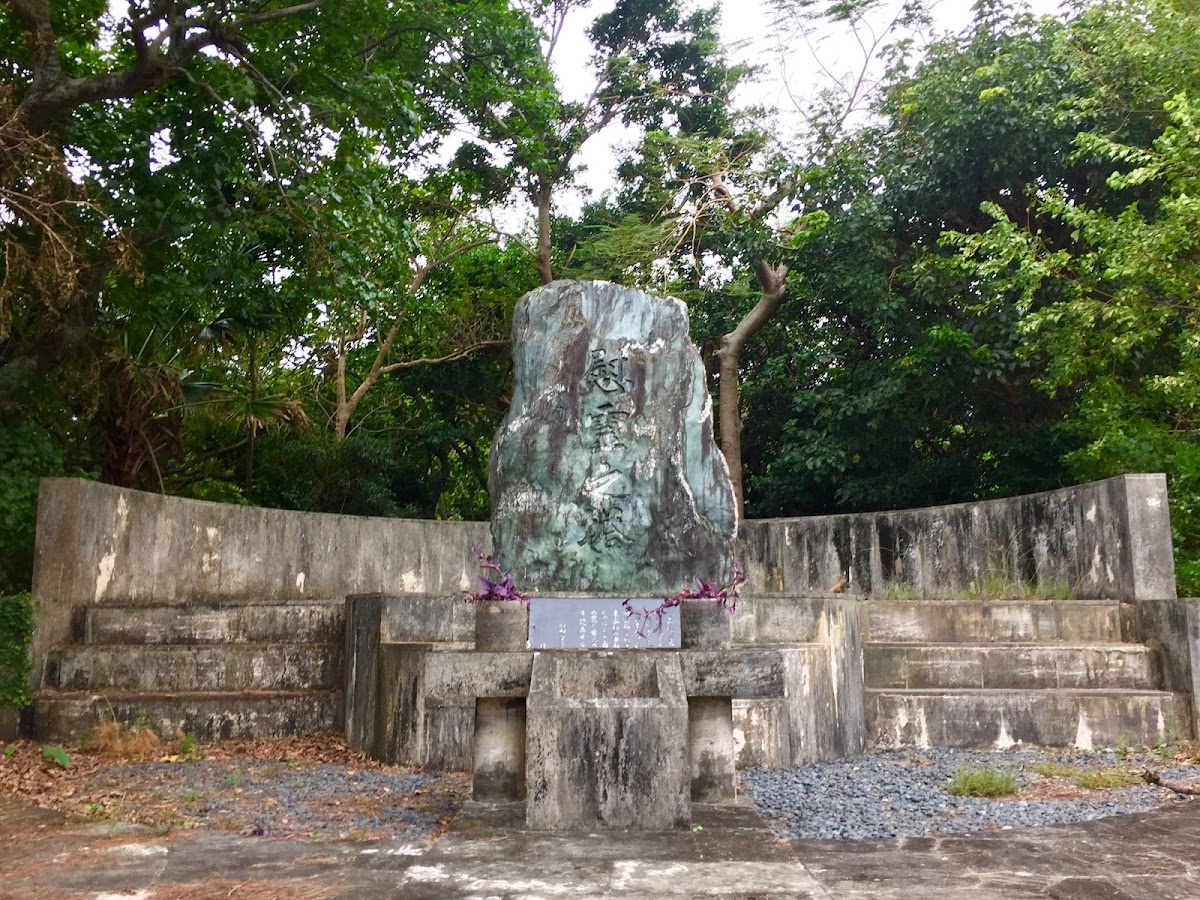
The history of Tamagusuku Gusuku dates back to the creation myth of Ryukyu. According to legend, this castle was built by Amamikiyo, the creator goddess of Ryukyu who descended from Nirai Kanai, a mythical land beyond the sea. Amamikiyo is revered as the god who created the Ryukyu Islands and brought culture to the people, and Tamagusuku Castle is an important sacred site, counted as one of the “Seven Sacred Sites of Ryukyu’s Creation.”
Due to this mythological background, Tamagusuku Castle holds special significance not merely as a military facility, but as a place that represents the origin of Ryukyu’s spiritual culture. Even today, it is cherished as a sacred place of prayer by local people and those who preserve Ryukyu’s traditional beliefs.
The Residence of the Tenson Clan
According to legend, Tamagusuku Castle was the residence of the Tenson clan, descendants of Amamikiyo. The Tenson clan is considered one of Ryukyu’s ancient royal families, who ruled Ryukyu before the Three Kingdoms period. However, detailed historical records are lacking, and many aspects of the castle’s construction date and its specific lord remain unknown.
Estimated Construction Date
While the exact construction date is unknown, the existing stonework and structure suggest it dates back approximately 600 years (late 14th to 15th century). This period marked a crucial transition for Ryukyu, as it transitioned from the Three Kingdoms era to a unified kingdom, a time of widespread castle construction and renovation.
However, as tradition suggests, it is highly probable that some kind of sacred site or settlement existed before the current stonework, suggesting that the castle’s history may date back even further.
Structure and Characteristics of Tamagusuku Gusuku
Concentric Layout
Tamagusuku Gusuku has a concentric layout consisting of the first, second, and third baileys. The skillful use of natural bedrock and terrain demonstrates the high level of Ryukyuan castle construction technology.
Ichinokuruwa (Main Enclosure): Located in the center of the gusuku (castle), it is the highest point. From here, one can see Kudaka Island and the central and southern parts of Okinawa Island, making it a strategically and religiously important location.
Ninokuruwa: Situated to protect Ichinokuruwa, it functioned as a defensive structure surrounded by stone walls.
Sannokuruwa: This is the outer enclosure, forming the defensive line for the entire gusuku.
The Gate in the Sky: “The Gate of the Sun”
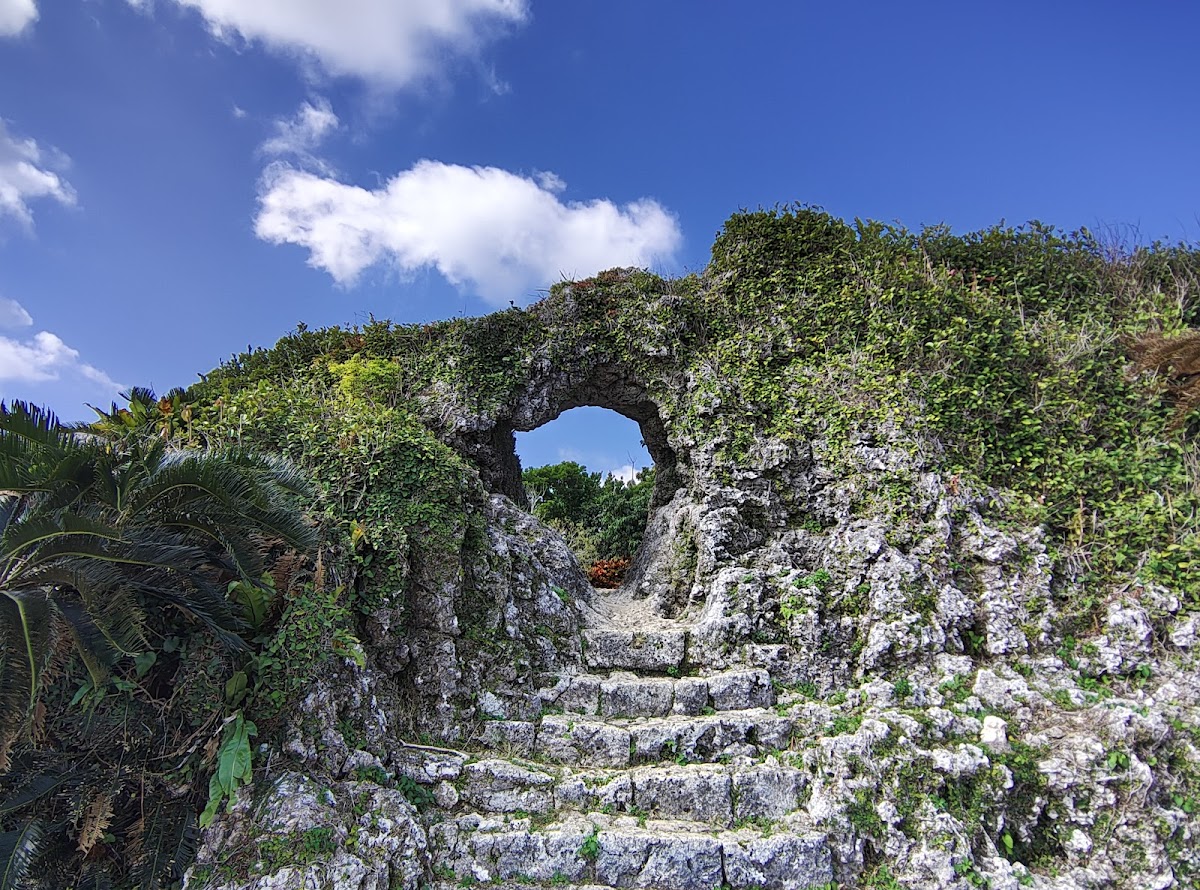
The greatest highlight of Tamagusuku Gusuku is its impressive circular gate carved out of limestone. This gate is also known as the “Gate of the Sun,” characterized by its unique shape that seems to open towards the sky.
The gate utilizes the natural bedrock while being carefully crafted by hand, demonstrating the high level of Ryukyu stonemasonry. Especially at sunrise, the light streaming in through the circular opening is divine, truly befitting the name “Gate of the Sun.”
Climbing the steep stairs to reach the castle gate, you’ll be overwhelmed by its grandeur and beauty. The gate, like a hole opening into the sky, is a unique feature of Tamagusuku Gusuku, unlike any other gusuku (Okinawan castle).
Features of the Stone Walls
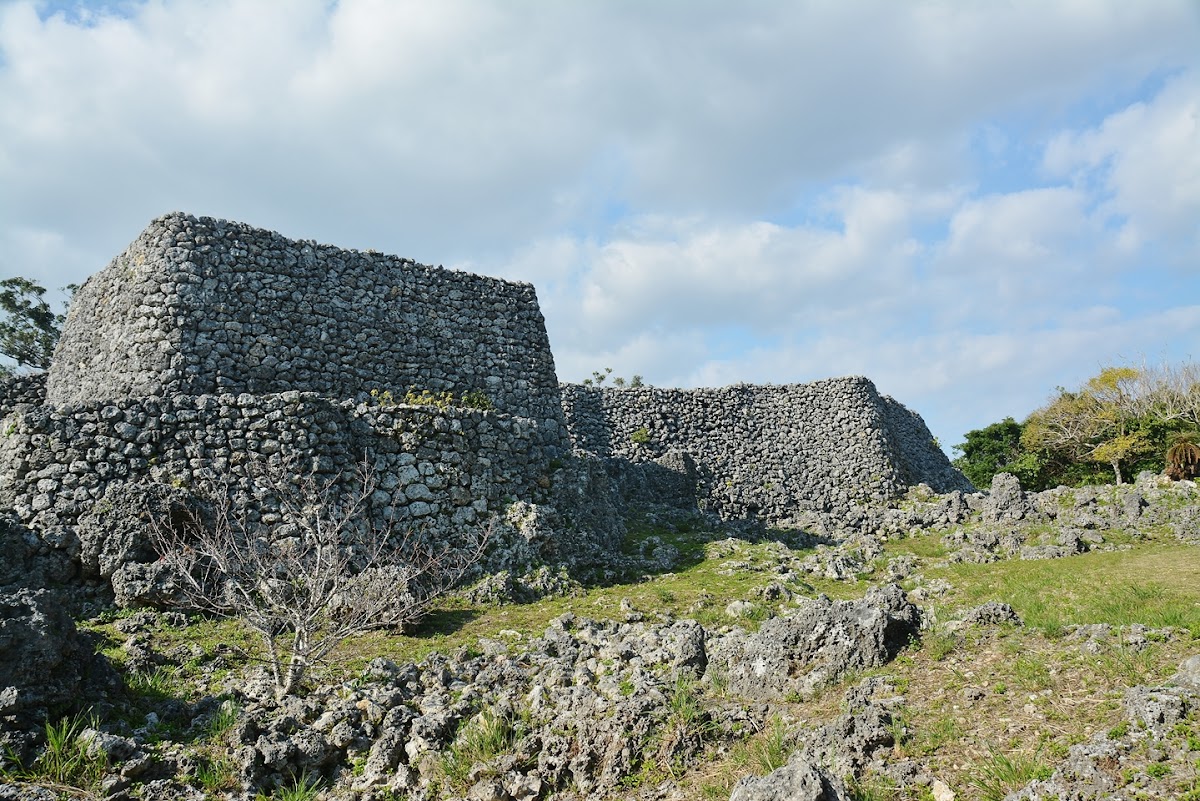
The stone walls of Tamagusuku Gusuku are constructed using Ryukyu limestone, employing techniques such as rough-hewn stonework and layered stonework. Built to blend seamlessly with the natural bedrock, the walls remain in excellent condition even after more than 600 years, demonstrating the high level of castle-building technology of the time.
The construction methods of the stone walls show changes over time, and by comparing older sections with later repairs, one can understand the changes in the gusuku’s history. Some parts of the castle walls utilize the natural bedrock as is, showcasing the wisdom of castle construction that maximized the use of the terrain.
Utaki and Sacred Sites
Several utaki (sacred sites) exist within the gusuku, and they remain objects of worship today. These sacred sites (Utaki) are traditional Ryukyuan places of prayer and have been carefully preserved, especially by the Noro (female priestesses) and local people.
As places of worship on the Higashi-mawari pilgrimage, many worshippers still visit and offer traditional Ryukyuan prayers. This religious function is thought to have continued since the castle’s construction, indicating that Tamagusuku was both a military facility and a sacred site.
Highlights of Tamagusuku
Spectacular Panoramic View
Located on a hill approximately 180 meters above sea level, Tamagusuku offers a breathtaking 360-degree panoramic view. The view from Ichinokuruwa is particularly magnificent, offering panoramic vistas of the following:
- East side: Kudaka Island, known as the Island of the Gods, floating in the sea
- South side: The blue expanse of the Pacific Ocean
- West side: The urban areas of central and southern Okinawa Island
- North side: Lush green hills
On clear days, you can even see the Kerama Islands in the distance, making it easy to understand why this location was strategically important during the Ryukyu Kingdom era.
A Sacred Site of the Agari-umai Pilgrimage
Tamakusuku Castle holds an important position as the 14th sacred site of the “Agaari-umai,” a pilgrimage that has continued since the Ryukyu Kingdom era. The Agari-umai is a pilgrimage route undertaken by the Ryukyu kings, royalty, and commoners, visiting sacred sites in southern Okinawa Island.
Even today, many worshippers uphold this tradition, visiting Tamagusuku Castle to offer prayers. Especially on certain days in the lunar calendar, you can see worshippers dressed in traditional attire.
Photo Spot
Tamaki Castle is also an excellent spot for taking photographs. Particularly popular photo spots include:
- Angle looking up at the circular castle gate: The composition of looking up at the castle gate from the middle of the stairs is the best photo spot to express the mystique of the gusuku (castle).
- View from the castle gate: Using the circular opening as a frame to photograph the scenery beyond is also popular.
- Details of the stone walls: The texture and moss-covered appearance of the stone walls, which have witnessed 600 years of history, are also suitable for macro photography.
- Sunrise and sunset: The contrast of light and shadow that changes depending on the position of the sun allows you to enjoy the different expressions depending on the time of day.
Visitor Guide: Access and Tourist Information
Access Method
Access by Car:
- Approximately 40 minutes from Naha Airport (via general roads)
- Approximately 30 minutes from Naha city center
- Approximately 20 minutes from Haebaru Minami IC
- There are signs along Prefectural Road 17 (Gusuku Road)
- Free parking available (parking at Tamagusuku Youth Center, Okinawa Prefecture)
Public Transportation:
- Take Toyo Bus No. 38 (Shikiya Line) and get off at the “Tamagi” bus stop, then walk for about 15 minutes.
- Approximately 1 hour from Naha Bus Terminal.
Nearest Landmark:
- Tamagusuku Youth Center, Okinawa Prefecture (very close)
- Along Gusuku Road
Visiting Hours and Estimated Time Required
- Visiting Hours: Open all day (however, nighttime visits are not recommended)
- Average Visiting Time: 30 minutes to 1 hour
- For a Thorough Visit: 1 hour to 1 hour 30 minutes
- Admission Fee: Free
Notes for Visitors
- Steep Stairs: The stairs leading to the castle gate are steep, so comfortable shoes are recommended.
- Consideration for Sacred Sites: Since it is still used as a place of prayer, please observe quietly if there are other visitors.
- Sun protection: There is little shade, so you will need to take precautions such as wearing a hat, using a parasol, and using sunscreen.
- Hydration: Please bring plenty of water, especially during the summer.
- Slippery areas: The stone steps become slippery during and after rain, so please be careful.
- Toilets: There are no toilets inside the castle, so it is recommended to use the restroom beforehand.
Best Season
- Spring (March-May): The weather is mild and ideal for visiting. The most beautiful time to visit is when the fresh greenery is at its peak.
- Autumn (October-November): The heat subsides, making for a comfortable visit.
- Early Morning: The sight of the rising sun shining through the castle gate is particularly beautiful and ideal for photography.
- Evening: The view of the stone walls and sea illuminated by the setting sun is fantastic.
Nearby Tourist Attractions
Nearby Gusuku Castles
Many other gusuku castles are scattered around Tamagusuku Castle:
Itokazu Gusuku: About a 10-minute drive from Tamagusuku Castle. An important castle of Nanzan during the Three Kingdoms period, its well-preserved stone walls are a highlight.
Chinen Gusuku: One of the important sacred sites of the Higashi-mawari pilgrimage. Also popular as a scenic spot overlooking the sea.
Kakihana Gusuku: A fortress built on a cliff, characterized by its dynamic scenery.
Funakoshi Gusuku: Although small in scale, it is well-preserved and suitable for learning about Ryukyu gusuku culture.
Oshiro Gusuku: An important gusuku (castle) that tells the history of the region.
Tourist Attractions in Nanjo City
- Seifa Utaki: The most sacred site in Ryukyu, registered as a World Heritage Site
- Kudaka Island: An outlying island known as the Island of the Gods. Accessible by ferry.
- Okinawa World: A tourist facility where you can experience limestone caves and traditional crafts.
- Nirai Kanai Bridge: A scenic driving spot.
- Chinen Cape Park: An observation park with a panoramic view of the Pacific Ocean.
Exploring the Gusuku Road
Prefectural Road 17, where Tamagusuku Gusuku is located, is called the “Gusuku Road” and is a historical road connecting several gusuku. By following this route, you can gain a deep understanding of Ryukyu history and culture.
Value of Tamagusuku Gusuku as a Cultural Property
Importance as a National Historic Site
Tamagusuku Gusuku was designated a national historic site in 1987. This designation was based on the following evaluations:
- Historical Value: One of the oldest gusuku castles linked to the Ryukyu creation myth
- Architectural Value: Unique circular castle gate and excellent stonework techniques
- Cultural Value: Still functions as a sacred site for the Higashi-mawari pilgrimage
- Academic Value: Provides important materials for research on the Ryukyu Gusuku period
Preservation and Utilization Efforts
Nanjo City and Okinawa Prefecture are actively working on the preservation and utilization of Tamagusuku Castle. Regular stone wall repair work, environmental maintenance such as grass cutting, and the installation of information boards are carried out, creating an environment where visitors can safely view the site.
At the same time, respecting its character as a sacred site and avoiding excessive tourism development, the tranquil atmosphere of a place of worship is maintained.
To Deeply Understand the Charms of Tamagusuku Castle
Castle Notes (Points of Interest)
- The Architectural Beauty of the Circular Castle Gate: A unique architectural technique utilizing natural bedrock
- The Method of Stacking Stone Walls: Observe the evolution of techniques over time
- The View: A spectacular view stretching from Kudaka Island to the central and southern parts of the main island
- The Arrangement of the Sacred Sites: A design philosophy as a space of worship
- Utilization of Topography: A layout that maximizes the use of natural fortifications
Learning About the Historical Background
To gain a deeper understanding of Tamagusuku Castle, it is helpful to learn about the history and mythology of the Ryukyu Kingdom. The following themes are particularly closely related to Tamagusuku Castle:
- Ryukyu Creation Myths and Amamikiyo Legends
- The History of the Tenson Clan and the Ancient Ryukyu Royal Lineage
- The Historical Flow from the Three Kingdoms Period to the Unification of the Ryukyu Kingdom
- The Higashi-mawari Pilgrimage and Ryukyu’s Belief and Culture
- The Social Structure and Castle Construction Techniques of the Gusuku Period
Related Books and Materials
For those who wish to learn more about Tamagusuku Castle, the following materials may be helpful:
- Historical Site Survey Reports published by the Okinawa Prefectural Board of Education
- Nanjo City Cultural Properties Guidebook
- Academic Papers on Ryukyu Gusuku Castles
- Folkloric Studies on the Higashi-mawari Pilgrimage
- Books on Ryukyu Myths and Legends
Tips for Enjoying Your Visit to Tamagusuku Castle
Differences in Appearance Depending on the Time of Day
Tamagusuku Castle presents completely different appearances depending on the time of day you visit. The castle gate seen in the refreshing morning air, the stone walls illuminated by the strong midday sun, and the castle bathed in the soft light of twilight. Each location has its own unique charm, so if possible, we recommend visiting multiple times at different times of day.
Photography Tips
When enjoying photography, keep the following points in mind to take great pictures:
- A wide-angle lens allows you to capture the entire castle gate and the surrounding scenery in one shot.
- Utilizing the slanted light of dawn and dusk will highlight the texture of the stone walls.
- On cloudy days, the soft light beautifully showcases the colors of the stone walls.
- If there are other visitors, be sure to ask for permission to take photos or take care not to include them in your shots.
Interacting with Locals
When visiting Tamagusuku Castle, if you have the opportunity to interact with locals, be sure to listen to their stories. You may gain valuable information not found in guidebooks, such as local legends and anecdotes related to the castle.
Summary: The Value and Charm of Tamagusuku Castle
Tamagusuku Castle is a special place where the history and culture of Ryukyu are condensed. Built on a natural fortress at an altitude of approximately 180 meters, this ancient gusuku (castle) still retains its stone walls and unique circular gate from about 600 years ago and is protected as a nationally designated historical site.
This gusuku, steeped in the legend of Amamikiyo, the Ryukyuan creation goddess, was both a military facility and a sacred site, and even today, it is an important place of worship on the Higashi-mawari pilgrimage, attracting many pilgrims. Its interconnected structure, consisting of the first, second, and third baileys, the “Gate of the Sun” opening into the sky, and the breathtaking panoramic views of Kudaka Island and the central and southern parts of Okinawa Island continue to captivate visitors.
Located along Gusuku Road in Nanjo City, Okinawa Prefecture, and relatively easy to access, Tamagusuku is a valuable place to experience Ryukyuan history and culture. Other important gusuku such as Itokazu Gusuku, Chinen Gusuku, and Kakihana Gusuku are scattered throughout the surrounding area, making it an ideal base for a Ryukyuan gusuku tour.
Tamagusuku Castle offers a glimpse into the origins of Ryukyu’s spiritual culture and allows visitors to experience the skills and beliefs of ancient people. Its mystical atmosphere and historical value make it one of the must-see attractions for anyone visiting Okinawa.