Complete Guide to Shichishu Castle (Koromo Castle) | History, Highlights, and Access Information
What is Shichishu Castle?
Shichishu Castle (七州城) was a Japanese castle located near Kosakamoto-cho, Toyota City, Aichi Prefecture. The name “Shichishu Castle” is a common name; its official name is “Koromo Castle” (庫母城). This castle was built in 1782 (Tenmei 2) during the late Edo period and functioned as the administrative center of the Koromo Domain.
The name “Shichishu Castle” (七州城) originates from the fact that from the high ground of Dojiyama Mountain where the castle was located, seven provinces—Mikawa, Owari, Mino, Shinano, Totomi, Ise, and Omi—could be seen. It was a typical flatland castle built on a hill approximately 60 meters above sea level, and the entire castle grounds covered an area of about 20 hectares.
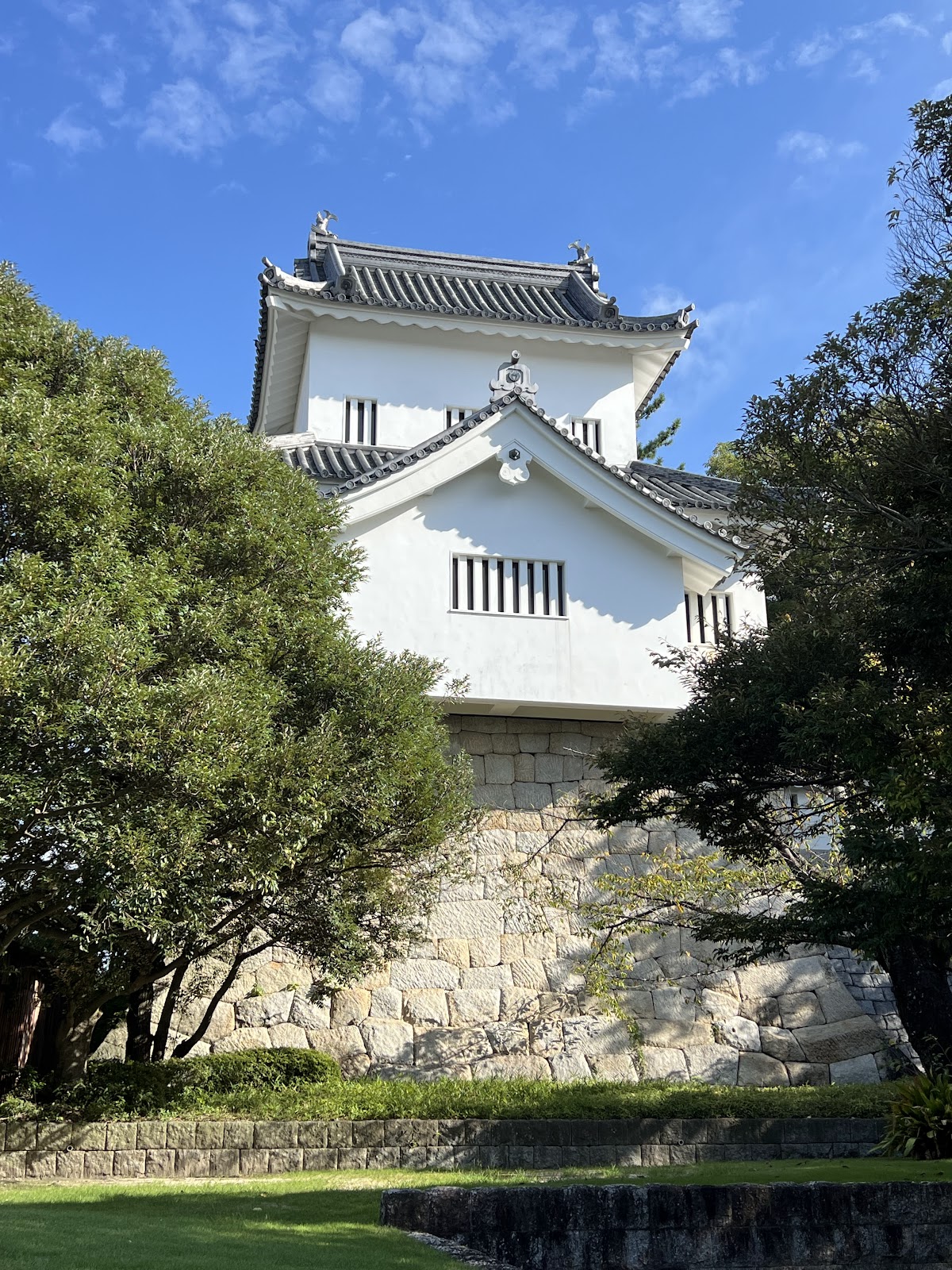
Currently, the site of the main keep is developed as the grounds of the Toyota Municipal Museum of Art and a castle ruins park. The stone walls of the turret base remain, and a corner turret restored in 1978 evokes the castle’s former appearance.
History of Shichishu Castle
Castles of Koromo Before Construction
Before Shichishu Castle was built, two castles existed in Koromo: Sakura Castle and Kanaya Castle. These were the predecessors of Shichishu Castle and played an important role in the history of the Koromo Domain.
Sakura Castle was located in a low-lying area along the Yahagi River, but it was highly susceptible to flooding, making it an unstable location for the domain’s base. Therefore, the domain’s center was moved several times. Kanaya Castle also had issues in terms of defense and convenience.
The Establishment of the Koromo Domain and the Need for a Castle
In the first half of the Edo period, the Koromo Domain was ruled by daimyo of relatively low status who could not afford to own a castle. However, the situation changed dramatically in 1749 (Kanei 2) when the relatively prestigious Naito family was appointed as the lord of Koromo.
The Naito family, as a Fudai daimyo (hereditary vassal daimyo), enjoyed the trust of the shogunate, and the need to construct a castle befitting their status was recognized. The shogunate also supported this construction plan and provided funding. However, it would take more than 30 years for the castle to actually be built.
Construction in 1782
In 1782 (Tenmei 2), the construction of Shichishu Castle was finally realized. The lord at the time was Naito Gakubun-no-kami Masanari, and a strategically advantageous location on the high ground of Dojiyama was chosen. This location was not only suitable for defense but also had the geographical advantage of offering a wide view of the surrounding area.
In addition to financial support from the shogunate, the entire domain’s finances had to be mobilized for the construction. Comprehensive development as a fortified city progressed, including the construction of stone walls, the construction of the palace, and the arrangement of samurai residences.
Structure and Characteristics of Koromo Castle
Koromo Castle did not have a keep (tenshukaku). This is thought to reflect the size and financial situation of the domain, as well as the scope of the shogunate’s permission. Instead, the structure emphasized practical functions, centered around the lord’s residence (goten).
The castle’s main structures included corner turrets, the goten, and samurai residences, with baileys separated by stone walls. Taking advantage of its characteristics as a hilltop castle, defensive structures utilizing elevation differences were employed.
Koromo Castle in the Late Edo Period
After its construction, Koromo Castle functioned as the political and administrative center of the Koromo domain. It served as the lord’s residence, the place where domain affairs were conducted, and a symbol of regional control.
The Naito family continued to rule the Koromo domain until the end of the Edo period, and Koromo Castle remained its base. The castle town was also developed, becoming a center of commerce and culture.
The Meiji Restoration and the Dismantling of the Castle
With the abolition of the feudal domains and establishment of prefectures in 1871 (Meiji 4), the Koromo Domain was abolished, and Shichishu Castle ceased to serve its purpose. Following the Meiji government’s policy, many castles throughout Japan were dismantled, and Shichishu Castle was no exception.
In 1871 (Meiji 4), all the castle buildings were demolished. The palace, turrets, gates, and other structures that had watched over the Koromo area for approximately 90 years since its construction disappeared. While some of the stone walls remained, the castle’s function as a castle was completely lost.
Existing Remains and Highlights
Corner Turret Stone Wall
The most important existing remains of Shichishu Castle are the stone walls of the main keep’s corner turret. Having escaped dismantling during the Meiji era, these stone walls are a valuable cultural asset that conveys the castle-building techniques of the late Edo period.
The stone walls utilize both rough-hewn and fitted stone techniques, demonstrating the level of stonemasonry at the time. The corner sections feature particularly intricate masonry, resulting in a structure that combines durability and aesthetic appeal. Standing approximately 5 to 8 meters tall, it evokes the imposing presence of the castle in its heyday.
Restored Corner Turret
In 1978 (Showa 53), the corner turret of the main keep was restored. This restoration was carried out based on remaining documents, old photographs, and similar castle architecture. Reconstructed as a wooden structure, the corner turret boasts a beautiful two-story design with white walls and is a beloved symbol of Shichishu Castle.
From the corner turret, one can enjoy a panoramic view of Toyota City, truly appreciating the origin of the name “Shichishu Castle,” which supposedly offered views of seven provinces. Especially on clear days, one can see distant mountain ranges, highlighting the importance of the castle’s location from the Sengoku period to the Edo period.
Dojiyama and Castle Ruins Park
Dojiyama, where Shichishu Castle was built, remains today as a small hill in the heart of Toyota City. This elevated area, approximately 60 meters above sea level, is a typical example of a flatland castle, utilizing the difference in elevation with the surrounding plains.
The castle ruins have been developed into a park, serving as a place of relaxation for citizens. Walking paths are maintained within the park, allowing visitors to see the stone walls and reconstructed corner turrets up close. In spring, cherry blossoms bloom, creating a beautiful landscape that evokes the former glory of the castle as a cherry blossom viewing spot.
Integrated Development with Toyota Municipal Museum of Art
Part of the former main keep site is now used as the grounds for the Toyota Municipal Museum of Art. Opened in 1995, the Toyota Municipal Museum of Art is a modern building designed by architect Yoshio Taniguchi, creating a unique landscape where the historical castle ruins and modern architecture harmonize.
In designing the museum, the historical significance of the castle ruins was respected, and a layout that utilizes the topography was adopted. From the museum’s observation terrace, you can enjoy the panoramic view from the hilltop, which once offered a view of seven provinces.
The museum and the castle ruins park are integrated, creating a cultural hub in Toyota City where cultural facilities and historical heritage coexist.
Layout and Structure of Shichishu Castle
Layout of the Main Enclosure
The main enclosure of Shichishu Castle was located on the highest point of Dojiyama Mountain. The lord’s residence, the Goten, was built within the main enclosure and functioned as a place for conducting government affairs.
The main enclosure was surrounded by stone walls, with corner turrets positioned at each of the four corners. These turrets served both defensive functions and as symbolic structures demonstrating the castle’s grandeur. The currently restored corner turret is a reproduction of one of these originals.
Second and Third Enclosures
The second and third enclosures were located around the main enclosure. Samurai residences and domain facilities were built in these enclosures, supporting the castle’s function as a fortified city.
Each enclosure was demarcated by moats, earthworks, and stone walls, enhancing its defensive capabilities and clearly defining residential areas based on social status and position. While many of these remains have been lost, traces of them can still be seen in the topography.
Formation of the Castle Town
With the construction of Shichishu Castle, the castle town was also systematically developed. Samurai residences, merchant districts, temples, and shrines were arranged around the castle, and Koromo developed into a fortified city.
Commercial activities, utilizing the Yahagi River’s water transport, flourished, and the castle town became one of the important economic centers of the Mikawa region. The current layout of central Toyota City still partially retains the structure of this castle town from that era.
Koromo Domain and the Naito Family
History of the Naito Family
The Naito family, who built Shichishu Castle, was a family of hereditary daimyo who served the Tokugawa shogunate. The Naito family held important positions in the Edo shogunate and enjoyed a high level of trust from the shogunate.
The arrival of the Naito family in Koromo in 1749 created a momentum for the construction of a castle befitting the status of the Koromo Domain, which had previously lacked one. The Naito family’s political power and relationship with the shogunate are believed to have greatly contributed to the realization of the construction of Shichishu Castle.
Koromo Domain’s Rice Yield and Scale
The Koromo Domain had a rice yield of 20,000 koku, placing it relatively small among daimyo domains. However, as a domain governing Mikawa Province, an important region close to the Tokugawa family’s base, it held strategic importance.
The fact that it was able to possess a magnificent castle despite being a small domain was due to the Naito family’s status and the shogunate’s support. The construction of Shichishu Castle was significant in enhancing the domain’s prestige and strengthening its control over its territory.
Koromo Domain in the Late Edo Period
During the late Edo period, the Koromo Domain, like other fudai daimyo, acted on the side of the shogunate. During the Boshin War, the Naito family fought on the side of the shogunate, but they quickly submitted to the new government, thus avoiding significant damage.
After the Meiji Restoration, the Naito family was granted the status of nobility, and the Koromo Domain existed for a short period before being abolished with the abolition of the feudal domains and establishment of prefectures.
Access and Visiting Guide
Location
The Shichishu Castle Ruins (Koromo Castle Ruins) are located in Kosakamoto-cho, Toyota City, Aichi Prefecture. They are adjacent to the Toyota Municipal Museum of Art, and using the museum’s address (8-5-1 Kosakamoto-cho, Toyota City) as a landmark will make it easier to find.
Access by Public Transportation
It is approximately a 15-minute walk from Toyota City Station on the Meitetsu Mikawa Line. Heading north from the station, passing through the city center and proceeding towards Dojiyama, you will arrive at the Toyota Municipal Museum of Art and the castle ruins park.
You can also take a bus from Toyota City Station. If you get off at the “Toyota Municipal Museum of Art” bus stop on the Meitetsu Bus or Toyota Oiden Bus, the castle ruins are right in front of you.
Access by Car
It’s about 15 minutes from the Tomei Expressway “Toyota IC”. The Toyota Municipal Museum of Art has its own parking lot, which can also be used when visiting the castle ruins park. Parking is charged, but you can park even if you are not using the museum.
Points to Note
The castle ruins park is always open and you can explore it freely. While the restored corner turret can only be viewed from the outside, you can imagine the original layout from the stone walls and walking paths within the park.
Visiting both the castle ruins park and the Toyota Municipal Museum of Art allows you to enjoy both history and modern culture. From the museum’s observation terrace, you can experience the view that gave rise to the name of Shichishu Castle.
The castle ruins are especially beautiful during the cherry blossom season in spring and the autumn foliage season, attracting many tourists and locals. Many cherry trees are planted within the castle ruins park, making it a popular spot for cherry blossom viewing.
Nearby Tourist Attractions
Around the Shichishu Castle ruins, there are numerous facilities related to the history and culture of Toyota City. At the Toyota City Local History Museum, you can see materials related to the Koromo Domain and Shichishu Castle.
Also, along the Yahagi River, there is a monument to the Sakura Castle ruins, where you can learn about the history of Koromo before Shichishu Castle. The area around Toyota City Station also boasts a wealth of commercial facilities and restaurants, making it enjoyable to combine sightseeing with other activities.
Cultural Value of Shichishu Castle
Late Edo Period Castle Construction Techniques
Shichishu Castle, built during the Tenmei era in the late Edo period, is a valuable historical site that conveys the castle construction techniques of this period. After the mid-Edo period, the construction of new castles was extremely rare, and the construction of Shichishu Castle was an exceptional case requiring special permission from the shogunate.
The remaining stone walls reveal the level of stonework techniques of the late Edo period. It features sophisticated stonework, a mature technique that differs from castles of the Sengoku period and early Edo period.
Historical Identity of Toyota City
Shichishu Castle is a crucial element in shaping the historical identity of present-day Toyota City. While Toyota City is known as a city of the automobile industry, Shichishu Castle was the historical center of its predecessor, the town of Koromo.
The preservation and utilization of the castle ruins demonstrates that Toyota City is not only an industrial city but also a cultural city with a long history. The integrated development of the Toyota Municipal Museum of Art and the castle ruins is a prime example of urban development that harmonizes history and modernity.
Local Memory and Inheritance
The restoration of the corner turret in 1978 was realized through the local residents’ interest in history and their desire to pass on their local heritage to future generations. The restored corner turret functions not merely as a tourist attraction, but as a device for visually preserving the historical memory of the region.
The space developed as a castle ruins park has become a place of daily relaxation for citizens, a prime example of how historical heritage is integrated into modern urban life.
Summary
Shichishu Castle (Koromo Castle) is an important cultural heritage site symbolizing the history of Toyota City, Aichi Prefecture. Built in 1782, this castle functioned as the administrative center of the Koromo Domain for approximately 90 years before being dismantled in 1871 (Meiji 4).
Currently, only the stone walls and a corner turret restored in 1978 (Showa 53) remain, and the site has been developed as a cultural space integrated with the Toyota Municipal Museum of Art. The view from the hilltop, which is said to have overlooked seven provinces, continues to fascinate visitors.
As a relic that conveys the castle-building techniques of the late Edo period, and as an element that forms the historical identity of Toyota City, Shichishu Castle is a valuable cultural asset that should continue to be preserved and utilized. When you visit Toyota City, be sure to visit this historic castle site.
Frequently Asked Questions (FAQ)
Q1: Are Shichishu Castle and Koromo Castle the same castle?
A1: Yes, they are the same castle. The official name is “Koromo Castle,” but it came to be commonly known as “Shichishu Castle” (Seven Provinces Castle) because it offered a view of seven provinces: Mikawa, Owari, Mino, Shinano, Totomi, Ise, and Omi. Both names are still used today.
Q2: Did Shichishu Castle have a keep?
A2: No, Shichishu Castle did not have a keep. It was structured around the lord’s residence, with corner turrets and gates arranged around it. This is likely due to the fact that Koromo Domain was a small domain with a 20,000 koku (unit of rice production) yield, and the castle was built in the late Edo period.
Q3: Is it possible to visit the castle ruins now?
A3: Yes, it has been developed into a castle ruins park and is open to the public. You can see the restored corner turrets and Edo-period stone walls. Visiting the adjacent Toyota Municipal Museum of Art in conjunction with the castle will make for a more fulfilling visit. Admission is free, and it is open year-round.
Q4: When was Shichishu Castle built?
A4: Shichishu Castle was built in 1782 (Tenmei 2). It was built during the late Edo period, under the lord of the Koromo Domain at the time, with the support of the shogunate. New castle construction after the mid-Edo period is extremely rare, making it a valuable example.
Q5: How do I access Shichishu Castle?
A5: It’s about a 15-minute walk from Meitetsu Mikawa Line’s “Toyota-shi Station,” or a short walk from the “Toyota Municipal Museum of Art” bus stop. By car, it’s about 15 minutes from the Tomei Expressway’s “Toyota IC,” and you can use the Toyota Municipal Museum of Art parking lot. It’s easily accessible by both public transport and car.
Q6: What is the relationship between this castle and Sakurajo and Kanayajo?
A6: Sakurajo and Kanayajo were castles located in the Koromo area before Shichishujo was built, and are considered predecessors of Shichishujo. These castles had issues with their location and defense, so ultimately Shichishujo was built on Dojiyama, a more advantageous location. Sakurajo was particularly vulnerable to flooding.
Q7: When was the corner turret restored?
A7: The corner turret was restored in 1978 (Showa 53). It was the first restoration of a structure in approximately 100 years since all the castle buildings were demolished in 1871 (Meiji 4). It was reconstructed as a wooden structure based on remaining documents and old photographs.
Q8: What is the relationship between the Toyota Municipal Museum of Art and the castle ruins?
A8: The Toyota Municipal Museum of Art is built on part of the site of the main keep of Shichishujo. Since its opening in 1995, the museum has been designed to harmonize historical castle ruins with modern architecture, and the museum and castle park are integrated into a single complex. From the museum’s observation terrace, visitors can enjoy a view that once encompassed seven different kingdoms.