Complete Guide to Settsu Takiyama Castle (Kobe City, Hyogo Prefecture) – History, Remains, and Access Explained in Detail
What is Settsu Takiyama Castle?
Settsu Takiyama Castle (Takiyama-jo) is a medieval mountain castle built on Shiroyama (elevation 316.5m, relative height approximately 250m) in Chuo-ku, Kobe City, Hyogo Prefecture. Located behind Shin-Kobe Station on the Sanyo Shinkansen line, west of Nunobiki Falls, known as one of Japan’s three great sacred waterfalls, it is also known as Ikuta Nunobiki Castle.
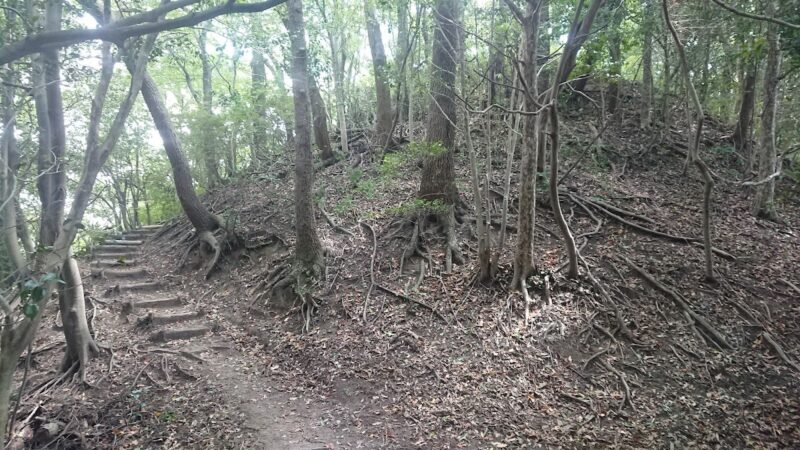
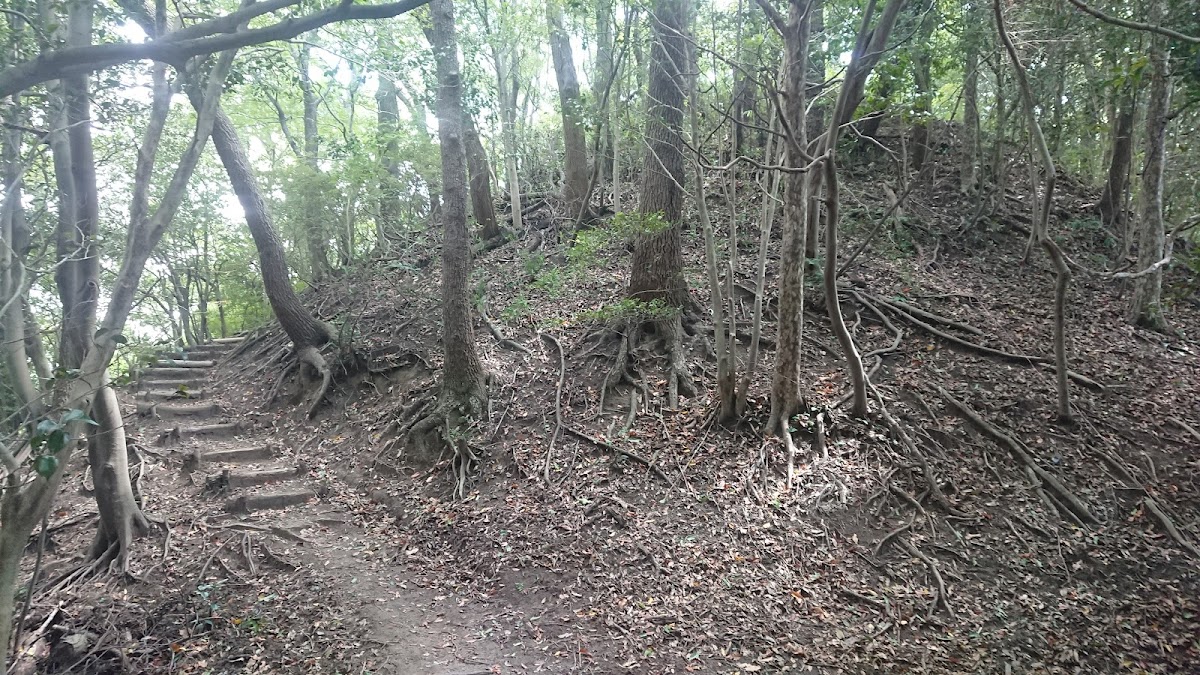
Despite being located in the rapidly developing urban center of Kobe, over 30 baileys, moats, earthworks, and stone walls remain in excellent condition, making it a valuable historical site that preserves the appearance of a Sengoku period mountain castle. Currently, it is maintained as a hiking course and is popular not only with history enthusiasts but also with many hikers.
History of Takiyama Castle
Nanboku-cho Period – Akamatsu Enshin and Nunobiki Castle
The exact construction date of Takiyama Castle in Settsu Province is uncertain, but the first mention in historical records is believed to be in Shōkei 2 (Genkō 3, 1333). In that year, Akamatsu Enshin (Norimura), a powerful local lord who raised an army at Shirahata Castle (Kokenawa Castle) in Harima Province in response to Emperor Go-Daigo’s anti-shogunate movement, marched towards the Rokuhara Tandai in Kyoto, the branch office of the Kamakura Shogunate.
Akamatsu Enshin advanced as far as Maya Mountain Castle, and on the 11th of the intercalary second month, he defeated the shogunate forces in the “Battle of Maya.” He even advanced as far as Shichijō in Kyoto, but was repelled by a strong counterattack. According to the “Shōkei Ranri-shi,” it was at this time that Enshin took refuge in Takiyama Castle (Nunobiki Castle) to regroup.
Subsequently, throughout the Nanboku-chō period, Takiyama Castle, along with Mayasan Castle and others, served as an important military base in Settsu Province and was frequently the site of battles. Settsu Province was a strategic point connecting Kyoto and western Japan, and controlling this region was of paramount political and military importance.
Sengoku Period – Major Renovation by Matsunaga Hisahide
With the arrival of the Sengoku period, Takiyama Castle fell into the hands of Matsunaga Hisahide (Danjō), who rose to prominence as a retainer of Miyoshi Nagayoshi. During the Eiroku era (1558-1570), Hisahide undertook a large-scale renovation of Takiyama Castle to serve as a base for controlling western Settsu, and many of the remains visible today are believed to have been constructed during this period.
Records show that Matsunaga Hisahide invited his lord, Miyoshi Nagayoshi, to Takiyama Castle and entertained him with a linked verse poetry gathering known as “Takiyama Senku” and Noh theater performances. This is an interesting anecdote that shows Hisahide was not merely a military commander, but also possessed a cultured side.
Conflict with the Miyoshi Three and the Entry of Shinohara Nagafusa
When Miyoshi Nagayoshi died in 1564, Matsunaga Hisahide engaged in a power struggle with the Miyoshi Three (Miyoshi Nagayoshi, Miyoshi Masayasu, and Iwanari Tomomichi). In this conflict, Hisahide gradually lost ground, and Takiyama Castle fell into the hands of Shinohara Nagafusa, a senior retainer of the Miyoshi Three.
Shinohara Nagafusa was a samurai from Awa Province and maintained Takiyama Castle as an important branch castle of the Miyoshi clan, but the situation in the Kinai region was rapidly changing.
Oda Nobunaga’s Invasion of Settsu and Araki Murashige
From 1570 onward, as Oda Nobunaga’s influence in the Kinai region strengthened, the situation in Settsu Province also changed dramatically. In 1573, Nobunaga launched a full-scale invasion of Settsu Province, capturing Miyoshi clan strongholds, including Takiyama Castle, one after another. Takiyama Castle was seized by Nobunaga and given to Araki Murashige, a powerful local lord of Settsu Province. Murashige was entrusted with governing Settsu Province and used Takiyama Castle as one of his subsidiary castles. However, when Murashige rebelled against Nobunaga in 1578 (Araki Murashige’s Rebellion), Takiyama Castle was also drawn into the conflict.
The Fall of the Castle and its Aftermath
In 1579, when Oda Nobunaga’s campaign against Araki Murashige intensified, Takiyama Castle became a target. It is believed that Takiyama Castle fell shortly after Murashige’s base, Arioka Castle (Itami Castle).
Afterward, Takiyama Castle was abandoned, ending its military role with the end of the Sengoku period. From the Edo period onward, it was left as a forest, resulting in the excellent preservation of its remains.
Structure and Layout of Takiyama Castle
Overall Structure
Settsu Takiyama Castle is a typical multi-bailey mountain castle, centered around the summit of Shiroyama Mountain (316.5m above sea level), with over 30 baileys arranged along the ridge. Skillfully utilizing the steep terrain with a relative height of approximately 250m, the baileys are arranged over an area of approximately 400m north-south and 300m east-west.
The castle’s structure is broadly divided into a core area centered around the main bailey and an outer bailey surrounding it. Each bailey is demarcated by moats and vertical trenches, enhancing its defensive capabilities.
Main Bailey
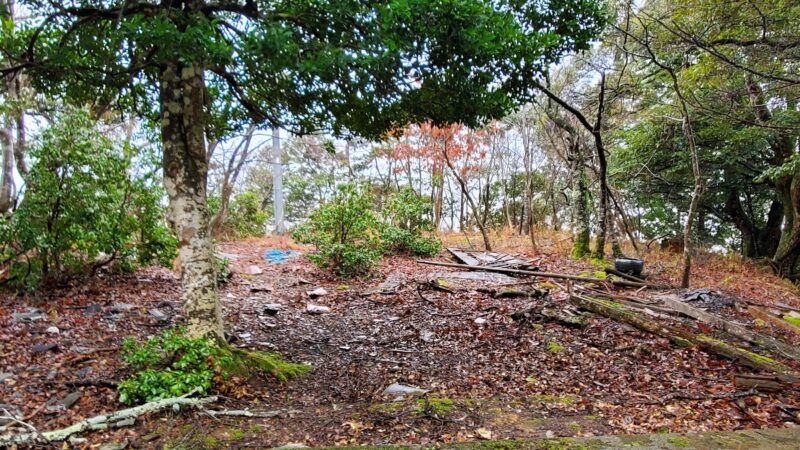
The main bailey (honmaru), located at the summit, is the largest flat area within the castle. Measuring approximately 40m east-west and 30m north-south, it is surrounded by earthen ramparts. A raised area, believed to be a watchtower base, can be seen in the southwest corner of the main bailey, offering panoramic views of Kobe city and Osaka Bay. To the north and south of the main enclosure are the second and third enclosures, arranged in a stepped fashion, each demarcated by earthworks and steep slopes. These enclosures are thought to have served to defend the main enclosure, as well as functioning as troop encampments and storage areas for supplies.
Remains of Stone Walls and Stone Masonry
One of the major features of Takiyama Castle is the remains of stone walls and stone masonry found throughout the site. Relatively solid stonework can be seen for a mountain castle of the Sengoku period, and particularly around the main enclosure and important entrances (koguchi), stone walls constructed using techniques such as rough-hewn stone masonry and random-hewn stonework are present.
These stone walls are thought to have been constructed during renovations by Matsunaga Hisahide, providing evidence of Hisahide’s superior castle-building skills. The stone used is granite quarried from the area around the castle mountain, and traces of processing can be seen in some places.
Moats and Vertical Moats
Takiyama Castle has several large moats that cut across the ridge. The trenches located on the north and south sides of the main enclosure were particularly large, measuring over 5 meters deep and over 10 meters wide, functioning as strong defensive structures to prevent enemy intrusion.
Furthermore, vertical trenches extended from these trenches down the slopes, demonstrating a design intended to make it difficult for enemies to climb the slopes. These vertical trenches also served to drain rainwater from the slopes, likely contributing to the maintenance of the enclosures.
Earthworks
Earthworks surrounded each enclosure, with the main enclosure’s earthworks measuring approximately 2 meters high and 4 meters wide at the base. It is presumed that fences or walls were built on top of these earthworks, enhancing defensive capabilities and making the interior of the enclosures less visible from the outside.
Some earthworks incorporated stone walls, indicating their function as even stronger defensive structures.
Entrances (Koguchi)
Takiyama Castle has multiple entrances (koguchi), each featuring defensive features such as staggered entrances and square-shaped entrances. The approach to the main enclosure is intentionally curved, designed to prevent direct enemy advances.
Stone walls and earthworks are positioned around the entrances, creating a structure that gives the defenders an advantage. These entrance designs represent the pinnacle of castle construction technology from the late Sengoku period.
Highlights of Takiyama Castle (Castle Notes)
Well-Preserved Enclosures
The greatest highlight of Takiyama Castle is the well-preserved group of over 30 enclosures. Despite its proximity to an urban area, it escaped development, allowing visitors to see the Sengoku period mountain castle almost exactly as it was. Exploring each enclosure will allow you to appreciate the scale and structure of the castle at that time.
Stone Walls and Stone Masonry
The stone walls remaining around the main enclosure and the entrance area, while employing the simple technique of rough-hewn stone masonry, possess a solid structure. These stone walls, renovated during the time of Matsunaga Hisahide, are valuable relics demonstrating the transitional castle-building techniques from medieval mountain castles to early modern castles.
Large-Scale Moats
The moats located north and south of the main enclosure are awe-inspiring in their scale and depth. These moats, completely cutting off the ridge, speak to the advanced civil engineering techniques of the time. Along with the vertical moats extending from them, one can truly appreciate the ingenuity of the defensive system.
Views
From the main enclosure, a panoramic view unfolds of Kobe city, Osaka Bay, and the Rokko Mountains. On clear days, one can even see Awaji Island and Kansai International Airport, demonstrating the castle’s important strategic location in Settsu Province.
Connection with Nunobiki Falls
One access route to Takiyama Castle passes through Nunobiki Falls, one of Japan’s three great sacred waterfalls. This luxurious hiking course allows you to enjoy both nature and history while admiring the magnificent waterfall on your way to the castle ruins.
Access Information
Access by Train
Nearest Station:
- Get off at Shin-Kobe Station on the Sanyo Shinkansen or Kobe Municipal Subway; the trailhead is approximately a 5-minute walk away.
- From JR Sannomiya Station or Hankyu/Hanshin Kobe Sannomiya Station, the trailhead is approximately a 20-minute walk away.
Shin-Kobe Station is a Shinkansen station, yet it’s unusual in that it’s the closest station to the trailhead of a mountain castle. The trailhead is located immediately north of the station, making it extremely accessible.
Access by Car
There are several paid parking lots around Shin-Kobe Station, but they are not suitable for long-term parking for hiking purposes. Using public transportation is recommended.
Ascent Routes
There are mainly two routes to Takiyama Castle:
1. Direct Ascent Route (from the north side of Shin-Kobe Station)
- Time Required: Approximately 40-50 minutes
- Distance: Approximately 1.5 km
- Features: The shortest route directly to the castle ruins. While there are some steep sections, the trail is well-maintained.
2. Route via Nunobiki Falls
- Time Required: Approximately 60-70 minutes
- Distance: Approximately 2.5 km
- Features: This route takes you to the castle ruins while viewing Nunobiki Falls (male and female falls). While slightly longer, it offers scenic views.
Both routes are well-maintained hiking trails with signposts. However, as it is a mountain castle, comfortable clothing and non-slip shoes are essential.
Precautions When Visiting the Castle
- Estimated Time Required: Please allow at least 2-3 hours from the start to the end of the climb.
- Equipment: Trekking shoes or athletic shoes, drinking water, towel, rain gear.
- Season: Be careful of heatstroke during the summer due to high temperatures. Spring and autumn are more comfortable.
- Wildlife: Beware of wild boars and venomous snakes. Walking while making noise is recommended.
- Solo Travel: It is recommended to climb the castle in groups whenever possible.
- Time of Day: Plan to descend before sunset.
Nearby Tourist Attractions
Nunobiki Falls
A must-visit in conjunction with Takiyama Castle is Nunobiki Falls, one of Japan’s three great sacred waterfalls. It consists of four waterfalls: Otaki (male waterfall), Metaki (female waterfall), Meoto-daki (married couple waterfall), and Tsuzumi-ga-taki (drum waterfall). Otaki, in particular, is known as a magnificent waterfall with a drop of 43 meters. It is a scenic spot that has been celebrated in many waka poems since the Heian period.
Nunobiki Herb Garden
Located on the north side of Shiroyama, accessible by ropeway, Nunobiki Herb Garden is one of Japan’s largest herb gardens, boasting approximately 200 species and 75,000 plants of herbs and flowers. A visit before or after climbing Takiyama Castle is highly recommended.
Kobe Kitano Ijinkan District
Within walking distance of Shin-Kobe Station, the Kitano Ijinkan District is a representative tourist spot in Kobe, lined with Western-style houses from the Meiji era. A visit as part of a historical walk is recommended.
Ikuta Shrine
An ancient shrine that gave its name to Kobe, located within walking distance of Sannomiya Station. Known as a god of matchmaking, it attracts many worshippers.
Nearby Castles
Mayasan Castle
Located approximately 3km east of Takiyama Castle, this mountain castle was a base for Akamatsu Enshin, along with Takiyama Castle. Built on Mount Maya (699m above sea level), it functioned as an important military base during the Nanboku-cho period. Remains such as baileys and moats still exist today.
Hanakuma Castle
A flatland castle located in Hanakuma-cho, Chuo-ku, Kobe City, known as the castle built by Araki Murashige. It is now maintained as Hanakuma Park, with a stone monument and information boards.
Arioka Castle (Itami Castle)
A famous castle, known as the base of Araki Murashige, located in Itami City, Hyogo Prefecture. It was the site of a rebellion against Oda Nobunaga, and is now maintained as Arioka Castle Ruins Park, with remains such as stone walls still present.
Amagasaki Castle
A modern castle located in Amagasaki City, Hyogo Prefecture, with its keep reconstructed in 2019. Built in the early Edo period, it functioned as an important base in Settsu Province.
Books and Materials on Takiyama Castle
Specialized Books
- *Hyogo Prefecture Medieval Castle Dictionary* (Hyogo Prefectural Board of Education) – Comprehensively explains medieval castles in Hyogo Prefecture, including Takiyama Castle.
- *Comprehensive Guide to Japanese Castles, Volume 12: Osaka and Hyogo* (Shin Jinbutsu Oraisha) – Includes a detailed layout map and explanation of Takiyama Castle.
- *Mastering Sengoku Period Mountain Castles* (Sunrise Publishing) – Features Takiyama Castle among mountain castles in the Kinki region.
General Public Books
- *Reviving Japanese Castles* series – Introduces castles in the Kinki region, including Takiyama Castle, with photographs.
- *Historical Figures Series: Sengoku Period Castles* – Explains the relationship between Matsunaga Hisahide and Takiyama Castle in detail.
- *Historical Walks in Kobe* – A guidebook introducing historical sites in Kobe, including Takiyama Castle.
Online Resources
- Cultural Property Information from the Kobe City Board of Education
- Old Map Collection from the Geospatial Information Authority of Japan
- Takiyama Castle Report from Various Castle Research Websites
The Charm and Modern Significance of Takiyama Castle
Settsu Takiyama Castle is a rare mountain castle that retains well-preserved remains despite its proximity to an urban area, making it of high historical and academic value. As a castle associated with prominent warlords such as Akamatsu Enshin, Matsunaga Hisahide, and Araki Murashige, it is an important historical site that tells the story of the Kinai region from the Nanboku-cho period to the Sengoku period.
Currently, Takiyama Castle is a popular hiking destination for many citizens, offering a valuable place to enjoy both historical learning and nature experiences. Its convenient accessibility on foot from Shin-Kobe Station is also a major attraction.
The excellent state of preservation of the castle remains is a result of escaping development, but it is crucial to maintain a balance between appropriate protection and utilization to pass it on to future generations. Takiyama Castle can be said to symbolize the historical identity of Kobe, a city where urban life and nature, past and present, coexist.
Summary
Settsu Takiyama Castle, despite its location close to the city center—behind Shin-Kobe Station—is a valuable Sengoku period mountain castle with over 30 well-preserved remains, including moats, earthworks, and stone walls. Historical records show its first use by Akamatsu Enshin in 1333, and it functioned as a strategic point in Settsu Province throughout the Nanboku-cho period.
During the Sengoku period, Matsunaga Hisahide carried out extensive renovations, developing it as a base for controlling western Settsu. Subsequently, the castle’s ownership changed hands to Shinohara Nagafusa of the Miyoshi Three, and then to Araki Murashige, a subordinate of Oda Nobunaga, before it fell and was abandoned around 1579.
Currently, it is a popular hiking trail enjoyed by a wide range of people, from history enthusiasts to general hikers. The walking route, combined with a visit to Nunobiki Falls, is a representative Kobe tourist attraction that allows visitors to enjoy both nature and history.
With its easy accessibility, well-preserved remains, and magnificent views, Takiyama Castle is a historical site worth visiting at least once, even for those who aren’t castle enthusiasts.