A Complete Guide to the History and Highlights of Setogawa Castle Ruins | A Medieval Flatland Castle in Owariasahi City, Aichi Prefecture
Setogawa Castle, located in Owariasahi City, Aichi Prefecture, was a medieval flatland castle that played a part in the regional control of the Owari region during the Sengoku period. While the area has been largely developed into residential land, making it difficult to imagine its former appearance, the structure revealed by archaeological excavations and the history passed down locally provide valuable clues to understanding the medieval history of this region. This article provides a detailed explanation of Setogawa Castle, from its historical background and structure to its current state and access methods.
Basic Information on Setogawa Castle
Location and Current Status
The Setogawa Castle ruins are located in Misato-cho, Owariasahi City, Aichi Prefecture. The area west of the current Owariasahi Municipal Misato Elementary School is considered to be the former castle grounds. Locally, it has long been known as “Shirondo,” a place name that has been passed down to this day as a unique local term indicating the castle ruins.
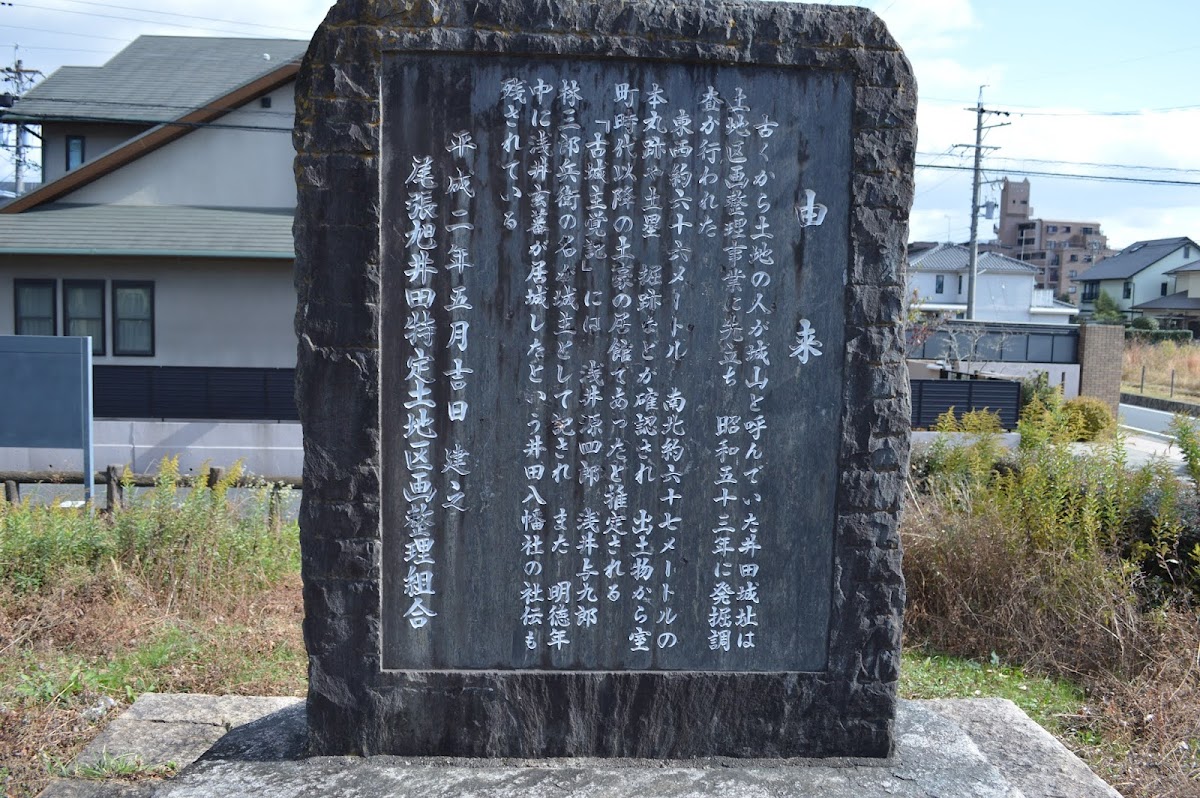
Most of the castle site has been developed into residential land, making it impossible to see any remains of the original structure on the surface. However, a castle site monument and information board are located at the southwest corner of Misato Elementary School, serving as the only marker indicating that this area was once a castle.
Castle Classification and Characteristics
Setogawa Castle is classified as a flatland castle. A flatland castle refers to a castle built on flat land, and unlike mountain castles, its location prioritizes convenient transportation and ease of managing the territory. Several castle sites have been identified within Owariasahi City, and almost all of them, with the exception of Niijo Castle, are flatland castles, sharing the common characteristic of being built near a river.
This choice of location is thought to have had not only a defensive purpose, but also the important objective of controlling water resources. During the Sengoku period, water was the foundation of agricultural production, and control of water rights directly influenced the economic power and influence of the feudal lord.
History of Setogawa Castle
Relationship between the Castle Lord and the Asai Clan
While much of the detailed history of Setogawa Castle remains unknown, tradition suggests that its lord was Asai Genshiro, the younger brother of Asai Genba-no-suke, the lord of Ida Castle. The Asai clan was a powerful samurai family in the Owari region, controlling the area from multiple castles.
Ida Castle is believed to have been located near present-day Ida-cho, Moriyama-ku, Nagoya City, and is geographically close to Setogawa Castle. It is presumed that the brothers, each based in a different castle, established a system for effectively controlling a wider area.
Construction Period and Duration
The exact construction date of Setogawa Castle is unknown. However, based on the castle’s structure and the historical context of the surrounding area, it is believed to have functioned from the late 15th to the 16th century during the Sengoku period.
During this period, before the rise of the Oda clan, the Owari region was divided among several local lords, and small castles were built in various locations. Setogawa Castle is thought to have functioned as a base for regional control within this historical context.
History of the Castle’s Abandonment
There are no definitive records of when or how Setogawa Castle was abandoned. Generally, flatland castles of this size were often abandoned during Oda Nobunaga’s unification of Owari, or during the castle reorganization after Toyotomi Hideyoshi’s unification of Japan.
In particular, after the Edo Shogunate’s “One Castle Per Province” decree (1615), small castles throughout the region were abandoned one after another, and it is believed that Setogawa Castle completely lost its function around this time.
Structure and Remains of Setogawa Castle
Castle’s Appearance Revealed by Archaeological Excavations
Archaeological investigations, which began in 1977, have yielded important information regarding the structure of Setogawa Castle. This investigation confirmed the existence of earthworks and moats at the castle.
Earthworks are a fundamental defensive structure for castles, serving to prevent enemy intrusion and maintain visibility from within the castle. Moats are physical obstacles that hinder enemy approach, and were particularly important defensive features in flatland castles.
Castle Scale
While there are various theories regarding the exact boundaries of the castle grounds, it is believed that the central area was centered around the west side of Misato Elementary School. It is thought to be of medium size for a flatland castle, and is presumed to have combined the lord’s residence with defensive facilities.
It is possible that a castle town-like settlement once existed around the castle, but due to current residential development, it is difficult to confirm the original town layout.
Relationship with Water Resources
As mentioned above, Setogawa Castle was built near a river. This is thought to have had not only defensive advantages (functioning as a natural moat) but also economic and political purposes related to water control.
For feudal lords during the Sengoku period, managing irrigation water was a crucial power that significantly impacted agricultural production. By positioning their castles near water sources, they could physically control water rights and strengthen their dominance over surrounding farmers. This is a characteristic common to other flatland castles in Owariasahi City.
Current Status of Setogawa Castle Ruins
Castle Site Monument and Information Board
Currently, the landmark for visitors to the Setogawa Castle ruins is the castle site monument and information board located at the southwest corner of Owariasahi Municipal Misato Elementary School. This monument serves as a valuable historical marker, preserving the region’s history for future generations.
The information board contains basic information about the castle’s history and structure, allowing visitors to learn about the overview of Setogawa Castle. For local history enthusiasts and castle researchers, this monument is an important point in tracing the medieval history of Owariasahi City.
Current Status of Remains
Unfortunately, no remains such as earthworks or moats can be seen on the surface. Due to years of land development, traces of the castle have been almost completely lost. However, there is a possibility that some remains exist underground, and new discoveries may be made during future excavations accompanying development.
Regional Positioning
Setogawa Castle Ruins are designated as a cultural property of Owariasahi City and play an important role in local history education. Students at Misato Elementary School have the opportunity to learn about the history of Setogawa Castle as part of their local studies, making it a valuable resource for fostering a love for their hometown.
Access and Visiting Guide
Access by Public Transportation
The nearest station to Setogawa Castle Ruins is Misato Station on the Meitetsu Seto Line. It’s about a 10-minute walk from the station to Owariasahi Municipal Misato Elementary School. A castle site monument is located at the southwest corner of the school; aim for that point when walking.
Access from central Nagoya is also relatively easy; it takes about 30 minutes using the Meitetsu Seto Line.
Access by Car
If visiting by car, the Kasugai IC on the Tomei Expressway or the Omori IC on the Nagoya Second Ring Expressway are convenient. It takes approximately 15-20 minutes from either interchange.
However, there is no dedicated parking lot around the castle ruins monument. When visiting, we recommend using the parking lots of nearby public or commercial facilities, or using public transportation. Please avoid parking on the street around the school.
Precautions During Visits
The Setogawa Castle ruins are currently a residential area and the grounds of an elementary school. Please note the following when visiting:
- Avoid unauthorized entry onto the elementary school grounds.
- The castle ruins monument can be viewed from the public road.
- As it is a residential area, please be mindful of noise and avoid trespassing on private property.
- When taking photographs, please be considerate of the privacy of local residents.
Other Castle Ruins in Owariasahi City
Niijo Castle
The most famous castle ruin in Owariasahi City is Niijo Castle. Niijo Castle is the only mountain castle in Owariasahi City and has different geographical characteristics from Setogawa Castle. Some remains still exist today, making it a worthwhile site to visit as a castle ruin.
Niijo Castle is known as the residence of the Mizuno clan, who served the Oda clan, and more detailed historical records exist for it. Visiting both Niijo Castle and Setogawa Castle allows for an understanding of the diversity of medieval castles in Owariasahi City.
Relationship with Ida Castle
As mentioned above, Ida Castle, where Asai Genba-no-suke, the elder brother of Asai Genshiro, the lord of Setogawa Castle, is said to have been the lord, was located in what is now Moriyama Ward, Nagoya City. Considering the relationship between the two castles, it can be inferred that the Asai clan controlled a region centered on the Yadagawa River basin.
Although the Ida Castle site is now urbanized and no clear remains exist, the castle’s location can be estimated from place names and legends.
Network of Castles in the Surrounding Area
In addition to Setogawa Castle, several other medieval castles existed in Owariasahi City and the surrounding area. These castles are believed to have cooperated with each other, forming a network for regional defense and territorial control.
In the Seto City area, there were castles such as Mizuno Castle, Irio Castle, and Hatakawa Castle, which formed part of the castle group in eastern Owari. A comprehensive study of these castles will shed light on the structure of regional society in Owari during the Sengoku period.
Historical Significance of Setogawa Castle
Position in Regional History
Setogawa Castle does not have a glorious history as the site of large-scale battles or the residence of famous warlords. However, it is precisely this “ordinary castle” that enhances the historical value of this castle site.
In the local society of the Sengoku period, the majority of castles were small to medium-sized flatland castles like Setogawa Castle. These castles served as the daily residences of influential local figures and functioned as bases for controlling the surrounding farming villages. Research on Setogawa Castle provides clues to understanding the realities of local society, often hidden in the shadows of the glamorous Sengoku period narratives.
The Importance of Water Control
The importance of water control has been cited as a reason why Setogawa Castle was built along a river. This perspective is crucial for understanding castles not merely as military facilities, but as centers of economic and social control.
In agricultural societies, water was one of the most important resources. Having the authority to manage irrigation water meant controlling the farmers. The location of Setogawa Castle symbolically represents this power structure of medieval society.
Archaeological Value
Scientific data regarding the structure of Setogawa Castle has been obtained through investigations conducted since 1977. Such archaeological investigations are essential for clarifying the realities of medieval castles, for which written historical sources are scarce.
Further detailed information may be obtained if excavations are conducted in conjunction with development in the surrounding area. Analysis of excavated artifacts is expected to shed light on the castle’s period of existence, the lifestyles of its inhabitants, and its trade relationships.
Preservation and Utilization of Setogawa Castle Ruins
Protection as a Cultural Property
Setogawa Castle Ruins are recognized as a cultural property of Owariasahi City, and its history is being passed down to future generations through the installation of a castle site monument and information boards. However, since the remains themselves have been lost, protection as a cultural property in the sense of physical preservation is difficult.
In the future, in order to protect any remains that may remain underground, careful measures are required, such as conducting pre-development excavation surveys before any development activities in the surrounding area.
Utilization in History Education
Setogawa Castle Ruins are an important teaching material in local history education. At Misato Elementary School, students have opportunities to learn about local history, and the history of Setogawa Castle is one of the central themes.
The fact that a castle once stood so close to their school stimulates children’s interest in history and fosters their attachment to their hometown. Such educational applications are an important way to utilize cultural properties, even at castle ruins where physical remains have been lost.
Potential as a Tourism Resource
Setogawa Castle Ruins alone have limited appeal as a tourist resource. However, by combining it with other castle ruins and historical sites in Owariasahi City, it is possible to construct historical tourism routes.
For example, setting up a historical walking course that visits Arai Castle Ruins, Setogawa Castle Ruins, and the surrounding temples and shrines would create an attractive tourist route for history enthusiasts and castle fans. Attempts to recreate the castle’s former appearance using digital technology such as augmented reality (AR) are also a possibility to consider in the future.
Challenges and Prospects of Setogawa Castle Research
Limitations of Historical Sources
The biggest challenge in research on Setogawa Castle is the scarcity of documentary sources. Even basic matters such as the castle lord, construction period, and circumstances of its abandonment are not reliably recorded. Much of our current knowledge relies on tradition and inferences from the history of the surrounding area.
While the likelihood of discovering new historical materials in the future is considered low, there is still a small chance that descriptions of Setogawa Castle may be found in ancient documents remaining in temples, shrines, and old families in the surrounding area. Continued, diligent historical research is crucial.
The Need for Archaeological Investigation
Given the scarcity of documentary sources, the importance of archaeological investigation is increasing. Although large-scale excavations do not appear to have been conducted since 1977, opportunities for smaller-scale investigations in conjunction with surrounding development will likely continue.
Taking advantage of such opportunities and accumulating scientific data will lead to a clearer understanding of Setogawa Castle. In particular, dating and analysis of excavated artifacts are effective in determining the period of the castle’s existence.
The Importance of Comparative Research
While research on Setogawa Castle alone has its limitations, comparative research with contemporary castles in the surrounding area allows for a broader understanding. By comparing it with other castle sites in Owariasahi City, and even with medieval castles throughout the Owari region, the characteristics and role of Setogawa Castle can be clarified.
Furthermore, by referring to research findings on medieval flatland castles nationwide, it is possible to reinforce inferences about the structure and function of Setogawa Castle.
Summary
Setogawa Castle was a medieval flatland castle located in Owariasahi City, Aichi Prefecture. Although the remains have been lost due to residential development, investigations since 1977 have confirmed the existence of earthworks and moats, making it an important historical site as a typical example of a regional castle from the Sengoku period.
The castle lord is said to have been Asai Genshiro, the younger brother of Asai Genba-no-suke, the lord of Ida Castle, and it is thought to have functioned as a base for the Asai clan’s regional control. Its location along the river suggests that it served not only defensive purposes but also economic and political objectives such as water management.
Currently, a castle site monument and information board are installed at the southwest corner of Owariasahi Municipal Misato Elementary School, where visitors can learn about the history of Setogawa Castle. Access is convenient, approximately a 10-minute walk from Meitetsu Seto Line’s “Misato Station.”
While Setogawa Castle Ruins may not be the setting for a glamorous Sengoku period epic, its very existence as an “ordinary castle” holds historical value. It offers crucial clues for considering numerous historical themes, such as the role of castles in local society during the Sengoku period, the importance of water management, and the structure of regional power.
When visiting Owariasahi City, why not also visit Setogawa Castle Ruins, along with other historical sites like Niijo Castle? By experiencing the region’s history, you can sense the rich layers of history lying dormant beneath the modern cityscape.