Yamazaki Castle (Nagoya City, Aichi Prefecture): History and Highlights | The Castle of Kato Yasaburo, Who Played a Key Role in the Battle of Okehazama
Antaiji Temple stands quietly in a residential area of Minami Ward, Nagoya City. The grounds of this temple are the site of Yamazaki Castle, which once existed during the Sengoku period. Known as the residence of Kato Yasaburo (Yosaburo), who distinguished himself in the Battle of Okehazama, this castle played an important role during the time of Oda Nobunaga. This article provides a detailed explanation of Yamazaki Castle’s history, the changes in its lords, its current state, and how to access it.
Overview and Location of Yamazaki Castle
Yamazaki Castle was a flatland castle located in Yobitsugi Motomachi, Minami Ward, Nagoya City, Aichi Prefecture. It was built on the site of the current Antaiji Temple grounds, which was formerly known as “Yamazaki Aza Hanejo.” The name “Yamazaki” originates from the place name, indicating that this area has been called Yamazaki since ancient times.
As a flatland castle, Yamazaki Castle is believed to have incorporated defensive structures utilizing the surrounding terrain. The current railway line running south of Antaiji Temple is thought to be the site of the former moat, providing clues to the castle’s size and structure. Located at a crucial transportation hub connecting Atsuta and central Nagoya in the Owari region during the Sengoku period, it is considered a strategically important base.
History of Yamazaki Castle and Changes in its Lords
The Era of the First Lord, Kuroudo Joban
The first lord of Yamazaki Castle is believed to have been Kuroudo Joban. While detailed records of Kuroudo Joban are limited, it is presumed that Yamazaki Castle during this period primarily served as the residence of a powerful local figure. In the early Sengoku period, the Owari region was in the process of expanding the Oda clan’s power, and surrounding local families gradually came under their influence.
Kato Yasaburo (Yosaburo) and the Battle of Okehazama
Yamazaki Castle first appeared on the historical stage during the time of its second lord, Kato Yasaburo (Yosaburo). Yasaburo was born the second son of Kato Junsei, a wealthy merchant in Atsuta. Atsuta was a region that had prospered through trade since ancient times, and the Kato family was a financially affluent merchant family.
Kato Yasaburo’s name was etched into history for his exploits in the Battle of Okehazama in 1560 (Eiroku 3). In this battle, Oda Nobunaga defeated Imagawa Yoshimoto, who boasted overwhelming military strength, through a surprise attack, establishing his position as a Sengoku daimyo. Kato Yasaburo distinguished himself in this battle, and for his achievements, he was selected to join the “Akahoro-shu,” Oda Nobunaga’s personal guard.
The Akahoro-shu were an elite unit trusted by Oda Nobunaga, and were special individuals permitted to wear red horo (a cloth armor worn on the back). The fact that Kato Yasaburo, despite coming from a merchant family, was selected for the Akahoro-shu for his military achievements speaks volumes about his bravery and the deep trust Nobunaga placed in him.
However, Kato Yasaburo later deserted the Oda family. While there are various theories about the reason for his desertion, the details remain unclear. Yasaburo’s fate, despite his military achievements, serves as an example of the complex human relationships and difficult positions of warlords during the Sengoku period.
The Era of Sakuma Nobumori and the Abandoned Castle
After Kato Yasaburo’s desertion, Yamazaki Castle became the possession of Sakuma Nobumori, a senior retainer of the Oda family. Sakuma Nobumori was a long-serving and important retainer of Oda Nobunaga, a warrior who distinguished himself in many battles. He played a crucial role in Nobunaga’s unification of Owari Province and his subsequent rise to power, and at one point wielded considerable influence within the Oda clan.
However, in 1580 (Tensho 8), Nobunaga suddenly banished Sakuma Nobumori. This banishment is known as the “Sakuma Nobumori Banishment Incident,” and is famous for the 19-article letter of reprimand that Nobunaga sent to Nobumori. Nobunaga severely criticized Nobumori’s lack of military achievements and negligence, and banished both father and son.
Following Sakuma Nobumori’s banishment, Yamazaki Castle was abandoned. 1580 was two years before Oda Nobunaga’s death in the Honnoji Incident, a time when his power was at its peak. The abandonment of Yamazaki Castle also represents one aspect of the power struggles within the Oda regime.
The Transformation of the Site After the Castle’s Abandonment and Antaiji Temple
After Yamazaki Castle was abandoned, a temple called Hoju-an, which was located in Sakura (present-day Sakura district, Minami Ward, Nagoya City), relocated to this site. This was the predecessor of the current Antaiji Temple. After the relocation, Hoju-an was renamed Hoju-zan Antaiji Temple, and it has continued to this day, using the Yamazaki Castle site as its temple grounds.
Antaiji Temple is a Soto Zen Buddhist temple and has attracted the faith of the local people. The conversion of castle sites into temples is a phenomenon seen throughout Japan, partly because the castle sites are relatively large, flat areas that have already been leveled, making them suitable for temple construction.
While there are almost no remains of Yamazaki Castle within the current Antaiji Temple grounds, the layout of the temple and the surrounding topography allow us to infer the former extent of the castle. In particular, the tradition that the area where the railway line runs to the south was the site of the moat is valuable information for understanding the castle’s defensive structure.
Structure and Scale of Yamazaki Castle
Yamazaki Castle is classified as a flatland castle, but its detailed structure is not fully understood due to limited historical documents. However, some inferences can be made by comparing it with flatland castles in the Owari region of the same period.
Moat and Earthworks
As mentioned above, the current railway line is believed to be the site of the moat. Moats were one of the most important elements in the defense of flatland castles, preventing enemy intrusion and clearly defining the castle’s boundaries. It is highly likely that earthworks were built inside the moat, and the combination of these elements is thought to have enhanced its defensive capabilities.
Residence Area
The lord’s residence is presumed to have been located near the current main hall of Antaiji Temple. Flatland castles of the Sengoku period did not necessarily have high-rise buildings like keeps; a structure centered around a residence surrounded by moats and earthworks was common. Yamazaki Castle is thought to have had a similar form, with buildings serving as both the lord’s residence and administrative offices.
Formation of the Castle Town
During the period when powerful warlords such as Kato Yasaburo and Sakuma Nobumori served as lords of the castle, it is possible that residences for retainers and residential areas for merchants and artisans were formed around the castle. However, considering the size and duration of Yamazaki Castle’s existence, it is unlikely that a large castle town developed; rather, it is presumed that only a relatively small settlement was formed.
Current State of Yamazaki Castle Ruins
State of Antaiji Temple Grounds
Currently, the Yamazaki Castle ruins are maintained as the grounds of Antaiji Temple, and are open to the general public. The temple grounds are located in a quiet residential area, and the surrounding area is a typical urban area of Minami Ward, Nagoya City.
While buildings such as the temple’s main hall and the kuri (kitchen and living quarters) are located there, no castle remains can be seen from the surface. However, by carefully observing the topography and layout of the temple grounds, it may be possible to sense the remnants of the former castle.
Changes in the Surrounding Environment
The surrounding environment has changed significantly between the Sengoku period (Warring States period) when Yamazaki Castle existed and the present day. While it is believed that the area was surrounded by fields and forests at that time, it is now urbanized, with numerous houses and commercial facilities.
The railway line (Meitetsu Nagoya Main Line) running south of Antaiji Temple may have been constructed using the former moat of Yamazaki Castle, as mentioned earlier. Although the railway was built after the Meiji era, examples of castle ruins being utilized for later infrastructure development can be seen throughout Japan.
Preservation Status of the Castle Ruins
At the Yamazaki Castle ruins, the installation of castle site monuments and explanatory signs is limited, and the development of the castle site is minimal. This is likely due to Yamazaki Castle being a relatively small castle and the long period after its abandonment during which most of the remains were lost.
However, the fact that the land has been preserved in the form of Antaiji Temple is historically significant. If it had not been used as a temple, it is highly likely that it would have been completely developed into residential land, and even traces of the castle ruins would have been lost.
How to Access Yamazaki Castle
This guide explains how to access Yamazaki Castle Ruins (Antaiji Temple).
Access by Public Transportation
By Train
The nearest station is “Yobitsugi Station” on the Meitetsu Nagoya Main Line. Antaiji Temple is approximately a 5-7 minute walk from the station. Yobitsugi Station is about 10 minutes from Meitetsu Nagoya Station and about 5 minutes from Kanayama Station, making it relatively convenient.
The route from Nagoya Station is as follows:
- Take the Meitetsu Nagoya Main Line (towards Toyohashi) from Meitetsu Nagoya Station.
- Get off at Yobitsugi Station (approximately 10 minutes by local train).
- Walk approximately 5-7 minutes northwest from the station.
By Bus
If using Nagoya City Buses, get off at the nearest bus stop, “Yobitsugi” or “Yobitsugi-cho.” While it’s possible to access by bus from Kanayama Station or Nagoya Station, the train is more convenient.
Access by Car
Using the Nagoya Expressway
If using the Nagoya Expressway, the nearest exit is “Yobitsugi Interchange.” It takes approximately 2-3 minutes from the exit to reach the vicinity of Antaiji Temple.
Using General Roads
You can access the temple via prefectural roads from National Route 1 or National Route 23. It takes approximately 15-20 minutes by car from central Nagoya.
Parking
Antaiji Temple has its own parking lot, but space is limited. It is recommended to check with the temple in advance before visiting. There are also several coin-operated parking lots in the surrounding area.
Address and Basic Information
- Address: 16 Yobitsugi-motomachi, Minami-ku, Nagoya City, Aichi Prefecture
- Nearest Station: 5-7 minute walk from Yobitsugi Station on the Meitetsu Nagoya Main Line
- Visiting: The temple grounds are generally open for free worship (however, consideration is needed if there are temple events, etc.)
- Admission Fee: Free (for worship at the temple)
Nearby Historical Spots
When visiting Yamazaki Castle Ruins, exploring the surrounding historical spots will allow you to gain a deeper understanding of Nagoya’s history.
Atsuta Shrine
Located approximately 2km north of Yamazaki Castle, Atsuta Shrine is a historic shrine that enshrines the Kusanagi-no-Tsurugi, one of the Three Sacred Treasures of Japan. It is a central figure in Atsuta, the birthplace of Kato Yasaburo, and many warlords, including Oda Nobunaga, visited it during the Sengoku period. There is a legend that Nobunaga prayed for victory at Atsuta Shrine before the Battle of Okehazama.
Kasadera Kannon (Kasafukuji Temple)
Located approximately 2 km southeast of Yamazaki Castle, Kasadera Kannon is an ancient temple known as one of the four Kannon temples of Owari. Said to have been founded during the Nara period, it is an indispensable temple when discussing the history of Nagoya.
Nagoya Castle
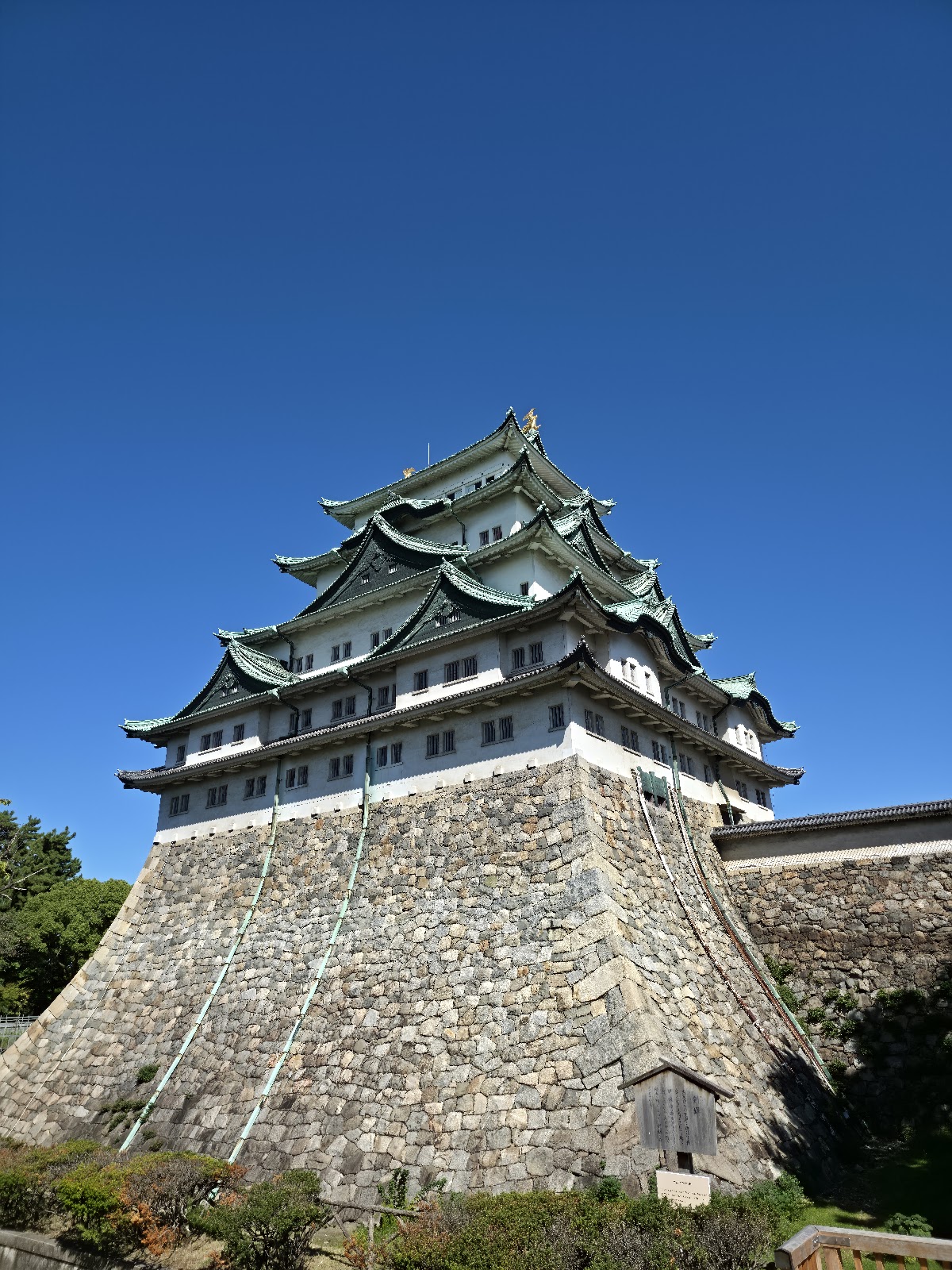
Nagoya Castle, a representative tourist spot in Nagoya City, is located approximately 6 km north of Yamazaki Castle. A masterpiece of early modern castle construction, begun by Tokugawa Ieyasu in 1610, it differs greatly in era and scale from Yamazaki Castle, but is important for understanding the history of castles in Owari.
Historical Significance of Yamazaki Castle
Although Yamazaki Castle is not large in scale, it is an important example of the nature of castles in the Owari region during the Sengoku period. It has historical significance in particular for the following reasons:
Connection to the Battle of Okehazama
Kato Yasaburo’s military achievements in the Battle of Okehazama make Yamazaki Castle one of the historically important castles. This battle was a decisive battle that determined the fate of Oda Nobunaga, and as the residence of a warrior who participated in this battle, Yamazaki Castle is indispensable when discussing the history of the Battle of Okehazama.
Castle of a Warrior from a Merchant Background
Kato Yasaburo’s background as the second son of a wealthy merchant in Atsuta is an interesting example illustrating the fluidity of social status during the Sengoku period. His career, being born into a merchant family yet being promoted to the Akahoro-shu (Red Cloak Corps) due to his military achievements, symbolizes Oda Nobunaga’s emphasis on meritocracy in personnel recruitment.
Power Structure of the Oda Regime
The abandonment of the castle following the expulsion of Sakuma Nobumori illustrates a shift in power relations within the Oda regime. The sudden expulsion of Sakuma Nobumori, a senior retainer, and the confiscation of his territory and castle, is an example of Oda Nobunaga’s authoritarian style of rule. ## Points to Note When Visiting Yamazaki Castle Ruins
Points for Visiting
When visiting Yamazaki Castle Ruins, paying attention to the following points will make your visit more fulfilling.
- Observing the Topography of Antaiji Temple Grounds: Try to imagine the structure of the former castle from the subtle differences in elevation and layout within the temple grounds.
- Railway Tracks to the South: Confirm the location of the railway tracks, which are believed to be the remains of the moat, and estimate the extent of the castle.
- Surrounding Place Names: Surrounding place names such as “Yobitsugi” and “Sakura” have historical origins, and researching them will deepen your understanding of the region’s history.
Manners for Visiting
Yamazaki Castle Ruins is currently a religious facility called Antaiji Temple. Please observe the following manners when visiting.
- If temple events or ceremonies are taking place, observe quietly or visit at a different time.
- Avoid entering the main hall or other buildings on the temple grounds without permission.
- Photography is permitted, but please be considerate of other visitors and monks.
- Always take your trash with you.
Best Time to Visit
Yamazaki Castle Ruins are open year-round, but the following times are especially recommended:
- Spring (late March to April): The cherry blossom season beautifully colors the temple grounds and surrounding area.
- Autumn (October to November): The weather is pleasant, making it a good season for strolling.
- Around May 19th: Visiting around the date of the Battle of Okehazama (May 19th in the old calendar) will deepen your historical appreciation.
Summary
Yamazaki Castle is a Sengoku period relic that quietly rests in a residential area of Minami Ward, Nagoya City. As the residence of Kato Yasaburo, who distinguished himself in the Battle of Okehazama, and later the castle of Sakuma Nobumori, a senior retainer of Oda Nobunaga, Yamazaki Castle is an important historical site that tells the story of Owari’s history during the Sengoku period.
Although it is now the grounds of Antaiji Temple and little remains of the castle itself, understanding its historical context provides clues to understanding the state of the Owari region during the Sengoku period and the power structure of Oda Nobunaga’s era.
Yamazaki Castle Ruins are relatively close to the center of Nagoya and easily accessible. Visiting it along with other famous tourist spots such as Nagoya Castle and Atsuta Shrine will allow you to experience Nagoya’s history more deeply. Yamazaki Castle Ruins is a worthwhile spot to visit not only for history buffs but also for anyone interested in local history.