Senbon Castle (Kimitsu City) Complete Guide | History, Remains, Access, and Highlights Explained in Detail
Senbon Castle, located in Hirooka, Kimitsu City, Chiba Prefecture, is a mountain castle built by the Satomi clan during the Sengoku period. It functioned as an important subsidiary castle responsible for the southern defense of Kururi Castle, and even today, remains such as moats and baileys are well-preserved. This article provides a detailed explanation of Senbon Castle, from its historical background to specific remains, access methods, and points to note when visiting, for castle enthusiasts and history buffs.
What is Senbon Castle? | Basic Information and Overview
Senbon Castle is a medieval mountain castle located around 2093 Hirooka, Kimitsu City, Chiba Prefecture. Built on a hill approximately 70 meters high, it is located about 8 kilometers south of Kururi Castle. This location lies on the military line connecting Kururi Castle and Sanuki Castle, making it a strategically important base.
Basic Castle Data
- Location: Near 2093 Hirooka, Kimitsu City, Chiba Prefecture
- Castle Structure: Mountain Castle
- Construction Period: Sengoku Period (Mid-16th Century)
- Builder: Satomi Clan
- Lord: Touhiraaki-no-kami and others
- Elevation: Approximately 70 meters
- Remains: Moats, baileys, earthworks, remains of an armory
- Designated Cultural Property: None (Not designated)
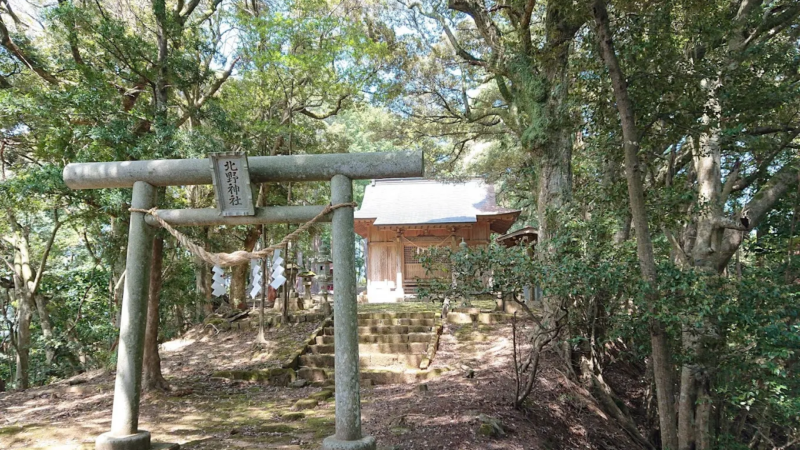
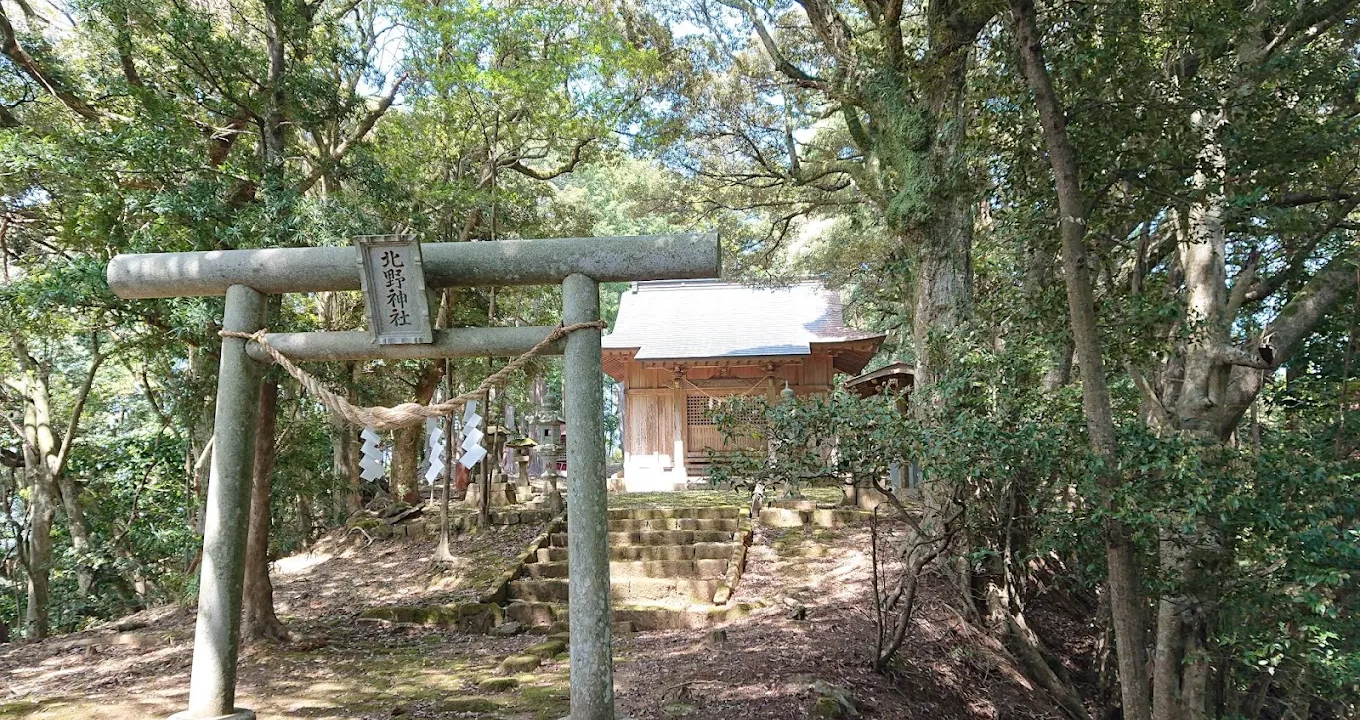
- Current Status: Forest, Kitano Shrine grounds
Currently, Kitano Shrine stands on the site of the main keep and is a beloved place of worship for locals. The castle site is relatively easy to access, and the remains are well-preserved, making it known among castle enthusiasts as a hidden gem.
The History of Senbon Castle | The Satomi Clan and the Sengoku Period in Boso
The Expansion of the Satomi Clan’s Power and the Construction of Senbon Castle
Senbon Castle was built by the Satomi clan, a Sengoku daimyo (feudal lord) based in Awa Province (present-day southern Chiba Prefecture). The Satomi clan expanded their power in the Boso Peninsula from the late 15th to the 16th century, advancing into Kazusa Province (present-day central Chiba Prefecture).
During the time of Satomi Yoshizane, their full-scale expansion into Kazusa Province began, and their power reached its peak during the time of his son, Satomi Yoshihiro. In the process of developing Kururi Castle as a base for controlling Kazusa, Senbon Castle and other branch castles were built to strengthen its defenses.
The Satomi Clan’s Succession Dispute and Senbon Castle
In 1564, when Satomi Yoshihiro died of illness, the Satomi family plunged into a serious succession dispute. A conflict arose between forces supporting Yoshihiro’s eldest son, Umeōmaru, and forces supporting Yoshihiro’s younger brother, Satomi Yoshiyori.
This conflict, also known as the “Amaha Rebellion,” saw fierce fighting among the castles of Bōsō Province, divided between the two factions. While it’s unclear which side Higashi Heianki-no-kami, the lord of Senbon Castle, belonged to during this conflict, Satomi Yoshiyori ultimately emerged victorious, and Umeōmaru was killed.
Conflict with the Hōjō Clan and the Role of the Castle
The Satomi clan engaged in a long-standing conflict with the Later Hōjō clan (Odawara Hōjō clan), based in Sagami Province. Kazusa Province became the front line between the two forces, and the Satomi castles, centered around Kururi Castle, formed a crucial defensive line against Hōjō attacks.
Senbon Castle served as a subsidiary castle protecting the south of Kururi Castle, playing a role in preparing for Hōjō invasions from the direction of Sanuki Castle. Looking at a map, Senbon Castle is located almost midway between Kururi Castle and Sanuki Castle, making it clear that it was a strategically important military location.
Toyotomi Hideyoshi’s Odawara Campaign and the End of Senbon Castle
In 1590 (Tensho 18), Toyotomi Hideyoshi launched the Odawara Campaign, leading to the downfall of the Later Hojo clan. The Satomi clan sided with Hideyoshi and their territory was secured, but in 1614 (Keicho 19), after the Battle of Sekigahara, Satomi Tadayoshi was dispossessed of his domain and transferred to Hoki Province (present-day Tottori Prefecture).
This marked the end of Satomi rule, and it is believed that Senbon Castle was abandoned. Afterward, Kitano Shrine was built as a local place of worship, and it remains so to this day.
The Layout and Structure of Senbon Castle | The Defensive System of a Mountain Castle
Overall Layout and Utilization of Terrain
Senbon Castle is a mountain castle built on the top of a hill approximately 100 meters above sea level, with a relative height of approximately 70 meters. It is characterized by its layout that skillfully utilizes the natural terrain, with steep slopes functioning as natural defensive walls.
The castle grounds are long and narrow from north to south, with multiple enclosures arranged around the main enclosure (honmaru). A large moat is constructed on the north side, preventing intrusion from the ridge.
The Main Enclosure (Honmaru) and Kitano Shrine
Currently, Kitano Shrine stands on the site of the main enclosure, and a stone monument marking the “Site of Senbon Castle’s Honmaru” is erected there. The main enclosure is a relatively flat, leveled area, measuring approximately 30 meters east-west and 40 meters north-south.
Remnants of an earthen embankment can be seen behind the shrine building, preserving some of the original defensive facilities. From the main enclosure, the surrounding area offers panoramic views, overlooking Kururi and the Obitsu River basin.
Moat | The Castle’s Greatest Highlight
The greatest highlight of Senbon Castle is the large moat located north of the main enclosure. This moat is approximately 10 meters wide and 5 meters deep, completely severing the ridge.
The moat was artificially excavated using the natural terrain and functioned as a strong defensive structure to prevent enemy intrusion. It remains clearly visible today, making it a valuable historical site where one can closely observe the civil engineering techniques of the Sengoku period.
To the north of the moat (opposite the main enclosure) is a flat area traditionally believed to be an “armory,” where weapons and provisions were stored.
Arrangement of the Enclosures
Several enclosures (kuruwa) are arranged in a stepped pattern around the main enclosure. These enclosures were used for garrisoning, storing supplies, and as defensive positions during battles.
The enclosure behind the shrine is a relatively wide, flat area, suggesting it was an important defensive stronghold. Each enclosure is separated by steep slopes called “kirigishi,” enhancing its defensive effectiveness through elevation differences.
Earthworks and Defensive Structures
Traces of earthworks remain around the main enclosure and each of the enclosures. Earthworks are embankment-like defensive structures built by piling up earth, serving to prevent enemy intrusion and protect against arrow and gunfire.
Many of the earthworks at Senbon Castle are only 1-2 meters high, and some are unclear due to weathering and collapse, but careful observation allows one to imagine their former appearance.
Highlights of Senbon Castle | Must-See Points for Castle Fans
Highlight 1: Clearly Remaining Large Moat
A must-see for anyone visiting Senbon Castle is the large moat on the north side of the main enclosure. The deeply and sharply dug moat showcases the pinnacle of medieval mountain castle defensive technology. Standing at the bottom of the moat and looking up, you’ll be overwhelmed by the height and steepness of the cliffs on both sides.
The moat is also a popular spot for photography, and on sunny days, sunlight filtering through the trees creates a magical atmosphere.
Highlight 2: View from the Main Enclosure
From the main enclosure (within the grounds of Kitano Shrine), you can see the city of Kimitsu and the Obitsu River basin. On a clear day, you can even see Kururi Castle and Tokyo Bay, giving you a real sense of the castle’s strategic importance.
In spring, cherry blossoms bloom, and in autumn, the autumn leaves are beautiful, allowing you to enjoy the scenery of each season.
Highlight 3: Well-Preserved Enclosures
The enclosures surrounding the main enclosure are relatively well-preserved, allowing you to clearly see the layout from the Sengoku period. By observing the arrangement of each enclosure and the structure of the cliffs, you can learn about the castle construction techniques and defensive philosophies of the time.
The enclosure behind the shrine, in particular, is wide and flat, making it easy to imagine what it looked like in its heyday.
Highlight 4: The Legendary Site of the Armory
The flat area north of the moat is traditionally believed to be the “armory,” where weapons and provisions were stored. Its isolated location from the main enclosure suggests that supplies could be secured even if the main enclosure were to fall.
Highlight 5: The Historical Atmosphere of Kitano Shrine
Kitano Shrine, built on the site of the main enclosure, is a shrine that attracts local devotion. Stone monuments marking the “Senbon Castle Main Enclosure Site” and “Kitano Shrine” stand within the grounds, indicating that this is a castle site. The tranquil atmosphere of the shrine blends with the history of the castle ruins, creating a unique and charming atmosphere.
Access to Senbon Castle | Detailed Directions Guide
Access by Public Transportation
By Train:
- Get off at Kururi Station on the JR Kururi Line.
- Approximately 40 minutes on foot from the station (approximately 3.5 kilometers).
- Or approximately 10 minutes by taxi.
The JR Kururi Line has infrequent service, so it is recommended to check the timetable in advance. From Kururi Station, head south along the flat road towards the Hirooka area.
By Bus:
The Kimitsu City Community Bus operates, but the number of services is limited, so it is recommended to inquire with Kimitsu City Hall in advance.
Access by Car
From Tokyo:
- Approximately 20 minutes (about 15 kilometers) from Kimitsu IC on the Tateyama Expressway
- Head north on National Route 410 towards Kururi
- Turn right onto Prefectural Road 32 in the Hirooka area
- Follow the signs to the entrance to Senbon Castle Ruins
Car Navigation Settings:
Map Code: 49 023 617*56 (near the parking area)
Address: 2093 Hirooka, Kimitsu City, Chiba Prefecture
Parking and Entrance to the Castle
There are several parking spaces at the dead end of the Senbon Castle Ruins entrance. It’s a simple, unpaved space, but regular cars can park without any problems.
To the left of the parking area are signs for “Kitano Shrine” and “Senbon Castle Ruins,” which marks the entrance to the castle. It’s about 250 meters from the entrance to the main keep, a 10-15 minute walk. ### Ascent Route and Estimated Time
Standard Route:
- Begin ascent from the parking area (approx. 30m elevation)
- Ascend the mountain path for approximately 250m (approx. 70m elevation gain)
- The large moat will be visible on your right
- Arrive at the main enclosure and Kitano Shrine (approx. 100m elevation)
- Visit the enclosure behind the shrine
- Descend
Estimated Time:
- Ascent: Approx. 10-15 minutes
- Sightseeing: Approx. 30-40 minutes
- Descent: Approx. 10 minutes
- Total: Approx. 1-1.5 hours
The ascent route is well-maintained, but it can become slippery after rain, so caution is advised.
Map and Navigation
Using your smartphone’s GPS function or Google Maps is convenient. Searching for “Senbon Castle Ruins” or “Kitano Shrine (Hirooka, Kimitsu City)” will show the area near the entrance to the castle. The signal strength is good, but we recommend checking the map beforehand just in case.
Precautions and Preparations for Visiting the Castle
Clothing and Equipment
- Shoes: Trekking shoes or athletic shoes are recommended. Leather shoes and heels are inappropriate.
- Clothing: Long sleeves and long pants are recommended (to prevent insect bites and abrasions from branches).
- Hat: For sun protection and protection from branches.
- Gloves: Work gloves are useful (for holding onto ropes and trees).
- Drinking water: Especially essential in summer.
Seasonal Precautions
Spring (March-May):
- The best season with beautiful fresh greenery.
- Take precautions if you have hay fever.
- Be careful as leeches become active.
Summer (June-August):
- Be careful of high temperatures and humidity, and heatstroke.
- Insect repellent spray is essential.
- Take precautions against leeches (saltwater spray recommended).
- Early morning visits are recommended.
Autumn (September-November):
- The best season with beautiful autumn leaves.
- Comfortable temperatures, ideal for visiting the castle.
- Beware of wasps.
Winter (December-February):
- The ruins are easily visible due to fallen leaves.
- Avoid visiting during snowy or icy conditions as it is dangerous.
- Allow ample time as sunset is early.
Safety Precautions
- Avoid visiting alone; group visits are recommended.
- Cell phone reception is available, but carry a spare battery just in case.
- Do not get too close to the edges of moats and cliffs, as there is a risk of falling.
- Turn back if the weather deteriorates.
- Take thorough precautions against leeches in summer (salt, saltwater spray, leech repellent spray).
Nearby Tourist Spots and Historical Facilities
Kururi Castle (Kururi Castle Ruins Museum)
Located approximately 8 kilometers north of Senbon Castle, Kururi Castle played an important role as the Satomi clan’s base for controlling Kazusa Province. Currently, a replica keep has been built and is open to the public as the Kururi Castle Ruins Museum.
- Location: Uchiyama, Kururi, Kimitsu City, Chiba Prefecture
- Opening Hours: 9:00 AM – 4:30 PM (Last entry at 4:00 PM)
- Closed: Mondays (or the following day if Monday is a public holiday), New Year holidays
- Admission Fee: Free
- Access: Approximately 15 minutes by car from Senbon Castle
The Kururi Castle Ruins Museum features exhibits on the history of the Satomi clan and the Sengoku period in Boso, making it ideal for deepening your understanding of Senbon Castle.
Sanuki Castle Ruins
Located approximately 10 kilometers southeast of Senbon Castle, Sanuki Castle was the site of fierce battles between the Satomi and Hojo clans. The Mariya and Takeda clans served as lords of the castle, playing an important role in the Sengoku history of Boso.
- Location: Sanuki, Futtsu City, Chiba Prefecture
- Remains: Earthworks, dry moats, baileys
- Access: Approximately 20 minutes by car from Senbon Castle
Mifuneyama Kofun Group
A representative group of ancient burial mounds in Kimitsu City, preserving approximately 30 mounds, including a keyhole-shaped burial mound. It is an important historical site where one can learn about the history of ancient Kazusa Province.
- Location: Mifune, Kimitsu City, Chiba Prefecture
- Access: Approximately 25 minutes by car from Senbon Castle
Shimizu Keiryu Hiroba (Nomizo Falls, Kameiwa Cave)
A popular tourist spot in Kimitsu City that has recently gained attention on social media. Light shining from the cave reflects on the water’s surface, creating a fantastical scene.
- Location: Sasa, Kimitsu City, Chiba Prefecture
- Access: Approximately 30 minutes by car from Senbon Castle
Kameyama Lake
A dam lake created by damming the Obitsu River, boasting the largest water storage capacity in Chiba Prefecture. Beautiful nature throughout the seasons, offering opportunities for boating and fishing. Autumn foliage cruises are also available.
- Location: Kawamata, Kimitsu City, Chiba Prefecture
- Access: Approximately 20 minutes by car from Senbon Castle
Castles in Kimitsu City to Visit Along with Senbon Castle
Major Castle Ruins in Kimitsu City
Besides Senbon Castle, many other medieval castles remain in Kimitsu City.
Kururi Castle: As mentioned above, the Satomi clan’s base castle.
Nuta Castle: A subsidiary castle protecting the northern part of Kururi Castle.
Odo Castle: A strategic point in the Obitsu River basin.
Obitsu Castle: The residence of the Mariya clan.
By visiting these castles, you can understand the overall picture of the castle network in Boso during the Sengoku period.
Castles Related to the Satomi Clan in Boso
In Awa Province (Tateyama City, Minamiboso City), the Satomi clan’s base, important castles such as Inamura Castle and Okamoto Castle remain. If you have time, a historical trip tracing the footsteps of the Satomi clan across the Boso Peninsula is also recommended.
Research and Historical Materials on Senbon Castle
Major Historical Materials and Documents
Historical materials concerning Senbon Castle are limited, but they are mentioned in the following documents.
“A Study of the Satomi Clan of Boso” (Noboru Kawana, 1982): Provides a detailed overview of the Satomi clan and its subsidiary castles.
“Medieval Castles of Chiba Prefecture”: Includes a layout map and explanation of Senbon Castle.
“History of Kimitsu City”: Explains the position of Senbon Castle from a regional history perspective.
Archaeological Excavations and Research Status
While no full-scale archaeological excavations have been conducted at Senbon Castle, detailed layout maps have been created through surveying. Further academic research may reveal more detailed information about the castle’s structure and history.
Tips for Enjoying Senbon Castle
Photography Tips
- Moat: The angle looking up from the bottom is incredibly impressive.
- View from the Main Enclosure: Use a telephoto lens to capture distant views.
- Elevation Differences in the Enclosures: You can take photos that show the structure of the castle.
- Kitano Shrine: A composition with a historical atmosphere.
How to Enjoy for Castle Fans
- Bring a castle layout map and compare it on site.
- Measure the size of the moat and the angle of the cliffs.
- Record your walking route with a GPS app.
- Compare and contrast with other castles related to the Satomi clan.
Historical Learning Tips
Before visiting Senbon Castle, studying the following will allow you to enjoy it more deeply.
- The History of the Satomi Clan and Their Rule of Boso Peninsula
- The Structure and Defensive Systems of Mountain Castles in the Sengoku Period
- The History of Conflicts with the Later Hojo Clan
- The Regional History of Medieval Boso Peninsula
Summary | The Charm and Value of Senbon Castle
Senbon Castle is a mountain castle that served as an important branch castle of the Satomi clan, who ruled Boso Peninsula during the Sengoku period, and was responsible for the southern defense of Kururi Castle. Built on a hill with a relative elevation of approximately 70 meters, it retains well-preserved remains such as clear moats, baileys, and earthworks.
Currently, Kitano Shrine is built on the main enclosure, and it is a popular place of worship for locals. Access is relatively easy, and the main enclosure can be reached in about 10-15 minutes on foot from the parking area. The climbing path is well-maintained, making it safe even for beginners.
The greatest highlight of Senbon Castle is the large moat located on the north side of the main enclosure. The deeply and sharply dug moat showcases the pinnacle of medieval mountain castle defensive technology and is a must-see for castle enthusiasts. From the main enclosure, you can overlook the city of Kimitsu and the Obitsu River basin, allowing you to truly appreciate the strategic importance of this castle.
Nearby, there are other castles related to the Satomi clan, such as Kururi Castle and Sanuki Castle, as well as tourist attractions like Shimizu Stream Plaza and Kameyama Lake, allowing you to enjoy both history and nature. Why not plan a historical trip through the Boso Peninsula during the Sengoku period, starting from Senbon Castle?
Senbon Castle, which played an important role as a branch castle of the Satomi clan, still retains clear remains. Within its quiet atmosphere, the turbulent history of the Sengoku period is etched. Please visit and experience its history and charm for yourself.
Frequently Asked Questions (FAQ)
Q1: Is a reservation required to visit Senbon Castle?
A1: Reservations are not required. You can freely visit the Senbon Castle ruins. However, since it is also the grounds of Kitano Shrine, please be considerate of worshippers and observe proper etiquette during your visit.
Q2: What is the best season to visit Senbon Castle?
A2: Spring (March-May) and autumn (September-November) are the best times. The weather is pleasant, the fresh greenery in spring and the autumn foliage are beautiful, and it’s an ideal season for observing the ruins. In summer, be careful of leeches and the heat, and in winter, the sun sets early, so please allow plenty of time for your visit.
Q3: Can I visit with children?
A3: Children of elementary school age and older can visit without any problems. The path to the castle is relatively well-maintained, but since it is a mountain path, we recommend wearing athletic shoes and having a guardian accompany them. There is a risk of falling near the moats and cliffs, so please keep a close eye on your children.
Q4: How long does it take to visit Senbon Castle?
A4: It takes approximately 1 to 1.5 hours round trip from the parking lot. The climb takes about 10-15 minutes, the visit takes about 30-40 minutes, and the descent takes about 10 minutes. If you want to carefully observe the remains and take photographs, it’s best to allow about 2 hours.
Q5: Are there toilets or rest facilities at Senbon Castle?
A5: There are no toilets or rest facilities within the castle grounds. We recommend using the facilities around Kururi Station or at a roadside rest area beforehand. Please also bring your own drinking water.
Q6: Can I visit on a rainy day?
A6: Visiting in rainy weather is not recommended. The path to the castle becomes slippery and dangerous. Also, the remains such as moats become difficult to see. We recommend checking the weather forecast and visiting on a sunny day.
Q7: Which should I visit first, Senbon Castle or Kururi Castle?
A7: We recommend visiting the Kururi Castle Ruins Museum first. Visiting Senbon Castle after learning about the history of the Satomi clan and the Sengoku period in Boso will allow for a deeper understanding. If you have the time, it is possible to visit both in one day.
Q8: Is drone photography allowed at Senbon Castle?
A8: Regarding drone flights, please check the Aviation Act and Kimitsu City ordinances and obtain the necessary permits. Also, since it is within the grounds of Kitano Shrine, consideration for the shrine is necessary. We recommend checking with the Kimitsu City Board of Education and shrine officials in advance.