
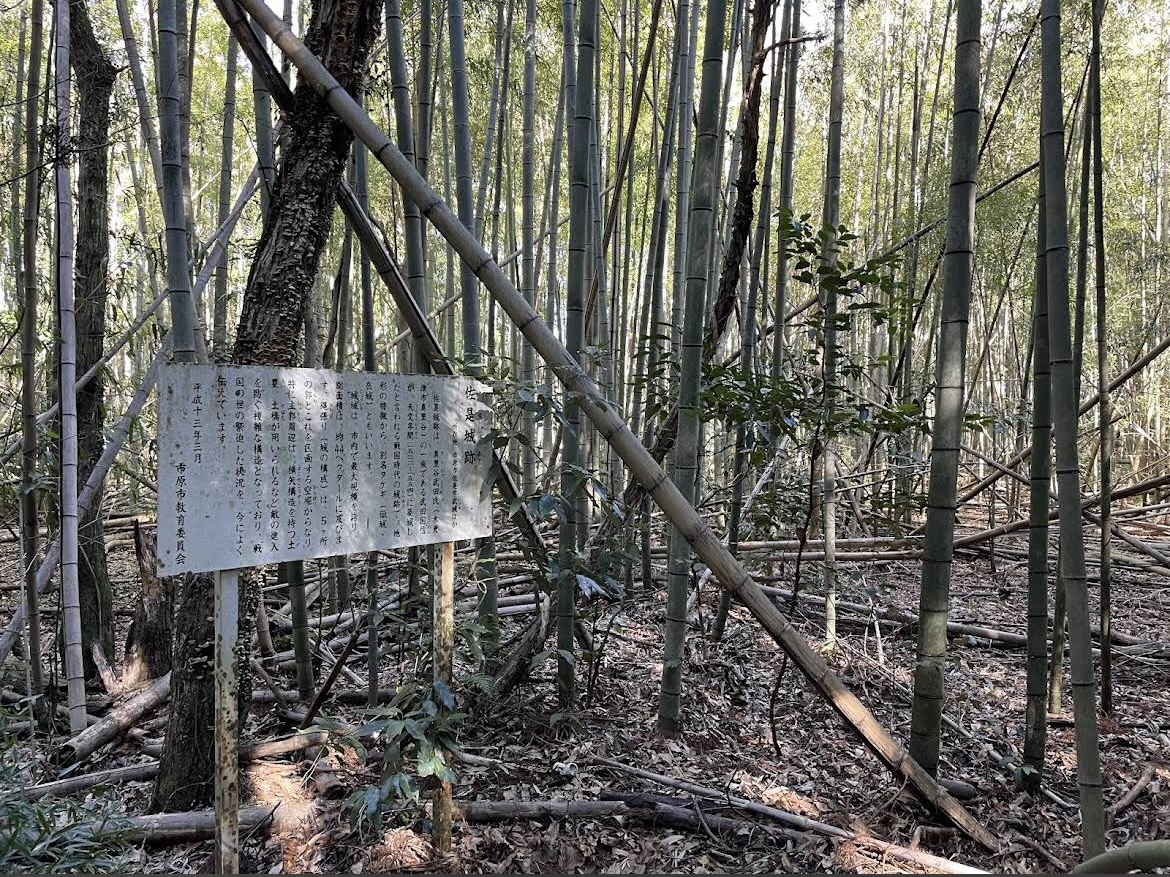
Complete Guide to Saze Castle (Ichihara City, Chiba Prefecture): The History of the Kazusa Takeda Clan’s Mountain Castle and the Battle of Shiizu
Saze Castle, located in the Saze district of Ichihara City, Chiba Prefecture, is a medieval mountain castle that was under the control of the Kazusa Takeda clan during the Sengoku period. Built on a plateau overlooking the Yoro River, this castle was the site of the important Battle of Shiizu and played a significant role in the Sengoku history of the Kazusa region. This article provides a detailed introduction to Saze Castle, including its history, highlights of its remains, access methods, and surrounding tourist information.
Overview and Basic Information of Saze Castle
Saze Castle is a flatland castle located in Takejo, Saze, Ichihara City, Chiba Prefecture, also known as “Takejo Castle.” It is built on a plateau approximately 60 meters above sea level facing the Yoro River, with a relative height of approximately 30 meters.
Basic Data
- Location: Takeshiro, Saze, Ichihara City, Chiba Prefecture
- Construction Period: Tenbun era (1532-1555)
- Builder: Takeda Kuninobu (Sase Saburo)
- Castle Structure: Hilltop castle
- Main Remains: Earthworks, dry moats, baileys
- Nearest Station: Kazusa-Ushiku Station, JR Uchibo Line
- Designated Cultural Property: Not designated
Saze Castle was a large-scale castle that skillfully utilized the topography of a long, north-south oriented plateau and was divided by multiple dry moats. Even today, the remains such as earthworks and dry moats are well-preserved, making it a valuable historical site for learning about the structure of medieval castles.
History and Lords of Saze Castle
Origin of Construction and the Kamakura Period
There are several theories regarding the origin of Saze Castle. According to one theory, the castle’s origins date back to the Kamakura period when Sazenji En’a established a residence in the area. During this time, the Saze region was under the control of the Kamakura Shogunate, and the construction of residences by local powerful families was common throughout the area.
The Sengoku Period and the Takeda Clan’s Rule
Saze Castle as a full-fledged fortress was built during the Tenbun era (1532-1555) of the Sengoku period. Takeda Kuninobu, the third son of Takeda Nobunaga of the Kazusa Takeda clan, built Saze Castle and adopted the name Saze Saburo.
The Kazusa Takeda clan was a branch of the Kai Takeda clan that settled in Kazusa Province and held considerable power in the southern part of Kazusa. Saze Castle was located at the northern edge of the Takeda clan’s territory and was an important base controlling the Yoro River basin.
The Battle of Shiizu and the Fall of Saze Castle
The most important event in the history of Saze Castle is the Battle of Shiizu, which took place in 1552. This battle was a clash between the Kazusa Takeda clan and the Satomi clan over supremacy in the Kazusa region.
According to the “Takeda Genealogy,” Saze Kuninobu (Takeda Kuninobu), the lord of Saze Castle, went to the Battle of Shiizu as reinforcements for the main branch of the Takeda clan, the Mariya Takeda clan. However, he was killed in battle against the Satomi army, and Saze Castle fell.
This battle marked a turning point in the decline of the Takeda clan’s power in Kazusa Province, and thereafter, the Satomi clan’s influence extended to southern Kazusa. The fall of Saze Castle symbolized the shift in the power balance in the Kazusa region during the Sengoku period.
Saze Castle After its Fall
There are no clear records of how Saze Castle was used after its fall in the Battle of Shiizu. It is believed that it lost its function as a castle from the late Sengoku period to the Edo period. Currently, Myōshōin Temple stands on the site of the main enclosure, and Kōfukuzenji Temple stands on the site of the inner enclosure, with part of the castle site being used as temple grounds.
Layout and Structure of Saze Castle
Saze Castle was a flatland castle built on a plateau facing the Yōrō River, with a layout that skillfully utilized the long, narrow topography of the plateau.
Main Enclosure (Honmaru)
The main enclosure is located southeast of Myōshōin Temple and functioned as the central part of the castle. Traces of the surrounding earthworks and dry moats can still be seen today, and marker posts have been erected. The entrance to the main enclosure is accessed by climbing up from the bottom of the moat, suggesting a highly defensible structure.
Divided by Dry Moats
The most distinctive feature of Saze Castle is the division of the plateau from north to south by multiple dry moats. These moats were dug across the plateau and served to clearly separate each enclosure. The scale of the dry moats is relatively large, demonstrating the advanced civil engineering technology of the time.
Even today, it is possible to walk along the bottom of the moats and experience the castle’s structure. The height of the earthworks viewed from the bottom of the moats speaks to the high level of defense at the time.
Earthworks
Earthworks were built around each enclosure, and the earthworks around the main enclosure, in particular, are relatively well-preserved. The height of the earthworks varies depending on the location, but the highest parts reach over 2 meters. These earthworks served to prevent enemy intrusion and also to ensure visibility from within the enclosures.
Inner and Outer Enclosures
An inner enclosure was arranged around the main enclosure, and an outer enclosure extended further outside of that. The area where Kofuku Zen Temple stands is thought to be part of the inner enclosure, forming an important defensive line protecting the main enclosure. The castle’s layout, which takes advantage of the plateau’s topography, is a typical example of a medieval castle that built an effective defensive system with limited manpower.
Highlights and Remains of Saze Castle
Earthworks and Dry Moat of the Main Enclosure
The main highlight of Saze Castle is the earthworks and dry moat remaining around the main enclosure. You can descend to the bottom of the moat from the southeast side of Myōshō-in Temple and observe the castle’s structure while walking along the dry moat. The impressive earthworks viewed from the bottom of the moat give a real sense of the castle’s defensive capabilities at the time.
Especially near the entrance to the main enclosure, the structure of the koguchi (gate) is relatively well-preserved, allowing you to learn about the defensive techniques of medieval castles.
Fusion of Kōfuku Zen Temple and Castle Ruins
Kōfuku Zen Temple, built on the site of the inner enclosure, creates a unique landscape where the castle ruins and temple are fused together. Walking through the temple grounds, you can imagine the layout of the former enclosures. The temple grounds retain traces of earthworks, creating an interesting space where castle ruins and religious facilities coexist.
Remains around Myōshōin Temple
Remnants of earthworks and baileys remain around Myōshōin Temple, located on the site of the main bailey. The temple grounds relatively well retain the topography of the castle era, providing clues to the size of the main bailey at that time.
View overlooking the Yōrō River
From the plateau where Saze Castle was built, you can see the Yōrō River and the surrounding plains. This view indicates that Saze Castle was strategically important for monitoring transportation routes and controlling the territory. On a clear day, you can experience the view that the former lord of the castle might have seen.
How to access Saze Castle
Access by public transport
By train
The nearest station is Kazusa-Ushiku Station on the JR Uchibō Line. Saze Castle is approximately 5 kilometers from the station.
- Approximately 60 minutes on foot from JR Uchibo Line Kazusa-Ushiku Station
- Approximately 10 minutes by taxi from JR Uchibo Line Kazusa-Ushiku Station
When accessing on foot from the station, head towards the Saze area via the prefectural road. The route offers scenic rural landscapes, allowing you to enjoy the peaceful scenery of Kazusa.
Using the Bus
Since bus routes from Kazusa-Ushiku Station to Saze are limited, it is recommended to check the Ichihara City community bus schedule in advance.
Access by Car
Using the Expressway
- Approximately 15 minutes from the Ken-O Expressway “Ichihara Tsurumai IC”
- Approximately 25 minutes from the Tateyama Expressway “Ichihara IC”
Parking Information
There is no dedicated parking lot at Saze Castle Ruins, but when visiting Kofuku Zen Temple or Myoshoin Temple, it is recommended to check with the temples regarding parking availability. Please avoid street parking as it inconveniences local residents.
Map and Location of the Surrounding Area
Saze Castle is located on a plateau along the Yoro River in the southern part of Ichihara City. Several other medieval castles, such as Mariyatsu Castle, Ikewada Castle, and Chonan Castle, are scattered in the surrounding area, making it possible to combine visits to these castles.
Saze Castle and Surrounding Castles
In addition to Saze Castle, many other medieval castles remain in southern Kazusa Province. These castles, interconnected, shaped the political and military situation of the Kazusa region during the Sengoku period.
Mariyatsu Castle
Mariyatsu Castle is a large mountain castle known as the base of the Kazusa Takeda clan. Located approximately 8 kilometers southwest of Saze Castle, it was the center of the Takeda clan’s sphere of influence. Mariyatsu Castle was the main battlefield during the Battle of Shiizu, and Takeda Kuninobu, the lord of Saze Castle, also participated as reinforcements.
Mariyatsu Castle is a prefectural designated historical site, and its large moats and baileys remain in good condition. Visiting Saze Castle and Ikewada Castle together will help you understand the castle network of the Kazusa Takeda clan.
Ikewada Castle
Ikewada Castle is a hilltop castle located approximately 4 kilometers north of Saze Castle. As one of the castles in the Yoro River basin, it served as a base for regional control. Earthworks and dry moats remain, and its similar structure to Saze Castle suggests the possibility that they were built at the same time.
Chonan Castle
Chonan Castle is a medieval castle located in the southern part of Ichihara City. Its location near the Kazusa provincial capital made it an important strategic point. Located across the Yoro River from Saze Castle, it is thought to have played a role in controlling a key point for river transportation.
Kaiyoshi Castle
Kaiyoshi Castle is a castle located east of Saze Castle and played an important role in the Sengoku period history of the Kazusa region. Visiting these castles will help you understand the actual layout of castles and the extent of territorial control in Kazusa Province during the Sengoku period.
Points to Note When Visiting Saze Castle
Precautions During Your Visit
Since part of the Saze Castle ruins is located on temple grounds, please observe the following points when visiting:
- Respect for Temples: When passing through the grounds of Myōshōin Temple or Kōfuku Zen Temple, please observe proper etiquette as a visitor.
- Respect for Private Property: Part of the castle ruins may be on private property. Please do not enter areas marked as “No Entry.”
- Safety Underfoot: When walking on the dry moats and earthworks, some areas may be uneven, so it is recommended to wear non-slip shoes.
- Insect Protection in Summer: In summer, there are many insects such as mosquitoes and gnats, so insect repellent spray and long-sleeved clothing are recommended.
- Take Your Trash Home: There are no trash cans around the castle ruins, so please be sure to take your trash home with you.
Best Seasons for Visiting
While Saze Castle is open year-round, the following seasons are particularly recommended:
- Spring (March-May): Beautiful fresh greenery, mild weather, and pleasant walking conditions.
- Autumn (October-November): Enjoy the autumn foliage, and fewer insects for a more comfortable visit.
- Winter (December-February): Fallen leaves make it easier to observe the ruins. However, warm clothing is necessary.
Summer (June-September) is less ideal for visiting due to overgrown vegetation and the abundance of insects.
Estimated Time Required
A visit to Saze Castle takes approximately 60-90 minutes if you carefully observe the ruins. Visiting only the main enclosure area can be done in 30-40 minutes. If you also plan to visit the surrounding temples, allow approximately 2 hours.
Tourist Attractions Around Saze Castle
Historical and Cultural Facilities in Ichihara City
Ichihara City Archaeological Research Center
This facility exhibits archaeological materials excavated within Ichihara City. You can learn about the history of Kazusa Province from ancient to medieval times. Visiting before visiting Saze Castle will help you understand the historical background of the region.
Kazusa Kokubunji Temple Ruins
This is the site of Kazusa Kokubunji Temple, built during the Nara period. It is a nationally designated historical site and conveys the history of the ancient center of Kazusa Province. It is about a 20-minute drive from Saze Castle.
Nature and Leisure Spots
Yoro Valley
This scenic spot is located about 15 kilometers south of Saze Castle. You can enjoy the beauty of the valley and waterfalls, and it is especially crowded with tourists during the autumn foliage season. It is recommended to visit in conjunction with a castle tour.
Takataki Lake
This is a dam lake located in Ichihara City, where you can enjoy fishing and cycling. On the lakeshore is Takataki Lake Green Park, a facility that can be enjoyed by families.
The Kazusa Takeda Clan and the Sengoku History of Boso
Understanding the Kazusa Takeda clan and the Sengoku history of Boso is important for understanding Saze Castle.
The Establishment of the Kazusa Takeda Clan
The Kazusa Takeda clan is said to be a branch of the Kai Takeda clan that settled in Kazusa Province. They built their power in southern Kazusa Province during the mid-Muromachi period, establishing their base in Mariya and controlling the surrounding area. During the Sengoku period, they were also known as the “Mariya Takeda clan” and maintained a certain level of power in southern Kazusa Province.
Conflicts of Sengoku Daimyo in Boso
During the Sengoku period, the Boso Peninsula was a land of war where multiple forces vied for supremacy. The main forces were as follows:
- Satomi clan: Based in Awa Province, expanding its influence into southern Boso Peninsula.
- Chiba clan: Based in Shimosa Province, controlling northern Boso Peninsula.
- Kazusa Takeda clan: Controlling southern Kazusa Province.
- Later Hojo clan: Based in Sagami Province, expanding its influence into Boso Peninsula.
Amidst the complex conflicts and alliances of these forces, the Battle of Shiizu erupted.
Historical Significance of the Battle of Shiizu
The Battle of Shiizu in 1552 (Tenbun 21) significantly altered the power balance in the Kazusa region. The Kazusa Takeda clan’s defeat by the Satomi clan in this battle led to a decline in the Takeda’s power in southern Kazusa, while the Satomi clan’s influence increased.
The death of Takeda Kuninobu, lord of Saze Castle, symbolized the decline of the Kazusa Takeda clan and marked a crucial turning point in the subsequent history of the Sengoku period in Boso Peninsula.
Preservation of Saze Castle and Future Challenges
Saze Castle is a castle ruin that has not been designated as a cultural property, but it is a valuable historical site with well-preserved remains. However, there are the following challenges regarding its preservation and utilization.
Current Status of Preservation
Currently, part of the Saze Castle ruins is on the grounds of a temple and is relatively well-preserved. However, no official protective measures as a cultural property have been taken, leaving concerns about its future preservation.
Future Challenges
- Promotion of Academic Research: Detailed surveys and archaeological excavations are needed to clarify the castle’s structure and history.
- Cultural Property Designation: It is desirable to establish an official protection system through cultural property designation, such as a city-designated historical site.
- Improvement of Visiting Environment: It is important to create an environment where more people can safely visit by installing information boards and improving visiting paths.
- Collaboration with the Community: It is necessary to build cooperative relationships with local residents and temples and create a sustainable preservation and utilization system.
Summary: The Charm and Value of Saze Castle
Saze Castle in Ichihara City, Chiba Prefecture, is a valuable historical site that conveys the history of the Kazusa Takeda clan and the turmoil of the Boso region during the Sengoku period. Built on a plateau overlooking the Yoro River, the castle retains well-preserved remains such as earthworks and dry moats, making it an important teaching tool for learning about the structure of medieval castles.
Saze Castle, with its dramatic history of falling during the Battle of Shiizu, tells the story of the power struggles in Boso during the Sengoku period. Its current form, integrated with temples such as Myoshoin and Kofukuzenji, demonstrates the diverse ways in which castle ruins can be utilized.
While many medieval castles remain in Chiba Prefecture, Saze Castle can be considered a relatively unknown “hidden gem.” It is a precious place where one can carefully observe the remains in a tranquil environment and reflect on the history of the Sengoku period.
If you’re planning a tour of castles in the Boso Peninsula or are interested in medieval history, be sure to visit Saze Castle and experience the rise and fall of the Kazusa Takeda clan and the spirit of the Sengoku period. Visiting nearby castles such as Mariya Castle and Ikewada Castle in conjunction with Saze Castle will give you a deeper understanding of the Sengoku history of the Kazusa region.


