Saruoka Castle (Wakayama Prefecture) Complete Guide: A Mountain Castle Built by Todo Takatora to Keep Kokawa Temple in check
What is Saruoka Castle?: Alternate Names and Basic Information
Saruoka Castle (Saruoka-jo) is a mountain castle located in Kokawa, Kinokawa City, Wakayama Prefecture, that existed from the Sengoku period to the Azuchi-Momoyama period. It is also known as Saruokayama Castle, Kokawa Castle, and Akibayama Castle, and appears in historical documents under multiple names.
Built on a hill approximately 54 meters above sea level where the current Akiba Park (Akibayama Park) is located, this castle is known as an important historical site symbolizing the tension between religious and samurai forces in Kii Province. The Nakatsu River flows to the south of the castle, functioning as a natural moat.
Kokawa in Kinokawa City flourished as a temple town for Kokawa-dera Temple, the third temple on the Saigoku Thirty-Three Kannon Pilgrimage. Saruoka Castle played a unique historical role in its relationship with Kokawa-dera Temple.
History of Saruoka Castle: From Kokawa-dera Temple to Todo Takatora
Construction by Kokawa-dera Temple (1573)
The history of Saruoka Castle begins in Tensho 1 (1573). At that time, Kokawa-dera Temple, known as one of the “Three Great Temples of Kishu” alongside Negoro-ji Temple and Koyasan, wielded considerable power in the Kinokawa River basin. To enhance the temple’s defenses, Saruoka Castle was built on Saruoka Hill, south of its temple grounds.
During the Sengoku period, temples and shrines were not merely religious organizations, but also military forces employing warrior monks. Kokawa-dera Temple was no exception, and it needed a castle for self-defense. During this period, Saruoka Castle functioned as a defensive base for Kokawa-dera Temple.
Toyotomi Hideyoshi’s Conquest of Kishu (1585)
In Tensho 13 (1585), Toyotomi Hideyoshi launched the Conquest of Kishu. This military operation was carried out to suppress the religious forces of Kishu, centered around Negoro-ji and Kokawa-dera temples. Faced with Hideyoshi’s overwhelming military strength, Kokawa-dera was burned down, and its power suffered a devastating blow.
It is believed that Saruoka Castle was also temporarily caught in the flames of this conquest. With the loss of Kokawa-dera’s power, the role of Saruoka Castle changed significantly.
Todo Takatora’s Entry and Renovation
After the Conquest of Kishu, the land of Kokawa in Kii Province was given to Todo Takatora. Takatora was granted 10,000 koku and entered Saruoka Castle as the lord of Kokawa.
Todo Takatora was a samurai who was active from the Sengoku period to the early Edo period, and is known as a master castle builder. Having built numerous famous castles such as Iga Ueno Castle, Imabari Castle, and Tsu Castle, Takatora also carried out large-scale renovations to Saruoka Castle.
The main purpose of Takatora’s renovations was to contain Kokawa-dera Temple. Although it had suffered a devastating blow during the Kishu campaign, Kokawa-dera Temple still wielded considerable influence. By strengthening Saruoka Castle, Takatora aimed to monitor Kokawa-dera Temple and prevent it from expanding its power again.
In fact, Saruoka Castle offered a clear view of the adjacent Kokawa-dera Temple, making its location ideal for a surveillance base. It is believed that Takatora designed the castle to enhance its defensive capabilities as a mountain castle while maintaining a clear view towards Kokawa-dera Temple.
The Road to Abandonment
Todo Takatora ruled Kokawa for several years, but was later transferred to Uwajima in Iyo Province with a 70,000 koku domain. This transfer signified that Takatora’s abilities were recognized and that he was entrusted with governing a more important region.
With Takatora’s transfer to Uwajima, Saruoka Castle ceased its role and was abandoned. The exact year of its abandonment is unknown, but it is estimated to be around 1595. Although it was only for a short period of just over 10 years, Saruoka Castle functioned as a symbol of the Toyotomi regime’s rule in Kishu.
Structure and Characteristics of Saruoka Castle
Location as a Mountain Castle
Saruoka Castle is a mountain castle built on a hill approximately 54 meters above sea level. While the elevation difference from the surrounding plain is not significant, its location on a high ground offering panoramic views made it strategically valuable.
The Nakatsu River flows to the south of the castle, and this river was utilized as a natural moat. The design, which cleverly utilized the natural terrain without the need for artificially excavating a moat, demonstrates the high level of castle-building technology.
Arrangement of the Enclosures (Kuruwa)
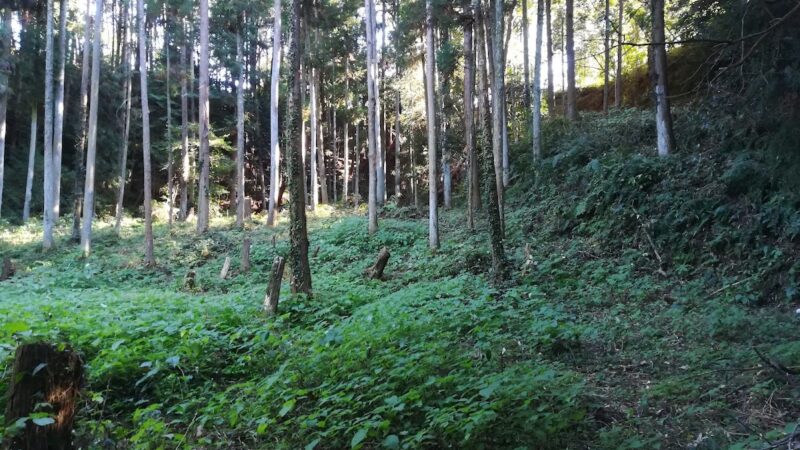
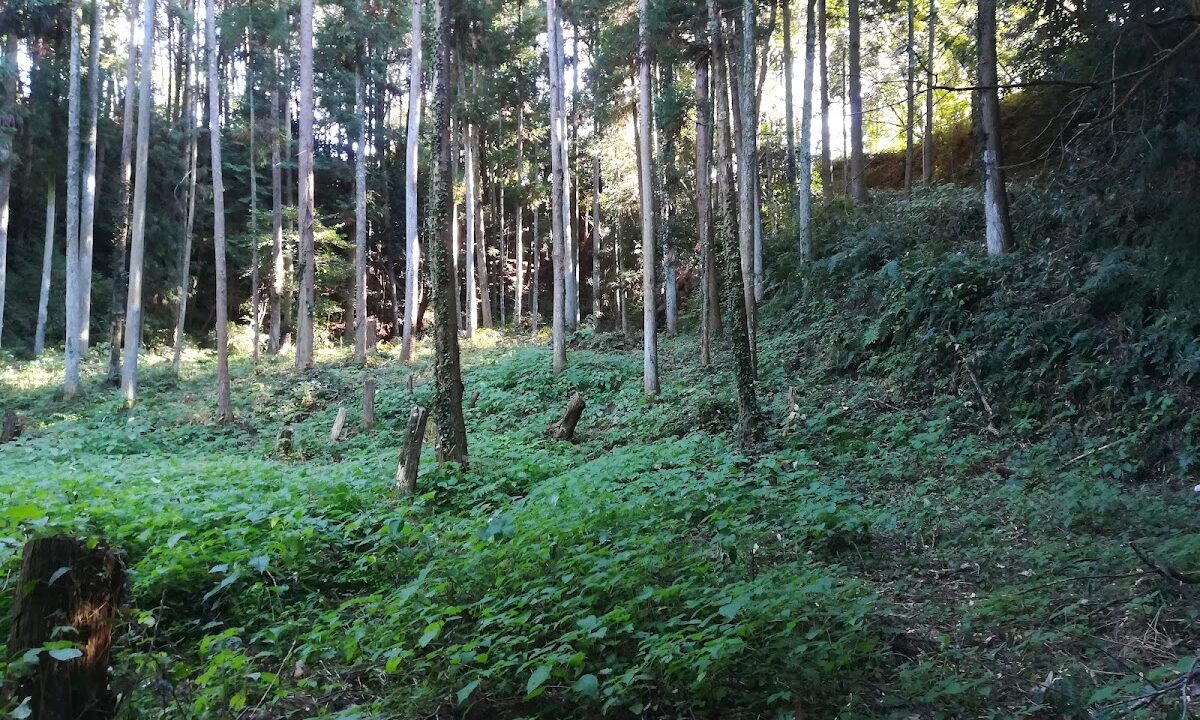
Several enclosures (flat areas) remain within the current Akiba Park. Enclosures are the basic structure of a castle and were used as garrisons for soldiers and construction sites for buildings.
It is presumed that Saruoka Castle’s enclosure arrangement followed a typical mountain castle pattern, with the main enclosure at the mountaintop and the enclosures arranged in stages downwards. Earthen ramparts and steep slopes (artificially constructed steep slopes) were constructed between each enclosure to enhance its defensive capabilities.
Positional Relationship with Kokawa-dera Temple
The most distinctive feature of Saruoka Castle is its position overlooking Kokawa-dera Temple. The distance from the castle to Kokawa-dera Temple was very short, allowing for constant monitoring of the temple’s activities.
This arrangement is thought to have been particularly important during the renovations by Todo Takatora. The castle design, with its clear objective of containing the massive religious facility of Kokawa-dera Temple, can be seen as a manifestation of Takatora’s strategic thinking.
Current Status of Saruoka Castle: Akiba Park
Development Status of Akiba Park
Currently, the Saruoka Castle ruins have been developed into Akiba Park (Akibayama Park), serving as a place of relaxation for local residents. Walking paths are maintained within the park, making it easily accessible.
While many of the former castle facilities have been lost due to the park’s development, the territory of the baileys remains relatively well-preserved, making it a historical site worth seeing even for castle enthusiasts.
Stone Monument and Information Board Marking the Castle Ruins
Within the park, there is a stone monument and an information board marking the Saruoka Castle ruins. The information board concisely describes the castle’s history and its relationship with Todo Takatora, helping visitors understand the castle’s history.
The stone monument is an important historical marker that conveys the existence of the castle ruins to future generations and serves as a symbol of the region’s historical identity.
Existing Remains
The main remaining remains at Saruoka Castle are as follows:
- Enclosures: Multiple flat areas can be identified.
- Topography: The basic topography of a mountain castle is preserved.
- View: The view towards Kokawa-dera Temple remains unobstructed.
While no clear structures such as stone walls or moats remain, the topography allows us to imagine the castle’s layout at the time.
Highlights of Saruoka Castle
Experiencing the Relationship with Kokawa-dera Temple
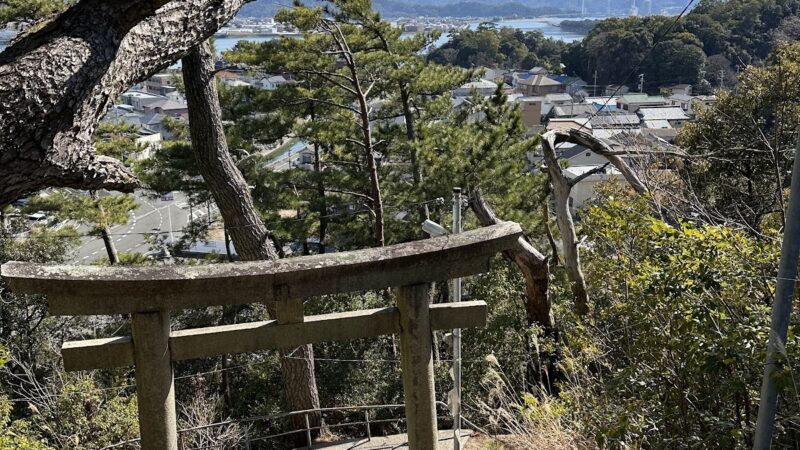
The greatest highlight of Saruoka Castle is the opportunity to experience its positional relationship with Kokawa-dera Temple. Looking towards Kokawa-dera Temple from the hilltop within the park, one can understand Todo Takatora’s intentions when he remodeled this castle.
Kokawa-dera Temple is still a magnificent temple complex, and viewing its grandeur from the castle ruins allows one to feel the tension between religious and samurai forces during the Sengoku period.
Observing the Topography of the Enclosures
For castle enthusiasts, observing the topography of the enclosures is a fascinating point. Walking through the park and observing the changes between flat areas and slopes allows you to infer the former castle structure.
In particular, imagining the elevation differences of the gradually arranged enclosures and the movement routes between them provides a good opportunity to understand the defensive philosophy of mountain castles.
Views of the Kinokawa River Basin
From Akiba Park, you can enjoy a panoramic view of the Kinokawa River basin. It’s likely that Todo Takatora once gazed upon this view while contemplating the governance of his territory.
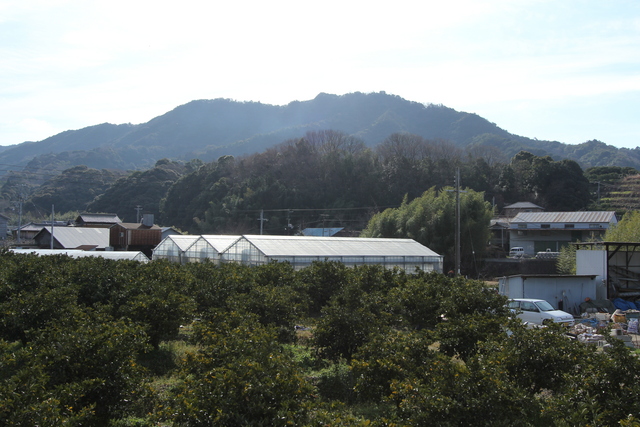
While the area is now dominated by residential areas and rural landscapes, imagining what the landscape was like during the Sengoku period is another enjoyable aspect.
Todo Takatora and Saruoka Castle
Todo Takatora, Master Castle Builder
Todo Takatora (1556-1630) was a samurai who was active from the Sengoku period to the early Edo period, and is remembered in history as a master castle builder.
Takatora is known for changing his lord seven times in his life, but this was not disloyalty, but rather the way of life for a samurai of the Sengoku period. Ultimately, he served Tokugawa Ieyasu and became the founder of the Tsu Domain in Ise Province.
Takatora’s castle building techniques are highly regarded, and he excelled particularly in stone wall techniques and castle layout (castle design). He designed many innovative castles, such as the high stone walls of Iga Ueno Castle and the sea castle design of Imabari Castle.
Todo Takatora in Kokawa
When Todo Takatora entered Saruoka Castle, he was still a minor daimyo with a domain of 10,000 koku. This period marked the early stages of Takatora’s rise to power, and his experience governing Kokawa is believed to have laid the foundation for his later rise as a powerful daimyo.
In Kokawa, Takatora is said to have not only focused on military governance but also on promoting the local economy. He tackled the difficult challenge of establishing samurai rule while maintaining the function of a temple town for Kokawa-dera.
Takatora’s Family Crest and Helmet
Tōdō Takatora’s family crest is a design of ivy leaves called Tōdō Tsuta. His helmet is known as the black lacquered Tang-style helmet and has a unique shape.
These are currently used in the design of the castle stamp of Saruoka Castle, conveying the relationship between Takatora and Saruoka Castle to this day.
Castle Stamp Information
Saruoka Castle Stamp Design
The castle stamp of Saruoka Castle is designed in honor of its lord, Tōdō Takatora. The inscription reads “Saruka Castle, the ‘Tiger’s Castle, built by a master castle builder of the Sengoku period,’ 10,000 koku of Kokawa” and incorporates the following elements:
- Todo Ivy (center): Todo Takatora’s family crest
- Black Lacquered Tang-Style Helmet (upper right): Todo Takatora’s helmet
- Todo Takatora’s Signature (lower right): Takatora’s signature
This design visually represents the deep connection between Saruoka Castle and Todo Takatora.
Where to Buy and Price the Castle Stamp
The Saruoka Castle stamp is sold at the Kokawa Tourist and Local Products Center.
- Price: 300 yen per stamp
- Sales Location: Kokawa Tourist Products Center
- Address: 853-1 Kokawa, Kinokawa City, Wakayama Prefecture
- Business Hours: 9:00 AM – 5:00 PM (Closed during New Year holidays)
The castle stamp is a popular souvenir among castle enthusiasts, and more and more people are purchasing it as a memento of their visit.
Access Information
Access by Train
JR Wakayama Line, Kokawa Station is the nearest station.
- From Kokawa Station to Saruoka Castle Ruins (Akiba Park): Approximately 15 minutes on foot
- Head northwest from the station towards Kokawa-dera Temple
- Akiba Park, located south of Kokawa-dera Temple, is your destination.
Kokawa Station is approximately 30 minutes from Wakayama Station on the Wakayama Line, making it easily accessible from Osaka.
Access by Car
- Approximately 10 minutes from the Kinokawa Interchange on the Keina-Wa Expressway
- Take National Route 24 towards Kokawa
- Parking is available around Akiba Park (limited number of spaces)
It is also possible to use the parking lot for visitors to Kokawa-dera Temple and walk to the Saruoka Castle ruins (approximately 5 minutes on foot from the Kokawa-dera parking lot).
Address and Map Information
- Address: Kokawa, Kinokawa City, Wakayama Prefecture (Akiba Park)
- Coordinates: Approximately 34°16′N, 135°21′E
Nearby Tourist Attractions
Kokawa-dera Temple
Kokawa-dera Temple has an inseparable relationship with Saruoka Castle. As the third temple on the Saigoku Thirty-Three Kannon Pilgrimage, it is a famous temple visited by many pilgrims.
- Main Hall: Nationally Designated Important Cultural Property
- Kokawa-dera Temple Garden: Nationally Designated Place of Scenic Beauty
- Nio-mon Gate: Magnificent Temple Gate
When visiting Saruoka Castle Ruins, we highly recommend also visiting Kokawa-dera Temple. Viewing the temple from the castle ruins and then walking through the temple grounds will allow you to understand the relationship between the two more deeply.
Kokawa Tourism and Local Products Center
The Kokawa Tourism and Local Products Center, which also sells castle stamps, is a facility that handles local products of Kinokawa City.
- Local agricultural products
- Processed goods
- Souvenirs
You can use it to purchase souvenirs of your visit to Saruoka Castle or as a resting place.
Negoro-ji Temple (Iwade City)
Negoro-ji Temple, which is related to the history of Saruoka Castle, is located in Iwade City, next to Kinokawa City. Negoro-ji Temple, along with Kokawa-dera Temple, was a center of religious power in Kishu, and it also suffered a major blow during Toyotomi Hideyoshi’s conquest of Kishu.
- Great Pagoda (National Treasure)
- Traditional Negoro Lacquerware
If you have time, visiting Negoro-ji Temple will give you a more comprehensive understanding of the Sengoku period history of Kishu.
Points to Note When Visiting Saruoka Castle
Advice for Visiting
- Wear Comfortable Shoes: The park has uneven terrain, so comfortable shoes such as sneakers are recommended.
- Check the Information Boards: Checking the historical information on the information boards in the park before exploring will deepen your understanding.
- Visit Kokawa-dera Temple Together: Visiting Kokawa-dera Temple in addition to Saruoka Castle will help you understand the historical background.
- Enjoy the View: The view towards Kokawa-dera Temple is a must-see.
Estimated Time Required
- Visiting Saruoka Castle Ruins (Akiba Park): 30 minutes to 1 hour
- Including a visit to Kokawa-dera Temple: Approximately 2 hours
- Including sightseeing in the surrounding area: Half-day course
Photo Spots
- In front of the stone monument and information board
- A hill overlooking Kokawa-dera Temple
- A place where the topography of the castle baileys can be seen
Photography of the castle ruins is permitted, but please be considerate of the local residents.
Historical Significance of Saruoka Castle
The Point of Intersection Between Religious and Samurai Power
The historical significance of Saruoka Castle lies in its symbolism of the transition of rule from religious to samurai power. The castle, originally built by the religious organization Kokawa-dera, was remodeled by Todo Takatora, a general of the Toyotomi regime, and subsequently became a base for monitoring Kokawa-dera. This history illustrates the end of the Sengoku period and the establishment of the early modern society.
Toyotomi Regime’s Rule over Kishu
Saruoka Castle is an important historical site that demonstrates Toyotomi Hideyoshi’s rule system after the conquest of Kishu. After suppressing the religious forces of Kishu, Hideyoshi stabilized his rule by appointing trustworthy generals. Todo Takatora’s placement in Kokawa was part of this strategy.
Todo Takatora’s Career
His experience at Saruoka Castle was a crucial stage in Todo Takatora’s career as a general. From a minor daimyo with a 10,000 koku domain to a powerful daimyo with a 320,000 koku domain in Tsu, the experience of governing in Kokawa is believed to have been a valuable learning opportunity.
Summary: The Charm of Saruoka Castle
Saruoka Castle (Saruokayama Castle/Kokawa Castle), though not large in scale, is a valuable historical site that illustrates the relationship between religion and politics during the transition from the Sengoku period to the early modern period.
As a castle built by the master castle builder Todo Takatora, and as a castle that played a unique role in relation to the large religious facility of Kokawa-dera Temple, its historical value is extremely high.
Currently, it is a popular park for citizens known as Akiba Park, but it still retains traces of its castle past, such as the topography of the baileys and the view of Kokawa-dera Temple. Visiting it in conjunction with a visit to Kokawa-dera Temple will allow you to gain a deeper understanding of the Sengoku history of Kishu.
When you visit Wakayama Prefecture, be sure to visit the ruins of Saruoka Castle and experience the view that Todo Takatora saw. We recommend getting a castle stamp to add to your memories of visiting castles.