Complete Guide to Saraki Jinya (Gifu Prefecture): History of the Hatamoto Tokuyama Clan and Highlights of Hatamoto Tokuyama Jinya Park
What is Saraki Jinya?
Saraki Jinya was a jinya (fortified residence) of the Hatamoto Tokuyama clan during the Edo period, located in Naka Nishiichiba-cho, Kakamigahara City, Gifu Prefecture. Situated in Kakami District, Mino Province, it functioned as the central facility of the region ruled by the Tokuyama clan for approximately 250 years. Currently, it has been restored based on archaeological excavations and the ancient document “Saraki Jinya Ezu” (Saraki Jinya Map), and is maintained as Hatamoto Tokuyama Jinya Park.
A jinya is a facility established during the Edo period by daimyo (feudal lords) and hatamoto (direct retainers of the shogun) with territories of less than 10,000 koku (a unit of land productivity) as a base for governing their territories. Unlike castles, it lacks large-scale defensive structures such as keeps and stone walls, but it houses the lord’s residence, offices, warehouses, and other facilities, serving as the center of regional governance.
Basic Information on Saraki Jinya
- Location: 3-117-1 Naka Nishiichiba-cho, Kakamigahara City, Gifu Prefecture
- Former Province: Kakamigahara District, Mino Province
- Classification/Structure: Jinya (Flatland Jinya)
- Construction Period: After Keicho 5 (1600)
- Builder: Tokuyama Norihide
- Main Remains: Earthworks (partially existing)
- Restored Facilities: Jinya Gate, Earthen Wall, Well
- Other Names: Tokuyama Jinya, Saraki-go Jinya
- Designation: One of Japan’s 100 Best Historical Parks (Selected in 2006)
History of the Tokuyama Clan and the Establishment of Saraki Jinya
Tokuyama Norihide and Service to Oda Nobunaga
Tokuyama Gohei Norihide, the first head of the Tokuyama clan who built Saraki Jinya, was a samurai who served Oda Nobunaga during the Sengoku period. Norihide served as a retainer of Oda Nobunaga, particularly distinguishing himself in battles in the Hokuriku region under Shibata Katsuie. He was considered a mid-ranking general within the Oda retainers, and is credited with contributing to the pacification of the Hokuriku region alongside figures like Maeda Toshiie.
The Battle of Sekigahara and Submission to Tokugawa Ieyasu
After the death of Oda Nobunaga, Tokuyama Norihide retained his territory under the Toyotomi regime, but in the Battle of Sekigahara in 1600, he sided with Tokugawa Ieyasu’s Eastern Army. This decision proved successful, and in the post-war distribution of rewards, he was granted approximately 5,000 koku of land in Kakami District, Mino Province.
His territory was dispersed across villages such as Yamago, Iwaike, Oshima, Shimazaki, and Noguchi, centered around Saraki-go. To govern these territories, Norihide established a fortified residence in Saraki, making it the base of the Tokuyama clan’s rule.
The Tokuyama Clan in the Edo Period
The Tokuyama clan survived as hatamoto (direct retainers of the shogun) throughout the Edo period, ruling the Kakamigahara region for 12 generations. Their 5,000 koku (a unit of rice production) was considered a medium-sized domain for a hatamoto. While they never held high-ranking positions in the shogunate, they contributed to the stable governance of the region.
Edo-period jinya (fortified residences) were not merely the lord’s residences; they played a central role in managing the territory, handling tax collection, legal proceedings, and maintaining public order. The Saraki Jinya similarly functioned as a magistrate’s office, serving as an important administrative window for farmers in the surrounding villages.
With the Meiji Restoration, the Tokuyama clan, like other hatamoto, were elevated to the peerage, and the jinya was abolished. Subsequently, the site of the jinya became privately owned and remained largely unseen for a long period.
Structure and Layout of the Saraki Jinya
The Appearance of the Jinya as Seen in the Saraki Jinya Map
In the reconstruction of the Saraki Jinya, the “Saraki Jinya Map,” a historical document, played a crucial role. This map depicts the detailed layout of the Jinya during the Edo period, making it a valuable historical document for understanding the relative positions of buildings and the boundaries of the site.
According to the map, the Jinya consisted of a main building (the lord’s residence), a long gatehouse, government offices, and storehouses, all located within a site demarcated by earthworks and a moat. While the defensive structures were simple, it is clear that they were dignified structures that demonstrated the authority of the lord.
Excavation Survey in 2000
In 2000 (Heisei 12), a full-scale excavation survey was conducted by the Kakamigahara City Board of Education. This survey uncovered parts of the earthworks, building foundations, well remains, and pottery fragments, confirming that the description in the Saraki Jinya Map matches the actual remains.
The excavation yielded the following significant results:
- Structure of the earthworks: The base of the earthworks surrounding the encampment was confirmed, allowing for estimation of its height and width.
- Building layout: The location of the foundation stones revealed the size and layout of the main buildings.
- Structure of the well: A well-preserved stone-lined well was discovered, revealing how water was secured for daily life.
- Excavated artifacts: Ceramics, roof tiles, and iron products from the Edo period were unearthed, providing clues to the lifestyle of the time.
By integrating these excavation results with the Saraki Jinya map, scientifically-based restoration and development became possible.
Development and Highlights of Hatamoto Tokuyama Jinya Park
Development as a Park
Based on the results of the excavation, Kakamigahara City formulated a plan to develop the Jinya site as a historical park. In 2003 (Heisei 15), it was opened to the public as “Hatamoto Tokuyama Jinya Park,” realizing a recreation of the Edo period Jinya landscape.
In developing the park, emphasis was placed on historically accurate restoration, while also considering its function as a place of relaxation for citizens. Despite being located in a residential area, it offers a valuable space where one can experience the atmosphere of the Edo period.
Restored Jinya Gate
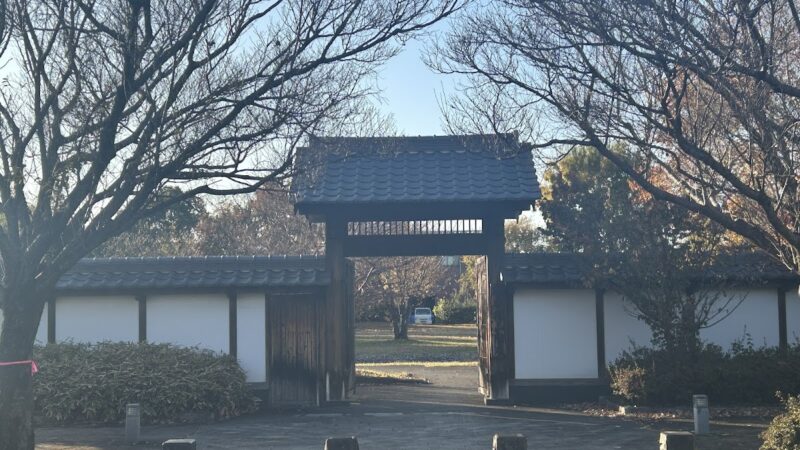
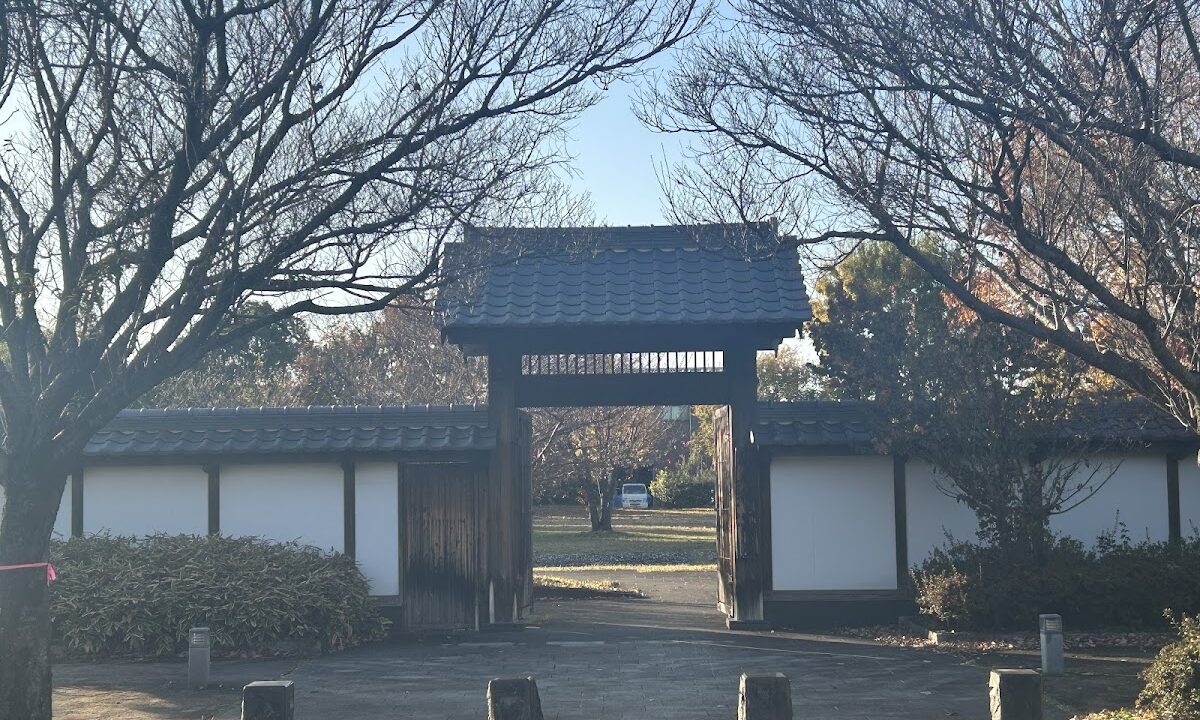
At the park entrance stands a restored Jinya gate based on the Saragi Jinya map. A magnificent sign bearing the inscription “Tokuyama Jinya” is displayed on the gate, inviting visitors into the world of the Edo period.
The Jinya gate is a wooden Yakui-mon style structure, possessing the dignified appearance befitting a samurai’s residence. Earthen walls line both sides of the gate, expressing the dignity of the residence. This restored gate is a popular photo spot, attracting not only history enthusiasts but also general tourists.
Traces of Earthworks and Moats
Within the park, a portion of the earthworks confirmed during archaeological excavations has been preserved and restored. The earthworks that surrounded the Edo-period residence are now only about 1-2 meters high, but they offer a glimpse into the defensive structures of the time.
The earthen ramparts were not merely defensive structures; they also clearly demarcated the grounds of the encampment, serving as a boundary separating the lord’s living space from the outside. Currently, the ramparts are covered with grass and function as a scenic element of the park.
Restored Well
The well discovered during archaeological excavations has also been restored. In Edo-period encampments, wells served not only a practical role in securing water for daily life but also a crucial defensive feature in ensuring a water source during sieges.
The restored well is constructed with stonework and is a valuable exhibit that conveys the technology of the time to the present day. While a fence has been erected for safety, visitors can observe the well’s depth and structure.
Information Boards and Guide Facilities
Several information boards explaining the history of the Saragi encampment and the Tokuyama clan are installed within the park. These boards provide detailed information, including photographs and illustrations, on the encampment’s evolution, the Tokuyama clan’s lineage, and the results of archaeological excavations.
In particular, a replica of the Saragi encampment map is on display, allowing for a visual understanding of the overall layout of the Edo-period encampment. A deeper understanding can be gained by comparing the park’s layout with its current configuration.
Selection as one of Japan’s Top 100 Historical Parks
In 2006 (Heisei 18), Hatamoto Tokuyama Jinya Park was selected as one of “Japan’s Top 100 Historical Parks.” This selection was made by the Japan Parks and Green Spaces Association and the Urban Greening Foundation to commemorate the 50th anniversary of the enforcement of the Urban Parks Act.
The following points were evaluated as reasons for selection:
- Scientific restoration and development based on archaeological excavations and ancient documents
- Preservation and utilization of a valuable historical heritage site, a Hatamoto Jinya (feudal lord’s residence)
- Function as a place for local residents to learn about history
- Creation of a historical landscape in an urban area
This title, awarded to only 100 locations nationwide, served as an opportunity to raise national awareness of the historical and cultural value of Hatamoto Tokuyama Jinya Park.
Historical Background of the Area Around Saraki Jinya
History of Kakamigahara
Kakamigahara City is a region that has flourished as a transportation hub since ancient times. Located at a crucial point connecting Mino and Owari provinces, along a side route of the Nakasendo highway, the area was a battleground during the Sengoku period, with numerous castles and fortifications built there.
In the Edo period, the region became a complex mix of territories, including those of the Tokuyama clan (who were hatamoto), shogunate-controlled territories, and Owari domain territories. Within this complex geographical layout, the Saraki Jinya (fortified residence) functioned as the center of the Tokuyama clan’s territory.
Jinya in Mino Province
Besides the Saraki Jinya, several other fortified residences existed in Mino Province. These residences of hatamoto and minor daimyo were scattered throughout the area, each managing their own territory independently. However, few remains of these fortified residences have survived to the present day and been developed into parks, making the Saraki Jinya a valuable example for understanding the actual state of fortified residences in Mino Province.
Location and Access Information
Detailed Location
Hatamoto Tokuyama Jinya Park
Address: 3-117-1 Naka Nishiichiba-cho, Kakamigahara City, Gifu Prefecture 504-0023
The park is located in a residential area, and the surrounding environment is quiet. Parking is limited, so the use of public transportation is recommended.
Access by Public Transportation
By Train/Bus
- Approximately 15 minutes on foot from JR Takayama Line “Naka Station”
- Approximately 20 minutes on foot from Meitetsu Kakamigahara Line “Shin-Naka Station”
- Approximately 3 minutes on foot from Kakamigahara City Community Bus “Nishi-Ichiba” bus stop
By Car
- Approximately 10 minutes from Tokai-Hokuriku Expressway “Gifu-Kakamigahara IC”
- Approximately 25 minutes from Meishin Expressway “Ichinomiya IC”
- Parking: Limited parking spaces available (use nearby paid parking lots during peak hours)
Visiting Information
- Opening Hours: Always open (as it is a park)
- Closed Days: None
- Admission Fee: Free
- Estimated Visiting Time: Approximately 30 minutes to 1 hour
As the park is an outdoor facility, it is subject to weather conditions. Visiting is possible even in rainy weather, but sunny days are recommended.
Evaluation of Saraki Jinya and Castle Enthusiasts
Attention from Castle Enthusiasts
In recent years, with the rise of the castle boom, attention has been drawn not only to large castles with keeps, but also to jinya (fortified residences) and manor sites. Saraki Jinya has been featured on castle information websites such as “Nippon Castle Tour,” “Kojodan,” and “Shirobito,” attracting many castle enthusiasts.
Visitor reviews include the following evaluations:
- “Despite being located in a residential area, it’s a beautifully maintained park where you can feel the atmosphere of the Edo period.”
- “The restoration based on archaeological excavations is wonderful, and you can get a good understanding of the actual state of the jinya.”
- “As expected of a site selected as one of Japan’s 100 Best Historical Parks, the explanatory signs are also comprehensive.”
- “Although small in scale, it’s a valuable historical site where you can imagine the life of a hatamoto (direct retainer of the shogun).”
Value as a Place for Historical Learning
Saraki Jinya is also used as a place for history learning in local elementary and junior high schools. It serves as a valuable teaching material where students can learn firsthand about the realities of local governance in the Edo period, the role of hatamoto, and the functions of jinya.
The Kakamigahara City Board of Education is implementing an educational program using the Saragi Jinya (fortified residence) as its subject, continuing its efforts to pass on local history to future generations.
How to Enjoy Your Visit to Saraki Jinya
Recommended Sightseeing Route
- Entering through the Jinya Gate: Pass through the restored Jinya Gate and experience the atmosphere of the Edo period.
- Checking the Information Board: Understand the overall layout by comparing the Saraki Jinya map with the current layout.
- Observing the Earthworks: Walk along the existing earthworks to experience the scale of the Jinya.
- Visiting the Well: Imagine life at the time by viewing the restored well.
- Strolling Through the Park: Relax and enjoy the Edo period scenery on the lawn.
Photography Tips
- Jinya Gate: Take a photo from the front, including the “Tokuyama Jinya” sign.
- Earthworks and Earthen Walls: Express the Jinya’s function as a defensive structure.
- Well: An angle that shows the stonework structure.
- Panoramic View: Take a photo from a position that allows you to overlook the entire park.
Nearby Tourist Spots
Nearby spots to visit in conjunction with your Saraki Jinya visit:
- Kakamigahara City Historical and Folk Museum: A facility where you can comprehensively learn about the history of Kakamigahara
- Ogase Pond: A place of relaxation surrounded by nature
- Murakuni-za: A rural Kabuki stage designated as an Important Cultural Property
- Kakamigahara Aerospace Museum: A large-scale museum exhibiting the history of aircraft
Preservation of Saraki Jinya and Future Prospects
Preservation Activities as a Cultural Property
Kakamigahara City is continuously working on the maintenance and management of Hatamoto Tokuyama Jinya Park. Regular repairs to the restored facilities, updates to explanatory signs, and management of plantings are carried out, ensuring that the site remains in good condition.
Future plans include conducting more detailed archaeological excavations and recreating the Jinya using digital technology (VR/AR, etc.).
Contribution to Regional Revitalization
Hatamoto Tokuyama Jinya Park contributes to tourism promotion as a local historical resource. Kakamigahara City is working to enhance the appeal of the region through the development of tourist routes utilizing historical heritage, including Saraki Jinya, and the holding of historical events. ## Summary
The Saraki Jinya (Kakamigahara City, Gifu Prefecture) is the site of a jinya (fortified residence) that was ruled by the Tokuyama clan, a hatamoto (direct retainer of the shogun) during the Edo period, for approximately 250 years. Based on archaeological excavations and the ancient document “Saraki Jinya Ezu” (Map of the Saraki Jinya), it has been restored and is now maintained as the Hatamoto Tokuyama Jinya Park.
Through the restored jinya gate, earthworks, and wells, it is a valuable historical park where visitors can experience the life of a hatamoto during the Edo period and the realities of local governance. In 2006, it was selected as one of Japan’s 100 Best Historical Parks, and its historical and cultural value has been recognized nationwide.
Located in the residential area of Naka Nishiichiba-cho, Kakamigahara City, this quiet space, which recreates the scenery of an Edo-period jinya, is popular not only with history enthusiasts but also as a place of relaxation for local residents. Its easy accessibility and free admission are also attractive features.
The history of the Tokuyama clan, beginning with Tokuyama Norihide, who served Oda Nobunaga and Tokugawa Ieyasu, the confirmation of their territory after the Battle of Sekigahara, and their rule as hatamoto that continued until the Meiji Restoration. As a witness to this history, the Saraki Jinya continues to convey valuable lessons to the present day.
When you visit Gifu Prefecture, why not stop by Hatamoto Tokuyama Jinya Park and experience the world of the hatamoto (direct retainers of the shogun) during the Edo period?