Mitsui Castle (Kakamigahara City, Gifu Prefecture) Complete Guide: History, Highlights, and Access Information
What is Mitsui Castle?
Mitsui Castle (Mitsui-jo) is a mountain castle from the Sengoku period located in Mitsuiyama-cho, Kakamigahara City, Gifu Prefecture. Also known as Mitsuiyama Castle, it was built on the summit of Mount Mitsui, at an altitude of 108 meters. It is known as the castle where Mitsui Yaichiro (Yaichiro), a vassal of the Toki clan who ruled Mino Province, served as lord.
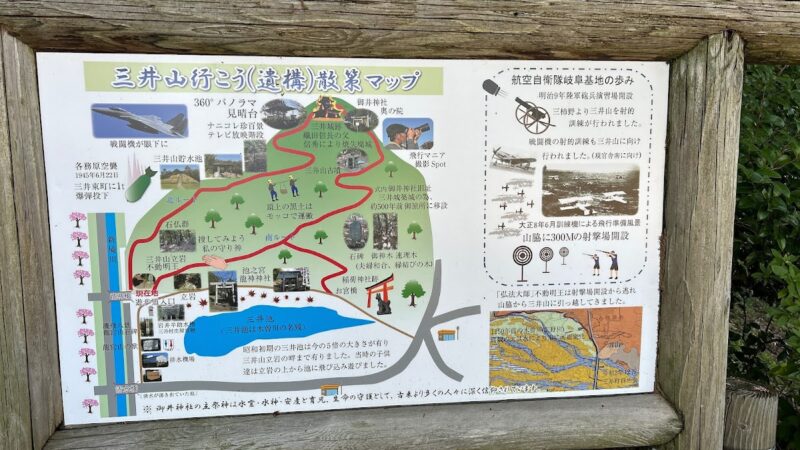
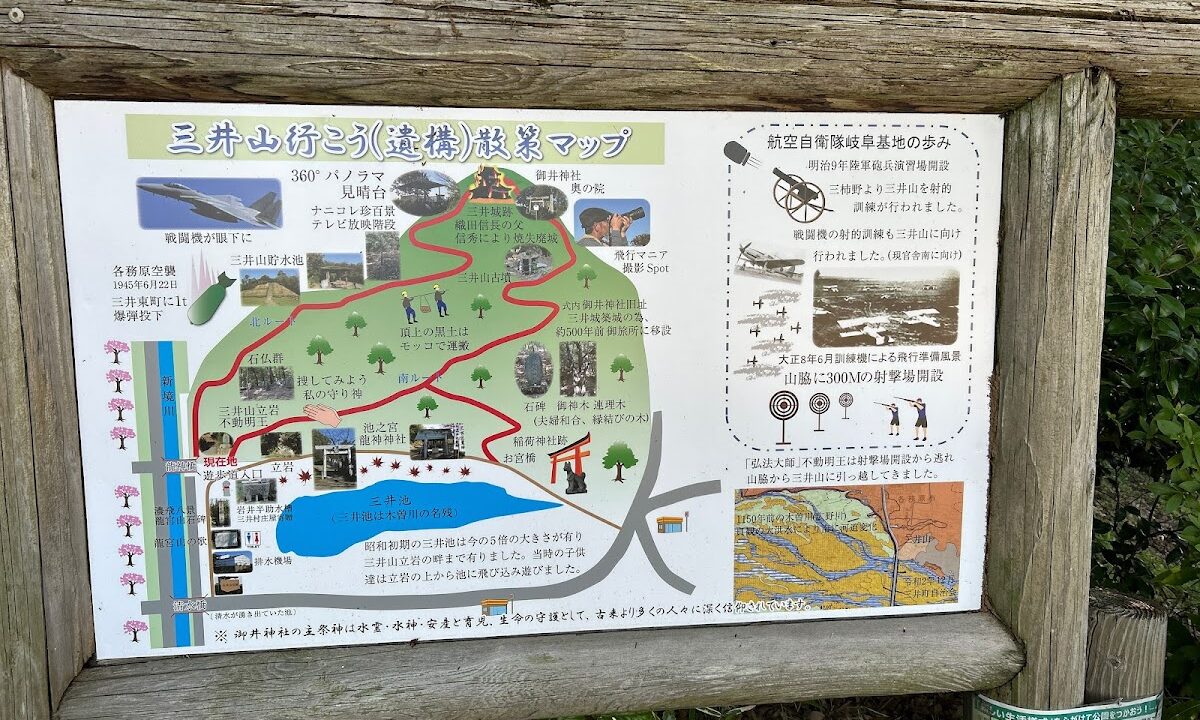
Currently, the castle ruins have been developed as “Mitsuiyama Fureai no Mori” (Mitsuiyama Friendship Forest), serving as a place of relaxation for local residents. The remains are relatively well-preserved, and defensive structures such as baileys and moats can be seen. While Gifu Prefecture has many famous castles such as Gifu Castle, Iwamura Castle, and Naegi Castle, Mitsui Castle is a mountain castle that played an important role in telling the history of the region, attracting attention from castle enthusiasts and history lovers.
History of Mitsui Castle
From Construction to the Era of the Toki Clan’s Vassals
While there are no clear records regarding the exact construction date of Mitsui Castle, it is believed to have been built in the early Sengoku period as part of the rule of the Toki clan, the shugo (military governor) of Mino Province. The Toki clan was a prestigious daimyo family that ruled Mino Province from the Kamakura period, and to maintain their territory, they had powerful vassals build castles at strategic locations throughout the region.
The lord of Mitsui Castle was a man named Mitsui Yaichiro (or Yaichiro). The Mitsui clan was a powerful group of vassals serving the Toki clan and was entrusted with the control of the Kakamigahara region. Mitsuiyama is located near the Kiso River and in a strategically important location close to the border between Mino and Owari Provinces, and it is presumed to have played a role in monitoring a key transportation hub in the Tokai region.
The Attack and Fall of Mitsui Castle by Oda Nobuhide
The most important event in the history of Mitsui Castle is the attack and fall of Mitsui Castle by Oda Nobuhide in 1548 (Tenbun 17). Oda Nobuhide was the father of Oda Nobunaga and was a powerful daimyo of Owari Province during the Sengoku period. Nobuhide actively pursued invasions of Mino Province, and in the process, Mitsui Castle became a target.
At that time, the political situation in Mino Province was chaotic, as the Toki clan, the provincial governor, was losing power to their vassal, Saito Dosan. Oda Nobuhide took advantage of this chaos to repeatedly invade Mino Province, capturing castles throughout the region. Mitsui Castle was also a target, and it is said to have fallen after a fierce battle.
After its fall, Mitsui Castle was abandoned and lost its function as a fortress. Oda Nobuhide sought to gain a foothold in Mino Province, but he faced difficulties in his battles against Saito Dosan and ultimately did not achieve complete control of Mino Province. However, the capture of Mitsui Castle was an important event demonstrating the expansion of the Oda clan’s influence in the border region between Owari and Mino.
Mitsuiyama After the Castle’s Abandonment
After the castle was abandoned, the ruins of Mitsui Castle were left neglected for a long time, but they remained in the memories of the local people throughout the Edo period. From the Meiji era onward, it was used as forest land and became a familiar and beloved satoyama (traditional rural landscape) for local residents.
In modern times, Kakamigahara City has worked to preserve and utilize the Mitsui Castle ruins as a local historical heritage site, developing it as “Mitsuiyama Fureai no Mori” (Mitsuiyama Friendship Forest). This has transformed it into a place where citizens can learn about local history while enjoying nature.
Structure and Layout of Mitsui Castle
Location and Topography
Mitsui Castle was a mountain castle built on the summit of Mitsuiyama, at an elevation of 108 meters. The relative height difference is approximately 70 meters, and the approach from the foot of the mountain involves climbing a steep slope. While relatively small for a mountain castle, its location overlooking the Kiso River basin provided excellent conditions for functioning as a military surveillance base.
The area around Mount Mitsui is located at the boundary between the plains and mountains of Mino Province, making it a strategically important location for monitoring transportation routes from the Tokaido region. Due to its proximity to the border with Owari Province, it is believed to have also served as a border security base.
Major Remains
The remains of Mitsui Castle are still relatively well-preserved. The following are the main remains that have been identified:
Main Enclosure (Honmaru): This is the central part of the castle, located on the mountaintop. A flat, leveled area has been formed, and it is presumed that the lord’s residence and command post were located here. While not particularly large, it is of a standard size for a mountain castle.
Enclosures (Kuruwa): Multiple enclosures are arranged around the main enclosure. These functioned as defensive facilities and troop garrisons. The terraced arrangement of the enclosures shows ingenuity in preventing enemy intrusion.
Moat: Several moats, dug to cut across the ridgeline, remain in various locations. The moats were crucial defensive structures designed to prevent enemy intrusion and played a vital role in the layout of Mitsui Castle. The scale and placement of the moats reveal insights into the castle’s defensive plan.
Earthworks: Traces of earthworks remain in some enclosures. These earthworks surrounded the enclosures, enhancing defense and also serving as a screen for the interior.
Characteristics of the Layout
Mitsui Castle’s layout exhibits typical characteristics of mountain castles in Mino Province from the early to mid-Sengoku period. It utilizes a ridgeline layout with multiple enclosures arranged linearly around the main enclosure.
The use of moats to establish defensive lines and the utilization of steep slopes to leverage natural defenses demonstrate ingenuity in efficiently enhancing defenses with limited resources. While large-scale stone walls and complex gate structures are not found, and the structure is relatively simple, it is therefore a suitable castle site for learning the basic form of mountain castles from the Sengoku period.
Highlights of Mitsui Castle
Observation Points for the Ruins
The main highlight of a visit to Mitsui Castle is its well-preserved ruins. Paying particular attention to the following points will allow you to gain a deeper understanding of the castle’s structure and defensive ingenuity.
Observation of the Moats: Multiple moats remain, and their depth and width allow you to appreciate the defensive plan of the time. Standing at the bottom of a moat and looking up at the surroundings gives you a real sense of how difficult it must have been for enemy soldiers to penetrate.
Layout of the Enclosures: By sequentially visiting the terraced enclosures, you can gain a three-dimensional understanding of the castle’s overall structure. Examining the views from each enclosure reveals the surveillance functions and division of defensive roles.
View from the Main Enclosure: From the main enclosure at the mountaintop, you can overlook the surrounding area. You can see the Kiso River basin, the plains of Kakamigahara, and even the Kinka Mountain area where Gifu Castle is located in the distance, allowing you to appreciate the strategic value of this castle.
The Charm of Mitsuiyama Fureai no Mori (Mitsuiyama Friendship Forest)
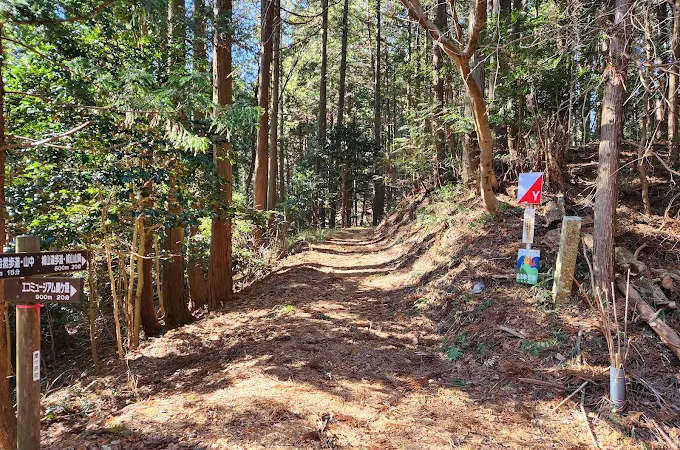
The castle ruins have been developed as “Mitsuiyama Fureai no Mori,” allowing visitors to enjoy not only historical exploration but also nature walks. The hiking trails are well-maintained, making it safe even for beginners. You can enjoy the beauty of nature throughout the seasons, from the fresh greenery in spring to the vibrant autumn foliage, while exploring the castle ruins.
A major attraction of Mitsui Castle is the opportunity to experience the atmosphere of a Sengoku period mountain castle while enjoying a forest bath. It’s also used as a walking course by locals, demonstrating its popularity as a historical site in the community.
Photography Tips
Mitsui Castle is also a great spot for photography. When photographing the remains, we recommend angles looking up from the bottom to express the depth of the moats, or side angles to emphasize the elevation changes of the baileys.
The view from the main bailey is also captivating. Especially on a clear day, you can see far into the distance, making it a good opportunity to try landscape photography with a wide-angle lens. Recording the seasonal changes in nature is another way to enjoy the site.
Access Information
Location
Address: 2 Mitsuiyama-cho, Kakamigahara City, Gifu Prefecture
Mitsui Castle Ruins are located relatively close to the city center of Kakamigahara, making them easily accessible.
Access by Public Transportation
By Train/Bus:
- Get off at Mikakino Station on the Meitetsu Kakamigahara Line, approximately 25 minutes on foot
- Get off at Naka Station on the JR Takayama Main Line, approximately 30 minutes on foot
- Get off at the Mitsuiyama bus stop on the Kakamigahara City Community Bus, approximately 10 minutes on foot
If using public transportation, it is recommended to allow ample time for your visit, as it is a bit of a distance from the nearest station. Since the number of community bus services is limited, it is advisable to check the timetable in advance.
Access by Car
By Car:
- Approximately 10 minutes from the Kakamigahara IC on the Tokai-Hokuriku Expressway
- Approximately 25 minutes from the Ichinomiya IC on the Meishin Expressway
Parking: There are a few parking spaces near the trailhead of Mitsuiyama Fureai no Mori. However, this is not a dedicated parking lot, so please be considerate of local residents. It may get crowded on holidays, so we recommend visiting earlier in the day.
Visiting Time and Precautions
Estimated Time: Approximately 20-30 minutes on foot from the trailhead to the main enclosure, and approximately 50 minutes to 1 hour to view the entire castle ruins.
Points to Note When Visiting:
- Since you will be walking on mountain paths, please wear comfortable shoes and clothing.
- Insect repellent is necessary in summer, and warm clothing is necessary in winter.
- Please prepare drinking water in advance.
- Be careful as the ground can be slippery during and after rain.
- It is recommended to use the restroom beforehand.
Nearby Tourist Attractions
Attractions in Kakamigahara City
When visiting Mitsui Castle, you can enjoy a more fulfilling historical exploration by also visiting other tourist attractions in Kakamigahara City.
Kakamigahara City Historical and Folk Museum: This facility allows you to learn about the history and culture of Kakamigahara City. There may be exhibits related to Mitsui Castle, so visiting before or after your visit will deepen your understanding.
Murakuni-za: This is an Edo period theater designated as a National Important Cultural Property. It is preserved as a regional cultural heritage site and is open for viewing.
Other Castles in Gifu Prefecture
Besides Mitsui Castle, there are many other fascinating castles in Gifu Prefecture. Please use this as a reference when planning a castle tour of the Mino region.
Gifu Castle: A representative castle of Mino, towering over the summit of Mt. Kinka. A famous castle that served as a residence for Saito Dosan and Oda Nobunaga, it is accessible by ropeway. The view from the keep is spectacular.
Iwamura Castle: A famous castle counted among Japan’s three greatest mountain castles. Built on a mountaintop at an altitude of 717 meters, its magnificent stone walls are a highlight. It is also known for the legend of its female lord.
Naegi Castle: A mountain castle built on a cliff overlooking the Kiso River. Its stone walls, utilizing massive stones, and the view from the keep’s base are magnificent, and it has become increasingly popular in recent years.
Ogaki Castle: A flatland castle that served as a base for the Western Army in the Battle of Sekigahara. The reconstructed keep stands in the city, and it is easily accessible.
Gujō Hachiman Castle: Known as the “Castle in the Sky,” this mountain castle presents a fantastical sight floating above a sea of clouds. The reconstructed wooden keep is particularly beautiful.
Visiting these castles allows you to experience the diversity and richness of Mino Province’s castle culture.
Mitsui Castle and the Sengoku Period History of Mino
The Sengoku Period of Mino Province
Mino Province was a crucial region during the Sengoku period, so much so that it was said, “He who controls Mino controls the world.” A vital transportation hub where the Tōkaidō and Nakasendō roads intersected, it was a strategically important location that Sengoku daimyo aiming to advance into Kyoto absolutely had to control.
From the era of the Toki clan, the rise of Saitō Dōsan, to the unification by Oda Nobunaga, Mino’s history was a turbulent period. Mitsui Castle played a vital role as a border guard base within this grand historical context.
Oda Nobuhide’s Invasion of Mino
While unifying Owari Province, Oda Nobuhide repeatedly invaded Mino Province. The capture of Mitsui Castle was part of this effort, demonstrating the expanding influence of the Oda clan in the border region between Mino and Owari.
Nobuhide struggled in his battles against Saito Dosan, but his son, Oda Nobunaga, eventually conquered Mino Province and began his path to unifying Japan, using Gifu Castle as his base. The history of Mitsui Castle can be positioned as part of this Sengoku period history of the Tokai region.
The Movements of the Toki Clan’s Retainers
The retainers of the Toki clan, including the Mitsui clan, were forced to make difficult choices as their lord’s family declined. Some followed Saito Dosan, some surrendered to the Oda clan, and others tried to maintain their independence; each made decisions to survive.
The fall of Mitsui Castle was one of the events that symbolized the shrinking sphere of influence of the Toki clan. The way small, local mountain castles were swallowed up by the great waves of history illustrates the harsh reality faced by local samurai during the Sengoku period (Warring States period).
Research and Investigation of Mitsui Castle
Excavation and Research Results
While full-scale archaeological excavations of Mitsui Castle are limited, layout surveys and land surveys have been conducted. These investigations have revealed the castle’s structure, size, and construction techniques.
The arrangement and shape of the remains allow us to discern the characteristics of mountain castle construction techniques in the Mino region from the early to mid-Sengoku period. Further research is expected to clarify the historical position of Mitsui Castle.
Mitsui Castle in Historical Documents
While historical documents concerning Mitsui Castle are limited, there are descriptions of the capture of Mitsui Castle in records of Oda Nobuhide’s invasion of Mino. Local traditions and oral histories also serve as valuable sources of information for understanding the castle’s history.
In the future, the history of Mitsui Castle may be further clarified through the discovery of new historical materials and the reinterpretation of existing ones.
Visitor Ratings and Reviews
Ratings from Castle Enthusiasts
On castle information websites such as Kojodan, you can see ratings and impressions from people who have visited Mitsui Castle. The average rating is around ★★★☆☆ (3.00), and it is praised for its well-preserved remains despite its small size.
Visitors have given positive feedback such as, “The remains are well-preserved and worth seeing,” “The atmosphere is nice, showing that it is loved by the locals,” and “It is relatively easy to access and recommended for beginners.”
On the other hand, there are also requests for improvements such as “There are few signs and explanatory panels” and “The parking lot is difficult to find.” It is hoped that this feedback will be used in future castle site maintenance.
Estimated Visiting Time
The average visiting time by actual visitors is approximately 51 minutes. If you want to carefully observe the remains and enjoy taking photos, it is recommended to allow about an hour. If you also want to enjoy a nature walk, it is recommended to allocate even more time. ## Tips for Enjoying Mitsui Castle
Recommended Prior Study
Before visiting Mitsui Castle, acquiring basic knowledge about the Sengoku period history of Mino Province and Oda Nobuhide’s invasion of Mino will deepen your understanding at the site. In particular, knowing about the relationship between the Toki clan and Saito Dosan, and the differences between Oda Nobuhide’s and Nobunaga’s conquests of Mino, will clarify the historical position of Mitsui Castle.
Recommended books include “Walking the Best 50 Mountain Castles of Gifu” (Sunrise Publishing) and “Walking the Famous Castles of Tokai: Gifu Edition” (Yoshikawa Kobunkan). These books also contain information about Mitsui Castle and are ideal for preparation before your visit.
Enjoying the Castle by Season
Spring (March-May): The fresh greenery is beautiful, and the weather is mild, making it the perfect season for visiting the castle. You can also enjoy cherry blossom viewing in the surrounding area during the cherry blossom season.
Summer (June-August): The greenery is lush, and you can enjoy forest bathing. However, you need to be prepared for the heat and insects. Early morning visits are recommended.
Autumn (September-November): The autumn foliage is beautiful, making it the perfect season for photography. The temperature is moderate, making for a comfortable stroll.
Winter (December-February): The fallen leaves make it easier to observe the ruins. The air is clear and the views are excellent, but warm clothing is necessary.
Combining with Other Castles
Mitsui Castle can be visited in a relatively short time, making it possible to visit other castles on the same day. Around Kakamigahara City, combining it with castles such as Inuyama Castle (Aichi Prefecture) and Gifu Castle is recommended.
If your theme is exploring mountain castles in Mino Province, visiting castles related to the Toki and Saito clans, such as Sarutaki Castle and Dodō Castle, will provide a more comprehensive understanding of Mino’s Sengoku period history.
Summary: The Charm of Mitsui Castle
Mitsui Castle is the site of a Sengoku period mountain castle remaining in Kakamigahara City, Gifu Prefecture. Although small in scale, the remains of the castle, such as moats and baileys, are well-preserved, making it an ideal site for learning about the basic structure of a Sengoku period mountain castle.
Its history, from being the residence of a Toki clan retainer to its conquest and fall by Oda Nobuhide, tells the story of a turbulent era in the Sengoku period history of Mino Province. Currently, it is a popular local spot known as “Mitsuiyama Fureai no Mori” (Mitsuiyama Friendship Forest), offering an attractive place to enjoy both historical exploration and nature walks.
With relatively easy access, it’s a castle site that can be enjoyed by a wide range of people, from beginners to advanced. Visiting it along with other famous castles in Gifu Prefecture will allow you to experience the richness and diversity of Mino’s castle culture.
Spending quiet time amidst the nature of Mitsuiyama while reflecting on the history of the Sengoku period—that may be the greatest charm of Mitsui Castle. Please visit this hidden gem of a castle at least once.