Complete Guide to Sakenobe Castle (Mamurogawa Town) | A Thorough Explanation of the Castle Ruins of Sakenobe Hidetuna, a Famous Sengoku Period General
What is Sakenobe Castle?
Sakenobe Castle is a mountain castle site located in Uchimachi, Mamurogawa Town, Mogami District, Yamagata Prefecture, dating from the Sengoku period to the early Edo period. Also known as Mamuro Castle, it is currently protected as a designated historical site of Mamurogawa Town.
Built on a hill overlooking the Mamurogawa River, this castle is known as the residence of Sakenobe Echizen-no-kami Hidetuna, a famous general of the Sengoku period, and played an important role in the history of the Mogami region. Due to its geographical location on the banks of the Sakegawa River in Mamurogawa Town, the northernmost town in Yamagata Prefecture, it functioned as a base protecting a strategic point connecting the Mogami and Akita regions.
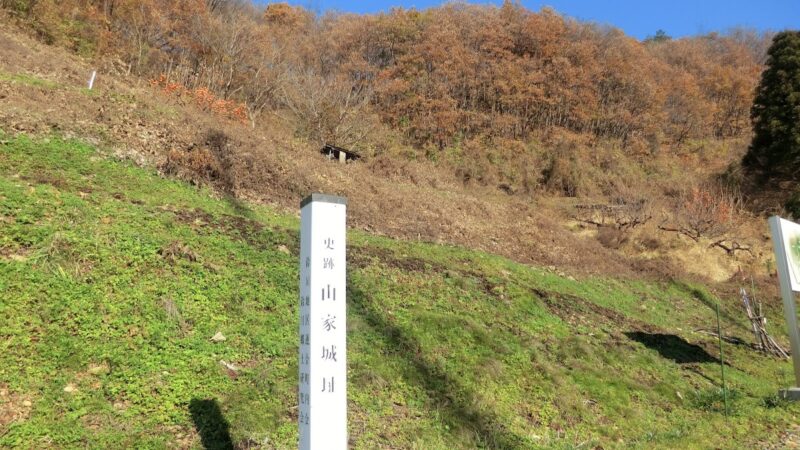
The castle ruins still retain the remains of the main gate and a stone monument, allowing visitors to imagine its former glory. Standing on a small hill surrounded by cedar trees, the castle ruins monument tells the story of the Sakenobe clan, who survived the turbulent Sengoku period.
History and Background of Sakenobe Castle
Construction and Origins of the Sakenobe Clan
Sakenobe Castle is said to have been built in 1535 (Tenbun 4). The builder was Sasaki Sadatsuna (Sakenobe Sadatsuna), the father of Sakenobe Hidetuna.
The roots of the Sakenobe clan are believed to be a branch of the Sasaki clan (Omi Genji), who resided at Iwahanakan in what is now Tozawa Village, Yamagata Prefecture, and served the Onodera clan. During the Daiei era (1521-1527), when Onodera Terumitsu, the lord of Senboku Castle, held this region as his territory, he granted Sasaki Sadatsuna, a guest general, a fief of 6,000 koku, moved him to Mamuro-go, and entrusted him with the defense of the cliffside area as a guard castle within Mogami-sho.
Sadatsuna received the Sakenobe estate and built a castle there, adopting the name Sakenobe. From this time on, Sakenobe Castle became the most important base for the Onodera clan in the Mogami region.
Turmoil from the Muromachi to the Azuchi-Momoyama Periods
As a subordinate of the Onodera clan, the Sakenobe clan fiercely fought against the Mutō and Mogami clans for control of Mogami County. During this period, the Mogami region exhibited the characteristics of a Sengoku period, with multiple forces vying for power.
The most important turning point in the history of Sakenobe Castle was the attack by Mogami Yoshiaki in 1581. In October 1584, Mogami Yoshiaki, lord of Yamagata Castle, after successively eliminating the formidable Tendō clan and the prestigious Hosokawa clan, turned his army towards Sakenobe Castle, where Sakenobe Echizen-no-kami Hidetoshi was holed up.
Hidetuna waged a three-month siege, but ultimately surrendered to the forces of Mogami Yoshiaki. However, Yoshiaki highly valued Hidetuna’s abilities as a military commander and welcomed him as a vassal on the condition that his territory be secured. This decision would greatly contribute to the later development of the Mogami family.
Activities under the Mogami Clan
After surrendering to the Mogami clan, Sakenobe Castle became an important frontline base in the Mogami clan’s strategy against the Onodera clan. It played a crucial role as a base for attacking the Onodera clan, whom he had previously served, and also in the campaign against the Daiboji clan.
The Battle of Hasedo in 1600 (Keicho 5) made Sakenobe Hidetuna’s name known throughout Japan. In this battle, which occurred in conjunction with the Battle of Sekigahara, Hidetuna displayed fierce fighting prowess as a general of the Mogami army. His performance was so impressive that his enemy general, Naoe Kanetsugu, remarked, “Even Shingen and Kenshin couldn’t compare to him.”
This evaluation signifies that he demonstrated military prowess comparable to that of famous generals of the Sengoku period, such as Takeda Shingen and Uesugi Kenshin, and clearly demonstrates Hidetuna’s talent as a military commander.
Sakenobe Hidetuna after the Mogami clan’s downfall
In 1622, when the Mogami clan was dispossessed of their domain, Sakenobe Hidetuna’s fate changed dramatically. However, Hidetuna’s reputation was widely known, and Doi Toshikatsu, a senior official of the shogunate, invited him to work for 1,000 koku.
This indicates that Hidetuna’s value as a military commander was highly regarded even after the Mogami clan’s downfall. Sakenobe Castle subsequently lost its function as a castle and was abandoned.
Structure and remains of Sakenobe Castle
Castle location and layout
The ruins of Sakenobe Castle are located on a plateau atop a cliff overlooking the Mamurogawa River. This terrain functioned as a natural stronghold, making it an extremely difficult defensive point for attackers.
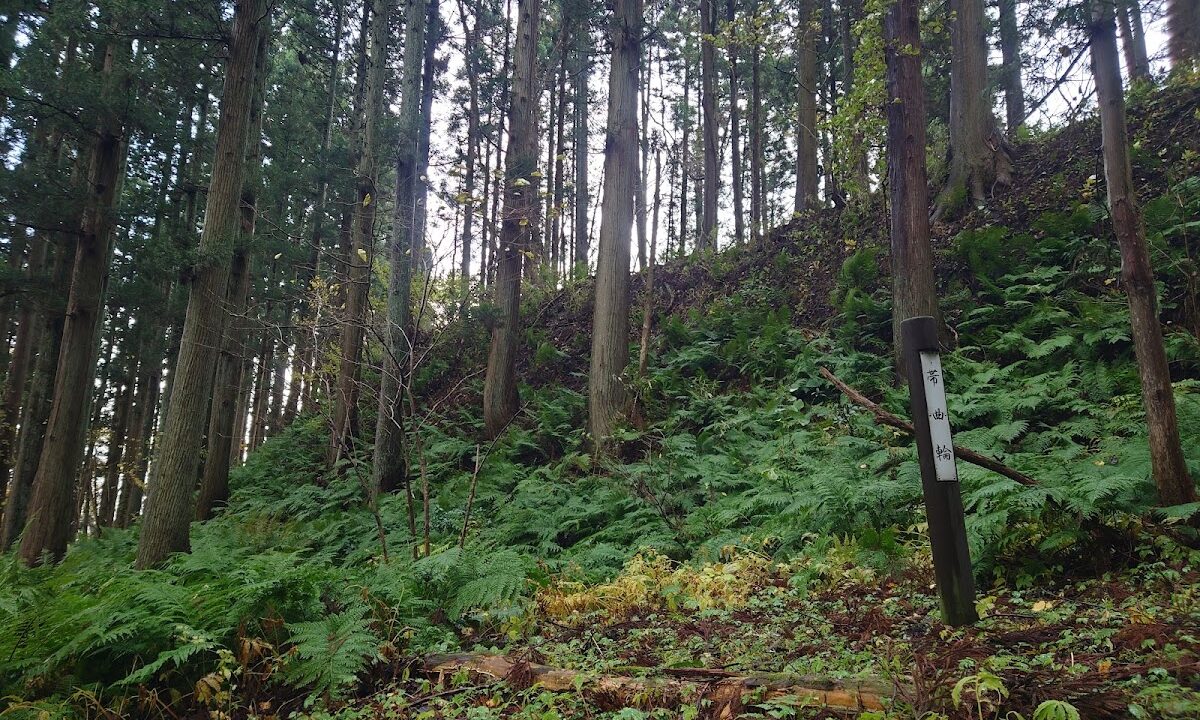
The castle is protected on three sides by natural terrain, with deep valleys of Yakushizawa to the south and Omizawa to the north, creating a robust structure. Its only weak point, the east side, was blocked by three trenches and a large earthen rampart, reinforced by artificial defensive structures.
This combination of trenches and ramparts is a typical defensive system for mountain castles of the Sengoku period, indicating the military importance of Sakenobe Castle.
Castle Structure
Protected by the three trenches and large earthen rampart, the interior was a vast space, and at the back lay the residence of the Sakenobe clan. This layout demonstrates a design philosophy that clearly separated the front line of defense from the living space.
Even today, visitors to the castle ruins can see traces of the main gate on a small hill beyond a cedar grove. The main gate was an important facility serving as the castle’s main entrance, and its remaining traces provide valuable clues for inferring the size and structure of the castle at the time.
Existing Remains
Currently, the following remains can be confirmed at the Sakenobe Castle site:
Main Gate Site: This is the location of the castle’s main gate. The gate’s position can be estimated from changes in the terrain.
Stone Monument: A stone monument marking the castle site has been erected, allowing visitors to recognize it as a castle site.
Traces of a Moat: Part of the Sanjo moat, a defensive structure on the east side, still remains as a topographical feature.
Traces of an Earthen Embankment: Part of the large earthen embankment can also be observed as a topographical feature.
Topography of the Enclosures: The flat areas within the castle indicate the former layout of the enclosures (kuruwa).
These remains are valuable resources for understanding the structure of mountain castles during the Sengoku period and are important points of interest for castle researchers and history enthusiasts.
Sakenobe Hidetuna, a Warrior
The Life and Achievements of Hidetuna
Sakenobe Echizen-no-kami Hidetuna was a brilliant strategist who was active from the Sengoku period to the early Edo period. Hidetoshi inherited Sakenobe Castle from his father, Sadatsuna, and initially served the Onodera clan. However, after fighting against Mogami Yoshiaki, he became a senior retainer of the Mogami family.
Hidetoshi’s greatest achievement was his performance in the Battle of Hasedo. In 1600, when a large army led by Naoe Kanetsugu, a retainer of Uesugi Kagekatsu, invaded Mogami territory, Hidetoshi fought valiantly alongside Mogami Yoshiaki. In particular, during the siege of Hasedo Castle, his tactical acumen and bravery troubled the Uesugi army, earning him the highest praise from an enemy general: “Even Shingen and Kenshin couldn’t replicate this.”
This evaluation signifies that his fighting prowess was on par with, or even surpassed, that of Takeda Shingen and Uesugi Kenshin, two of the most famous generals of the Sengoku period.
The Character of Hidetuna
The fact that Mogami Yoshiaki continued to highly value Hidetuna even after his surrender suggests that Hidetuna possessed not only military prowess but also governing ability and personal charm. For a Sengoku daimyo like Yoshiaki to accept an enemy general as a vassal and appoint him to a high-ranking position indicates absolute trust in that individual.
The fact that Hidetuna was invited by the shogunate’s senior councilor, Doi Toshikatsu, even after the Mogami family’s downfall, demonstrates that Hidetuna’s reputation was widely known beyond the confines of the Mogami family. While his stipend of 1,000 koku was not particularly large, the very act of a high-ranking shogunate official personally employing a vassal of a dispossessed daimyo was unusual.
Highlights of Sakenobe Castle Ruins
Castle Site Monument and Main Gate Ruins
The main highlights when visiting Sakenobe Castle Ruins are the castle site monument and the main gate ruins. Nestled amidst a tranquil cedar grove, the stone monument standing on a small hill serves as a valuable reminder of the history of the Sengoku period (Warring States period).
From the vicinity of the main gate ruins, one can observe the castle’s layout and topographical features, providing an important point for understanding the castle-building techniques and defensive philosophies of the Sengoku period.
Views and Natural Environment
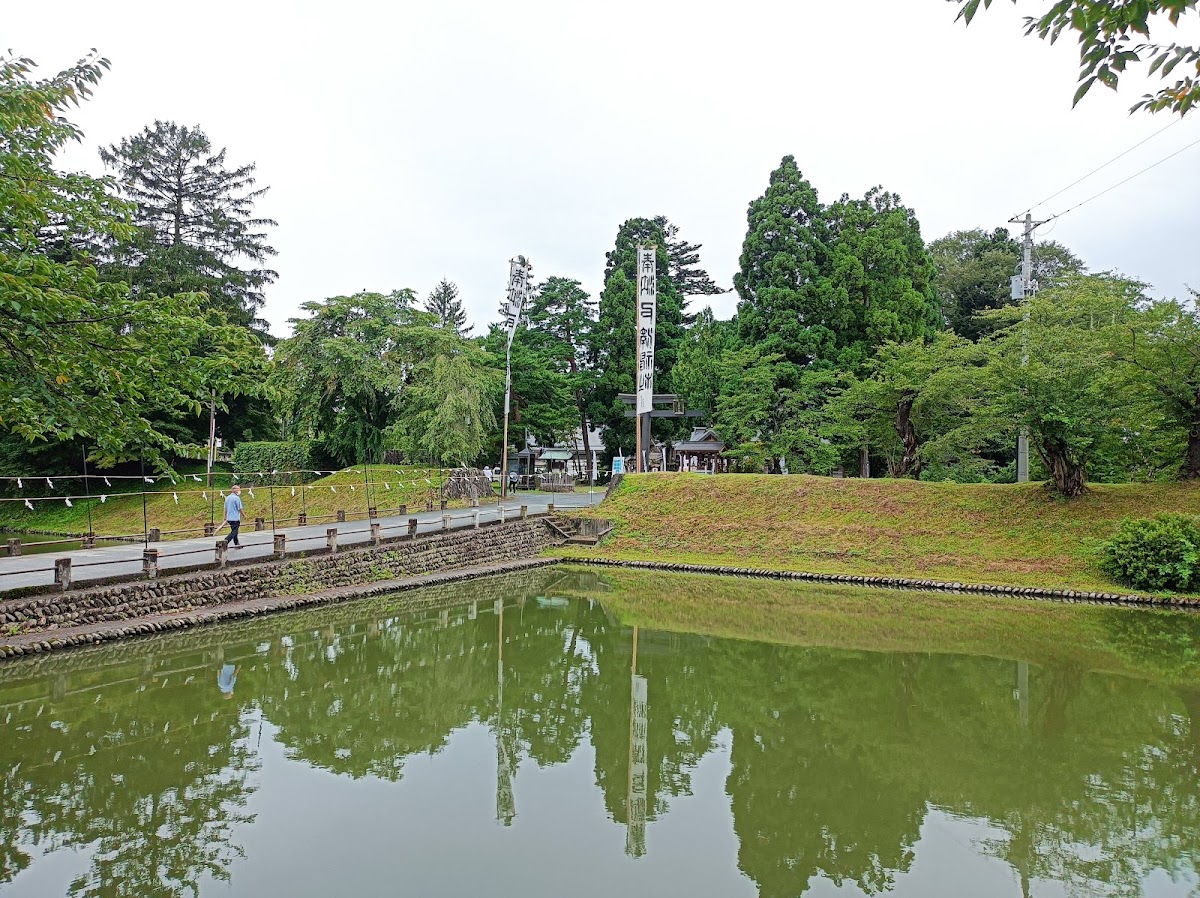
From the Sakenobe Castle ruins, one can overlook the flow of the Mamurogawa River, allowing visitors to relive the scenery seen by the former castle lords. The location on the banks of the Mamurogawa River was a crucial point for water transport, demonstrating its economic and military importance.
The cedar grove covering the castle ruins evokes a historical atmosphere while allowing visitors to enjoy the changing seasons. The seasons of fresh greenery and autumn foliage are particularly ideal for combining historical exploration with nature walks.
Historical Value
The Sakenobe Castle ruins are protected as a designated historical site of Mamurogawa Town, making them an indispensable cultural asset for understanding the region’s history. This castle ruin holds significant historical importance as a concrete stage for understanding the power struggles in the Mogami region during the Sengoku period, the conflict between the Onodera and Mogami clans, and the existence of the renowned general, Sakenobe Hidetuna.
Access and Basic Information
Location
Address: Uchimachi, Mamurogawa-machi, Mogami-gun, Yamagata Prefecture
Transportation Access
By Train:
- Approximately 10 minutes by car from JR Ou Main Line Mamurogawa Station
- Taking a taxi from Mamurogawa Station is convenient
By Car:
- Approximately 1 hour via National Route 13 from Higashine IC on the Tohoku Chuo Expressway
- It is recommended to check parking availability in advance
Visiting Information
Visiting Hours: There are no specific restrictions, but visiting during daylight hours is recommended
Admission Fee: Free
Estimated Time Required: Allow approximately 30 minutes to 1 hour to explore the castle ruins
Notes:
- As it is a mountain castle site, comfortable walking shoes are recommended
- Caution is needed as the ground can be slippery during rainy weather and winter
- Please be considerate of the historical site and avoid damaging the remains
Related Tourist Spots in Mamurogawa Town
Historical and Cultural Facilities in Mamurogawa Town
When visiting the Sakenobe Castle ruins, visiting other historical and cultural facilities in Mamurogawa Town will allow you to gain a deeper understanding of the region’s history.
As the northernmost town in Yamagata Prefecture, Mamurogawa Town has cultivated its own unique history and culture. There are numerous facilities where you can learn not only about the history of the Sakenobe clan, but also about the local folk culture and natural environment.
Surrounding Castle Ruins and Historical Sites
Besides Sakenobe Castle, many other castle ruins remain in the Mogami region. Visiting related historical sites such as the Yamagata Castle ruins (the base of Mogami Yoshiaki) and the Hasedo Castle ruins will provide a more comprehensive understanding of the history of the Mogami region during the Sengoku period.
Points to Note When Visiting Sakenobe Castle
Preparation for Historical Background
Before visiting Sakenobe Castle, gaining basic knowledge about the life of Sakenobe Hidetuna, his relationship with Mogami Yoshiaki, and the Battle of Hasedo will deepen your understanding at the site. Understanding the power dynamics of the Mogami region during the Sengoku period (Warring States period) will make the strategic importance of Sakenobe Castle even clearer.
Photography Tips
There are several photo opportunities, including the castle ruins monument, the remains of the main gate, and the view of Mamurogawa. The stone monument visible through the cedar trees is a particularly excellent subject, evoking a sense of history.
The castle’s appearance changes depending on the season and time of day, so multiple visits may lead to new discoveries.
Local Food Culture
Mamurogawa Town is blessed with abundant nature, and you can enjoy dishes made with local ingredients. Experiencing the local food culture, along with historical exploration, is another enjoyable aspect of your trip.
Historical Significance of Sakenobe Castle
Position in the History of the Mogami Region
Sakenobe Castle played a crucial role in the Sengoku period history of the Mogami region. From a base for the Onodera clan’s control of the Mogami region to a key point for the Mogami clan’s northern defense, it consistently maintained its military and political importance.
The history of this castle symbolically illustrates the shifts in power in the Mogami region, making it an indispensable resource for regional history research.
Evaluation of Sakenobe Hidetuna
Sakenobe Hidetuna is highly regarded as a senior retainer of Mogami Yoshiaki and as a renowned general of the Sengoku period. The fact that he received the praise of Naoe Kanetsugu, a top-class warlord of his time, who said “even Shingen and Kenshin didn’t remember him,” demonstrates that Hidetuna’s abilities as a military commander were on a national level.
The fact that he was invited to become a senior retainer of the shogunate even after the Mogami family’s downfall indicates that his reputation was passed down through the ages.
Value in Castle Research
Sakenobe Castle is a valuable historical site that preserves the typical structure of a Sengoku period mountain castle. Its location utilizing cliffs, defensive system of moats and earthworks, and layout of baileys make it important material for studying the castle-building techniques of the time.
Protected as a Mamurogawa Town designated historical site, it is expected that this historical value will be passed down to future generations.
Summary
Sakenobe Castle is a mountain castle ruin located in Mamurogawa Town, Mogami District, Yamagata Prefecture, dating back to the Sengoku period. It is known as the residence of the renowned general, Sakenobe Hidetuna. Since its construction in 1535, it played a crucial role as a base for the Onodera clan and a key point in the Mogami clan’s northern defenses.
Its robust structure, utilizing its geographical location on the banks of the Mamurogawa River, and its defensive system of three trenches and large earthen ramparts, showcase the pinnacle of Sengoku period castle construction technology. The remaining castle ruins monument and the site of the main gate are valuable relics that evoke the castle’s former glory.
The existence of the warrior Sakenobe Hidetuna further enhances the historical value of this castle. His exploits in the Battle of Hasedo etch a glorious page in the history of Sengoku period warlords, and the assessment that “even Shingen and Kenshin were unaware of his prowess” demonstrates the value of his martial prowess that transcends time.
When you visit Mamurogawa, the northernmost town in Yamagata Prefecture, be sure to stop by the ruins of Sakenobe Castle and trace the footsteps of a famous general who survived the turbulent Sengoku period. In this tranquil space surrounded by cedar trees, you’re sure to feel the romance of history.