Complete Guide to Toki Castle (Sakai City, Osaka Prefecture): A Thorough Explanation of the History and Remains of Kitamura Fort
What is Toki Castle?
Toki Castle (Toki-jo) is a medieval castle located in Toki-kita, Naka-ku, Sakai City, Osaka Prefecture. Also known as “Kitamura Fort,” it is a historical castle site that played an important role from the late Kamakura period to the Nanboku-cho period. Currently, remains are preserved on the south side of Higashi-Toki Park, making it a valuable historical site that conveys the atmosphere of that time.
Located around 661 Toki-kita, Naka-ku, Sakai City, it was once a strategically important location as a key point in Izumi Province. Even today, remains such as earthworks can be seen, providing valuable information for understanding the structure of medieval castles.
History of Toki Castle
Late Kamakura Period: The Residence of the Toki Clan
The exact construction date of Toki Castle is not clearly known, but it is believed to have already existed by the late Kamakura period. This castle was the residence of a samurai named Toki Saemon-no-jo. The Toki clan was a powerful local family that ruled this area.
The Toki clan was loyal to the Hojo clan and played an important role in Izumi Province under the Kamakura Shogunate’s system of rule. It is believed that Toki Castle functioned as a political and military center in this region.
The Genko War and the Attack by Kusunoki Masashige
The most important event in the history of Toki Castle was the attack by Kusunoki Masashige’s family in 1333 (Genko 3rd year/Shokei 2nd year). This was also the year the Kamakura Shogunate fell, a time of nationwide turmoil.
Kusunoki Masashige supported Emperor Go-Daigo’s movement to overthrow the shogunate and was a central figure in the anti-shogunate forces based in Kawachi Province. Kusunoki Masashige’s family attacked Toki Castle, which was loyal to the Hojo clan, and destroyed the Toki clan. This battle marked the disappearance of the Tōki clan from the historical stage.
Battles during the Nanboku-chō Period
Even after the fall of the Kamakura Shogunate, Tōki Castle remained a militarily important base. Records show that in Shōhei 6th year/Kannō 2nd year (1351), Wada Sukeuji and Sukeshige of the Southern Court attacked Tōki Castle, which was defended by the Northern Court.
This period was a time of turmoil for the Nanboku-chō period, with fierce battles fought throughout the country between the Southern and Northern Courts. Tōki Castle was also a battleground, and it is believed that numerous battles took place there.
After the Sengoku Period
While the detailed history of Tōki Castle after the Nanboku-chō period is unclear, there are records indicating that the fourth son of Koide Hidemasa was involved with the Tōki region during the Sengoku period. However, it is highly likely that the castle had already lost its function by this time and was used as a military encampment.
During the Edo period, Touki Castle was completely abandoned, and the surrounding area was developed into farmland and residential areas.
Structure and Layout of Touki Castle
Scale and Location of the Castle
Touki Castle was built south of Higashi Touki Elementary School, near the present-day Higashi Touki Park. It is classified as a medieval flatland or hill castle, and it is believed that defensive structures were arranged to take advantage of the surrounding terrain.
The exact size of the castle is unknown, but judging from the existing remains, it is estimated to have been a relatively small castle. However, it is thought to have been large enough to serve as the residence of a local powerful family.
Earthworks and Defensive Structures
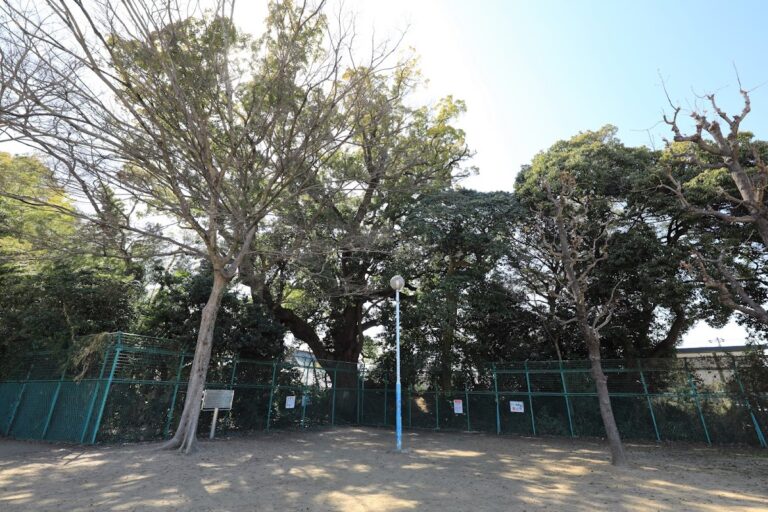
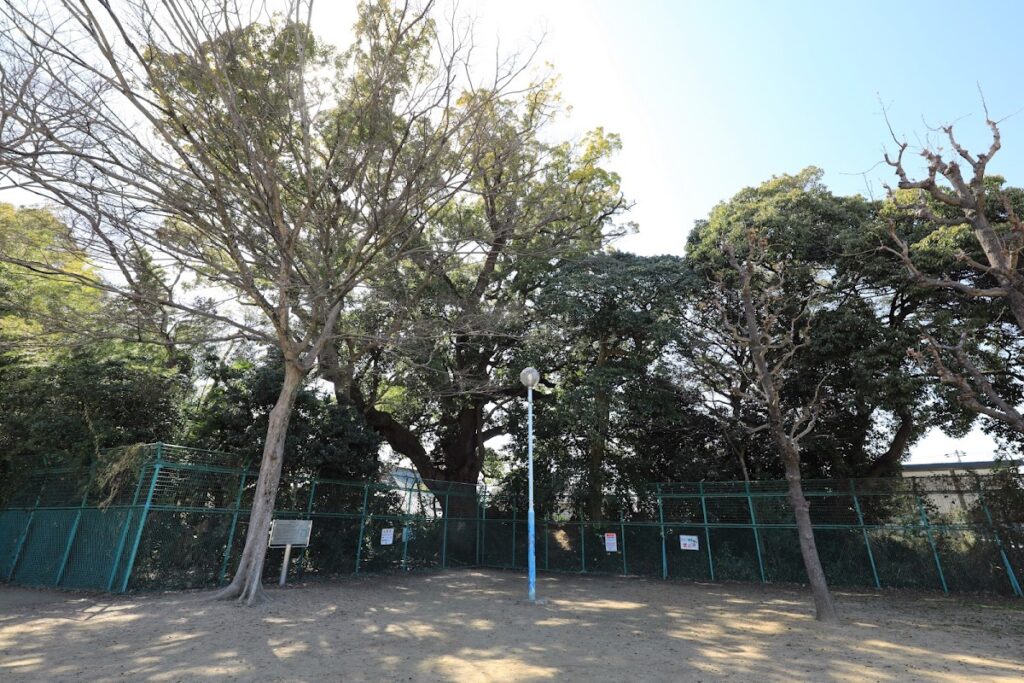
The greatest highlight of Touki Castle is the earthworks that still remain today. Beyond the wire mesh fence located south of Higashi Touki Park, the impressive earthworks can be seen. These earthworks retain many characteristics of medieval castle architecture and are valuable remains for understanding the castle construction techniques of the time.
The earthworks are several meters high, and earthen walls that show their age can also be seen. Currently, the site is private property, so viewing is only possible from behind a fence, but its presence is still clearly felt.
Moats and Water Supply
While moats were common in medieval castles for defense, the existence of a moat at Touki Castle is not clearly established. However, considering the surrounding topography and water supply, it is highly likely that some kind of water moat or dry moat existed.
Highlights of Touki Castle
View from Higashi Touki Park
The main viewing point when visiting Touki Castle is Higashi Touki Park. From the south side of the park, you can see the earthworks through a wire mesh fence. The park is maintained as a place of relaxation for local residents, and visitors can easily stop by.
You can enter the park by car from the east side (kindergarten side), and for short visits, you can park at the edge of the park. However, consideration should be given to avoiding inconveniencing other park users.
Existing Earthworks
The biggest highlight is undoubtedly the existing earthworks. The earthen rampart visible beyond the wire mesh fence is a valuable historical relic dating back to the Middle Ages, and its scale and excellent state of preservation are astonishing.
The surface of the rampart shows signs of weathering, indicating its age and telling the story of several hundred years of history. While there aren’t many remains, it’s well worth seeing and a must-see spot for fans of medieval castles.
Around Murata Clinic
The area marked “Murata Clinic” on the map is believed to have been the central part of the former castle grounds. Although it’s now private property and entry is prohibited, the exterior still exudes a historical atmosphere.
Access and Visiting Information
Access by Public Transportation
When visiting Toki Castle using public transportation, the following routes are convenient:
Using the Senboku Rapid Railway
- Get off at “Fukai Station” on the Senboku Rapid Railway
- Approximately 20 minutes on foot from the station
- Alternatively, take a bus from the station and get off at the “Toki” bus stop, then approximately 5 minutes on foot.
Using Nankai Bus
- Take a bus from “Nakamozu Station” or “Sakaihigashi Station” on the Nankai Koya Line
- Get off at the “Toki” bus stop, then approximately 5 minutes on foot.
Access by Car
When visiting by car:
- Approximately 15 minutes from “Sakai IC” on the Hanwa Expressway
- Accessible via National Route 310
- You can enter the park from the east side (kindergarten side) of Higashi Toki Park
- There is no dedicated parking lot, but short-term parking is possible at the edge of the park (consideration is required to avoid inconveniencing other park users).
Estimated Visit Time
The estimated visit time to Touki Castle is approximately 15 minutes. Since the remains are limited, 30 minutes should be sufficient even for a thorough visit. Including photography and exploring the surrounding area, the entire visit can be completed within an hour.
Points to Note During Your Visit
- Respect for Private Property: The area with the earthworks is private property; please view it only from behind the fence. Unauthorized entry is strictly prohibited.
- Respect for Park Users: Higashi Touki Park is a place of relaxation for local residents. Please be considerate of park users during your visit.
- Photography Etiquette: Photography is permitted, but please be mindful of the privacy of local residents and avoid including private homes or other private objects in your photos.
- Season and Time of Day: As the remains are outdoors, we recommend visiting during the daytime on a sunny day. Early mornings and evenings are not suitable for viewing due to darkness.
Nearby Castles and Tourist Attractions
Nearby Castle Ruins
Here are some nearby castle ruins you can visit when you come to Touki Castle:
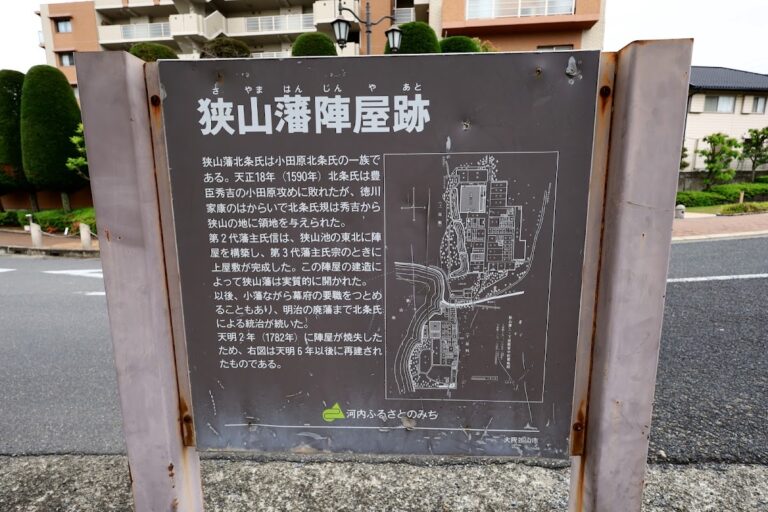
Sayama Jinya
- Approximately 20 minutes by car from Touki Castle
- Remains of an Edo period encampment
- One of the areas controlled by the Hojo clan
Tannan Jinya
- Approximately 15 minutes by car from Touki Castle
- Remains of an Edo period encampment
- A facility related to Koide Hidemasa
Odani Castle (Izumi Odani Castle)
- Approximately 25 minutes by car from Touki Castle
- A mountain castle from the Sengoku period
- Remains of a larger castle complex
Tourist Attractions in Sakai City
Sakai City, where Touki Castle is located, also has many other tourist attractions:
Sakai City Museum
- A comprehensive museum where you can learn about the history and culture of Sakai
- Detailed exhibits on Sakai in the Middle Ages
- Also houses materials on castles in the region, including Touki Castle
Nintoku Emperor’s Mausoleum
- One of the world’s largest burial mounds
- Registered as a World Cultural Heritage Site
- A representative historical spot of Sakai
Sakai Traditional Industries Hall
- Exhibits and sells traditional crafts of Sakai
- You can learn about Sakai’s famous products such as cutlery and incense sticks
Evaluation and Appeal of Touki Castle
Evaluation as a Castle
Touki Castle does not have large-scale stone walls or magnificent remains such as a keep, but it is valued as a valuable historical site that retains the original form of a medieval castle. In particular, the existing earthworks are important materials for understanding medieval castle construction techniques.
The average rating on Kojodan is ★★☆☆☆ 2.25, which is not particularly high, but this is because the scale of the remains is small and the area that can be visited is limited. However, for those interested in medieval castles or those who want to visit places associated with Kusunoki Masashige, it is a castle site well worth visiting.
Historical Value
The greatest appeal of Touki Castle lies in its historical background. As a castle involved in important turning points in Japanese history, such as its conquest by the family of Kusunoki Masashige and its role in the battles during the Nanboku-chō period, it evokes a sense of historical romance.
In particular, Kusunoki Masashige’s exploits during the Genkō War are famous in Japanese history, and Tōki Castle holds significant importance as a related historical site.
Visitor Feedback
The following are comments from people who have actually visited Toki Castle:
- “Beyond the wire mesh fence on the south side of Higashi Toki Park, you can see a magnificent earthen embankment. You can also see ancient earthen walls, and although there aren’t many remains, it’s well worth seeing.”
- “Although small, it’s a valuable place where you can feel the atmosphere of a medieval castle.”
- “As a place associated with Kusunoki Masashige, you can feel the historical romance.”
Resources for Toki Castle Research
Related Books
For those who want to learn more about Toki Castle, the following books are helpful:
- “Medieval Castles of Osaka Prefecture” (Osaka Prefectural Board of Education)
- Comprehensively explains medieval castles in Osaka Prefecture
- Includes detailed descriptions of Toki Castle
- “History of Sakai City” (Sakai City History Compilation Committee)
- General history of Sakai City
- Detailed description of Sakai and the surrounding areas in the medieval period
- “Kusunoki Masashige and the Turmoil of the Northern and Southern Courts”
- The Life and Battles of Kusunoki Masashige
- Mentions the Siege of Tōki Castle
Historical Materials
Primary sources concerning Tōki Castle are limited, but the following materials contain descriptions:
- *Taiheiki*: Records the activities of Kusunoki Masashige
- *Izumi no Kuni Shi*: A geographical record of Izumi Province, containing descriptions of Tōki Castle
- Various military chronicles: Records of battles during the Nanboku-chō period
Preservation and Future of Tōki Castle
Current Preservation Status
The remains of Tōki Castle are not currently designated as a special protected site, but important remains such as earthworks are preserved in relatively good condition. However, because it is located on private land, public maintenance is limited.
Future Challenges
Regarding the preservation and utilization of Touki Castle, the following challenges exist:
- Protection of the remains: How to protect the remains located on private land?
- Promotion of public access: Creating an environment that allows more people to visit.
- Raising awareness of historical value: Educating local residents and visitors about the historical value.
- Promotion of research: Clarifying the detailed structure through archaeological excavations, etc.
Engagement with the local community
Touki Castle is cherished by local residents as a historical heritage site. Higashi Touki Park functions as a place of relaxation for local residents, and the presence of historical remains in a corner of it is part of the community’s identity.
Summary
Touki Castle (Kitamura Fort) is a medieval castle ruin located in Naka Ward, Sakai City, Osaka Prefecture. Although small in scale, it is a castle site of high historical value, having been involved in important events in Japanese history, such as the conquest by the family of Kusunoki Masashige and the battles during the Nanboku-cho period.
Currently, remnants such as earthworks remain on the south side of Higashi-Toki Park, and can be viewed from behind a fence. While the visit only takes about 15 minutes, it’s a valuable spot where you can experience the atmosphere of a medieval castle.
When visiting Sakai City, why not also visit this quiet historical site along with other famous tourist attractions such as the Emperor Nintoku Mausoleum? You’ll be able to experience the simple charm of a medieval castle, unlike the large-scale fortresses you might find elsewhere.
Access is relatively convenient; you can visit by public transport or car. This historical site is recommended not only for history buffs and castle enthusiasts, but also for anyone interested in local history.