Complete Guide to Ozu Castle | The Charm, History, Highlights, and Access Information of the Reconstructed Wooden Keep
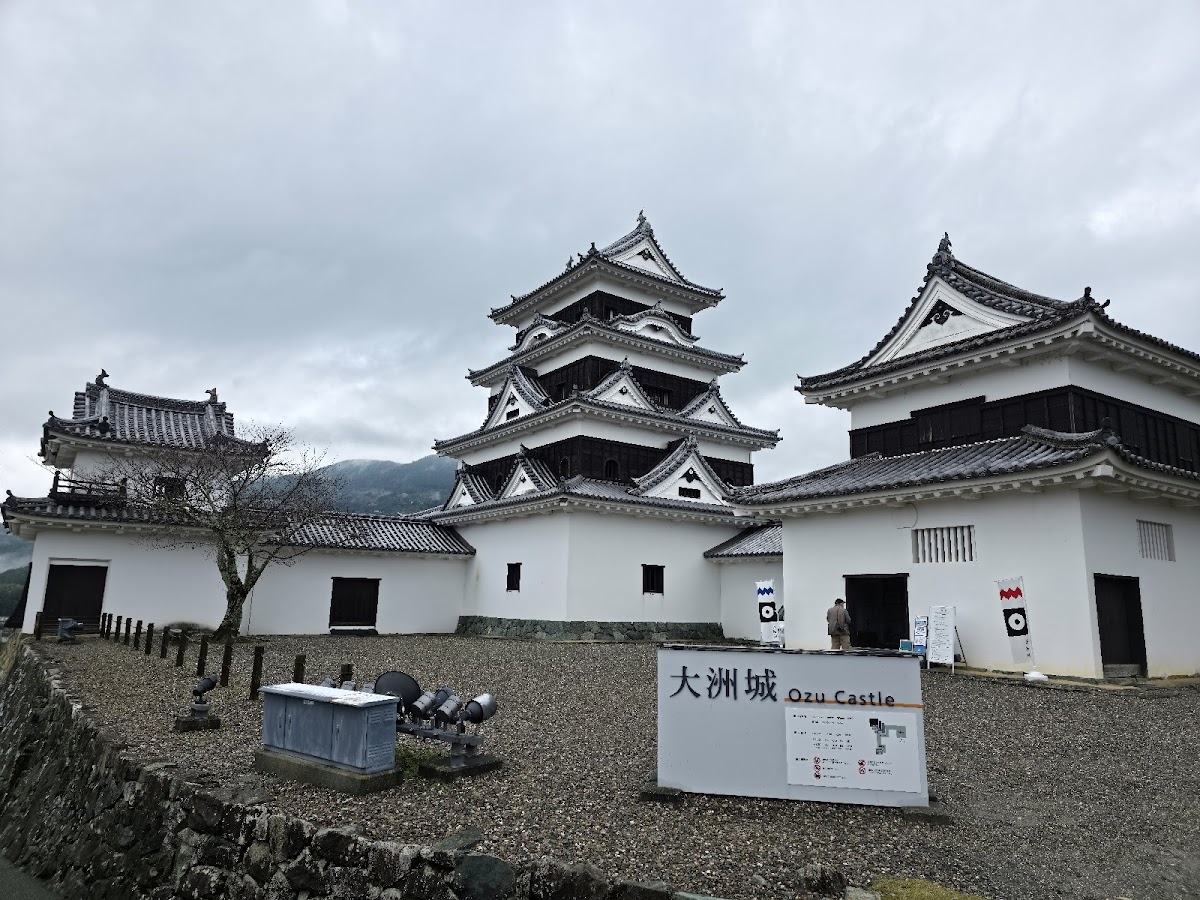
Ozu Castle, towering over Ozu City, Ehime Prefecture, is a beautiful castle situated on the banks of the Hiji River. Built at the end of the Kamakura period, it flourished as the center of the Iyo Ozu Domain during the Edo period. The castle gained national attention when its keep, once lost in the Meiji era, was completely reconstructed in wood in 2004. This wooden reconstruction, the first of its kind in post-war castle architecture using traditional methods, has been dubbed a “miracle castle” and is highly regarded by history buffs and architecture enthusiasts.
This article comprehensively introduces everything you need to know before visiting Ozu Castle, from its history and highlights to viewing information and access methods.
History and Background of Ozu Castle
Construction at the End of the Kamakura Period
The history of Ozu Castle dates back to the first year of the Genko era (1331). At the end of the Kamakura period, Utsunomiya Toyofusa, who entered Iyo Province as its governor, built a castle on a hill approximately 40 meters above sea level, near the confluence of the Hiji River and Kume River. Initially, it was called “Jizogatake Castle” or, after the original place name, “Otsu Castle.”
The Utsunomiya clan ruled this area for over 200 years, laying the foundation for a medieval castle. However, in 1568 (Eiroku 11), the Utsunomiya clan was destroyed, and the castle’s history entered a new phase.
Major Renovations from the Toyotomi Period to the Early Edo Period
In 1585 (Tensho 13), after Toyotomi Hideyoshi’s conquest of Shikoku, powerful warlords successively entered Otsu Castle. Following Kobayakawa Takakage and Toda Katsutaka, Todo Takatora became the castle lord in 1597 (Keicho 2).
Todo Takatora was known as a master castle builder, and he carried out large-scale renovations of Ozu Castle almost simultaneously with those of Uwajima Castle. During this period, the transition from medieval to early modern castles progressed, and the basic structure of the castle was established.
In 1609 (Keicho 14), Wakisaka Yasuharu entered the castle from Sumoto in Awaji, and during the time of Todo Takatora and Wakisaka Yasuharu, the main buildings, including the keep, were constructed. It is also said that the castle’s name was changed from the original “Otsu” to the current “Ozu” during Wakisaka Yasuharu’s time (although there are differing theories).
The Kato Clan and the Prosperity of the Castle Town
In 1617 (Genna 3), Kato Sadayasu was appointed to the domain with a 60,000 koku stipend, and from then until the Meiji Restoration, 14 generations of the Kato clan served as lords. By this time, most of the castle grounds were completed, and the castle town flourished greatly as the political and economic center of the Iyo Ozu Domain.
Throughout the Edo period, Ozu Castle continued to function as a symbol of peace and as the center of the domain’s administration. The keep and turrets were beloved symbols of the domain’s prestige, cherished by the people of the castle town.
Demolition and Preservation Movement in the Meiji Era
After the Meiji Restoration, many castles were demolished under the castle demolition decree, and Ozu Castle was no exception. In 1888 (Meiji 21), the keep was demolished due to its dilapidation. However, thanks to the strong desire for preservation from local residents, four turrets—the kitchen turret, the railing turret (later renamed the South Corner Turret), the cotton turret, and the South Corner Turret of the Third Bailey—were spared from demolition and remain to this day.
These turrets, as valuable structures remaining from the Edo period, were designated as Important Cultural Properties of Japan in 1957 (Showa 32).
The Heisei Era Castle Tower Restoration Project
The Challenge of Wooden Restoration
The restoration of Ozu Castle’s tower was not merely about creating a tourist attraction, but a project with a cultural mission: the accurate reproduction of a historical building. The four-story, four-tiered tower, completed in 2004 (Heisei 16), was the first complete wooden restoration using the original construction methods since the end of World War II.
In the restoration, historical materials such as old photographs taken during the Meiji era, Edo period drawings, and wooden models called “castle tower models” were thoroughly researched. Based on these materials, it became possible to faithfully reproduce the appearance of the castle in its heyday.
Construction Using Traditional Methods
The restoration work brought together experts in traditional architecture, including master carpenters. Over approximately 10 years, the tower was constructed using traditional joinery methods that minimized the use of nails. The timber used included domestically produced cypress and pine, the same materials used during the Edo period.
This wooden restoration was achieved by overcoming many difficulties, including adjustments to modern building codes. In an era where reinforced concrete construction was the norm for castle restoration, the approach taken for Ozu Castle was groundbreaking.
Support from Citizens
Notably, this restoration project was realized primarily through donations from citizens. Support poured in from the citizens of Ozu, as well as castle enthusiasts and history buffs nationwide, covering a total of approximately 1.1 billion yen in project costs.
This citizen-participatory project symbolizes local pride and affection, and even after its completion, Ozu Castle remains deeply cherished by its citizens.
Highlights of Ozu Castle
Wooden Restored Keep
The greatest highlight of Ozu Castle is undoubtedly its wooden restored keep. The four-story, four-floor keep not only boasts a beautiful exterior, but upon entering, visitors can experience the scent of wood and admire the intricate wooden joinery using traditional construction methods up close.
The keep’s interior features steep staircases connecting each floor, allowing visitors to experience the characteristics of Edo-period castle architecture. From the top floor, you can enjoy a panoramic view of the Hijikawa River and the castle town of Ozu, allowing you to relive the scenery seen by the former lord of the castle.
The triangular and square gunports, which can be opened and closed as needed, offer a surprisingly wide view, allowing you to appreciate their function as defensive structures.
Group of Turrets Designated as National Important Cultural Properties
The four turrets remaining from the Edo period are valuable structures that tell the story of the historical value of Ozu Castle.
The Kitchen Turret, as its name suggests, was a turret that housed the castle’s kitchen, and is characterized by its practical architectural style. The South Corner Turret (formerly the Railing Turret) is located in the southeast corner of the main enclosure and presents an elegant appearance. The Owata Turret is a two-story turret with a structure that combines defensive and residential functions. The South Corner Turret of the Third Enclosure is a valuable structure remaining in the Third Enclosure area.
These turrets, harmonizing with the reconstructed wooden keep, convey the atmosphere of an Edo-period castle.
Stone Walls and Castle Structure
The stone walls of Ozu Castle are a valuable historical site that allows us to see the evolution of castle construction techniques throughout different eras. From the rough-hewn stonework of the medieval period to the fitted and cut stonework of the early modern period, various construction methods can be observed.
In particular, the stone walls around the main keep were constructed during the time of Todo Takatora and Wakizaka Yasuharu, demonstrating a high level of technical skill. The stone walls facing the Hiji River are positioned with water transport in mind, which is important for understanding the relationship between the castle and the castle town.
Shiroyama Park and Surrounding Environment
Ozu Castle has been developed into Shiroyama Park, where visitors can enjoy the changing seasons. In spring, cherry blossoms bloom, making it a popular spot for cherry blossom viewing. Walking paths are maintained within the park, allowing visitors to view the castle from various angles.
The location on the banks of the Hiji River is also one of Ozu Castle’s charms. The reflection of the castle tower on the river surface is as beautiful as a painting, making it a popular spot for photography.
Ozu Castle Experience
Ozu Castle Castle Stay
Started in July 2020, “Ozu Castle Castle Stay” is Japan’s first castle stay experience program. This groundbreaking initiative, which allows participants to actually stay in a reconstructed wooden castle tower and experience being a castle lord for one night, has attracted attention both domestically and internationally.
The program includes a reenactment of the first lord of the Ozu domain entering the castle, a welcome ceremony by banner bearers and musketeers, and a special meal experience within the castle. As a top-tier travel experience that allows visitors to relive the time spent by their ancestors in a historical site that is usually only viewable, it has become a dream destination for many history enthusiasts.
Ozu Castle Welcome Flag Waving
When JR Shikoku’s sightseeing train “Iyonada Monogatari” slowly crosses the Hijikawa River bridge, a “flag waving” event takes place from the main keep of Ozu Castle, welcoming the train with banners. This scene, a unique offering of hospitality in Ozu, is popular with both train passengers and tourists visiting the castle.
The majestic castle tower rising high on the hill, with its brightly colored banners fluttering in the wind, is truly a symbol of Ozu.
Exploring the Castle Town
The charm of Ozu Castle extends beyond the castle itself. The castle town retains numerous townhouses and historical buildings dating back to the Edo period, and a distributed hotel concept, “NIPPONIA HOTEL Ozu Castle Town,” has been developed by renovating these buildings.
You can fully appreciate the charm of Ozu, where the castle and castle town have intertwined and accumulated history.
Visitor Information
Admission Fees
The admission fees for Ozu Castle are as follows:
- Adults: 550 yen
- Children (Elementary and Junior High School Students): 220 yen
- Infants (Under Elementary School Age): Free
Discount System:
- Free admission for holders of a Physical Disability Certificate, Intellectual Disability Certificate, or Mental Disability Health and Welfare Certificate, and one accompanying caregiver.
- Group discounts (20 or more people) are available.
The admission fee includes viewing the castle keep and the important cultural property turrets. Strolling through Shiroyama Park is free of charge.
Opening Hours and Closing Days
Opening Hours: 9:00 AM – 5:00 PM (Last entry 4:30 PM)
Closing Days:
- December 29th – December 31st (Year-end)
- Other temporary closures may occur (We recommend checking the official website in advance)
Entry may be restricted due to weather or events, so we especially recommend checking in advance during long holidays and events.
Notes
- The castle tower is made of wood and has steep stairs. We recommend wearing comfortable shoes when visiting the castle.
- Smoking is prohibited inside the castle keep.
- Pets are not allowed (except for service animals).
- Children under elementary school age must be accompanied by a guardian.
- Photography is permitted, but please be considerate of other visitors.
Access
Access by Train
Using the JR Yosan Line:
- Get off at JR “Iyo-Ozu Station” and walk for approximately 25 minutes.
- Approximately 5 minutes by taxi.
- Rental bicycles are available from the station (convenient for exploring the castle town).
Travel Time from Major Cities:
- From Matsuyama Station: Approximately 35 minutes by limited express train, approximately 1 hour by local train.
- From Uwajima Station: Approximately 25 minutes by limited express train.
Access by Car
Using the Expressway:
- Approximately 5 minutes (approximately 3 km) from the Matsuyama Expressway “Ozu IC”.
- From the Ozu IC, take National Route 56.
Travel Time from Major Cities:
- From Matsuyama City: Approximately 1 hour via general roads
- From Kochi City: Approximately 2 hours via expressway
Parking:
- Dedicated parking lot for Ozu Castle (free)
- Accommodates approximately 30 regular cars
- Large buses can be parked (advance notice required)
Combining with surrounding tourist attractions
Around Ozu Castle, there are many attractive tourist spots within walking distance, including Garyu Sanso (a nationally designated important cultural property), Ozu Red Brick Museum, and Pokopen Yokocho. You can combine a stroll through the castle town with these attractions to create a half-day to full-day sightseeing plan.
Cultural Property Designation and Evaluation of Ozu Castle
Cultural Property Value
Ozu Castle has received the following cultural property designations:
- Nationally Designated Important Cultural Property: Four buildings – the Kitchen Turret, the Balustrade Turret (South Corner Turret), the Owata Turret, and the South Corner Turret of the Third Bailey
- Ehime Prefecture Designated Historic Site: The entire area of Ozu Castle ruins
The landscape, where turrets remaining from the Edo period coexist with the Heisei-era wooden reconstruction of the castle tower, is a valuable example in the history of Japanese castles.
One of Japan’s Top 100 Castles
Ozu Castle has been selected as one of “Japan’s Top 100 Castles” and is known as a must-see spot among castle enthusiasts. The 100 Castles stamp can be obtained inside Ozu Castle.
Its pioneering efforts in wooden reconstruction of the castle tower and the history of citizen-led preservation activities are highly regarded, and it is attracting attention as a model case for modern castle preservation.
The Four Seasons of Ozu Castle
Spring (March-May)
In spring, Ozu Castle is a popular spot for cherry blossom viewing, attracting many visitors. The combination of the cherry blossoms in full bloom in Shiroyama Park and the castle keep is a spectacular sight, and the castle is illuminated at night. The reflection of the cherry blossoms and castle on the surface of the Hijikawa River at night is magical.
Summer (June-August)
Surrounded by fresh greenery, Ozu Castle exudes a powerful sense of vitality. From the top floor of the keep, you can enjoy a panoramic view of the lush townscape of Ozu and the clear waters of the Hijikawa River. The contrast between the white walls and black tiles against the summer blue sky is beautiful.
Autumn (September-November)
During the autumn foliage season, the trees in Shiroyama Park change color, adorning the castle keep. On clear autumn days, you can see the details of the castle clearly in the crisp air. You can also enjoy the atmosphere of the castle town as it enters harvest season. ### Winter (December-February)
Winter presents a dignified presence at Ozu Castle. The clear air makes it an ideal season for viewing distant mountains. If you’re lucky, you can witness the castle enveloped in the morning mist rising from the Hiji River, creating a fantastical scene.
Attractions around Ozu Castle
Garyu Sanso
Located about a 10-minute walk from Ozu Castle, Garyu Sanso is a villa built by a wealthy merchant during the Meiji era and is a nationally designated Important Cultural Property. The garden overlooking the Hiji River and the beauty of its sukiya-style architecture are must-sees.
Ozu Red Brick Building
This red brick building, constructed in 1901 (Meiji 34), was formerly used as the Ozu Commercial Bank. It is now used as a tourist information hub.
Pokopen Yokocho
This shopping street retains the atmosphere of the Showa era, allowing you to stroll through a retro townscape. This area offers a glimpse into both the history of Ozu Castle as a castle town and its modern commercial development.
Summary
Ozu Castle is a unique castle that blends a long history dating back to the late Kamakura period with the modern endeavor of its wooden reconstruction in the Heisei era. The turrets, important cultural properties remaining from the Edo period, the keep restored using traditional methods, and the historical landscape of the castle town all come together to deeply impress visitors.
The restoration of the keep, realized through citizen conservation efforts and donations, is a symbol of local pride and affection, and a cultural heritage of Ozu that will be passed down to future generations. With various ways to experience history, such as castle stays and strolls through the castle town, Ozu Castle is a must-visit spot when visiting Ehime Prefecture.
The beautiful keep, standing on the banks of the Hijikawa River, continues to watch over the town of Ozu, displaying its ever-changing expressions throughout the seasons. For history buffs, architecture enthusiasts, and anyone wanting to experience traditional Japanese culture, Ozu Castle is a place that will create unforgettable memories.