Complete Guide to Ozu Castle | History, Highlights, and Access Information for the Reconstructed Wooden Keep
Ozu Castle stands majestically on the banks of the Hiji River in the heart of Ozu City, Ehime Prefecture. With a history spanning approximately 700 years since the late Kamakura period, its wooden keep, reconstructed in 2004, has attracted nationwide attention as the first four-story keep built using traditional construction methods after World War II. This article comprehensively covers everything you need to know before visiting Ozu Castle, from its history and highlights to visitor information and access methods.
Overview of Ozu Castle
Ozu Castle is a hilltop castle located in Ozu, Ozu City, Ehime Prefecture, and is also known as “Hiji Castle” or “Jizogatake Castle.” Built on Jizogatake, a hill approximately 20 meters above sea level on the banks of the Hijikawa River, Ozu Castle flourished during the Edo period as the residence of the 60,000-koku Iyo Ozu Domain, becoming a center of politics and economy.
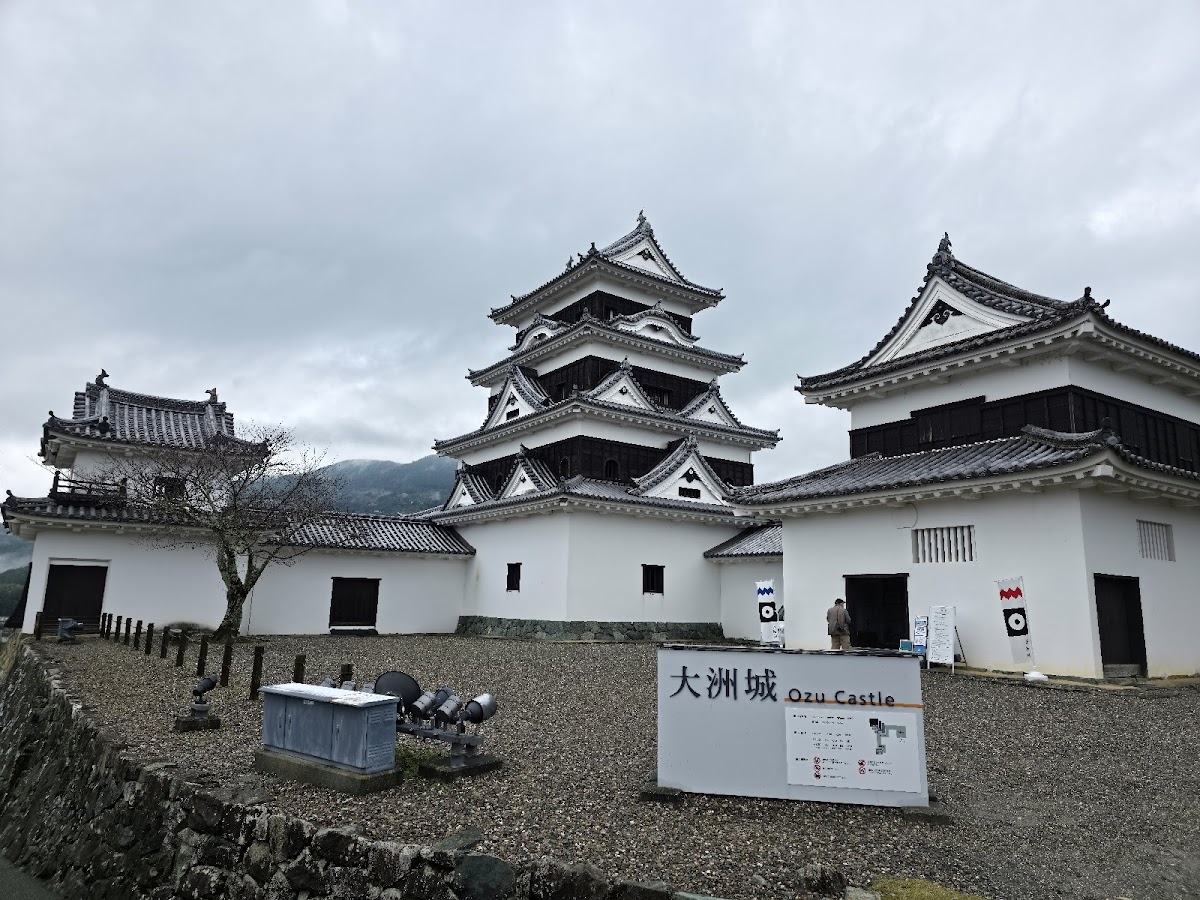
The current Ozu Castle consists of a four-story, four-tiered wooden reconstructed keep, along with four existing turrets designated as important national cultural properties: the kitchen turret, the railing turret, the cotton batten turret, and the south corner turret of the third bailey. This combination of a wooden reconstructed keep and existing turrets is extremely rare and valuable in Japan.
History and Background of Ozu Castle
Late Kamakura Period to Sengoku Period
The history of Ozu Castle dates back to 1331. It is believed to have begun when Toyofusa Utsunomiya, who entered Iyo Province as its governor at the end of the Kamakura period, built the castle on Jizogatake. The Utsunomiya clan ruled this area for approximately 200 years, laying the foundation for the castle as a medieval fortress.
During the Sengoku period, Kobayakawa Takakage succeeded the Utsunomiya clan, and after Toyotomi Hideyoshi’s conquest of Shikoku, the castle entered a turbulent era with successive changes in lords, including Toda Katsutaka, Todo Takatora, and Wakizaka Yasuharu.
Large-Scale Renovations in the Edo Period
In 1609 (Keicho 14), after Todo Takatora was transferred to Imabari Castle, Wakizaka Yasuharu took over Ozu Castle. However, the large-scale castle construction carried out by Todo Takatora during his tenure gave Ozu Castle the appearance of a modern fortress. Takatora carried out the construction of Ozu Castle almost simultaneously with Uwajima Castle, completing the basic structure of the current castle.
In 1617 (Genna 3), Kato Sadayasu was appointed with a 60,000 koku stipend, and the Kato family served as lords of the domain for 13 generations until the Meiji Restoration. Throughout the Edo period, the castle town of Ozu flourished as the political, economic, and cultural center of the Iyo-Ozu Domain.
Demolition and Preservation Activities in the Meiji Era
After the Meiji Restoration, the castle keep was demolished in 1888 due to dilapidation. However, four turrets—the kitchen turret, the railing turret, the cotton turret, and the south corner turret of the third bailey—were saved from demolition thanks to the efforts of local residents and still exist today. This movement by local residents to protect the castle became an important foundation for the later restoration of the castle keep.
Restoration of the Castle Keep in the Heisei Era
In 2004, the keep castle, lost during the Meiji era, was restored in wood after approximately 120 years. This restoration project was mainly realized through donations from citizens, with approximately 600 million yen of the total construction cost of approximately 1.5 billion yen covered by citizen donations.
In its restoration, the castle faithfully recreated its original appearance based on historical materials such as old photographs taken during the Meiji era, Edo-period castle tower models, and detailed blueprints. The four-story, four-tiered castle tower, constructed using traditional wooden frame construction methods, holds extremely high value from both an architectural history and cultural property preservation perspective as the first wooden castle tower restored after World War II.
Completed after approximately 10 years of restoration, this castle tower continues to be cherished by the citizens as a symbol of modern Ozu City and as the core of the historical castle town’s landscape.
Highlights of Ozu Castle
Wooden Restored Castle Tower
The greatest highlight of Ozu Castle is undoubtedly the wooden castle tower, restored in 2004. Standing approximately 19 meters tall, the four-story, four-tiered tower was built using high-quality timber, primarily cypress, and traditional construction methods that minimized the use of nails.
Upon entering the castle tower, the scent of cypress fills the air, allowing visitors to experience the atmosphere of the time when the castle was first built. As you ascend the steep stairs, you can view the exhibits and weapons on each floor. From the top floor, a 360-degree panoramic view unfolds, offering views of the clear waters of the Hijikawa River, the townscape of the castle, and the mountains of the Shikoku Mountains in the distance.
The exterior of the castle tower is also magnificent, with a beautiful contrast between the white plaster walls and black clapboard siding, and the ornaments such as the karahafu and chidorihafu finials are in perfect harmony. The castle tower, which shows different expressions depending on the season and time of day, is a popular spot for photography.
Four Existing Turrets
Ozu Castle has four turrets that have survived from the Edo period, all of which are designated as important national cultural properties.
The Kitchen Turret, as its name suggests, was used as a kitchen for preparing meals for the feudal lord, and is characterized by its practical structure. The Balustrade Turret is located northeast of the castle tower and is impressive with its elegant appearance and balustrade (railing). The Owata Turret was located southwest of the main keep and functioned as a key defensive point. The South Corner Turret of the Third Bailey stood at the southeast corner of the third bailey and was responsible for the defense of the entire castle.
These existing turrets are valuable cultural assets that convey the architectural techniques of the Edo period, and when combined with the reconstructed wooden keep, they create a precious space where visitors can realistically experience the appearance of the castle in its heyday.
Exhibits and Experiences Inside the Castle
Inside the keep, there are extensive exhibits introducing the history of Ozu Castle and the restoration process. Exhibits include actual pieces of wood used in the keep’s reconstruction, photographic panels of the restoration work, and Edo-period weapons and furnishings, allowing visitors to learn about castle architecture and the history of the Ozu Domain.
Each floor has triangular and square gunports, and looking out reveals a surprisingly wide field of view, allowing visitors to experience the actual defensive function. Visitors can also see castle-specific defensive features such as stone drops and loopholes, gaining an understanding of the ingenuity of castle architecture from the Sengoku period to the Edo period. ### Shiroyama Park and Surrounding Scenery
Shiroyama Park, where Ozu Castle stands, is also known as a famous cherry blossom viewing spot, with approximately 200 Somei Yoshino cherry trees in full bloom in spring. The combination of cherry blossoms and the castle tower is a spectacular sight, attracting many tourists and photography enthusiasts.
The view from the banks of the Hijikawa River is also wonderful, and the reflection of the castle tower on the water’s surface is exceptional. The scenery, especially at dusk and when the castle is lit up at night, is fantastic and highlights the beauty of Ozu Castle.
The castle town retains its Edo-period streetscape, and historical sights such as the nationally important cultural property “Garyu Sanso” and “Ohanahan Street” are scattered throughout. Exploring the town in conjunction with Ozu Castle allows you to deeply appreciate the history and culture of the entire castle town.
Castle Experience: Ozu Castle Castle Stay
One of the biggest features of Ozu Castle is that it offers Japan’s first “castle stay” experience. The “Ozu Castle Stay” is a groundbreaking program that allows you to stay overnight in a reconstructed wooden castle tower and experience a special time as a castle lord for a day.
Details of the One-Day Castle Lord Experience
The Castle Stay begins with a welcome ceremony recreating the entry of the first lord of the Ozu domain. You will receive a warm welcome from banner bearers and musketeers, truly feeling like a feudal lord as you enter the castle.
Dinner is a special meal featuring seasonal ingredients from Ozu, served inside the castle tower. cuisine, a fusion of traditional cooking methods and modern techniques, allows you to experience Ozu’s history and culture through your taste buds.
You will spend the night on the top floor of the castle tower, in a traditional Japanese space with futon bedding on tatami mats. The sounds of time echoing within the castle in the quiet of the night, and the night view of the town castle from the window, create a truly luxurious experience.
Breakfast is served at the “Garyu Sanso,” a nationally important cultural property, while enjoying the spectacular view of the Hijikawa River. Enjoying breakfast in a magnificent Sukiya-style building is one of the highlights of your castle stay.
Reservations and Rates
The castle stay is limited to one group per day (maximum 4 people) and is by reservation only. Rates vary depending on the season, but are approximately 1 million yen per group for a 1-night, 2-day stay. Reservations can be made through the official website.
This special experience is more than just staying in a castle; it’s a program that allows you to truly enjoy the land by experiencing the history, culture, food, and nature of Ozu with all your senses, and reliving the time of those who lived there before you.
Information for Visitors
Opening Hours and Closing Days
Opening Hours: 9:00 AM – 5:00 PM (Last entry 4:30 PM)
Closing Days: Open all year round (however, temporary closures may occur)
*Temporary closures may occur due to bad weather or facility maintenance, so we recommend checking the official website in advance.
Admission Fees
Individual Rates:
- Adults (High school students and older): 550 yen
- Children (Elementary and junior high school students): 220 yen
- Infants (Under elementary school age): Free
Group Rates (20 or more people):
-Adults: 440 yen
- Children: 170 yen
Discount for Persons with Disabilities:
Holders of a physical disability certificate, intellectual disability certificate, or mental disability health and welfare certificate are admitted free of charge for themselves and one caregiver upon presentation of the certificate.
Combined Ticket:
A combined ticket for Garyu Sanso is also available, allowing you to visit both facilities at a discounted price.
- Adults: 880 yen
- Children: 330 yen
Notes
- Shoes are strictly prohibited inside the castle tower. Please remove your shoes before entering.
- The stairs inside the castle tower are steep, so please watch your step.
- Admission may be restricted (stopped due to weather or crowd conditions).
- Eating, drinking, and smoking are prohibited inside the castle keep.
- Pets are not allowed (except for guide dogs and service dogs).
- Children under elementary school age must be accompanied by a guardian.
Parking
There is a free parking lot exclusively for Ozu Castle. Approximately 30 regular-sized cars can be parked there. It can get crowded during peak tourist seasons and weekends, so please consider using public transportation.
Access
Access by Train
From JR Yosan Line “Iyo-Ozu Station”:
- Approximately 25 minutes on foot (approximately 2 km)
- Approximately 5 minutes by taxi
- Approximately 10 minutes by rental bicycle
From Iyo-Ozu Station, walking through the castle town is also recommended. Along the way, you’ll find old merchant houses and storehouses, allowing you to experience a historical atmosphere.
Access from Major Cities:
- From Matsuyama Station: Approximately 35 minutes by JR Yosan Line Limited Express, approximately 1 hour by local train
- From Kochi Station: Approximately 2 hours 30 minutes via JR Yodo Line and Yosan Line
- From Okayama Station: Approximately 3 hours via JR Seto-Ohashi Line and Yosan Line
Access by Car
From Matsuyama Expressway “Ozu” I C”:
Approximately 5 minutes (approximately 3 km)
From Matsuyama City:
Approximately 40 km, approximately 50 minutes via National Route 56
From Kochi City:
Approximately 100 km, approximately 2 hours via National Routes 33 and 56
Access by Bus
A city loop bus operates from in front of Iyo-Ozu Station. Get off at the “Ozu Castle” bus stop; it’s a short walk from there. However, since the number of buses is limited, it is recommended to check the timetable in advance.
Bicycle Rental
Rental bicycles are available at Iyo-Ozu Station and tourist information centers in the city. Bicycles are convenient for exploring the castle town, allowing you to efficiently visit not only Ozu Castle but also surrounding tourist spots such as Garyu Sanso and Ohanahan Street.
Nearby Tourist Spots
Garyu Sanso
A nationally important cultural property located on the banks of the Hijikawa River, this is a masterpiece of sukiya-style architecture built by Torajiro Kawachi, a wealthy merchant of the Meiji era. It’s about a 10-minute walk from Ozu Castle, and you can enjoy its beautiful garden and architectural beauty. It has received one star in the “Michelin Green Guide Japan” and is highly regarded both domestically and internationally.
Ohanahan Street
This street was the setting for the NHK serial television drama “Ohanahan,” broadcast in 1966. It’s a street charming lined with townhouses dating back to the Edo period. It’s about a 5-minute walk from Ozu Castle, and you can feel the atmosphere of the past while strolling along.
Hijikawa Arashi Observation Park
This observation park allows you to observe the “Hijikawa Arashi,” a natural phenomenon that occurs in the early mornings from autumn to winter. The fantastic sight of mist rising from the Hijikawa River and covering its surface is a popular spot for photography enthusiasts. It’s about a 15-minute drive from Ozu Castle.
Pokopen Yokocho
This shopping street recreates the atmosphere of the Showa era, with candy stores, cafes, and souvenir shops lining the street. You can enjoy the nostalgic atmosphere while purchasing local specialties.
Ozu Castle Anniversary Projects and Events
Ozu Castle holds various events to commemorate the anniversary of the castle tower’s restoration. In milestone years such as the 10th, 15th, and 20th anniversaries of the restoration, special exhibitions, commemorative events, and castle symposiums are held, attracting castle fans and history enthusiasts from all over the country.
Seasonal events are also abundant, including a cherry blossom festival in spring, autumn foliage illuminations, and a New Year’s sunrise event. Furthermore, during the local festival, the “Ozu Festival,” traditional performing arts are showcased against the backdrop of the castle, enveloping the entire castle town in a festive atmosphere.
The latest event information can be found on the official Ozu Castle website and the Ozu City Tourism Association website.
A Wooden Restored Castle Rooted in the Community
The restoration of Ozu Castle’s keep was not merely the construction of a tourist facility, but a project that embodied the pride and affection of the citizens. The fact that approximately 600 million yen in citizen donations were collected speaks volumes about how important Ozu Castle is to the region.
Nearly 20 years after its restoration, Ozu Castle has established a firm position as a symbol of Ozu City and as the core of the historical castle town’s landscape. The wooden keep has gained character over time, and its harmony with the existing turrets has deepened.
Local elementary and junior high school students visit Ozu Castle on field trips and social studies excursions to learn about local history. Citizen volunteer guides convey the castle’s charm to visitors, and efforts to protect and utilize the castle as a whole community continue.
The innovative “Castle Stay” program also demonstrates a new model of using the castle not merely as a sightseeing facility, but as a place for experience and cultural transmission. These public-private partnerships are propelling Ozu Castle to national prominence.
Best Season to Visit Ozu Castle
Ozu Castle offers different charms in each season, but here are some particularly recommended seasons:
Spring (Late March to Early April): The cherry blossom season is when Ozu Castle is at its most vibrant. Approximately 200 Somei Yoshino cherry trees bloom, creating a spectacular contrast between the castle tower and the blossoms. Nighttime illuminations are also held, allowing visitors to enjoy the magical sight of the cherry blossoms and castle at night.
Early Summer (May to June): The fresh greenery is beautiful, and the clear waters of the Hijikawa River are refreshing. The weather is mild, making it an ideal time for strolling through the town.
Autumn (October-November): The autumn leaves change color, adorning the castle keep. The view from the top floor of the keep in the crisp autumn air is exceptional. This is also the season for observing the Hijikawa River storm.
Winter (December-February): This is a hidden gem of a season, with fewer tourists, allowing for a more leisurely visit. The castle keeps looks even more majestic in the crisp winter air. The Hijikawa River storm in the early morning is a winter tradition.
Summary
Ozu Castle is a uniquely fascinating castle in Japan, combining a long history dating back to the late Kamakura period, a wooden castle keep reconstructed in the Heisei era, and the innovative concept of Japan’s first stay castle experience.
It boasts a four-story, four-tiered castle keep reconstructed using traditional methods, four important cultural property turrets existing since the Edo period, a beautiful landscape harmonizing with the clear waters of the Hijikawa River, and community-based preservation and utilization efforts. All of these factors make Ozu Castle something special.
It’s a tourist spot that can be enjoyed by a wide range of people, from castle enthusiasts and history buffs to architecture lovers, those seeking beautiful scenery, and those looking for a unique experience.
When you visit Ehime Prefecture, be sure to visit Ozu Castle, breathe in the scent of cypress wood from the wooden keep, enjoy the view from the top floor, and immerse yourself in the history and culture of the castle town. Ozu Castle is sure to provide you with an unforgettable experience.