
Complete Guide to Otaki Castle: A Thorough Explanation of the History and Highlights of the Famous Castle Associated with Honda Tadakatsu
Located in Otaki-machi, Isumi-gun, Chiba Prefecture, Otaki Castle is a historical castle where Honda Tadakatsu, known as one of the Four Heavenly Kings of Tokugawa, served as lord. Currently open to the public as the “Chiba Prefectural Central Museum Otaki Castle Branch,” it is an important tourist spot that conveys the history and culture of the Boso Peninsula. This article comprehensively explains everything you need to know before visiting, from the detailed history and highlights of Otaki Castle to access information.
Overview and Basic Information of Otaki Castle
Otaki Castle was a flatland castle that existed from the Sengoku period to the Edo period, and was originally called “Odaki Castle.” The current castle tower-style building is a replica built in 1975 (Showa 50), and is built on the “Kazusa Otaki Castle Honmaru Site,” a Chiba Prefecture designated historical site.
Basic Data
- Location: 481 Otaki, Otaki-machi, Isumi-gun, Chiba Prefecture
- Castle Structure: Hilltop Castle
- Construction Period: Early 16th Century (Sengoku Period)
- Major Lords: Takeda clan, Honda Tadakatsu, Abe clan, Aoyama clan, Inagaki clan, etc.
- Current Facilities: Chiba Prefectural Central Museum Otaki Castle Branch (3-story, 4-floor reinforced concrete building)
- Designation: Chiba Prefecture Designated Historic Site
- Continued Top 100 Japanese Castles: Selected
Note: Otaki Castle (Chiba Prefectural Central Museum Otaki Castle Branch) is currently closed. Please check the official website for the latest opening status before visiting.
History of Otaki Castle
Sengoku Period: Establishment of Otaki Castle
The origins of Otaki Castle date back to the first half of the 16th century, during the Daiei era (1521-1528). Initially called “Odaki Castle,” it was ruled by Takeda Nobukiyo, Nobukatsu, and Nobuyoshi, members of the Mariya Takeda clan. During this period, the castle played an important role as a base for Sengoku daimyo on the Boso Peninsula.
In the later Sengoku period, fierce battles were fought between the Otaki Castle and the Satomi clan, based in Awa Province (present-day southern Chiba Prefecture). The Satomi clan expanded their power as a powerful daimyo on the Boso Peninsula, and Odaki Castle was under their influence for a time.
Entry of Honda Tadakatsu and Major Renovation
The most important turning point in the history of Otaki Castle was the entry of Honda Tadakatsu in 1590 (Tensho 18). Following Tokugawa Ieyasu’s entry into the Kanto region, Honda Tadakatsu, renowned as one of the Four Heavenly Kings of the Tokugawa, became the lord of Otaki Castle with a 100,000 koku domain.
Honda Tadakatsu extensively renovated Odaki Castle, which had previously been a medieval mountain castle, transforming it into a modern fortress. It is believed that the castle’s name was changed to “Otaki Castle” during this period. Tadakatsu was not only a skilled military commander but also a talented castle builder, developing Otaki Castle into an important base for the Tokugawa clan in the Boso Peninsula.
Honda Tadakatsu served as lord of Otaki Castle until 1609 (Keicho 14), after which he was transferred to Kuwana Domain in Ise Province. His son, Honda Tadaaki, continued as lord, but in 1617 (Genna 3), the Honda clan was transferred to Koriyama Domain in Yamato Province, marking the end of the Honda clan’s time in Otaki.
Edo Period: As a Residence for Fudai Daimyo
After the Honda clan, Otaki Castle became a castle where successive fudai daimyo of the Edo shogunate served as lords. The main changes in castle lords are as follows:
- Abe Masatsugu (1617-): After the Honda clan, the Abe clan took over the castle. Abe Masatsugu was a senior retainer who served Tokugawa Hidetada and Iemitsu, and also served as a roju (senior councilor).
- Aoyama Masatoshi: After the Abe clan, the Aoyama clan became the castle lords.
- Abe Masaharu/Abe Masanori: The Abe clan again became castle lords and ruled for several generations.
- Inagaki Shigetomi: In the late Edo period, the Inagaki clan served as castle lords.
Under the rule of these fudai daimyo, Otaki Castle continued to function as an important base for the shogunate in the Boso Peninsula. The castle town also developed and flourished as the political, economic, and cultural center of the Otaki Domain.
After the Meiji Era: From Abandonment to the Present
With the abolition of the feudal domains in 1871 (Meiji 4), the Otaki Domain was abolished, and Otaki Castle was also abandoned. During the Meiji era, many buildings were demolished, and Otaki Elementary School was built on the site of the main keep. Later, Chiba Prefectural Otaki High School was established on the second keep site, and it is still in use today.
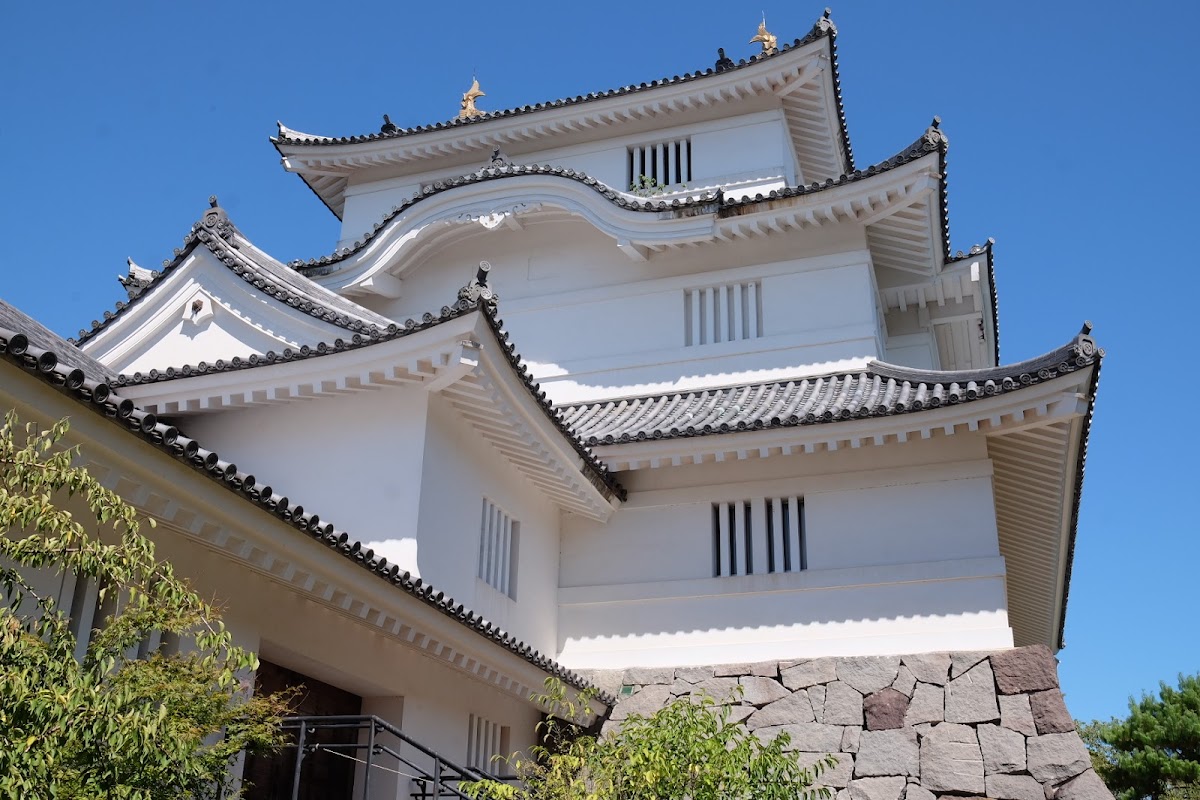
In 1975 (Showa 50), a three-story, four-tiered building in the style of a castle tower was constructed on the site of the main keep and opened as the “Chiba Prefectural Central Museum Otaki Castle Branch.” This building is not a historical reconstruction of the castle tower, but a museum facility modeled after the castle’s style, and it is cherished by the community as a symbol of Otaki Castle.
Characteristics of the Castle Tower and Architecture
Current Replica Castle Tower
The current castle tower of Otaki Castle is a reinforced concrete replica built in 1975. It has a three-story exterior and a four-story interior, with a beautiful contrast between the white walls and black tiled roof.
While historical records do not clearly indicate whether a castle tower actually existed at Otaki Castle during the Edo period, the building’s design incorporates the style of castle architecture, resulting in a majestic appearance. The castle tower, situated on a hill, is visible from afar and serves as a landmark for Otaki Town.
About the Historical Castle Tower
Historical records concerning Otaki Castle during the Edo period are limited, but it is believed that a structure of considerable size was built during the major renovation by Honda Tadakatsu. However, there are no reliable records of the exact shape and size of the castle tower at that time.
The current replica castle tower was designed with the characteristics of castle architecture in the Boso region in mind, and also incorporates museum functions. Rather than prioritizing historical accuracy, this structure was built to pass on the history of Otaki Castle to future generations and to serve as a symbol of the region.
Remains and Highlights
Ninomaru Palace Yakui Gate
One of the most important surviving remains of Otaki Castle is the Yakui Gate of the Ninomaru Palace. This gate is an Edo period structure that was relocated to the grounds of Chiba Prefectural Otaki High School after the castle was abandoned and is still preserved today.
The Yakui Gate is a type of gate with supporting pillars behind the main pillars and a gabled roof, a formal gate style commonly seen in samurai residences and temples. The Yakui Gate of Otaki Castle is highly valued for its historical significance as a valuable relic that conveys Edo period castle architecture to the present day.
The Great Well
A massive well, known as “Japan’s largest well,” still exists at the site of the Ninomaru Palace. This well boasts an astonishing size, with a circumference of approximately 10 meters and a depth of approximately 20 meters, and functioned as an important water source within the castle.
From the Sengoku period to the Edo period, securing water for castles was a matter of life and death. Securing abundant water sources within the castle grounds in preparation for sieges was one of the most important aspects of castle construction. The large well at Otaki Castle, given its size, is thought to have had the capacity to support a considerable number of people for extended periods.
It can still be seen today at the site of the second bailey, allowing visitors to experience its immense size. It is a very interesting relic for understanding the practical aspects of castle construction.
Traces of Earthworks and Moats
Partial traces of former earthworks and moats remain around Otaki Castle. In particular, remnants of defensive structures utilizing the terrain can be seen on the east side of the castle.
Otaki Castle, a flatland castle, was built by skillfully utilizing the hilly terrain. The layout, which took advantage of the natural elevation differences, was designed to be an impregnable fortress for attackers. Even today, walking around the area, one can appreciate the skillful use of the terrain at that time.
Main Enclosure Site
The site of the main enclosure, where the current castle tower stands, is protected as a Chiba Prefecture designated historical site, “Kazusa Otaki Castle Main Enclosure Site.” The main enclosure was the central part of the castle, where the lord’s residence and other important buildings were located.
The view from the main enclosure is magnificent, offering a panoramic view of the castle town of Otaki. This excellent location is one of the reasons why a castle was built here from the Sengoku period (Warring States period).
Chiba Prefectural Central Museum Otaki Castle Branch
Exhibition Contents
The Otaki Castle Branch is a history museum themed on “Castles and Castle Towns of Boso.” The main exhibits are as follows:
1st Floor Exhibition Room
- Materials related to medieval and early modern castles in Boso
- History and changes of Otaki Castle
- Development of the castle town and the lives of its people
2nd Floor Exhibition Room
- Collection of weapons and armor
- Exhibition of swords and bladed weapons
- Samurai attire such as armor and battle surcoats
3rd Floor Exhibition Room
- Materials related to successive lords of Otaki Domain
- Ancient documents and maps
- Culture and daily life tools of the samurai society
4th Floor Exhibition Room
- Observation space
- Panoramic view of Otaki townscape
The exhibits related to Honda Tadakatsu are particularly extensive, allowing visitors to learn in detail about his activities as one of the Four Heavenly Kings of Tokugawa and his achievements as the lord of Otaki Castle.
Museum Features
The distinctive feature of the Otaki Castle Annex is that it goes beyond simply exhibiting castles, comprehensively introducing the history and culture of the entire Boso region. The Boso Peninsula is a region that underwent unique development during the Sengoku period (Warring States period), boasting a fascinating history involving local powers such as the Satomi and Takeda clans, and their interactions with the Tokugawa shogunate’s rule over the Kanto region.
Furthermore, the collection of weapons and armor is extensive in both quality and quantity, making it particularly worthwhile for those interested in samurai culture. The swords and other bladed weapons are regularly rotated, ensuring new discoveries with each visit.
The Charm of Strolling Through the Castle Town
The Townscape of Otaki
At the foot of Otaki Castle lies a townscape that retains the atmosphere of an Edo-period castle town. Along the road from Otaki Station on the Isumi Railway to Otaki Castle, historical buildings and merchant houses are scattered, allowing visitors to enjoy the charm of a castle town.
In recent years, Otaki Town has been focusing on preserving and utilizing its historical townscape, resulting in an increase in cafes, galleries, and souvenir shops housed in renovated old buildings. Enjoying a stroll through the town in conjunction with a castle visit allows for a deeper understanding of Otaki’s history and culture.
Main Attractions
Otaki Town Tourist Information Center
This facility functions as a tourist information center, where you can obtain information about Otaki’s history and attractions.
Merchant Townscape
Around Honmachi Street, buildings of merchant houses dating back to the Edo period remain. You can see traditional architectural styles such as white-walled storehouses and lattice doors.
Watanabe Residence
This is the residence of the Watanabe family, who served as chief retainers of the Otaki Domain. It is a valuable building that preserves the style of a samurai residence.
Isumi River
The Isumi River, which flows east of the castle, is a natural fortress that was also used for the castle’s defense. From the riverside promenade, you can view the castle from different angles.
Gourmet Food and Souvenirs
Otaki Town is rich in local specialties such as bamboo shoots and wild boar meat from Chiba Prefecture. In the castle town, there are restaurants that serve dishes using these ingredients.
Otaki is also known as a sake-producing region, and there are local sake breweries. Enjoying local sake after visiting the castle is one of the pleasures of sightseeing in Otaki.
Popular souvenirs include items featuring Otaki Castle and Honda Tadakatsu, local Japanese sweets, and processed products made with bamboo shoots.
Access and Surrounding Area Information
Access by Train
Using the Isumi Railway
- Transfer to the Isumi Railway from JR Sotobo Line “Ohara Station”
- Get off at Isumi Railway “Otaki Station,” and walk approximately 15 minutes to Otaki Castle.
The Isumi Railway is a popular local line, allowing you to enjoy the peaceful rural scenery of Boso Peninsula. Especially during the spring rapeseed flower season, the combination of rapeseed flowers blooming along the tracks and the train is a spectacular sight.
Access by Car
From the Tokyo Metropolitan Area
- Approximately 40 minutes from Ichihara IC on the Tateyama Expressway via National Route 297
- Approximately 50 minutes from Kisarazu-Higashi IC on the Ken-O Expressway
Parking
There are several parking lots around Otaki Castle. In addition to the museum’s dedicated parking lot, town-operated parking lots are also available.
Nearby Tourist Attractions
Yoro Valley
Located south of Otaki Town, Yoro Valley is known as one of the best places to see autumn foliage in the Boso Peninsula. Visiting it in conjunction with Otaki Castle is highly recommended.
Mamihara Plateau
From late June to early July, approximately 20,000 hydrangea bushes bloom on this plateau. It is approximately 30 minutes by car from Otaki Castle.
Isumi City
Isumi City, adjacent to the east of Otaki Town, boasts numerous coastal tourist attractions such as Taitozaki Cape and Ohara Fishing Port.
Points to Note and Advice for Visitors
Checking Opening Status
As mentioned at the beginning, Otaki Castle (Otaki Castle Branch of the Chiba Prefectural Central Museum) is currently closed. When planning a visit, please be sure to check the latest opening status on the official Otaki Town website or the official Chiba Prefectural Central Museum website.
Even when closed, you can still enjoy the castle’s exterior, surrounding ruins, and strolling through the castle town.
Photography
You are free to photograph the exterior of Otaki Castle and the surrounding scenery. The cherry blossom season in spring and the autumn foliage season offer particularly beautiful opportunities for photography.
Regarding photography inside the museum, please follow the regulations in place during opening hours. Generally, there may be restrictions on photographing exhibits.
Estimated Time Required
- Museum visit only: Approximately 60-90 minutes
- Museum visit + surrounding ruins: Approximately 2 hours
- Museum visit + stroll through the castle town: Approximately 3-4 hours
By allowing ample time, you can more deeply appreciate the charm of Otaki.
Clothing and Items to Bring
Since there are many slopes and stairs around the castle, we recommend wearing comfortable shoes. Especially in summer, the sun is strong, so it’s a good idea to bring a hat, sunscreen, and drinks for hydration.
Cultural Value of Otaki Castle
Value as one of the Continued Top 100 Japanese Castles
Otaki Castle has been selected as one of the “Continued Top 100 Japanese Castles” by the Japan Castle Association. This means that it has been recognized as a castle of high historical and cultural value that should be preserved for future generations.
The stamp for the Continued Top 100 Japanese Castles can be obtained when the museum is open (please check as the location may change when the museum is closed). For those who enjoy visiting castles, Otaki Castle is a must-see spot.
Honda Tadakatsu and Otaki Castle
When discussing Otaki Castle, its connection to Honda Tadakatsu, one of the Four Heavenly Kings of the Tokugawa, is essential. Tadakatsu is considered “the strongest warrior of the Tokugawa,” and legend says he participated in 57 battles throughout his life without ever being wounded.
Tadakatsu’s beloved spear, “Tonbokiri,” is counted among Japan’s three most famous spears, and his bravery is still recounted in numerous anecdotes. During his time as lord of Otaki Castle, Tadakatsu demonstrated not only military prowess but also excellent governance, skillfully managing his territory.
The Otaki Castle Annex features extensive exhibits on Honda Tadakatsu, allowing visitors to learn in detail about his life and achievements. It is especially recommended for Tadakatsu fans and anyone interested in Sengoku period warriors.
Role in the Community
Otaki Castle plays a role far beyond that of a mere tourist attraction. It is an important presence for Otaki Town, serving as a symbol of the region’s historical identity and as a place of education.
Local elementary and junior high schools conduct local history lessons using Otaki Castle as a theme, providing children with opportunities to learn about the region’s history. Furthermore, various cultural events are held throughout the year, making it a central hub for the local community.
Summary: The Charm of Otaki Castle
Otaki Castle is a valuable historical site that conveys the history of the Boso Peninsula from the Sengoku period to the Edo period. It possesses multifaceted charm, including its historical value as a modern castle built by Honda Tadakatsu, one of the Four Heavenly Kings of Tokugawa, its existing remains, and its modern role as a museum disseminating the history and culture of the Boso Peninsula.
Although it is a replica keep, the white castle tower standing on the hill is beautiful, and combined with the atmosphere of the castle town, it allows visitors to experience the atmosphere of the Edo period. Furthermore, the existing structures, such as Japan’s largest well and the Yakui Gate of the Ninomaru Palace, are invaluable resources for understanding the actual state of castle architecture at the time.
Beyond castle tours, there are plenty of things to enjoy in the Otaki area, including strolling through the castle town, taking a ride on the Isumi Railway, and admiring the surrounding natural scenery. Located within day-trip distance from Tokyo, Otaki Castle offers a tranquil Boso Peninsula atmosphere and is a recommended spot not only for history buffs but also for weekend getaways.
Although currently closed, be sure to visit when it reopens and experience the history and charm of this famous Boso castle built by Honda Tadakatsu.

