

The History and Remains of Omiya Castle (Suruga Province): A Complete Guide from the Fuji Clan’s Residence to the Battles Against Takeda Shingen
Omiya Castle was a Japanese castle located in Fuji-Omiya, Suruga Province (present-day Fujinomiya City, Shizuoka Prefecture). Also known as Fuji Castle, it is known as the residence of the Fuji clan, the chief priest family of Fujisan Hongu Sengen Taisha Shrine. Despite being a flatland castle, it was a formidable fortress that repelled Takeda Shingen’s large army twice, making it an important base in Suruga Province during the Sengoku period.
This article provides a detailed explanation of Omiya Castle’s history, from its construction to its abandonment, its battles against Takeda Shingen, the remains revealed by archaeological excavations, and current visitor information.
Overview and Location of Omiya Castle
Basic Information
Location: Omiya-cho, Fujinomiya City, Shizuoka Prefecture
Alternate Name: Fuji Castle
Castle Structure: Flatland Castle
Builder: Fuji Clan
Year of Construction: Medieval Period (Details Unknown)
Main Lord: Fuji Clan
Year of Abandonment: Around 1582 (Tensho 10)
Remains: Moat Remains (Confirmed by Archaeological Excavation)
Designated Cultural Property: None
Current Status: Fujinomiya Municipal Omiya Elementary School, Omiya Nursery School, etc.
Geographical Location
Omiya Castle was located on a east of Fujisan Hongu Sengen Taisha Shrine. The area around the current Omiya Elementary School was the center of the castle, and place names such as “Shiroyama” (Castle Mountain) and “Kurayashiki” (Storehouse) remain. It is believed that the castle grounds, with Kanda Kurayashiki Inari Shrine at the northeastern end, encompassed the elementary school’s grounds and the area south of them.
Although a flatland castle built on the plains at the foot of Mount Fuji, it utilized its topography, situated between the Fuji River and the Urui River, to function as a strategic point on the border between Kai and Suruga Provinces. The castle’s layout, integrated with the Fujisan Hongu Sengen Taisha Shrine, was a distinctive structure that combined religious authority with military function.
History of Omiya Castle
Construction and the Fuji Clan
Omiya Castle is believed to have been built in the medieval period by the Fuji clan, a local lord of Fuji County, although the exact year of construction is unknown. The Fuji clan was a family that inherited the position of chief priest of Fujisan Hongu Sengen Taisha Shrine, thus balancing religious authority with regional control.
The Fuji clan has origins ancient, having played a central role in the worship of Mount Fuji since the Heian period. In the medieval period, they became samurai and maintained power as a powerful local lord in eastern Suruga Province. Omiya Castle, as the residence of this Fuji clan, was a castle unique closely linked to the religious facility, Sengen Taisha Shrine.
Under the Imagawa Clan’s Rule
With the arrival of the Sengoku period (Warring States period), the Fuji clan was incorporated into the Imagawa clan’s vassal group. Since the Fuji clan was appointed as the castle lord of Omiya Castle by the Imagawa clan, it is believed that the castle was under Imagawa control during this period.
For the Imagawa clan, Omiya Castle was an important base for protecting the border with Kai Province (Takeda clan). Due to its geographical location bordering Takeda territory across the Fuji River, it was positioned as a frontline defensive base against invasions of Suruga. The Fuji clan, as vassals of the Imagawa clan, were entrusted with the defense of this strategically important location.
Takeda Shingen’s Invasion of Suruga and the Battle of Omiya Castle
First Battle (Eiroku 11, 1568)
In December of Eiroku 11 (1568), Takeda Shingen began his invasion of Suruga. The Takeda army, which invaded Suruga Province under the control of Imagawa Ujizane, captured castles one after another, but Omiya Castle remained untouched due to the tenacious resistance of the Fuji clan.
At this time, the Fuji clan sided with the Imagawa clan and holed up in the castle, fighting fiercely against the Takeda. Despite the disadvantageous conditions of being a flatland castle, the Fuji clan succeeded in repelling the Takeda army’s attack. This demonstrates the high military capabilities of the Fuji clan and the effective functioning of the castle’s defensive features.
Second Battle (Eiroku 12, 1569)
In Eiroku 12 (1569), the Takeda army attacked Omiya Castle again, but the Fuji clan repelled them once more. Repelling the Takeda army proved the defensive strength of Omiya Castle twice and the tactical superiority of the Fuji clan.
The Fuji clan’s resistance is thought to have been not merely a military defense, but also influenced by their influence in the region and the religious centripetal force centered around Asama Shrine. With local support, the Fuji clan was able to conduct an effective defensive battle against the Takeda army.
Third Battle and Surrender (Eiroku 12)
In Eiroku 12 (1569), Takeda Shingen personally led a large army for the third attack. This Takeda army was incomparably larger than previous forces, and it became a full-scale siege commanded by Shingen himself.
The Fuji clan fought bravely to the end, inflicting 2,000 casualties on the Takeda army, but ultimately surrendered and opened the castle gates due to the overwhelming difference in troop numbers. The Fuji clan’s resistance in this battle was exceptionally tenacious for a flatland castle and is considered a noteworthy example in the history of siege warfare during the Sengoku period.
Takeda Rule and Abandonment
After the surrender of Omiya Castle, the Fuji clan became subordinate to the Takeda clan. It is believed that Omiya Castle continued to function as an important base within the Takeda clan’s control of Suruga Province.
However, after the fall of the Takeda clan in 1582, the military value of Omiya Castle declined. It is presumed that Omiya Castle was abandoned once Tokugawa Ieyasu’s rule over Suruga Province was established. While the exact year of abandonment is unknown, it is believed to have lost its function as a castle sometime during the Tensho era (1573-1593).
Structure and Remains of Omiya Castle
Castle Structure
Omiya Castle was built as a flatland castle and consisted of multiple bails. Based on archaeological excavations and historical records, the following structure is presumed:
Main Baileys:
- Honmaru: The central part of the castle, near the current Omiya Elementary School grounds
- Kanda Bailey: Around the Kanda Kurayashiki Inari Shrine
- Kurayashiki: An area that remains as a place name, used for storing supplies and as a residence for retainers
The secret to its defensive strength, which allowed it to repel the Takeda army twice despite being a flatland castle, is thought to lie in its defensive system utilizing the arrangement of moats and water resources. The moat, the utilizing the abundant water resources of the Fujikawa River system, may have strengthened the castle’s defenses.
Archaeological Excavation Results
Archaeological excavations were conducted on the grounds of Omiya Elementary School and the area south of it, uncovering important remains.
Main Discoveries:
- Moat Remains: A moat approximately 10 meters wide was confirmed. A moat of this size indicates considerable defensive capability for a flatland castle of that era.
- Building Remains: Traces of buildings related to the Fuji clan were confirmed.
- Excavated Artifacts: Pottery and fragments of weapons from the Sengoku period were unearthed, confirming the castle’s existence.
Continued investigations by the Fujinomiya City Board of Education are gradually revealing the true nature of Omiya Castle. These excavation results are valuable resources that show the specific appearance of the castle, which cannot be understood from historical documents alone.
Existing Traces
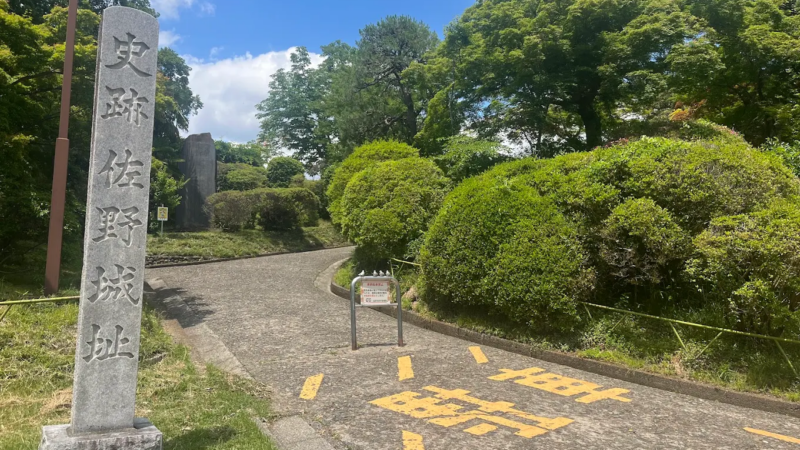
Currently, no clear remains of Omiya Castle exist above ground. However, the following traces allow us to imagine its former glory.
- Place Names: The place names “Shiroyama” and “Kurayashiki” remain.
- Kanda Kurayashiki Inari: A historical site indicating part of the castle grounds.
- Topography: Traces of the castle grounds remain in slight elevation differences.
- Fujisan Hongu Sengen Taisha: A religious facility integrated with the castle.
The Fuji Clan and Fujisan Hongu Sengen Taisha
The Fuji Clan as the Chief Priest Family
The Fuji clan was a family that served as the chief priest of Fujisan Hongu Sengen Taisha for generations. As a central figure in the worship of Mount Fuji, they exercised regional control backed by religious authority.
As chief priests, the Fuji clan were not merely Shinto priests, but also political and economic rulers of the area around the foot of Mount Fuji. By managing pilgrimages to Mount Fuji and overseeing religious organizations such as Fuji-ko, they maintained widespread influence.
The Unity of Castle and Shrine
Omiya Castle and Fujisan Hongu Sengen Taisha were a single entity, both physically and functionally. The castle was located on a hill east of the shrine and also served to protect the shrine.
This arrangement demonstrates a characteristic form of medieval Japan: the fusion of religious and military facilities. For the Fuji clan, Asama Shrine was a source of authority, and Omiya Castle was a symbol of the military power that protected that authority. The two were inseparable, functioning as two wheels supporting the Fuji clan’s rule.
Historical Significance of Omiya Castle
A Strategic Point in Eastern Suruga Province
Omiya Castle was a strategically important military and political point in eastern Suruga Province. Located near the border between Kai and Suruga provinces, it functioned as a frontline defense against invasions by the Takeda clan.
For the Imagawa clan, defending the area east of the Fuji River was vital to their control of Suruga. Omiya Castle occupied a strategically crucial position as the core of this defense line. The appointment of the Fuji clan as castle lords is thought to have been intended to leverage the Fuji clan’s influence in the region.
The Defensive Power of a Flatland Castle
The high defensive capabilities of Omiya Castle, a flatland castle, are a noteworthy example in the history of castle architecture. Despite being a flatland castle, which is generally considered less defensively advantageous than mountain castles, its ability to repel Takeda Shingen’s large army twice demonstrates the skillful design of the castle and the tactical superiority of the defenders.
It is presumed that defensive techniques unique to flatland castles, such as the placement of moats, the utilization of water resources, and the arrangement of baileys, were effectively employed. Furthermore, the governing ability of the Fuji clan, who enjoyed the support of the local residents, was also a crucial factor in the success of the defense.
The Combination of Religion and Military Power
Omiya Castle embodies a characteristic form of governance in medieval Japan: the combination of religious authority and military power. The Fuji clan, as chief priests, possessed religious authority, while simultaneously maintaining military power as samurai.
This duality was also a survival strategy for local lords in the medieval period. Religious authority secured the support of the people, while military power was a means of protecting their territory from external enemies. The integrated layout of Omiya Castle and Asama Shrine can be seen as a spatial representation of this strategy.
Omiya Castle Visit Guide
Access
By Train:
- Get off at Fujinomiya Station on the JR Minobu Line, approximately 15 minutes on foot.
- Head towards Fujisan Hongu Sengen Taisha Shrine from Fujinomiya Station; the castle site is around Omiya Elementary School.
By Car:
- Approximately 15 minutes from Fuji IC on the Tomei Expressway.
- Approximately 15 minutes from Shin-Fuji IC on the Shin-Tomei Expressway.
- Parking is available at the Fujisan Hongu Sengen Taisha Shrine visitor parking lot.
Points to Note
Although no remains of Omiya Castle exist today, you can imagine its former glory at the following points:
- Around Fujinomiya Municipal Omiya Elementary School: This was the central area of the castle. The topography of the playground allows you to imagine the castle’s layout.
- Kanda Kurayashiki Inari: A historical site marking the northeastern edge of the castle grounds. Although a small shrine, it provides clues to the extent of the castle’s boundaries.
- Fujisan Hongu Sengen Taisha: A religious facility integrated with the castle. Experience the source of the Fuji clan’s authority. While walking through the grounds, confirm its position relative to the eastern hill (castle ruins).
- Confirming Place Names: Walking through areas where place names like “Shiroyama” (Castle Mountain) and “Kurayashiki” (Storehouse) remain will give you a sense of the castle’s scale.
Related Historical Sites in the Surrounding Area
Fujisan Hongu Sengen Taisha: An ancient shrine where the Fuji clan served as chief priests. The main hall was built in 1604 (Keicho 9) through a donation from Tokugawa Ieyasu and is designated a National Important Cultural Property. The Wakutama Pond within the grounds is a Special Natural Monument.
Fujinomiya City Local History Museum:
A facility where you can learn about materials related to Omiya Castle and the history of the Fuji clan. The results of archaeological excavations are also on display.
Other Castle Sites in Suruga Province:
- Tanaka Castle (Fujieda City): An important base for the Imagawa clan
- Kokokuji Castle (Numazu City): A castle associated with Hojo Soun
Notes for Visitors
- Omiya Elementary School is an active educational facility. Please avoid unauthorized entry during class hours and view from outside the grounds.
- Similarly, please be considerate of the facility’s operation when visiting the area around Omiya Nursery School.
- The remains are buried underground and cannot be seen above ground. Please use your imagination to picture what it looked like in its heyday.
- Fujisan Hongu Sengen Taisha Shrine is a place of worship. Please observe proper worship etiquette when visiting.
Materials and Research Related to Omiya Castle
Major Historical Documents
Records related to Omiya Castle can be found in the following historical documents. – ‘Koyo Gunkan’: A military chronicle of the Takeda clan. It contains a description of the battle for Omiya Castle during the invasion of Suruga Province.
- ‘Fuji Clan Genealogy’: A genealogy recording the history of the Fuji clan. It records the lineage as the Omiya-ji family.
- ‘Suruga-ki’: A geographical record of Suruga Province. It includes a description of the location and structure of Omiya Castle.
Excavation Survey Report
The results of the excavation survey conducted by the Fujinomiya City Board of Education are summarized in the following report:
- ‘Omiya Castle Ruins Excavation Survey Report’ (Fujinomiya City Board of Education)
-Annual Survey Summary Reports
These reports are available for viewing at the Fujinomiya City Local History Museum and the Municipal Library.
Current Status and Challenges of Research
Research on Omiya Castle faces the following challenges:
- Identification of Construction Date: While it is believed to have been built in the medieval period, the specific date remains unknown.
- Unraveling the Full Structure of the Castle: Excavations have been partial, and the overall structure remains unclear.
- The Reality of the Fuji Clan: Further research is needed regarding the relationship between their religious role as the chief priest family and their military role as samurai.
It is hoped that continued excavations and documentary research will shed more light on the true nature of Omiya Castle.
Summary
Omiya Castle was the residence of the Fuji clan, built in Fuji Omiya, Suruga Province, and was a unique castle integrated with Fujisan Hongu Sengen Taisha Shrine. Despite being a flatland castle, it repelled Takeda Shingen’s large army twice, playing a crucial role in Suruga Province during the Sengoku period.
Omiya Castle, symbolizing the Fuji clan’s system of rule that combined religious authority and military power, is a valuable example of regional governance in medieval Japan. Although no remains exist today, excavations are gradually revealing its former appearance.
When you visit Fujinomiya, why not take a stroll around Omiya Elementary School and reflect on the history of Omiya Castle, in addition to visiting Fujisan Hongu Sengen Taisha Shrine? With Mount Fuji as a backdrop, you can experience the history of the Middle Ages, where religion and military power intersected.
--765x450.png)