Complete Guide to Okusa Castle (Gifu Prefecture): Mountain Castle Ruins of the Toki Clan, the Shugo (Provincial Governor) of Mino Province, and Hiking Access Information
Okusa Castle, built on Mt. Kojō (elevation 407.5m) in Yamagata City, Gifu Prefecture, was a mountain castle that played an important role during the Sengoku period as the residence of the Toki clan, the Shugo (provincial governor) who ruled Mino Province. Currently designated as a national historic site, it is known as a valuable castle ruin with well-preserved remains from the Sengoku period. This article comprehensively introduces all the information necessary for visiting Okusa Castle, including its history, layout, highlights, hiking routes, and access methods.
What is the Okusa Castle Ruins?
The Okusa Castle Ruins are mountain castle ruins located at the border of the Okusa, Aonami, and Tominaga districts of Yamagata City, Gifu Prefecture. Built near the summit of Mt. Kojō, this castle is located on a mountain with an elevation of 407.5 meters, also known as “Kinkei-zan.”
Value of National Historic Site Designation
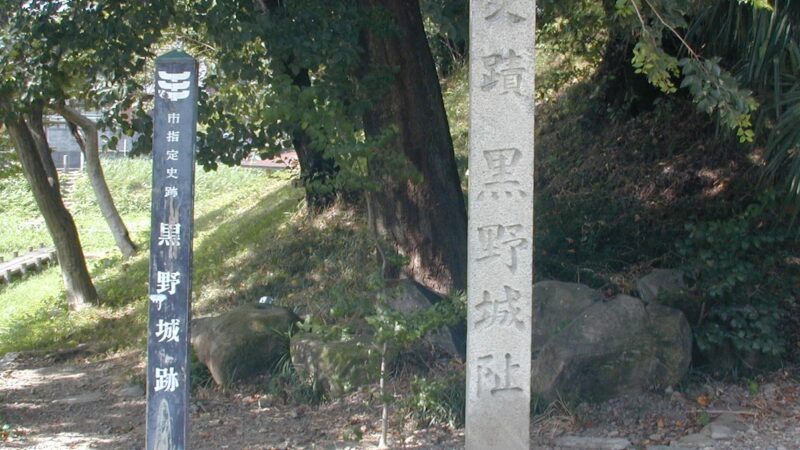
The Okusawa Castle ruins are an exceptionally well-preserved example of a Sengoku period mountain castle, and have been designated a national historic site. Even in the Reiwa era, the defensive structures such as baileys, moats, and earthworks from that time can be clearly identified, making it a valuable resource for understanding Sengoku period castle construction techniques.
Not only the mountaintop, but also the remains of the castle town remain at the foot of the mountain, conveying the appearance of a Sengoku period political center where the castle and castle town were integrated. In particular, the outer earthworks and moats, known as “Shikoku Moat,” “Echizen Moat,” and “Outer Moat,” indicate the existence of a large-scale castle town defense system.
History of Okusawa Castle
Castle Construction Legends from the Kamakura Period
According to the “Mino Province Historical Records,” the origins of Okusawa Castle date back to the Kamakura period. It is believed that Okuwa Matasaburo, son of Hemmi Yoshishige, who was granted the Okuwa region as his territory for his achievements in the Jokyu War of 1221, built the castle around 1250.
Another record states that Toki Sadayori, the third son of Toki Nariyori, the governor of Mino Province, renovated the castle in 1496 and resided there for only one generation, calling himself Okuwa Hyobu-no-taifu (later changing his surname to Ohata).
Relocation of the Governor’s Office by Toki Yorinori
Okuwa Castle first appears on the historical stage in 1535. That year, a major flood of the Nagara River caused significant damage to the governor’s office in Edahiro (near present-day Nagara Park, Gifu City).
Toki Yorinori, the governor of Mino Province at the time, decided to relocate his political functions to Okuwa following this disaster. Yorinori built Okuwa Castle on the summit of Kojōyama mountain and developed a castle town at its base. Thus, Okuwa flourished as a political center of Mino Province.
The Conquest and Fall of Okuwa Castle by Saitō Dōsan
The history of Okuwa Castle cannot be discussed without mentioning its relationship with Saitō Dōsan. Known as the setting for Ryōtarō Shiba’s historical novel “Kunitori Monogatari” (The Tale of the Nation’s Conquest), this castle became a crucial stage in the battle for supremacy in Mino Province.
Saitō Dōsan (Saitō Toshimasa), who rose to prominence as a senior retainer of Toki Yorinori, gradually seized real power. In 1542, Dōsan expelled his lord, Yorinori, from Okuwa Castle, becoming the de facto ruler of Mino Province. This event is a classic example of “gekokujō” (overthrowing one’s superior) and a significant episode in the history of the Sengoku period.
After its fall, Okuwa Castle is believed to have ceased to serve its purpose and was abandoned. However, its remains have been well preserved to this day, conveying the appearance of a mountain castle from the Sengoku period.
Layout and Structure of Okuwa Castle
Main Enclosures on the Mountaintop
The central part of Okuwa Castle is located near the summit of Kojōyama Mountain. The main enclosure sits on the 407.5-meter-high summit, surrounded by multiple enclosures arranged in a stepped pattern.
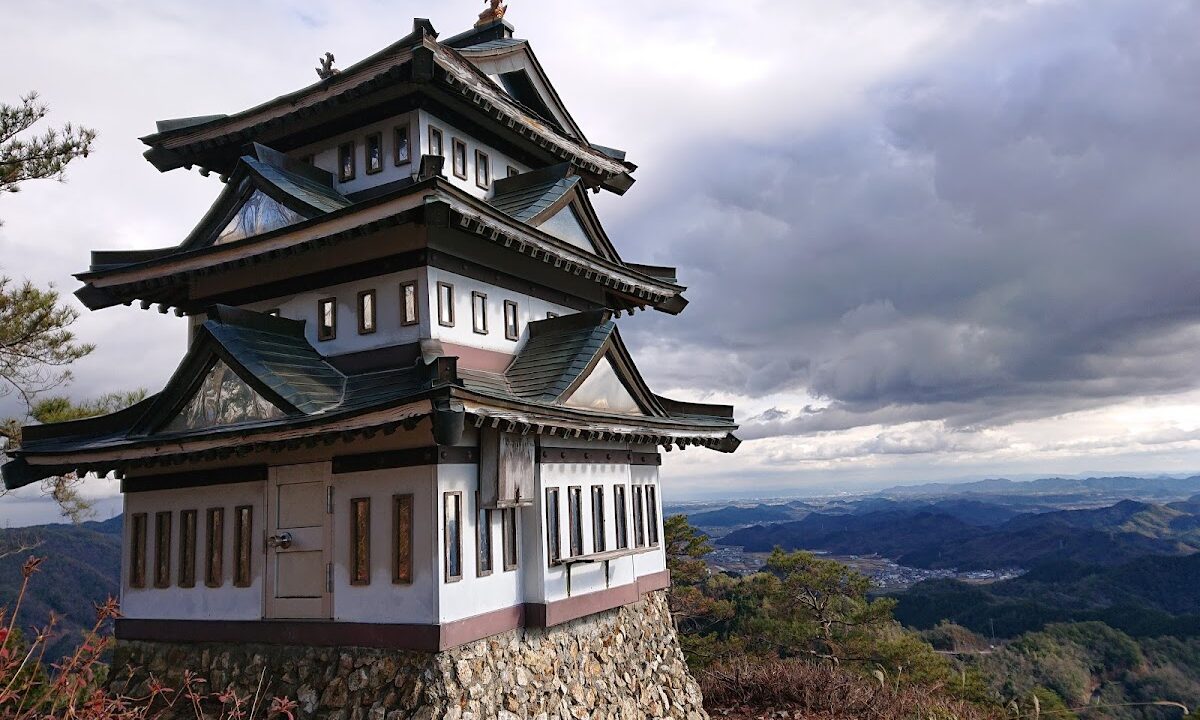
From the main enclosure on the mountaintop, one can see the Mino Plain, demonstrating its strategically and politically important location. Even today, on clear days, one can see the city of Gifu and Kinka Mountain (Gifu Castle).
Characteristics of Defensive Facilities
The defensive facilities of Okuwa Castle exhibit typical characteristics of a Sengoku period mountain castle:
Moats: Multiple moats, cut across the ridge, can be identified. They served to prevent enemy intrusion and clearly demarcate the castle area.
Earthworks: Earthworks surround the enclosures, enhancing their defensive capabilities. Some earthen ramparts exceeding 2 meters in height remain.
Stone Walls: It has been confirmed that stone walls were partially used at Okuwa Castle. However, unlike full-fledged stone-walled castles, their use was limited to auxiliary purposes.
Remains of the Castle Town at the Foot of the Mountain
A castle town once existed in the valley opening on the south side of Kojōyama Mountain. The current Okuwa area corresponds to this area.
At the entrance to the valley, earthen ramparts and moats known as “Shikoku-bori,” “Echizen-bori,” and “Soto-bori” were positioned as outer defensive facilities. These names are thought to originate from the hometowns of the people mobilized for construction.
The castle town is estimated to have formed a major political city, with administrative functions as a provincial governor’s office, residences for retainers, and merchant and industrialist townhouses.
Highlights of Okuwa Castle Ruins
View from the Main Enclosure Ruins
The main enclosure ruins at the mountaintop are the biggest highlight of Okuwa Castle. From the summit, at an altitude of 407.5 meters, a vast panorama of the Mino Plain unfolds. Imagining Toki Yorinori once looking out over Mino Province from this spot evokes a sense of historical romance.
A miniature model of the castle keep is currently installed in the main enclosure, serving as a landmark for visitors. While the actual Okuwa Castle did not have a keep, it is a beloved symbol of the castle ruins.
Well-Preserved Enclosures
On the mountaintop, multiple enclosures are arranged in a stepped pattern, their shapes clearly visible. The flat surfaces of the enclosures, the elevation differences of the cliffs, and the passages between the enclosures provide a valuable opportunity to observe the castle-building techniques of the Sengoku period.
Moats and Earthworks
The moats built along the ridge are the cornerstone of Okuwa Castle’s defensive system. Reaching several meters in depth, the moats remain clearly visible today, and their sheer scale is astonishing.
The earthworks are well-preserved, and in some places, they appear to have retained almost their original height. Walking along the top of the earthworks allows you to experience the perspective of the defending soldiers.
Natural Environment
Kojoyama Mountain is blessed with abundant nature, allowing you to enjoy the scenery of each season. It shows a different face each season: fresh greenery in spring, deep green in summer, autumn leaves in fall, and snowscapes in winter.
Various plants grow along the hiking trails, and it is also known as a birdwatching spot. The ability to enjoy historical exploration and nature observation simultaneously is one of the charms of the Okusawa Castle Ruins.
Hiking Routes to Okusawa Castle Ruins
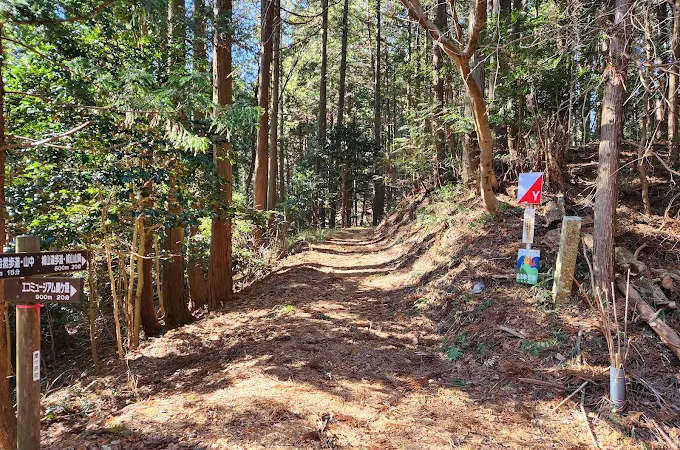
To visit the Okusawa Castle Ruins, you need to hike Kojoyama Mountain. There are two main hiking routes, which you can choose according to your physical strength and time.
Hiking Route 1: From the Kojoyama Mountain Trailhead at the Foot of the Mountain (Strenuous Course)
The most common route is the course that starts from the Kojoyama Mountain Trailhead at the foot of the mountain. This route is also known as the “Strenuous Course” and is a full-fledged mountain climb with an elevation difference of approximately 400 meters.
Estimated Time: Ascent approximately 60-90 minutes, Descent approximately 45-60 minutes
Route Features:
- A well-maintained hiking trail is provided from the trailhead to the summit.
- There are steep sections, so athletic shoes or hiking boots are essential.
- Along the way, you can observe the remains of the castle, such as moats and baileys.
- Recommended for those confident in their physical fitness and those who want to carefully observe the castle ruins.
Precautions:
- Wear non-slip shoes as there are steep sections.
- Insect repellent is necessary in summer, and warm clothing is necessary in winter.
- Bring plenty of drinking water.
Hiking Route 2: From the trailhead at the pass on the Hajikami Forest Road (shortest route)
Another route is the course that starts from the new trailhead at the pass on the Hajikami Forest Road (accessible by car). This route is known as the shortest route. Estimated Time: Ascent approximately 30-40 minutes, descent approximately 20-30 minutes
Route Characteristics:
- The climb starts from the middle of the mountain, so the elevation difference is small and it’s relatively easy to climb.
- Recommended for those with limited time or concerns about their physical fitness.
- The biggest advantage is that you can access the trailhead by car.
Precautions:
- The Hajikami Forest Road is a narrow mountain road, so caution is required when driving.
- There are places where it is difficult to pass oncoming vehicles.
- In winter, there is a possibility of road freezing, so please check the road conditions in advance.
Clothing and Equipment for Hiking
Appropriate clothing and equipment are necessary for hiking to the Okusawa Castle Ruins:
Clothing:
- Comfortable long-sleeved shirt and long pants (to prevent insect bites and abrasions from branches)
- Warm clothing and rain gear appropriate for the season
- Hat (for protection from the sun and branches)
Footwear:
- Athletic shoes or hiking boots (with non-slip soles)
- Sandals and high heels are strictly prohibited.
Items to bring:
- Drinking water (500ml or more recommended)
- Towel, gloves
- Insect repellent spray (spring to autumn)
- Mobile phone (for emergency contact)
- Camera (for taking photos of scenery and ruins)
Access Information
Access by Car
The most convenient way to access the Okusawa Castle Ruins is by car.
From Nagoya:
- Approximately 15 minutes from the Yamagata Interchange on the Tokai-Hokuriku Expressway
- Head north on National Route 256 and follow the signs to the Okusawa area.
From Gifu City:
- Approximately 25 minutes heading north from Kinka Mountain (Gifu Castle)
- Take National Route 256 to the Okusawa area in Yamagata City.
Parking:
- Parking is available near the trailhead of Kojōyama Mountain at the foot of the mountain (free).
- Parking is also available near the new trailhead on the Hajikami Forest Road.
- Due to limited parking spaces, early arrival is recommended on holidays.
Access by Public Transportation
Access by public transportation is limited.
Nearest Station:
- JR Gifu Station or Meitetsu Gifu Station
Bus:
- Take the Gifu Bus (bound for Takatomi from Gifu Station)
- Walking is required from the nearest bus stop to the trailhead
- Bus service is limited, so please check the timetable in advance.
Taxi:
- Taxis are also available from Gifu Station or the Takatomi area of Yamagata City
- Fares vary depending on the departure point.
Nearby Facilities
Yamagata City Hall:
- Address: 1000-1 Takagi, Yamagata City, Gifu Prefecture
- Can be used as a contact point for tourist information inquiries.
Michi-no-Eki Mino Niwaka Chaya:
- A rest stop on the way back from the Okusawa Castle Ruins
- Enjoy local specialties and meals.
Points to Note When Visiting Okusawa Castle Ruins
Safety Precautions
- Trail Conditions: The trail becomes slippery after rain, so please check the weather before visiting.
- Avoid Solo Hiking: We recommend hiking in groups whenever possible.
- Time Management: Plan your hike with ample time to descend before sunset.
- Wildlife: If there are reports of wild boars, bears, or other wildlife sightings, please refrain from visiting.
Manners and Rules
- Protection of Historical Sites: As this is a designated national historical site, please do not damage or remove any historical remains.
- Take Your Trash Home: For nature conservation, please be sure to take all your trash with you.
- No Open Fires: To prevent forest fires, the use of open fires is strictly prohibited.
- Respect for Private Property: Please refrain from entering areas other than the designated hiking trails.
Best Season for Visiting
Spring (March-May):
- The fresh greenery is beautiful, and the weather is mild, making it ideal for hiking.
- Those with hay fever should take precautions.
Autumn (October-November):
- The autumn foliage is beautiful, and the temperature is suitable for hiking.
- Most Popular Season
Summer (June-September):
- Many insects, heat protection necessary
- Early morning hikes are recommended
Winter (December-February):
- Possibility of snow and ice, suitable for advanced hikers
- Clear air and excellent views
Tourist Spots Around Okusa Castle Ruins
Gifu Castle (Kinka Mountain)
Located about 25 minutes south of Okusa Castle, Gifu Castle is a famous castle associated with Saito Dosan and Oda Nobunaga. As a castle deeply connected to the history of Okusa Castle, visiting both together is recommended.
Historical Sites in the Tsubakino Area
The Tsubakino area around Okusa Castle is dotted with historical sites related to the Toki clan and Saito Dosan. A stroll while searching for traces of the castle town is an interesting experience.
Local Products of Yamagata City
Yamagata City is a region where traditional culture thrives, including Enku Buddha statues and Mino Washi paper. When visiting Okusawa Castle, please also take the time to experience the local culture.
Research and Preservation Activities
At the Okusawa Castle site, continuous research and preservation activities are being carried out, primarily by the Yamagata City Board of Education. Even in the Reiwa era, archaeological excavations and surveys have been conducted, yielding new insights into the castle’s structure and history.
Latest Research Findings
Recent research has yielded new discoveries regarding the extent and structure of the castle town. Furthermore, analysis of excavated artifacts has shed light on the lifestyle and trade relations of the time.
Based on these research findings, Yamagata City is promoting the appropriate preservation and utilization of the historical site. Efforts are being made to create an environment where visitors can safely and understand the site while exploring, including the maintenance of hiking trails and the installation of information boards.
Summary
Okusawa Castle (Yamagata City, Gifu Prefecture) is a mountain castle that played an important role during the Sengoku period as the residence of the Toki clan, the shugo (military governor) of Mino Province. Built on Mount Kojōzan, at an altitude of 407.5 meters, this castle is known as the stage for Saitō Dōsan’s “conquest of the province,” and holds a significant place in the history of the Sengoku period (Warring States period).
Currently designated as a national historic site, its well-preserved remains transport visitors back to the Sengoku period. With its panoramic views from the summit, clearly visible baileys and moats, and rich natural environment, it’s an attractive spot where you can enjoy both history and nature.
While appropriate clothing and equipment are necessary for the climb, there are two routes to choose from, allowing you to visit according to your fitness level. When visiting Gifu Prefecture, be sure to visit the Ōkusa Castle ruins and experience the spirit of the Sengoku period.
Before your visit, please check the latest information on the Yamagata City website to ensure a safe and fulfilling historical site visit.