Kurono Castle (Gifu Prefecture): A Complete Guide to its History and Highlights | A Phantom Flatland Castle That Lasted Only 16 Years
What is Kurono Castle?
Kurono Castle (Kurono-jo) was a Japanese castle located in Kurono, Gifu City, Gifu Prefecture, dating from the Sengoku period to the early Edo period. It was built in Kurono, Kataagata District, Mino Province, by Kato Sadayasu, under the orders of Toyotomi Hideyoshi. However, due to Sadayasu’s transfer to Yonago, Hoki Province, it was abandoned after a short period of only 16 years, becoming known as a phantom flatland castle.
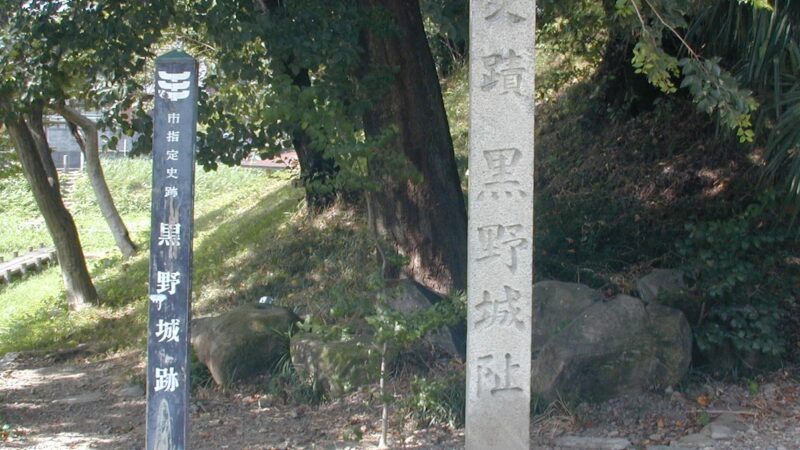
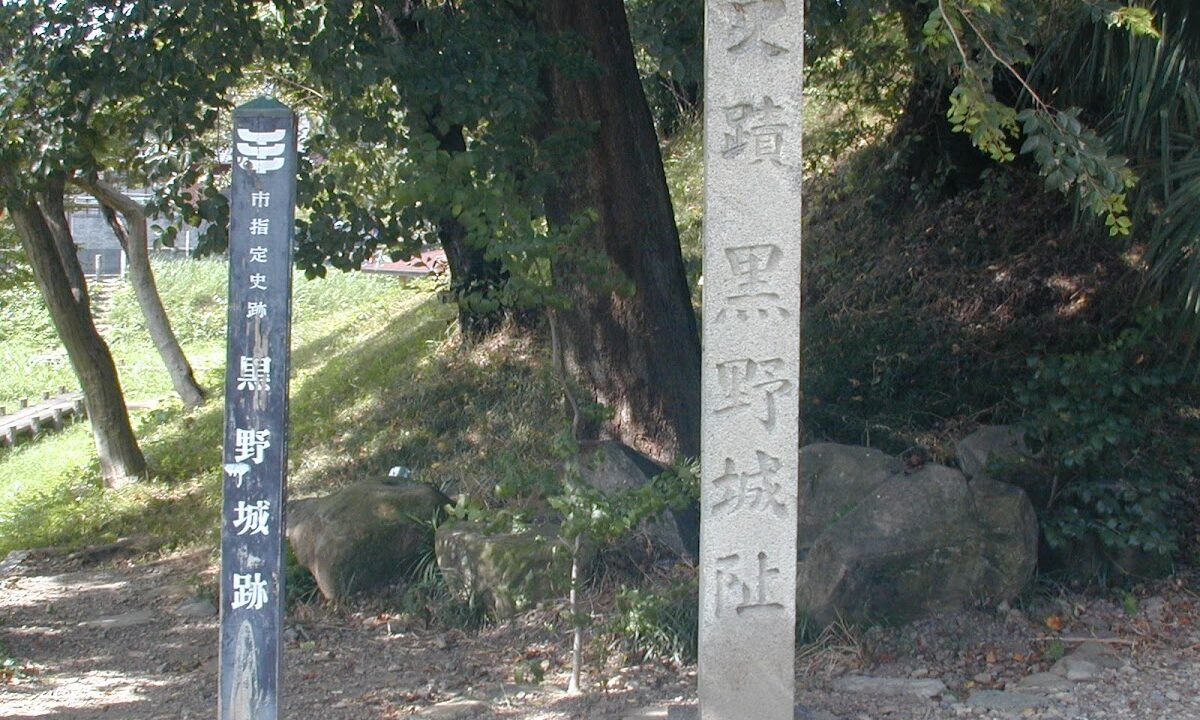
Currently designated as a Gifu City Historic Site, the remains of the main keep and second bailey still exist, making it a valuable cultural asset that conveys the history of the region. Despite being located within an urban area, it is a precious example of a flatland castle that was abandoned in the early Edo period.
Basic Information on Kurono Castle
Common Name/Alternate Name: Kurono Jin’ya
Location: Kurono, Gifu City, Gifu Prefecture
Former Province: Mino Province, Kataagata District
Classification/Structure: Flatland Castle
Keep Structure: None (possibly only a keep base existed)
Builder: Kato Sadayasu
Year of Construction: Around 1594-1597
Main Lord: Kato Sadayasu
Year of Abandonment: 1610
Designated Cultural Property: Gifu City Historic Site
Remains: Earthworks, moat remains, part of stone wall
History of Kurono Castle
Background of Construction and the Genealogy of the Kato Clan
The Kato clan, who became the lords of Kurono Castle, are believed to have been a branch of the Ando family of West Mino and former retainers of the Toki clan. Kato Mitsuyasu, the father of the castle lord Kato Sadayasu, served the Toki clan, then the Saito clan, and finally Toyotomi Hidenaga, the younger brother of Toyotomi Hideyoshi. He was later recalled by Hideyoshi and rose to prominence, eventually becoming the lord of Kai Province with a domain of 240,000 koku.
Kato Sadayasu was born in 1580 (Tensho 8) as the second son of Kato Mitsuyasu, a retainer of the Toyotomi family. His father, Mitsuyasu, died of illness in Nagoya, Hizen Province, during the Korean campaign of 1592 (Bunroku 1), and Sadayasu inherited the headship of the Kato family at the young age of 13.
Construction of the Castle and the Establishment of the Kurono Domain during the Bunroku Period
In 1594 (Bunroku 3), Kato Sadayasu was transferred by order of Toyotomi Hideyoshi from Kai Province to Kurono in Mino Province, with a domain of 40,000 koku (25,292 koku in Atsumi District and 14,700 koku in Kataagata District). Following this transfer, construction of Kurono Castle began in the Kurono area as his new residence.
Construction is believed to have taken place from 1594 to around 1597 (Keicho 2), and it was completed as a flatland castle exhibiting characteristics of castle architecture from the transitional period between the Sengoku and Edo periods. Kurono Castle functioned as the administrative center of the Kurono Domain of Mino Province, and a castle town was also developed.
The Battle of Sekigahara and Kato Sadayasu
In 1600 (Keicho 5), the decisive Battle of Sekigahara broke out. Kato Sadayasu initially belonged to the Western Army led by Ishida Mitsunari, but after assessing the battle situation, he switched sides to the Eastern Army (Tokugawa forces). This decision proved successful, and he was granted his territory in the post-war rewards and punishments.
His achievements in the Battle of Sekigahara earned him the trust of Tokugawa Ieyasu, which contributed to the continued existence of the Kato family. Kurono Castle continued to serve as the Kato clan’s residence for some time under the Tokugawa regime.
Transfer to Yonago and Abandonment of the Castle
In 1610 (Keicho 15), Kato Sadayasu was granted an additional 20,000 koku and transferred to Yonago, Hoki Province, as the lord of a 60,000 koku castle. With this transfer, Kurono Castle, after a short history of only 16 years, came to an end and was abandoned.
After its abandonment, Kurono Castle completely lost its function as a castle due to the Tokugawa shogunate’s “One Castle Per Province” policy. However, the castle ruins have been carefully preserved by the local people and remain a valuable historical heritage to this day.
Structure and Scale of Kurono Castle
Characteristics as a Flatland Castle
Kurono Castle was a typical flatland castle, utilizing the surrounding low-lying wetlands for its defensive structure. It employed castle construction techniques from the late Sengoku period to the early Edo period, combining stone walls and earthworks.
The castle’s layout consisted of a central main enclosure (Honmaru) surrounded by the second and third baileys (Ninmaru and Sannomaru), with a total area estimated at approximately 100,000 square meters. While a main keep (Tenshu) is not believed to have existed, the possibility of a Tenshu base being constructed has been suggested.
Structure of the Main Enclosure and Entrance
Excavation results have confirmed the presence of earthworks and moat remains at the Honmaru site. The Honmaru is estimated to have measured approximately 100 meters east-west and 80 meters north-south, surrounded by earthworks and a moat.
The entrance (Koguchi) of the castle has been confirmed to have a masugata-koguchi (square-shaped entrance) structure. This is a defensive structure designed to prevent enemy intrusion, a common feature in castles from the late Sengoku period. Stone walls were used around the entrance, and some of the stones remain today.
Construction Techniques for Stone Walls and Earthworks
The stone walls of Kurono Castle were built using a technique called “nozura-zumi,” which involves stacking natural stones as they are. This was a common stone wall construction technique from the Sengoku period to the early Edo period. The stones used were mainly granite and sandstone quarried locally.
The earthworks were constructed to a height of approximately 3-4 meters and a width of approximately 5-6 meters, and some parts remain in good condition today. The structure of the earthworks confirms the use of a technique called “hanchiku,” which involves compacting and stacking soil.
Moat Arrangement and Water System
A water moat surrounded the castle, estimated to be approximately 10-15 meters wide and 2-3 meters deep. This moat served not only as a defensive feature but also as a drainage system within the castle.
The water source utilized surrounding rivers and groundwater, and it was designed to maintain a constant water level. Archaeological excavations have uncovered a stone-built drainage structure at the bottom of the moat, revealing the use of advanced civil engineering techniques.
Current Status and Remains of Kurono Castle
Current Status of the Main Enclosure Site
Currently, the main enclosure site of Kurono Castle is maintained as Kurono Castle Ruins Park and used as a sports field. Parts of the earthworks remain around the site, allowing visitors to imagine the scale of the castle in its heyday.
An explanatory sign is installed at the main enclosure site, providing detailed information about the castle’s history and structure. Furthermore, regular cleaning and preservation activities are carried out by local history enthusiasts, ensuring the site is maintained in good condition.
Ninomaru Museum
The Ninomaru Museum, operated by local residents, serves as a facility that conveys the history of Kurono Castle. This private museum displays historical documents, maps, and excavated artifacts related to Kurono Castle, allowing visitors to learn about the castle’s history in detail.
The museum also offers explanations by citizen groups researching local history, as well as kamishibai (picture-story shows) introducing the history of Kurono Castle. It is recommended to check the opening days in advance before visiting.
Results of Archaeological Excavations
The Gifu City Board of Education has conducted multiple archaeological excavations, yielding valuable results. The excavations have confirmed the earthworks of the main keep and second bailey, the remains of moats, the foundations of stone walls, and the structure of the castle gates.
Excavated artifacts include roof tiles, ceramics, iron products, and coins, providing important information about the lifestyle and culture of the late 16th and early 17th centuries. In particular, the discovery of fragments of gold-leaf roof tiles is considered a significant finding, demonstrating the castle’s high status.
Remaining Earthworks and Stone Walls
A portion of the earthworks remains in good condition around Kurono Castle Ruins Park. In particular, the earthen rampart on the north side of the main keep remains to a height of approximately 2-3 meters, allowing visitors to appreciate the scale of the castle at the time.
While much of the stone wall has been lost, some foundations and stones can still be seen. These remains are valued as a valuable example of a flatland castle that was abandoned in the early Edo period and has survived remarkably well within an urban area.
History of Kurono Castle Town
Formation and Development of the Castle Town
With the construction of Kurono Castle, a planned castle town was formed in the surrounding area. The castle town had a typical early modern castle town structure, with samurai residences, merchant districts, and temples and shrines arranged around the main keep.
The town layout was arranged in a grid pattern, and merchant houses lined the main roads. Although it existed for only 16 years, the foundation of the castle town was established, and it continued to exist as a settlement even after the castle was abandoned.
Traces of the Castle Town Remaining Today
Remnants of the former castle town can still be seen in the present-day Kurono area. The town and place names, such as “Honmachi,” “Shinmachi,” and “Yokomachi,” retain traces of their origins as castle towns.
Furthermore, the layout of roads and plot divisions also show traces of the original town planning. Walking through the area, you’ll see the word “KURONO” everywhere, demonstrating the residents’ deep respect for the history of Kurono Castle.
Kurono and Fuyu Persimmons
The Kurono area is also known as a production area for Fuyu persimmons, a representative specialty product of Gifu Prefecture. While Fuyu persimmons were developed through selective breeding during the Meiji era, the fertile soil and climate of this region were ideal for cultivation.
Currently, regional development activities are being carried out focusing on the history of Kurono Castle and Fuyu persimmons, with tours offering historical walks and opportunities to enjoy the local specialty.
Gifu City’s Three Great Ancient Castles and Kurono Castle
Gifu City’s Castle Heritage
Kurono Castle is counted as one of the “Three Great Ancient Castles of Gifu City,” along with Gifu Castle and Kano Castle. Each castle possesses a distinct historical background and characteristics, making them indispensable to understanding the history of Gifu City.
Gifu Castle is a mountain castle that Oda Nobunaga used as a base for unifying Japan; Kano Castle is a flatland castle built by Tokugawa Ieyasu after the Battle of Sekigahara; and Kurono Castle is a flatland castle built under the Toyotomi regime.
Historical Positioning of Kurono Castle
Kurono Castle has a unique history, having been built during the transition period from the Toyotomi regime to the Tokugawa regime and abandoned after only 16 years. This short lifespan symbolizes the movement of daimyo during the turbulent period from the Sengoku period to the Edo period, and the results of the shogunate’s “One Castle Per Province” policy.
From the perspective of castle history, it is valued as a valuable example showing the transitional period from the practical, warlike castles of the Sengoku period to the political and symbolic castles of the Edo period.
Transportation and Access Information
Access by Public Transportation
By Train/Bus:
- Take the Gifu Bus bound for “Kurono” from JR Gifu Station or Meitetsu Gifu Station.
- Get off at the “Kurono” bus stop and walk approximately 5 minutes to Kurono Castle Ruins Park.
- Travel time from Gifu Station is approximately 30-40 minutes.
Community Bus:
- Gifu City Community Buses are also available.
- Routes and timetables can be found on the Gifu City official website.
Access by Car
By Expressway:
- Approximately 20 minutes from the Tokai-Hokuriku Expressway “Gifu-Kakamigahara IC”.
- Approximately 30 minutes from the Meishin Expressway “Gifu-Hashima IC”.
By General Road:
- Accessible via National Route 157 and a prefectural road.
- Approximately 20 minutes by car from the center of Gifu City.
Parking:
- Limited parking space is available around Kurono Castle Ruins Park.
- When visiting the Ninomaru Museum, it is recommended to check parking availability in advance.
Nearby Tourist Attractions
Gifu Castle:
- Approximately 30 minutes by car from Kurono Castle
- A symbol of Gifu City, towering over the summit of Mt. Kinka
- You can reach the summit by ropeway
Kano Castle Ruins:
- Approximately 25 minutes by car from Kurono Castle
- Remains of a flatland castle built by Tokugawa Ieyasu remain
Gifu City History Museum:
- A comprehensive history museum located near Gifu Castle
- You can learn about Gifu’s history and culture comprehensively
Kurono Castle Visiting Points
Recommended Visiting Route
- Kurono Castle Ruins Park (Main Enclosure Site): First, visit the main enclosure site and understand the castle’s overview from the information board.
- Earthwork Remains: Observe the earthworks remaining around the park to get a sense of the castle’s scale.
- Ninomaru Museum: Learn about the castle’s history and excavated artifacts in detail (check opening days)
- Stroll through the castle town: Walk through the old castle town and explore the traces of history
Points to note when visiting
- The main keep site is used as a sports field, so check its usage status.
- The Ninomaru Museum is privately owned, so opening days and hours may be irregular.
- In summer, there is little shade, so it is recommended to bring a hat and drinking water.
- Please be careful not to climb on or damage the remains such as earthworks.
Photo spots
- A composition including the explanatory sign for the main keep site and the earthworks in the background.
- A cross-section of the remaining earthworks (angle that shows height and structure).
- A panoramic view of the castle park (wide-angle shot that conveys the scale of the castle).
- Streetscape of the old castle town (street corners that give a sense of historical atmosphere).
Materials for learning about Kurono Castle
Main references
- “Gifu City History,” edited by Gifu City
- “Comprehensive Survey of Japanese Castles,” Volume 9 (Shin Jinbutsu Oraisha)
- “Castles of Mino,” Gifu Prefectural Board of Education
- Excavation survey report published by Gifu City Board of Education
Online Information Sources
- Gifu City Official Website (Cultural Property Information)
- Gifu Prefecture Tourism Official Website “Gifu Travel Guide”
- National Diet Library Digital Collection (Ancient Documents and Maps)
Summary
Kurono Castle, despite its short existence of only 16 years, is a valuable historical heritage site that conveys the castle architecture and political situation of the transitional period from the Sengoku period to the Edo period. The flatland castle built by Kato Sadayasu symbolizes the turbulent era of daimyo placement under the Toyotomi regime and the transition to the Tokugawa regime after the Battle of Sekigahara.
Currently, the site of the main keep has been developed into a park, and remains such as earthworks and moat traces are preserved in good condition. Located within the city, the Kurono Castle ruins, which retain the appearance of a flatland castle abandoned in the early Edo period, are carefully preserved by the local people as a Gifu City historical site.
By combining learning at the Ninomaru Museum, observing the remains in the castle park, and strolling through the old castle town, you can gain a deeper understanding of the history and culture of Kurono Castle. As one of Gifu City’s three major ancient castles, and a valuable historical site that shows the transition period from the Sengoku period to the Edo period, Kurono Castle is a historical spot well worth visiting.
When you visit Gifu, be sure to visit the Kurono Castle ruins and experience the charm of this phantom flatland castle that left its mark on a short but important history.