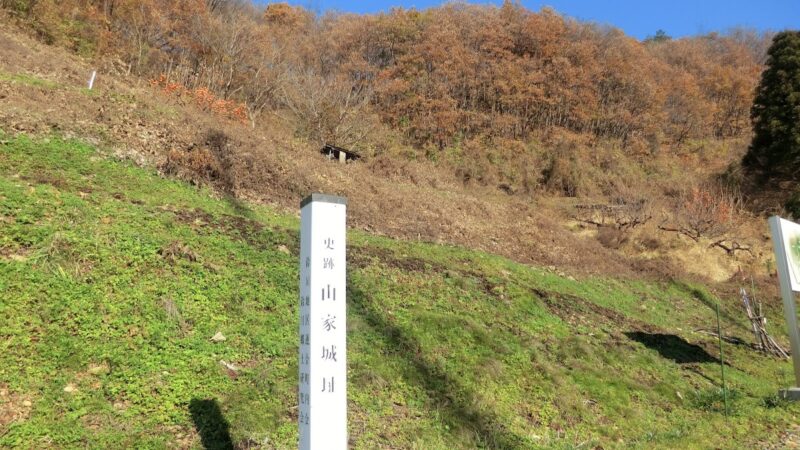
Narushima Castle Ruins, Yonezawa City (Yamagata Prefecture) Complete Guide | Remains, History, and Access Information
What are the Narushima Castle Ruins?
The Narushima Castle Ruins are the remains of a medieval castle located in Narushima, Hirohata-cho, Yonezawa City, Yamagata Prefecture. Currently, the site is within the grounds of Narushima Hachiman Shrine, where castle remains such as earthworks, dry moats, and gatehouses are well-preserved. While detailed historical records are limited, the characteristics of the remains suggest that it was used until the end of the Sengoku period, making it an important historical site for understanding the medieval history of the Yonezawa region.
Historical Background of Narushima Castle
Narushima Castle is believed to have been built during the time when the Date clan ruled Yonezawa. According to tradition, it was the residence of Endo Tango-no-kami. The Endo clan was a family of samurai who served the Date clan, and it is thought that they established Narushima Castle as a defensive base in this region.
The Yonezawa region was an important base for the Date clan during the Sengoku period. There was a period when Date Masamune used Yonezawa Castle as his base, and Narushima-kan may have functioned as one of the subsidiary castles fortifying the surrounding area. While there are no clear records of the period after Uesugi Kagekatsu took control of Yonezawa, the condition of the remains suggests that it was used in some form until the end of the Sengoku period.
Remains and Structure of Narushima-kan Site
Characteristics of the Earthworks
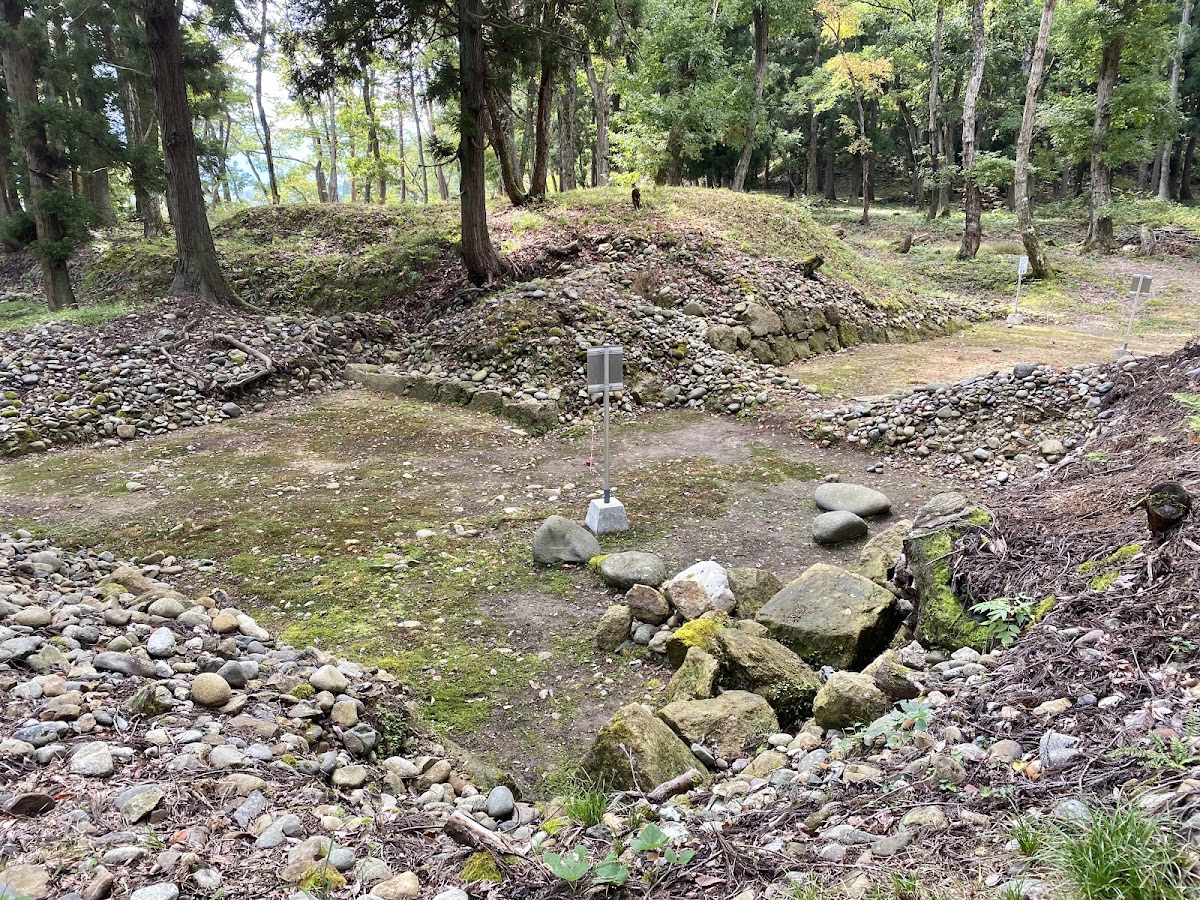
Within the grounds of Narushima Hachiman Shrine, particularly on the north and west sides, earthworks approximately 2 meters high still exist. These earthworks were built as defensive structures for a medieval castle and were important structures for preventing enemy intrusion. Even today, their height and shape are relatively well-preserved, making them valuable remains for understanding the castle-building techniques of the time.
A detailed examination of the earthworks’ structure reveals that they were carefully constructed using rammed earth and embankment techniques. Their survival over hundreds of years of weathering demonstrates the high level of civil engineering technology of the time.
Remains of the Dry Moat
The remains of a dry moat can be seen outside the earthworks. A dry moat is a moat that does not hold water, and it served to physically hinder enemy approaches while also relatively increasing the height of the earthworks. While parts of the dry moat at Narushima Castle are now filled in, its original size can be estimated from the topography.
The dry moat’s placement is concentrated in directions crucial to the castle’s defense, indicating a planned layout. The western dry moat, in particular, remains relatively clear and provides important clues to understanding the defensive system of the time.
Remains of the Entrance Gate
On the west side, remains believed to be those of an entrance gate (koguchi) are found. The entrance gate was an important facility controlling entry and exit to the castle, and was a key defensive point. The entrance gate at Narushima Castle is shaped like a cut-out in the earthworks, showing ingenuity in restricting enemy intrusion while allowing friendly forces to enter and exit.
Observing the structure of the entrance gate, it may not be a simple opening, but rather positioned to allow for flanking fire against intruders. Such defensive features are characteristic of castle architecture from the Sengoku period.
Arrangement of Enclosures
The flat area where the Narushima Hachiman Shrine stands is thought to have been the former main enclosure (honmaru). Observing the surrounding terrain, steps and flat areas can be seen, suggesting the possibility of multiple enclosures being arranged. Currently, it is difficult to reconstruct the detailed layout of the castle due to the development of the shrine grounds, but the size and structure of the residence can be inferred from the topography.
Relationship with Narushima Hachiman Shrine
History of the Shrine
Narushima Hachiman Shrine is built on the site of the Narushima residence. It is believed that the Hachiman Shrine was established on this site after the castle was abandoned. Hachiman was worshipped by samurai as a god of war, and it is not uncommon for Hachiman Shrines to be built on castle sites.
While there are no clear records of the shrine’s founding date, it has a long history as a center of local faith. While the current shrine building was rebuilt in the modern era, the layout of the grounds strongly retains the structure of a medieval castle.
Traces of a Castle Remaining on the Grounds
Upon visiting the grounds of Narushima Hachiman Shrine, it appears at first glance to be an ordinary shrine, but careful observation reveals traces of a castle everywhere. The earthen ramparts surrounding the shrine building, the remains of the dry moat outside, and the layout of the approach path all incorporate features of a medieval castle into the shrine’s structure.
In particular, the earthen ramparts remaining on the north and west sides of the grounds function as boundaries, creating a unique landscape where castle remains and shrine facilities are integrated. Such examples are seen at castle sites throughout Japan and are valuable examples demonstrating the layered nature of history.
Highlights of the Narushima Castle Site
Observation Points for the Earthen Ramp and Dry Moat
The greatest highlight when visiting the Narushima Castle Site is the well-preserved earthen ramparts and dry moat. Walking along the north and west sides of the temple grounds, you’ll find a series of earthen ramparts, approximately 2 meters high, that are remarkably large and well-preserved.
While climbing on the ramparts should be avoided, observing them from below or from the side allows you to appreciate the impressive defensive features of the time. Furthermore, circling around to the outside of the ramparts reveals the remains of a dry moat. Although overgrown with weeds in some areas, the depressions in the terrain allow you to infer the location and size of the moat.
Structure of the Entrance
The remains of the entrance on the west side are also a must-see. Careful observation of the breaks in the rampart reveals that these are not mere gaps, but strategically placed entrances. By observing the terrain before and after the entrance, you can imagine how enemy incursions were prevented and the movement of allied forces was controlled.
Overall Layout
Viewing the entire temple grounds from a bird’s-eye perspective allows you to understand the layout (design) of Narushima Castle. The layout of the shrine, surrounded by earthworks and a dry moat, and the placement of the fortified entrance, suggests that it was a small but systematically designed castle.
By comparing the current layout of the shrine grounds with the structure of the medieval castle, one can gain a deeper understanding of its history.
Relationship with Castles in the Yonezawa Area
Location Relative to Yonezawa Castle
Narushima Castle is located approximately 5 kilometers northeast of Yonezawa Castle (present-day Matsugamisaki Park). Yonezawa Castle flourished as the base of the Date clan, and later the Uesugi clan, and Narushima Castle is thought to have played a subsidiary role.
Within the castle network centered around Yonezawa Castle, Narushima Castle may have functioned as a defensive base to the northeast. It is presumed to have monitored the surrounding roads and played a role in communication with and defense of Yonezawa Castle in times of emergency.
Surrounding Medieval Castles
Many other medieval castle sites remain in Yonezawa City and its surrounding areas besides Narushima Castle. These castles and fortifications were important military facilities that supported the rule of the Date and Uesugi clans.
For example, in addition to Yonezawa Castle, several other castles and fortifications have been identified, including Tateyama Castle, Shirakozawa Castle, and Nagate Castle, and it is believed that these formed a network. Narushima Castle was also part of this network, contributing to regional security.
Visitor Guide
Access
Using Public Transportation
Narushima Hachiman Shrine is approximately 6 kilometers from JR Yonezawa Station. A taxi from the station takes about 15 minutes. Since the number of buses is limited, it is recommended to check the timetable in advance.
Using a Car
It is approximately 10 minutes from the Yonezawa Kita Interchange on the Tohoku Chuo Expressway, and approximately 15 minutes from the Yonezawa Chuo Interchange. Access is via National Route 121 and a prefectural road. There is parking space for visitors at the shrine, but it is not large, so caution is advised during busy times.
Address
Narushima, Hirohata-cho, Yonezawa City, Yamagata Prefecture
Notes for Visitors
Since the Narushima Castle Ruins are located within the grounds of Narushima Hachiman Shrine, it is important to observe proper shrine etiquette when visiting. Please show respect to the shrine buildings and ritual facilities, and observe quietly.
Please refrain from climbing on or damaging the earthworks or remains. The preservation of the remains is supported by the efforts of local residents. Photography is permitted, but consideration is needed if shrine events are taking place.
The best time to visit is from spring to autumn. Observing the remains is difficult in winter due to snow. Also, the ground can be slippery in rainy weather, so it is recommended to wear appropriate footwear.
Estimated Visiting Time
If you want to leisurely explore the grounds and observe the remains such as earthworks, dry moats, and gates, allow 30 minutes to 1 hour. If you want to gain a deeper understanding of the castle’s structure and history, reading related books and materials beforehand will make your visit more fulfilling.
Nearby Tourist Attractions
Yonezawa Castle Ruins and Matsugamisaki Park
When visiting the Narushima-kan Ruins, be sure to also visit the Yonezawa Castle Ruins (Matsugamisaki Park). This park is home to facilities that offer a deep understanding of Yonezawa’s history, including the Uesugi Shrine, dedicated to Uesugi Kenshin, and the Yonezawa City Uesugi Museum, which displays valuable artifacts from the Uesugi family.
The water-filled moat evokes the former Yonezawa Castle, and it’s also known as a famous cherry blossom viewing spot in spring. It’s also a place where you can learn about Uesugi Yozan’s “Where there’s a will, there’s a way” spirit.
Uesugi Family Mausoleum
The Uesugi Family Mausoleum, the burial place of successive lords of the Uesugi family, is also a must-see. Surrounded by cedar trees, the mausoleums of the lords from Uesugi Kenshin to the 12th generation are neatly arranged in a solemn atmosphere. Designated a national historical site, it’s a place where you can truly feel the history of Yonezawa.
Michi-no-Eki Yonezawa
Michi-no-Eki Yonezawa, conveniently located as a base for sightseeing in Yonezawa, offers local cuisine including Yonezawa beef. It also boasts a wide selection of regional dishes such as Yonezawa ramen and Yamagata soba, making it ideal for a break during sightseeing. A rich variety of local specialties and souvenirs are also available.
Cultural Value of Narushima-kan Ruins
Importance in Medieval Castle Research
The Narushima-kan Ruins are one of the best-preserved examples of medieval castles remaining in Yamagata Prefecture. Basic defensive structures such as earthworks, dry moats, and gates remain intact, providing valuable information for understanding the structure of medieval castles.
In particular, the fact that the ruins were preserved by being used as shrine grounds, thus avoiding development, is significant. While such cases can be seen throughout Japan, the Narushima-kan Ruins are a typical example that attracts attention from castle researchers and history enthusiasts.
Position in Regional History
The Narushima-kan Ruins are an indispensable historical site for understanding the medieval history of the Yonezawa region. This site serves as a witness to the historical changes that occurred in this region, from the rule of the Date clan to the transition to the Uesugi clan and into the Edo period.
It has the potential to be used as a site for local history education, and its future preservation and utilization are highly anticipated.
Preservation of Narushima Castle Ruins and Future Challenges
Current State of Preservation
The Narushima Castle Ruins are managed as part of the grounds of Narushima Hachiman Shrine, and therefore maintain a relatively good state of preservation. However, the earthworks and dry moats are affected by natural weathering and vegetation, and proper management is necessary for long-term preservation.
Currently, cleaning and management are carried out by local residents, but professional surveys and the formulation of a preservation plan are future challenges.
Potential for Utilization
The Narushima Castle Ruins hold great potential for further utilization as a historical tourism resource for Yonezawa City. By installing information boards, explaining the remains, and developing viewing paths, the charm of medieval castles can be conveyed to a wider audience.
Furthermore, the development of tourist routes linked to Yonezawa Castle and surrounding castle ruins is also conceivable. By creating a tour course that visits multiple historical sites under a theme such as “A Tour of Castles and Fortifications in Yonezawa,” the appeal of historical tourism can be enhanced.
Summary
The Narushima Castle Ruins are a valuable medieval castle site remaining in Yonezawa City, Yamagata Prefecture. Although currently located within the grounds of Narushima Hachiman Shrine, the remains such as earthworks, dry moats, and gates are well-preserved, conveying the history of the Sengoku period.
While detailed historical records are limited, the characteristics of the remains suggest that it was used until the end of the Sengoku period, and it is highly likely that it was one of the branch castles supporting the Date clan’s rule. Considering its location relative to Yonezawa Castle and its role within the surrounding castle network allows for a deeper understanding of the medieval history of this region.
When visiting Yonezawa City, be sure to visit the Narushima Castle Ruins along with the Yonezawa Castle Ruins and the Uesugi Family Mausoleum. Observing the earthworks and dry moats remaining in the quiet shrine grounds will allow you to reflect on history from hundreds of years ago. For history buffs, the Narushima Castle Ruins are a must-see spot.