Complete Guide to Nanbu Shiroyama Castle (Nanbu Town, Yamanashi Prefecture): History and Highlights of the Mountain Castle Built on the Birthplace of the Nanbu Clan
What is Nanbu Shiroyama Castle?
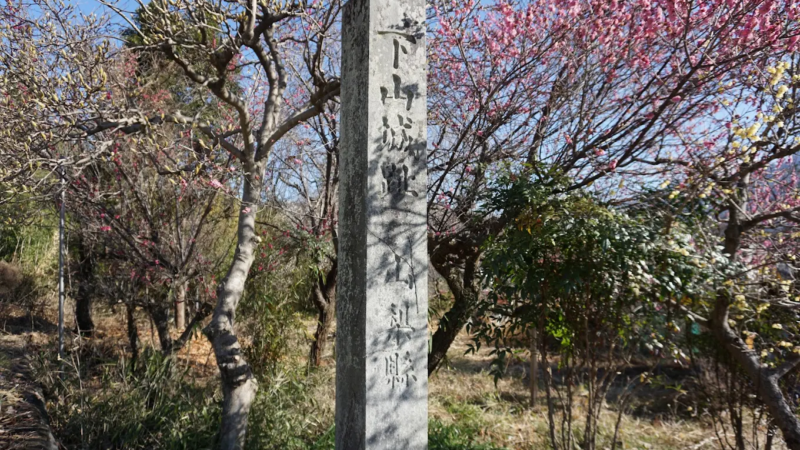
Nanbu Shiroyama Castle is a medieval mountain castle located in Nanbu, Nanbu Town, Minamikoma District, Yamanashi Prefecture. Also known as “Nanbu Shiroyama” or “Nanbu Castle,” it holds a historically extremely important position as the birthplace of the Nanbu clan, who ruled Mutsu Province (present-day Aomori and Iwate Prefectures).
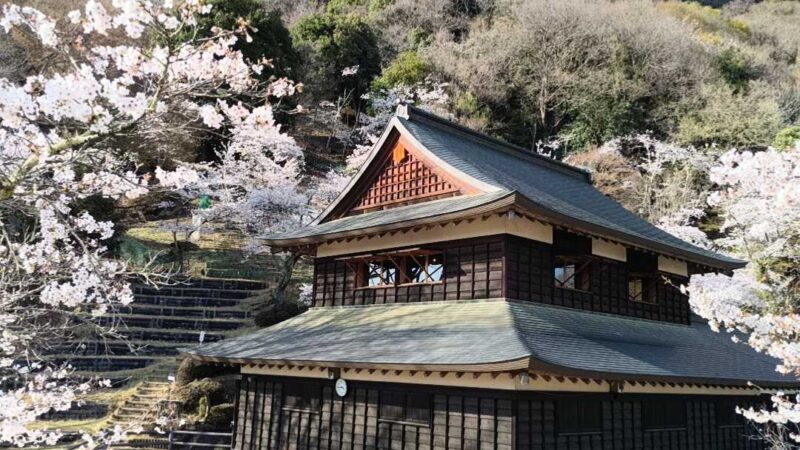
Located on the west bank of the Fuji River, the castle was built on the summit of Shiroyama Mountain, approximately 400 meters above sea level. It was a strategically important location, overlooking the Fuji River and the key strategic points of southern Kai Province. While part of the castle grounds has been developed into Nanbu Shiroyama Furusato Park, much of the castle remains in its natural state, retaining a strong atmosphere of a medieval mountain castle.
Table of Contents
- History of Nanbu Shiroyama Castle
- Relationship between the Nanbu Clan and Nanbu Shiroyama Castle
- Castle Structure and Layout
- Major Remains and Highlights
- Access Methods and Visitor Guide
- Nearby Tourist Spots
- Points to Note When Visiting
History of Nanbu Shiroyama Castle
Late Heian Period: The Birth of the Nanbu Clan
The history of Nanbu Shiroyama Castle dates back to 1180 (Jisho 4), the late Heian period. Nanbu Mitsuyuki, the third son of Kagami Tomomitsu, a member of the Kai Genji clan, participated in Minamoto no Yoritomo’s uprising and was granted Nanbu Pasture in Kai Province (the area of present-day Nanbu Town) for his achievements.
Mitsuyuki is said to have built a residence in this area and constructed Nanbu Castle on the summit of Shiroyama Mountain as its fortified castle. In peacetime, the Nanbu clan conducted their affairs at their residence at the foot of the mountain, and in wartime, they holed up in the castle on the mountaintop, adopting a “Negoya-style” castle layout. The site of the Nanbu clan residence is believed to have been located in the present-day Nanbu district of Nanbu Town.
Kamakura Period: Migration to Oshu
At the start of the Kamakura period, Nanbu Mitsuyuki participated in Minamoto no Yoritomo’s conquest of Oshu (1189) and achieved great military success. For his achievements, he was newly granted Nukanobu District in Mutsu Province (present-day eastern Aomori Prefecture to northern Iwate Prefecture).
Mitsuyuki led his family to Oshu, but he continued to retain his territory in Nanbu, Kai Province. It is believed that some members of his family and local retainers remained in this area, and Nanbu Shiroyama Castle continued to be used. Throughout the Kamakura period, Nanbu Shiroyama Castle continued to function as a base for the Kai Nanbu clan.
Sengoku Period: Relationship with the Takeda Clan
At the start of the Sengoku period, Kai Province came under the control of the Takeda clan. The Nanbu region also became part of the Takeda clan’s sphere of influence, and Nanbu Shiroyama Castle may have been positioned as part of the Takeda clan’s castle network.
Some researchers suggest that some of the remaining structures show signs of renovations made during this period using the Takeda-style castle construction techniques. In particular, techniques such as moats and earthen bridges have been noted for their similarities to the mountain castle construction techniques favored by the Takeda clan.
After the Edo Period: Abandonment of the Castle
With the start of the Edo period, Nanbu Shiroyama Castle lost its military function and was abandoned. The Nanbu region prospered through river transport on the Fuji River and developed into a commercial town, but Shiroyama remained a beloved object of worship and a regional symbol for the local people.
Currently, it is preserved as a historical heritage site of Nanbu Town, and a portion has been developed into Nanbu Shiroyama Furusato Park.
Relationship between the Nanbu Clan and Nanbu Shiroyama Castle
Genealogy of the Nanbu Clan
The Nanbu clan was a branch of the prestigious Kagami clan, a branch of the Kai Genji clan. It began when Mitsuyuki, the third son of Kagami Tomomitsu, ruled the Nanbu pasture and adopted the name “Nanbu.” After Mitsuyuki’s descendants migrated to Oshu, they expanded their power, primarily in Nukabe District, and eventually grew into a powerful daimyo family controlling all of present-day Aomori Prefecture and northern Iwate Prefecture.
During the Edo period, they ruled the Morioka Domain (Nanbu Domain) with a 200,000 koku (unit of rice production) yield, and continued to exist until the Meiji Restoration. Even today, numerous historical sites related to the Nanbu clan remain in Aomori and Iwate Prefectures, and Nanbu Town (Yamanashi Prefecture) has historical ties to these regions as the “birthplace of the Nanbu clan.”
Temples and Shrines Related to the Nanbu Clan
Nanbu Town has many temples and shrines founded or donated by the Nanbu clan.
Jokoji Temple: A temple said to have been founded by Nanbu Mitsuyuki, it flourished as the Nanbu clan’s family temple. Cultural artifacts related to the Nanbu clan are preserved on the temple grounds.
Myojoji Temple: Another temple associated with Nanbu Mitsuyuki, it attracted the faith of the Nanbu clan.
Shinra Shrine: This shrine was revered by the Nanbu clan, who donated land to it. It continues to be worshipped as the guardian deity of the region.
Visiting these temples and shrines in conjunction with Nanbu Shiroyama Castle will allow for a deeper understanding of the Nanbu clan’s legacy.
Castle Structure and Layout
Single Castle, Separate Enclosure Layout
Nanbu Shiroyama Castle employs a layout known as the “Single Castle, Separate Enclosure” style. This structure involves arranging multiple independent enclosures (kuruwa) on a single mountain, each separated by a moat. It is based on the concept of multi-layered defense, where even if the enemy captures one enclosure, the next enclosure can provide defense.
The main enclosures are located on the ridge of the castle mountain, each clearly demarcated by a moat. This structure is a common feature of medieval mountain castles in Yamanashi Prefecture, and its connection to the castle-building techniques of the Takeda clan has also been pointed out.
Arrangement of the Main and Secondary Enclosures
The main enclosure (honmaru), located at the highest point of the castle, has a relatively large, flat area, and it is believed that the lord’s residence and command post were located here. Several secondary enclosures are arranged around the main enclosure, forming a tiered defensive line.
Each enclosure skillfully utilizes the natural terrain, while artificial cliffs (kirigishi) create steep slopes, making enemy intrusion difficult.
Arrangement of Defensive Structures
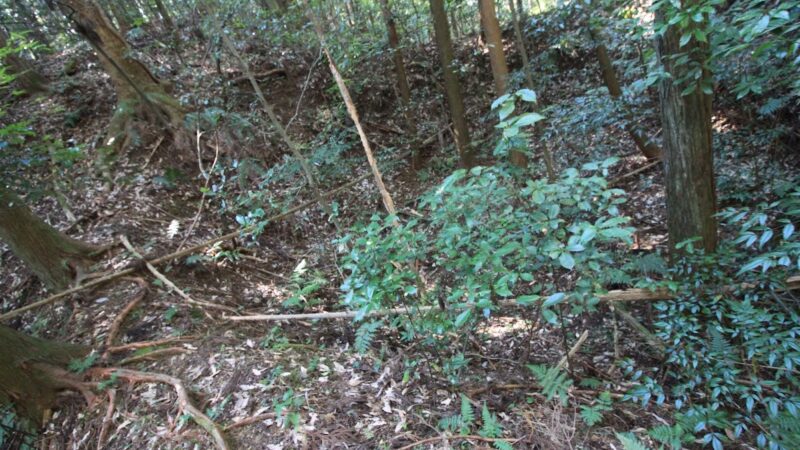
The key to the castle’s defense is the moat. Several moats have been identified at Nanbu Shiroyama Castle, and the large-scale moats that cut off the main ridge lines are particularly impressive. The moats reach depths of over 5 meters in some places, demonstrating the advanced civil engineering technology of the time.
In some places, earthen bridges (dobashi) are provided at the bottom of the moats, suggesting they functioned as passageways during peacetime.
Major Remains and Highlights
Moats and Earthen Bridges
The most impressive remains when visiting Nanbu Shiroyama Castle are the moats. The V-shaped moats, deeply excavated into the ridge, remain clearly visible even after several hundred years.
The moat separating the main enclosure and the second enclosure is particularly large in scale, impressive in both depth and width. The earthen bridge at the bottom of the moat is a passageway created by leaving a portion of the leveled ridge intact, a relic that demonstrates the technology of medieval castle construction.
Enclosures
Several enclosures of varying sizes can be identified within the castle grounds. The main enclosures, including the main bailey, are relatively flat and large enough to accommodate buildings. Traces of earthworks remain along the edges of the enclosures, suggesting that fences or walls once stood there.
Each enclosure is clearly demarcated by steep slopes, creating a terraced landscape. This arrangement, also known as the “terraced enclosure style,” is a structure unique to mountain castles. ### Traces of Vertical Moats
Traces of vertical moats dug down the slope can also be seen. Vertical moats hinder the enemy’s lateral movement and limit their attack routes. The vertical moats of Nanbu Shiroyama Castle are combined with the natural valley terrain, showcasing skillful castle construction techniques that utilize the topography.
Views
From the top of Shiroyama, you can enjoy a panoramic view of the Fujikawa River and the town of Nanbu. On clear days, you can even see Mount Fuji and the Southern Alps, giving you a real sense of this area’s strategic importance as a transportation hub.
The former lords of the castle likely contemplated their rule and strategies while gazing at this view. Today, it is a popular viewpoint for visitors.
Access and Visiting Guide
Access by Public Transportation
Train: The nearest station is Uchifune Station on the JR Minobu Line. The distance from the station to Nanbu Shiroyama Castle is approximately 28 minutes on foot (about 2.2 km).
From the station, head southwest and take the prefectural road towards the center of Nanbu Town. While there are some signs along the way, it is recommended to check the route beforehand using a map app.
Bus: Nanbu Town operates a bus service, but the number of services is limited, so please check the timetable in advance.
Access by Car
Expressway: Approximately 28 minutes (about 20 km) from the Shin-Shimizu Interchange on the Shin-Tomei Expressway.
After exiting the interchange, head south on National Route 52, following the Fujikawa River. Once you enter the center of Nanbu Town, follow the signs towards Shiroyama.
Parking: There is a dedicated parking lot at Nanbu Shiroyama Furusato Park, which can accommodate about 3 regular-sized cars. Parking is free, but space is limited, so consider using nearby public parking lots during busy times.
Castle Ascent Route
A well-maintained trail leads to the castle from Nanbu Shiroyama Furusato Park. An information board is installed at the entrance, explaining the castle’s history and highlights.
The trail is a mountain path, climbing approximately 100 meters in elevation. The one-way trip takes about 15-20 minutes. Since some sections are steep, comfortable walking shoes such as athletic shoes are recommended.
Best Time to Visit
Spring (March-May): The fresh greenery is beautiful, and the mild weather makes it ideal for a visit. However, be careful on rainy days as the ground can be slippery.
Autumn (September-November): The autumn foliage season brings vibrant colors to the entire castle mountain. The temperature is comfortable, making it suitable for longer walks.
Summer (June-August): Due to the heat and numerous insects, adequate preparation is necessary. Remember to stay hydrated to prevent heatstroke.
Winter (December-February): Snowfall is rare, but there is a possibility of freezing. The views are excellent, but warm clothing is necessary.
Nearby Tourist Attractions
Historical Sites Associated with the Nanbu Clan
Jokoji Temple: Approximately a 10-minute walk from Nanbu Castle. This temple is said to have been founded by Nanbu Mitsuyuki and is the family temple of the Nanbu clan. Cultural artifacts related to the Nanbu clan are preserved on the temple grounds, making it a must-see spot for history buffs.
Myojoji Temple: Also a temple associated with Nanbu Mitsuyuki. You can reflect on history in the quiet temple grounds.
Shinra Shrine: A shrine revered by the Nanbu clan. It continues to attract worshippers as the guardian deity of the region.
Michi-no-Eki Nanbu (Roadside Station Nanbu)
This roadside station sells local specialties of Nanbu Town. A large bamboo shoot monument is a landmark, and it offers a wide variety of fresh local vegetables, processed goods, and souvenirs.
The restaurant serves dishes made with local ingredients. These facilities are convenient to visit before or after visiting Nanbu Shiroyama Castle.
Fukushigawa Valley
This valley is rich in nature and offers beautiful scenery throughout the seasons. It is especially beautiful during the seasons of fresh greenery and autumn leaves, and is a popular hiking spot.
Arcadia Cultural Center
This art museum permanently displays the works of Koichiro Kondo, a Japanese painter from Nanbu Town. Many visitors come here to experience local culture.
Funayama Onsen
A hot spring facility located within Nanbu Town. It’s perfect for relaxing after climbing the castle. The view from the open-air bath overlooking the Fujikawa River is exceptional.
Points to Note When Visiting
Condition of the Castle Grounds
Nanbu Shiroyama Castle is sometimes described as “quite overgrown and suitable for advanced hikers.” While the climbing path is maintained, some parts of the castle grounds have bushes and fallen trees, requiring careful walking.
When visiting the ruins, please note the following:
- Watch your step: The moats and cliffs are steep. Avoid getting too close to the edges to prevent slipping.
- Bushwhacking: Some enclosures and ruins are covered in bushes. Wearing long sleeves and long pants is recommended.
- Fallen trees: There may be fallen trees due to typhoons or other storms. Do not attempt to pass through them; choose a safe route.
Equipment and Clothing
- Shoes: Athletic shoes or trekking shoes are essential. Avoid visiting in sandals or heels.
- Clothing: Long sleeves and long pants are recommended. In the summer, don’t forget insect repellent.
- Items to bring: Bring drinking water, a towel, insect repellent spray, a first-aid kit, and a map or smartphone (with GPS).
- Camera: Useful for documenting the ruins and taking photos of the scenery.
Safety Management
- Avoid Solo Activities: Visiting in groups is recommended if possible.
- Check Weather: The ground can be slippery during rainy weather or immediately after rain, so please refrain from visiting or exercise extreme caution.
- Time Management: Plan your trip with ample time to descend before sunset.
- Mobile Phone: Please bring a fully charged mobile phone for emergency contact.
Manners
- Protection of Ruins: Climbing on or digging at the ruins is strictly prohibited.
- Take Your Trash Home: Please take all your trash with you.
- Consideration for Private Property: There is private property around the castle ruins. Do not enter restricted areas.
- Noise: Please maintain a quiet environment and be considerate of other visitors and local residents.
Cultural Property Designation of Nanbu Shiroyama Castle
Currently, Nanbu Shiroyama Castle is a town-designated historical site and is protected as an important historical heritage of the region. In the future, it is hoped that the site will be upgraded to a prefectural or national designation, and preservation and maintenance activities are underway.
Local history enthusiasts and castle researchers are also continuously conducting surveys, and new discoveries and research findings are sometimes reported.
Points for Enjoying Nanbu Shiroyama Castle
Pre-Visit Study
Learning about the history of the Nanbu clan and basic knowledge of medieval mountain castles before your visit will deepen your understanding at the site. We recommend borrowing related books from the library or gathering information online.
Photography
Taking photos of remains such as moats, earthen bridges, and baileys will be helpful when you look back on your visit later. The view from Shiroyama is also an excellent photo opportunity.
Interacting with Locals
Some residents of Nanbu Town are knowledgeable about Nanbu Shiroyama Castle and the history of the Nanbu clan. Interacting with locals may provide you with information not found in guidebooks.
Combining with Surrounding Historical Sites
Visiting not only Nanbu Shiroyama Castle but also surrounding historical sites such as Jokoji Temple, Myojoji Temple, and Shinra Shrine will allow you to understand the history of the Nanbu clan in a more comprehensive way.
A plan to enjoy a historical walk through Nanbu Town for half a day to a full day is recommended.
Summary
Nanbu Shiroyama Castle is a historically important mountain castle as the birthplace of the Oshu Nanbu clan. You can fully appreciate the charm of a medieval mountain castle with its separate-enclosure layout, clearly preserved moats and earthen bridges, and views overlooking the Fujikawa River.
While some parts of the castle grounds are somewhat dilapidated, requiring appropriate preparation and caution for a visit, this is precisely what makes it so impressive, as it retains a strong atmosphere of its former glory, making it a worthwhile spot for castle enthusiasts.
When visiting Nanbu Town in Yamanashi Prefecture, be sure to climb Nanbu Shiroyama Castle and reflect on the history of the Nanbu clan. Combining it with visits to surrounding temples, shrines, and tourist facilities will make for a fulfilling day of historical exploration.
Nanbu Shiroyama Castle is a hidden gem in southern Yamanashi Prefecture that is recommended not only for history buffs but also for those who enjoy hiking and nature walks.