Nakahata Castle: The Complete Picture of a Strategic Mountain Castle in Tanba Built by a Descendant of Nasu Yoichi
About Nakahata Castle
Nakahata Castle is a medieval mountain castle located in Kuchihata, Kyotanba-cho, Funai-gun, Kyoto Prefecture. Built on a mountaintop approximately 325 meters above sea level, this castle was a strategically important base in the Tanba region, serving as a key transportation hub connecting Kyoto with Tango and Hikami. Currently, it is a designated historical site of Kyotanba-cho, and the remains such as moats and baileys are well-preserved.
It is believed to have been built by Kitaichinokami, a descendant of Nasu Yoichi, who played an active role in the Genpei War, and subsequently defended by the Kitamichi clan for generations. As an important historical site essential to understanding the regional history of medieval Tanba, it attracts attention from castle enthusiasts and history buffs.
History of Nakahata Castle
Construction History and Kitaichinosho
There are various theories regarding the construction date of Nakahata Castle, but it is said that Kitaichinosho came to this area with a statue of Kannon during the Jokyu era (1219-1222) and built a castle to enshrine it. Kitaichinosho is said to be a descendant of Nasu Yoichi, known for shooting down the fan target at the Battle of Yashima during the Genpei War, and was a resident of Tanba Shidaka-sho.
It is believed that the initial Nakahata Castle had a strong character as a small, manor-like castle centered around a Kannon hall. This period was politically unstable, immediately following the Jokyu War (1221), and local samurai were developing bases for self-defense.
Development during the Nanboku-cho period and the Kitamichi clan
During the Nanboku-cho period, under the rule of the Kitamichi clan, Nakahata Castle was extensively renovated and transformed into a full-fledged mountain castle. During this period, the Tanba region became one of the front lines of fierce conflict between the Southern and Northern Court forces, increasing its strategic importance.
The Kitamichi clan used this castle as their residence for generations, maintaining their power as a powerful local lord by controlling the transportation routes connecting Kyoto, Tango, and Hikami. To enhance its defensive capabilities as a mountain castle, multiple moats and baileys were arranged, and the castle’s layout took advantage of the steep terrain.
From the Sengoku Period to the Castle’s Abandonment
Throughout the Sengoku period, the Kitamichi clan continued to operate from Nakahata Castle, experiencing turbulent times including Oda Nobunaga’s conquest of Tanba, the subsequent rule of Akechi Mitsuhide, and the reorganization under the Toyotomi regime.
Ultimately, it is said that the castle was abandoned during the Kan’ei era (1624-1644) under Kitamichi Manjimune. With the establishment of the shogunate system in the Edo period, its military role as a mountain castle ended, and its inability to adapt to the peaceful times is considered the reason for its abandonment. ## Structure and Layout of Nakahata Castle
Overall Layout
Nakahata Castle is built on a mountaintop overlooking the settlements of Nakahata and Kamakura. Its layout utilizes the unique terrain of a mountain castle, with multiple enclosures arranged around the main enclosure, separated by moats. It features a highly defensible structure that takes advantage of the elevation difference.
The castle grounds extend approximately 200 meters north-south and 150 meters east-west, making it a medium-sized castle for a medieval mountain castle. The remains are still well-preserved, allowing for an understanding of the castle’s structure in its heyday.
Main Enclosure (Honmaru)
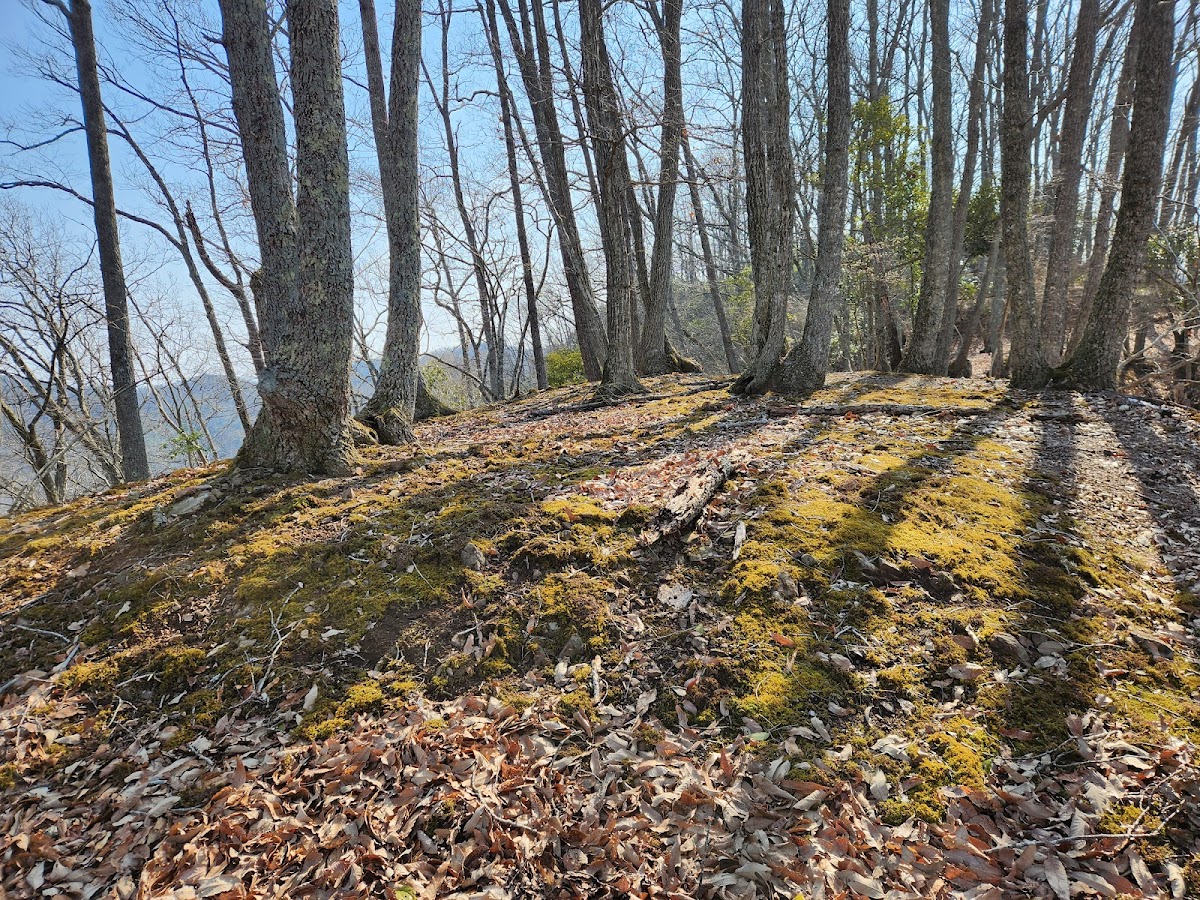
The main enclosure, located on the mountaintop, is the central enclosure of the castle. It is almost flat and measures approximately 30 meters east-west and 20 meters north-south. From the main enclosure, one can overlook the surrounding mountains and valleys, indicating its advantageous location for monitoring transportation routes.
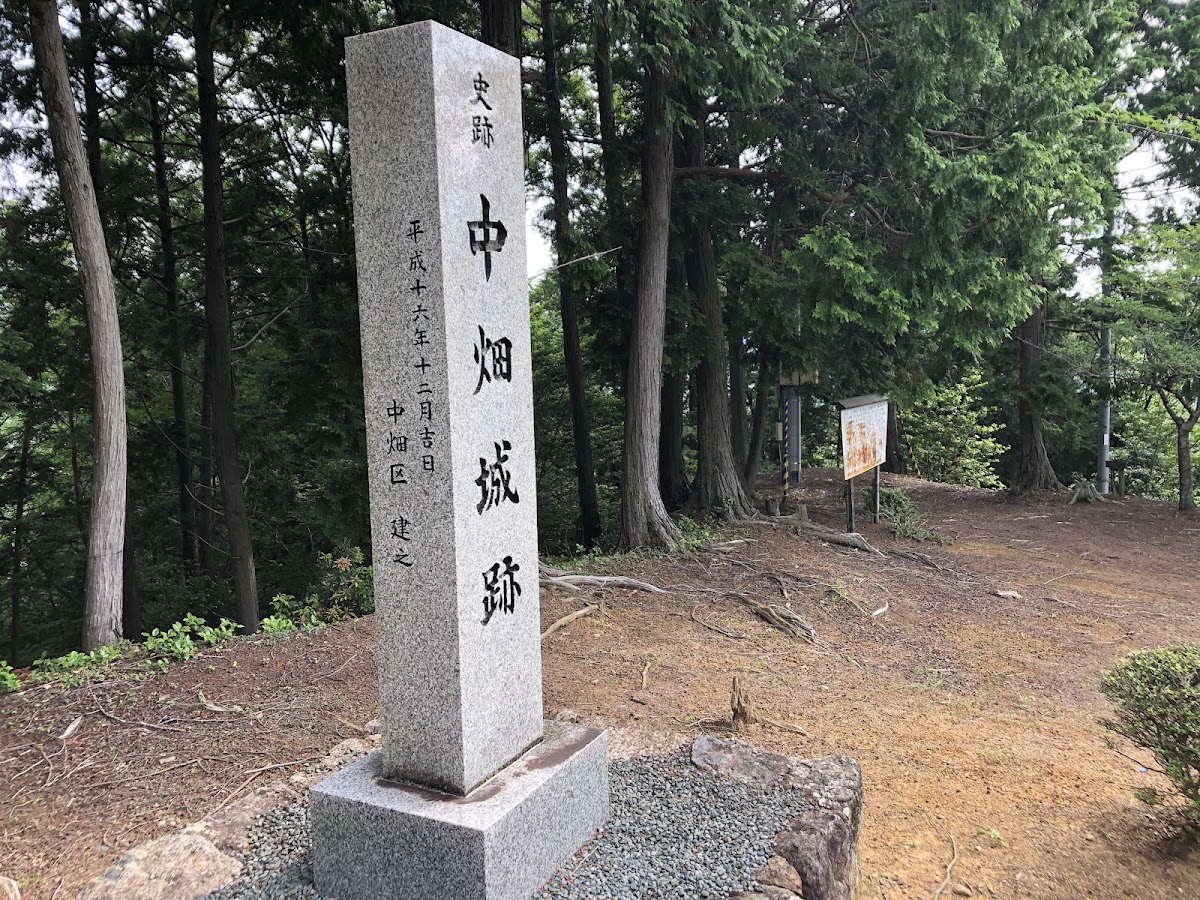
Currently, a stone monument and information board marking the Nakahata Castle ruins are installed in the main enclosure, conveying the castle’s history to visitors. While archaeological excavations have been limited, remains suggesting the existence of buildings have been identified.
Moats and Enclosures
The key to Nakahata Castle’s defense lies in its multiple moats. Moats approximately 3-5 meters deep were constructed in front of and behind the main enclosure, serving to prevent enemy intrusion. The moat on the main gate side (the approach road side) is particularly large and clearly visible.
Around the main enclosure are secondary enclosures such as the second and third enclosures. These are thought to have served both as defensive positions protecting the main enclosure and as garrisons for soldiers. The enclosures are separated by steep slopes (artificially constructed ramparts), enhancing their defensive capabilities.
Approach Road and Entrance
While the current approach road is well-maintained, traces of the original main road remain. From the foot of the mountain to the main enclosure, a winding path cleverly utilizing the slope was constructed, demonstrating a design intended to prevent a swift enemy advance. While the clear remains of the castle gate (koguchi) are difficult to confirm, traces of earthworks are found near the entrance to the main enclosure, suggesting the possibility of a structure similar to a masugata koguchi (square-shaped gate).
Highlights of Nakahata Castle
Well-Preserved Remains
The greatest appeal of Nakahata Castle is that the remains are clearly visible thanks to the restoration work. In particular, the moats retain their depth and width clearly, allowing visitors to appreciate the defensive techniques of a medieval mountain castle. The flat areas of the enclosures are also well-preserved, allowing visitors to experience the scale of the castle.
Information boards and stone monuments are appropriately placed, making it easy for first-time visitors to understand the castle’s structure while exploring. Thanks to the town’s designated historical site maintenance, the approach to the castle is also well-maintained and easy to walk.
Views and Strategic Location
The view from the main enclosure is magnificent, offering a panoramic view of the Tanba mountain range. The transportation routes to Kyoto, Tango, and Hikami spread out below, making it easy to understand why this castle functioned as a crucial transportation hub.
Especially on clear days, the surrounding mountain castles of Suchi Castle and Sonobe Castle can be seen, allowing one to understand a part of the Tanba castle network. This location is also the reason why the Kitamichi clan was able to rule this area for a long period.
Historical Value and Cultural Property Designation
Nakahata Castle is protected as a designated historical site of Kyotamba Town and is recognized as an important cultural property of the region. It is a valuable site with multiple historical aspects, including the legend of its descendants being descendants of Nasu Yoichi, the history of the Kitamichi clan from the Nanboku-cho period to the Sengoku period, and the transportation history of Tanba.
In recent years, research by local history enthusiasts and castle researchers has been progressing, and it occupies an important position in the study of the regional history of medieval Tanba.
Access Information
Location
Address: Kuchihata, Kyotamba-cho, Funai-gun, Kyoto Prefecture
Nakahata Castle is located slightly northwest of the center of Kyotamba-cho and is accessible from National Route 9.
Access by Car
- From Kyoto Jukan Expressway Tanba IC: Approximately 15 minutes
- From National Route 9: Follow the signs for the Kuchihata area towards Nakahata settlement.
There are a few parking spaces near the castle ruins. However, caution is required when driving as you will need to navigate narrow mountain roads. Visiting with large vehicles is difficult.
Access by Public Transportation
- From Shimoyama Station on the JR San’in Main Line: Approximately 15 minutes by taxi, or approximately 1 hour 30 minutes on foot.
- From Wachi Station on the JR San’in Main Line: Approximately 10 minutes by taxi.
Public transportation access is not very convenient, so we recommend renting a car or arranging a taxi in advance.
Points to Note When Visiting the Castle
- Estimated Time: Approximately 15-20 minutes on foot from the parking area to the main enclosure.
- Difficulty: Intermediate (The climbing path is well-maintained, but appropriate footwear is necessary as it is a mountain trail.)
- Attire: Comfortable clothing, trekking shoes recommended.
- Items to Bring: Drinking water, insect repellent (summer).
- Visiting Hours: Daytime only recommended (no lighting facilities).
Nearby Tourist Attractions
Nearby Castles
Suchi Castle (Kyotamba Town): A mountain castle located about 10 minutes by car from Nakahata Castle. Known as the residence of the Naito clan, it formed part of the Tanba castle network along with Nakahata Castle.
Kuchihata Castle (Kyotamba Town): A castle located near Nakahata Castle, and a connection between the two has been suggested.
Sonobe Castle (Nantan City): A castle where the administrative office of the Sonobe Domain was located during the Edo period. Currently, the site is occupied by Sonobe High School, but some remains of the castle still exist. Approximately 30 minutes by car.
Other Tourist Facilities
Kyotamba Town Cultural Properties Museum: Exhibits on the town’s history and cultural properties; materials related to Nakahata Castle may also be available for viewing.
Michi-no-Eki Tamba Marques: A facility where you can enjoy local specialties and meals. Convenient for a stop before or after visiting Nakahata Castle.
Shitsushi Limestone Cave Park: A spot to enjoy the nature of Kyotamba Town. Can be incorporated into a sightseeing plan that includes a castle tour.
Research, Study, and Preservation Activities of Nakahata Castle
Academic Research
Regarding Nakahata Castle, surveying and the creation of layout maps have been conducted as part of the comprehensive survey of medieval castles in Kyoto Prefecture. These surveys have gradually revealed the castle’s structure and historical changes.
In particular, the structure of the moats and the arrangement of the baileys suggest a renovation process from the Nanboku-cho period to the Sengoku period, making it an important case study for understanding the history of castle development in the Tanba region.
Preservation and Maintenance
Thanks to the historical site designation and maintenance by Kyotanba Town, the remains are well-preserved. Regular maintenance, including improvements to the approach to the castle, installation of information boards, and grass cutting, ensures a safe environment for visitors.
Local history enthusiast groups also conduct cleaning and guiding activities, making it a good example of community-based cultural property protection.
The Historical Significance of Nakahata Castle and the Kitamichi Clan
The Kitamichi Clan as a Local Lord of Tanba
The Kitamichi clan was one of the powerful local lords in medieval Tanba. Local lords refer to the samurai class who established their own power base in the region from the Kamakura period to the Sengoku period. The Kitamichi clan established their economic base by controlling the transportation routes connecting Kyoto and Tango, using Nakahata Castle as their base.
During the turbulent period of the Northern and Southern Courts, they likely survived by shifting their allegiance depending on the situation, sometimes siding with the Southern Court and sometimes with the Northern Court. This flexible approach is likely one of the factors that allowed them to maintain their power until the Sengoku period.
Value as a Transportation Hub
The area where Nakahata Castle is located lies on a major route from Kyoto to the San’in region (Tango and Tajima areas), and was also a branching point to the Hikami area (around present-day Tanba City). In the medieval period, controlling transportation routes was extremely important in terms of collecting tolls and obtaining information.
Nakahata Castle was not merely a military base, but functioned as a hub for logistics and information, and was the source of the Kitamichi clan’s economic power. The importance of this location explains why the castle was maintained for approximately 400 years, from the Jokyu era to the Kan’ei era.
Best Season to Visit Nakahata Castle
Spring (March-May)
This is the season of fresh greenery, making it ideal for exploring mountain castles. The mild temperatures make long walks comfortable. The surrounding mountains are beautifully colored during cherry blossom season.
Autumn (October-November)
The autumn foliage season is especially recommended. The mountains of Tanba are dyed in red and yellow, and the view from the main enclosure is exceptional. The weather is stable, making it the perfect season for castle visits.
Summer and Winter Precautions
In summer (June-August), vegetation is lush and insects are numerous, so long sleeves, long pants, and insect repellent are essential. In winter (December-February), there is a possibility of snow and ice, so caution is necessary when visiting.
Things to Know Before Visiting Nakahata Castle
Preparations
- Check the latest information on the Kyotamba Town Tourism Association website.
- Obtaining a map of the castle grounds and related materials in advance will deepen your understanding.
- Check the weather (it’s best to avoid visiting in rainy weather as the ground can be slippery).
- Check the battery level of your camera and smartphone.
Manners and Precautions
- Do not damage the ruins to protect the historical site.
- Always take your trash with you.
- Do not trespass on private property.
- No open flames.
- Beware of wild animals (wild boars, deer, etc.).
Summary: The Charm of Nakahata Castle
Nakahata Castle is a historic mountain castle that originated from a legend of descendants of Nasu Yoichi and was defended by the Kitamichi clan from the Nanboku-cho period to the Sengoku period. It played an important role as a transportation hub connecting Kyoto, Tango, and the Hikami area, and its strategic location can still be appreciated today from the view from the main enclosure.
With its well-preserved remains such as moats and baileys, and meticulous maintenance, this castle is an ideal site for learning about the structure of a medieval mountain castle. Designated a historical site by Kyotamba Town and carefully protected by the local community, this castle is an important cultural asset essential for understanding the history of Tamba.
It’s a recommended spot not only for castle enthusiasts, but also for those who enjoy historical walks and appreciate the natural beauty of Tamba. Visiting it along with nearby Suchi Castle and Sonobe Castle will give you a deeper understanding of Tamba’s castle network. Be sure to visit this historic mountain castle at least once.