

Murakami Castle (Ichikai Town, Tochigi Prefecture) Complete Guide | Thorough Explanation of Highlights, History, and Access
Located in Ichikai Town, Haga District, Tochigi Prefecture, the Murakami Castle ruins are a valuable historical site that preserves excellent remains of a medieval mountain castle. Built on a mountain with an elevation of 172.2 meters, commonly known as “Murakami Kannon-yama,” the castle is protected as a Tochigi Prefecture designated historical site and is now developed as “Kannon-yama Plum Blossom Village,” making it popular not only with history enthusiasts but also with general tourists.
This article provides a thorough explanation of this fascinating mountain castle, from its historical background and the characteristics of its castle structure to its actual highlights and useful access information for your visit.
History of Murakami Castle
Construction History and Period
There are several theories regarding the construction period of Murakami Castle. The most widely accepted theory is that the castle was built in 1378 by Murakami Shinsuke Yoshifuji, the second son of Mashiko Masamune. However, a historical document called “Murakami Castle Fall Chronicle” states that Murakami Castle, defended by Taira no Munekiyo, fell in 1187, suggesting the possibility that some kind of castle structure already existed by the end of the Heian period.
Many of the remains visible today are thought to be from the stage when Murakami Yoshifuji developed the castle after 1378. This period corresponds to the end of the Nanboku-cho period and the beginning of the Muromachi period, a time when powerful samurai groups in the Kanto region were building castles throughout the country and competing for power.
Relationship between the Murakami and Mashiko Clans
The Murakami clan is a branch of the Mashiko clan. The Mashiko clan was a samurai group based in Haga District, Shimotsuke Province, and wielded considerable power as vassals of the Utsunomiya clan. It is believed that Murakami Castle originated when Yoshifuji, the second son of Mashiko Masamune, established a branch family in Murakami, adopted the name Murakami, and built a castle there.
The Murakami family resided in this castle for approximately 50 years, spanning three generations: Yoshifuji, his son Norimitsu, and his grandson Mitsuyoshi. The names Murakami Tanba-no-kami Norimitsu and Murakami Tanba-no-kami Mitsuyoshi are recorded in historical documents, suggesting they were influential samurai in the region.
The Castle’s Demise
The exact date of Murakami Castle’s abandonment is unclear, but during the Sengoku period (Warring States period), the surrounding area became a battleground for power struggles between clans such as the Utsunomiya, Satake, and Hojo. As a small mountain castle, Murakami Castle was no longer able to withstand the large-scale battles of the Sengoku period, and it is thought that its role gradually came to an end.
Structure and Layout of Murakami Castle
Overall Size and Layout
Murakami Castle is a mountain castle built on the slopes and summit of Mt. Kannon, measuring approximately 200 meters east-west and 250 meters north-south. The main enclosure (honmaru) is located at the summit, surrounded by a dry moat and earthen ramparts for defense.
A notable feature of the castle is its overall rounded layout. This is a natural arrangement following the terrain, but defensive ingenuity is also evident throughout, such as the inclusion of bends and curves at key points. This balance between the elegant, rounded layout and practical defensive functions is a major characteristic of Murakami Castle.
Structure of the Main Enclosure (Honmaru)
The main enclosure (honmaru), located at the summit, is the central part of Murakami Castle. It has a triangular structure with earthen ramparts and dry moats, and an inner moat surrounds the entire perimeter. This inner moat is still well-preserved, and it is possible to walk along its bottom.
The main enclosure (Honmaru) is relatively compact in size, but its distinguishing feature is the excellent view, taking advantage of its mountaintop location. Currently, a small shrine stands on the site of the Honmaru, surrounded by numerous plum trees. In spring, the plum blossoms bloom profusely, adding color to the castle ruins.
Features of the Dry Moats
One of the greatest highlights of Murakami Castle is its dynamic dry moats. Three main moats can be identified within the castle grounds.
The inner moat is the main defensive line surrounding the entire Honmaru. It is deep, and the width of the moat bottom is also sufficiently wide. Currently, it is well-maintained, allowing for pleasant walks along the moat bottom.
The middle moat and outer moat are a double defensive line located outside the Honmaru. These moats cleverly utilize the undulations of the terrain, effectively preventing enemy incursions.
Earthen ramparts are built along the walls of the dry moats, with elevation differences reaching several meters in some places. This three-dimensional defensive structure speaks to the high level of sophistication of Murakami Castle as a medieval mountain castle.
Earthworks Arrangement
Earthworks are strategically placed throughout the castle, centered around the main keep. These earthworks served to prevent enemy intrusion and also obstructed visibility from within the castle, concealing the movements of the defenders. Even today, approximately 1-2 meters of the earthworks remain, making them valuable relics that allow us to experience the castle’s structure at the time.
The tops of the earthworks are flat, suggesting that fences or walls were once erected there. Furthermore, the frequent use of curves in the earthworks’ arrangement creates the soft, distinctive impression of Murakami Castle.
Highlights of Murakami Castle
Well-Preserved Remains
The greatest appeal of the Murakami Castle ruins is the remarkably well-preserved remains of this medieval mountain castle. While many mountain castles have lost their remains due to development and weathering, Murakami Castle clearly displays its basic castle structure, including dry moats, earthworks, and baileys. The dry moats, in particular, retain their considerable depth and width, allowing visitors to experience how a medieval castle functioned by walking along their bottoms. The earthworks are also well-preserved, demonstrating the high level of castle-building technology of the time.
Development as Kannon-yama Plum Blossom Village
Currently, the Murakami Castle ruins have been developed as “Kannon-yama Plum Blossom Village,” a park that combines historical value with tourist appeal. Approximately 1,000 plum trees are planted throughout the castle grounds, reaching their peak bloom from late February to mid-March each year.
During the plum blossom season, white and red plums adorn the entire mountain, allowing visitors to enjoy both a stroll through the castle ruins and flower viewing simultaneously. The plum orchard around the main keep is particularly magnificent, creating a unique landscape where history and nature harmonize.
Excellent Views
From the main keep at the summit, you can enjoy a panoramic view of Ichikai town. On clear days, you can even see the distant mountains, a view that the former castle lords undoubtedly enjoyed. During the Sengoku period (Warring States period), this excellent vantage point played a crucial role in monitoring enemy movements.
Currently, due to the growth of surrounding trees, the view is not as open as it once was, but even so, you can still enjoy wonderful scenery from key locations.
Information Signs and Walking Trails
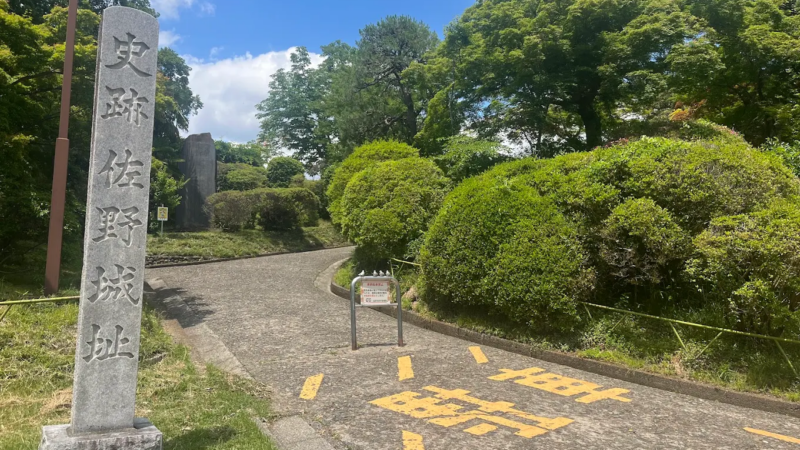
A large sign reading “Murakami Castle Ruins” is installed at the castle site, making its location easily identifiable from afar. This sign has become one of Ichikai Town’s landmarks and is familiar to the local people.
Walking trails are maintained within the castle grounds, allowing visitors to tour the main remains in order. Information boards are placed throughout, making it appealing to learn about the castle’s structure and history while exploring. The walking trails are relatively gentle, and can be easily walked by those with average physical fitness.
Evaluation as an Earthen Castle
In the field of castle research, Murakami Castle is highly regarded as an “earthen castle.” As a typical example of a medieval mountain castle constructed using only earthworks and dry moats, without stone walls, its ingenious layout and the state of preservation of its remains have attracted attention from experts. In particular, the incorporation of defensive features throughout the rounded layout, and the meticulously calculated scale and placement of the dry moats, are highly regarded as evidence of the advanced castle-building techniques employed.
Access Information
Location
Address: Ichihana, Ichikai-machi, Haga-gun, Tochigi Prefecture
Murakami Castle Ruins are located in the center of Ichikai-machi, making them easily accessible from within the town. The castle ruins are situated on the summit of a mountain affectionately known locally as Kannon-yama.
Access by Car
Access by car is the most convenient.
If using the Kita-Kanto Expressway:
- Approximately 20 minutes from Mooka IC
- Approximately 30 minutes from Sakuragawa-Chikusei IC
If using the Joban Expressway:
- Approximately 40 minutes from Naka IC
When using a car navigation system, it is recommended to search for “Kannon-yama Ume no Sato” or “Murakami Castle Ruins.” There is a sign at the foot of the castle ruins, and from there you will begin climbing the mountain path.
Parking
There is a parking lot near the castle ruins. It can get crowded during peak tourist seasons such as the plum blossom season, but there is usually ample parking space. Parking is free.
It takes about 10-15 minutes to walk from the parking lot to the main keep. While it involves climbing a mountain path, there is a well-maintained walking trail, making it relatively easy to walk.
Access by Public Transportation
Access by public transportation is somewhat inconvenient.
Nearest Stations: JR Karasuyama Line Karasuyama Station, or JR Tohoku Main Line Utsunomiya Station
You will need to take a bus or taxi from either station. Bus services to Ichikai Town are limited, so it is recommended to check the timetable in advance. For tourists, renting a car would be convenient.
Opening Hours and Holidays
Murakami Castle Ruins are maintained as a park and are generally open for viewing year-round. There are no restrictions on opening hours, and you can freely stroll around from sunrise to sunset. However, since there is no lighting at night, we recommend visiting during daylight hours for safety reasons. Also, be careful as the ground can become slippery after rain or snowfall.
Estimated Visiting Time
If you want to leisurely explore the entire castle ruins, allow 1 to 1.5 hours. While it’s possible to see only the main remains in about 30 minutes, including time to walk through the dry moats and enjoy the view from the main keep, it’s best to allocate at least an hour.
If visiting during the plum blossom season, we recommend allowing even more time to enjoy the blossoms as well.
Points to Note and Recommended Equipment for Visitors
Clothing and Shoes
Since Murakami Castle is a mountain castle, appropriate clothing and shoes are necessary for your visit.
Shoes: Wear comfortable, non-slip shoes such as sneakers or trekking shoes. Avoid wearing heels or sandals.
Clothing: Comfortable clothing that allows for easy movement is essential. Long sleeves are recommended in spring and autumn, and a light long-sleeved shirt in summer to protect against insects. Don’t forget warm clothing in winter.
What to Bring
- Drinks: Hydration is especially important in summer.
- Insect Repellent Spray: There may be many insects from spring to autumn.
- Hat: Essential on sunny days.
- Camera: For photographing the ruins and plum blossoms.
- Towel: For wiping away sweat.
Safety Precautions
- Walk carefully in the dry moat, as some areas have uneven footing.
- Be especially careful after rain, as it can be very slippery.
- Visiting in a group is safer than visiting alone.
- Check your cell phone signal strength beforehand.
Nearby Tourist Attractions
When visiting Murakami Castle Ruins, we recommend also visiting tourist attractions in Ichikai Town and the surrounding area.
Ichikai Town Shibazakura Park
A representative tourist spot in Ichikai Town, where approximately 250,000 moss phlox plants bloom in spring. Located about 10 minutes by car from Murakami Castle Ruins, the best time to visit is from mid-April to early May.
Michi-no-Eki Sashiba-no-Sato Ichikai
A roadside station where you can purchase local agricultural products and specialty goods. Convenient for gathering information about Ichikai Town and an ideal rest stop.
Mashiko Town Pottery Village
The neighboring town of Mashiko is famous for its pottery. It is also a place associated with the Mashiko clan, the main branch of the Murakami clan, and you can feel the historical connection. There are many kilns and galleries, and you can enjoy pottery making experiences.
Murakami Castle Ruins Cultural Property Designation
Murakami Castle Ruins are protected as a Tochigi Prefecture Designated Historic Site. This designation ensures the systematic preservation and maintenance of the remains, and it is expected to be maintained as a valuable historical heritage for future generations.
The value of this site as a prefectural designated historical site lies not merely in the fact that the castle ruins remain, but also in its recognized educational and academic value in accurately conveying the structure of a medieval mountain castle. It can be considered an important historical site for understanding local history and for studying the history of Japanese castles.
Significance of Visiting Murakami Castle
While Murakami Castle ruins may not be flashy, it is a valuable place where you can truly experience what a medieval mountain castle was like. Although there are no prominent structures such as stone walls or keeps, the ability to actually walk around and experience the layout and function of basic defensive facilities such as earthworks and dry moats is of great value.
For history enthusiasts, it will be an excellent opportunity to learn about the history of the Mashiko clan and the local community in the medieval period. Furthermore, for general tourists, it is a place that can be thoroughly enjoyed as a famous spot for plum blossoms, or as a walking spot where you can feel the nature and history of Ichikai Town.
During the spring plum blossom season, you can have a special experience enjoying both history and nature. If you have the opportunity to visit Tochigi Prefecture, please be sure to visit Murakami Castle ruins.
Summary
Murakami Castle (Ichikai-machi, Tochigi Prefecture) is a medieval mountain castle that served as the residence of the Murakami clan, a branch of the Mashiko clan, for three generations over 50 years. It is believed to have been built in 1378 by Murakami Yoshifuji and is currently protected as a Tochigi Prefecture designated historical site.
Centered around the main keep built on the summit of Kannon-yama mountain, the dry moats and earthworks are well-preserved, making it a valuable historical site for learning about the structure of medieval mountain castles. It is particularly characterized by its dynamic dry moats and elegant, rounded layout, and is highly regarded as an “earthen castle.”
Currently, it has been developed as “Kannon-yama Plum Blossom Village,” with approximately 1,000 plum trees planted, making it a popular spot for cherry blossom viewing in spring. It is easily accessible by car, and parking is available.
It is a representative tourist spot in Ichikai-machi, recommended not only for history buffs but also for those who want to enjoy nature and strolling.
--765x450.png)
